EdTech software development

EdTech Software
Development

Company

We build custom LMS platforms, eLearning portals, education ERP systems, assessment tools, and mobile learning apps for schools, universities, corporate L&D teams, and EdTech startups. Planned around SCORM, xAPI, accessibility, and data-handling requirements based on project scope.


SCORM 1.2 / 2004 xAPI · AICC FERPA support GDPR-ready WCAG 2.2 AA COPPA support
Verified by
GoodFirms — SDLC Corp rated 4.9 out of 5
AppFutura — SDLC Corp rated 4.9 out of 5
Clutch — SDLC Corp rated 4.9 out of 5
Team reviewing an EdTech learning platform dashboard — custom LMS and eLearning software by SDLC Corp
Target uptime
99.9%
Available with hosting and support scope
$133.7BDigital Education by 2030
31.5%CAGR to 2030
40%Primary Schools Connected
50%Lower Secondary Connected
$842.6BE-Learning Services by 2030
Our EdTech services

EdTech Software We Build & Deliver

From standalone learning apps to full education technology ecosystems, each service is planned around the target audience, compliance needs, and delivery model.

01

Custom LMS Development

Course management, assessments, certificates, role-based access, SCORM 1.2, SCORM 2004, and xAPI support with admin reporting across web, iOS, and Android.

Explore LMS dev
02

AI-Powered Learning Solutions

Adaptive learning paths, AI tutor chatbots, automated content tagging, predictive learner insights, and intelligent assessment support using LLM and ML-based systems.

AI for EdTech
03

Education ERP & Institutional Management

Admissions, student records, fee management, timetables, staff administration, and reporting through Odoo-based or fully custom education management systems.

Education ERP
04

Education Analytics Platforms

Learner dashboards, cohort performance analysis, progress tracking, and institutional reporting powered by real-time data systems built for education environments.

Education analytics
05

Virtual Classroom & Live Learning

Scheduling, attendance, live video, recording, moderation, in-session chat, Q&A, and engagement reporting with Zoom or WebRTC integration.

Live learning
06

AR/VR Immersive Learning

Virtual labs, 3D simulations, and immersive training environments for medical, engineering, vocational, and safety education built with Unity and Unreal Engine.

AR/VR development
07

Gamification & Engagement Systems

Badges, leaderboards, XP systems, streak tracking, and challenge mechanics integrated into new or existing platforms to support learner engagement and retention.

Gamification
08

Mobile eLearning Apps

Offline-capable, low-bandwidth-optimized learning apps for iOS and Android with SCORM and xAPI support, push notifications, and secure user access.

Mobile app dev
Custom vs Off-the-Shelf

Custom LMS vs
Off-the-Shelf Platforms

Choosing between a configurable LMS and a custom-built platform affects product flexibility, integration depth, reporting control, and long-term operating cost.

Moodle · Canvas · Blackboard
Off-the-Shelf LMS
Prebuilt systems that work well for standard learning flows and faster setup, but can become restrictive when requirements move beyond common templates.
Faster initial setup Useful when the goal is to launch standard course delivery, learner access, and basic reporting without extensive custom workflows.
Limited workflow flexibility Complex enrollment logic, assessment models, certification paths, and institution-specific rules often require workarounds or third-party extensions.
Vendor dependency Customization scope, integrations, upgrades, and data portability can depend heavily on the platform vendor or plugin ecosystem.
Analytics and AI can be fragmented Advanced personalization, learner-risk monitoring, and unified analytics often need added tools rather than being built into the platform core.
vs
Built Around Your Requirements
Custom EdTech Platform
Purpose-built software shaped around your learning model, business logic, integrations, and compliance requirements for stronger control over product direction.
Compliance planned from the start SCORM, xAPI, privacy controls, accessibility needs, and reporting requirements can be handled as part of the platform architecture.
AI and analytics built around your product Adaptive journeys, tutor support, learner signals, and reporting logic can align with your own data model instead of a generic LMS structure.
Greater control over data and integrations Custom platforms can connect more cleanly with SIS, ERP, CRM, payment, proctoring, and content systems while giving the team more control over the roadmap.
Business model flexibility Subscription logic, cohort sales, enterprise licensing, partner portals, certification flows, and marketplace models can be built to match commercial goals.
Why this comparison matters
The platform model influences launch speed, customization depth, integration scope, reporting control, and how easily the product can evolve as requirements grow.
Who we serve

EdTech Software for Every Segment

Each audience has distinct compliance requirements, user experience expectations, and feature priorities. We scope and build for each one as a separate product decision.

K-12

Schools & Educational Institutions

Student portals, attendance tracking, parent dashboards, curriculum management, and school ERP — built around COPPA compliance and WCAG 2.1 AA accessibility for under-13 audiences.
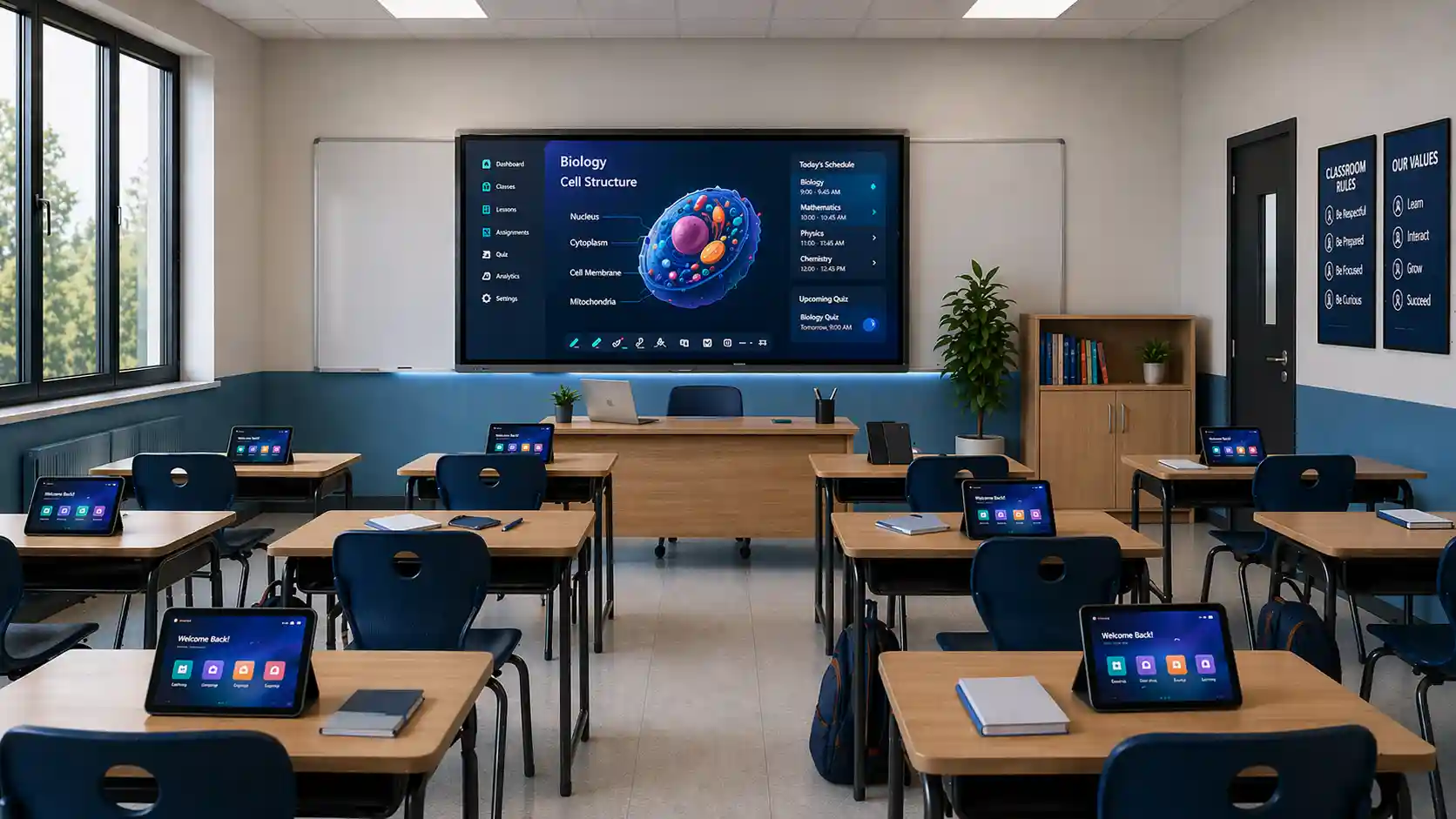
Student and parent portal with real-time updates
Attendance, behaviour, and academic progress tracking
COPPA-compliant data handling for under-13 learners
Fee management and payment processing
Discuss your K-12 project
K-12 students using tablets in a classroom for digital learning
Higher education

Universities & Colleges

University LMS, credit management, academic portals, accreditation-ready reporting, and alumni engagement platforms for complex multi-department institutional workflows.
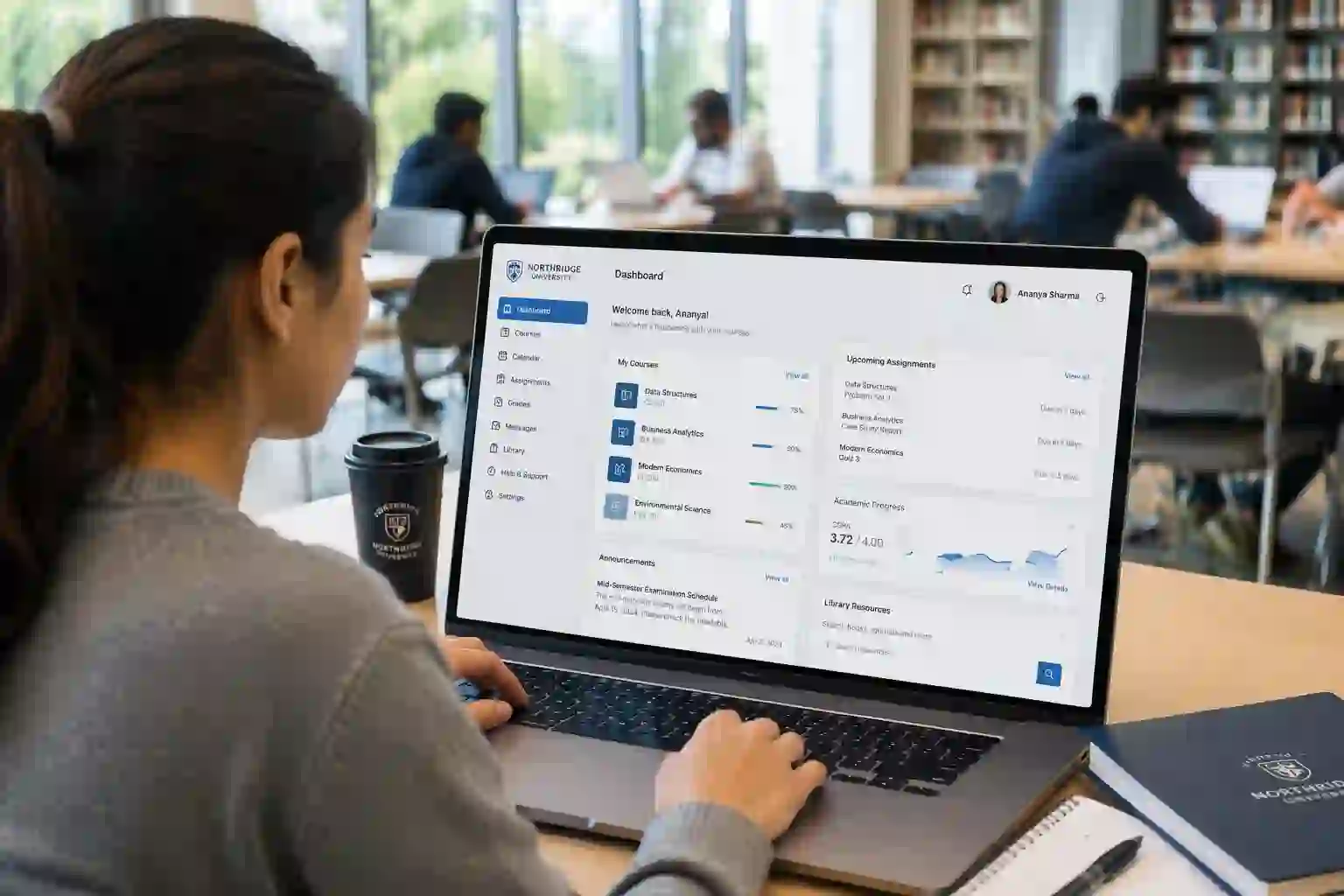
Multi-department LMS with SCORM / xAPI delivery
Credit, enrolment, and accreditation management
FERPA-compliant student data handling
Alumni networks and lifelong learning platforms
Discuss your university project
University students working on laptops in a modern campus setting
Corporate L&D

Enterprise Training & L&D Teams

Onboarding portals, compliance training, skills matrix, SCORM-ready delivery, and completion reporting integrated with HRIS, Salesforce, and your existing enterprise systems.

SCORM 1.2 / 2004 / xAPI content delivery
Role-based onboarding and compliance paths
Skills matrix and competency tracking dashboards
HRIS and Salesforce integration
Discuss corporate L&D
Corporate team completing compliance training on laptops in an office
Coaching & tutoring

Tutoring Marketplaces & Coaching Platforms

Tutor profile and booking systems, live class delivery, session recordings, in-app payments, review systems, and subscription billing for tutoring marketplaces.
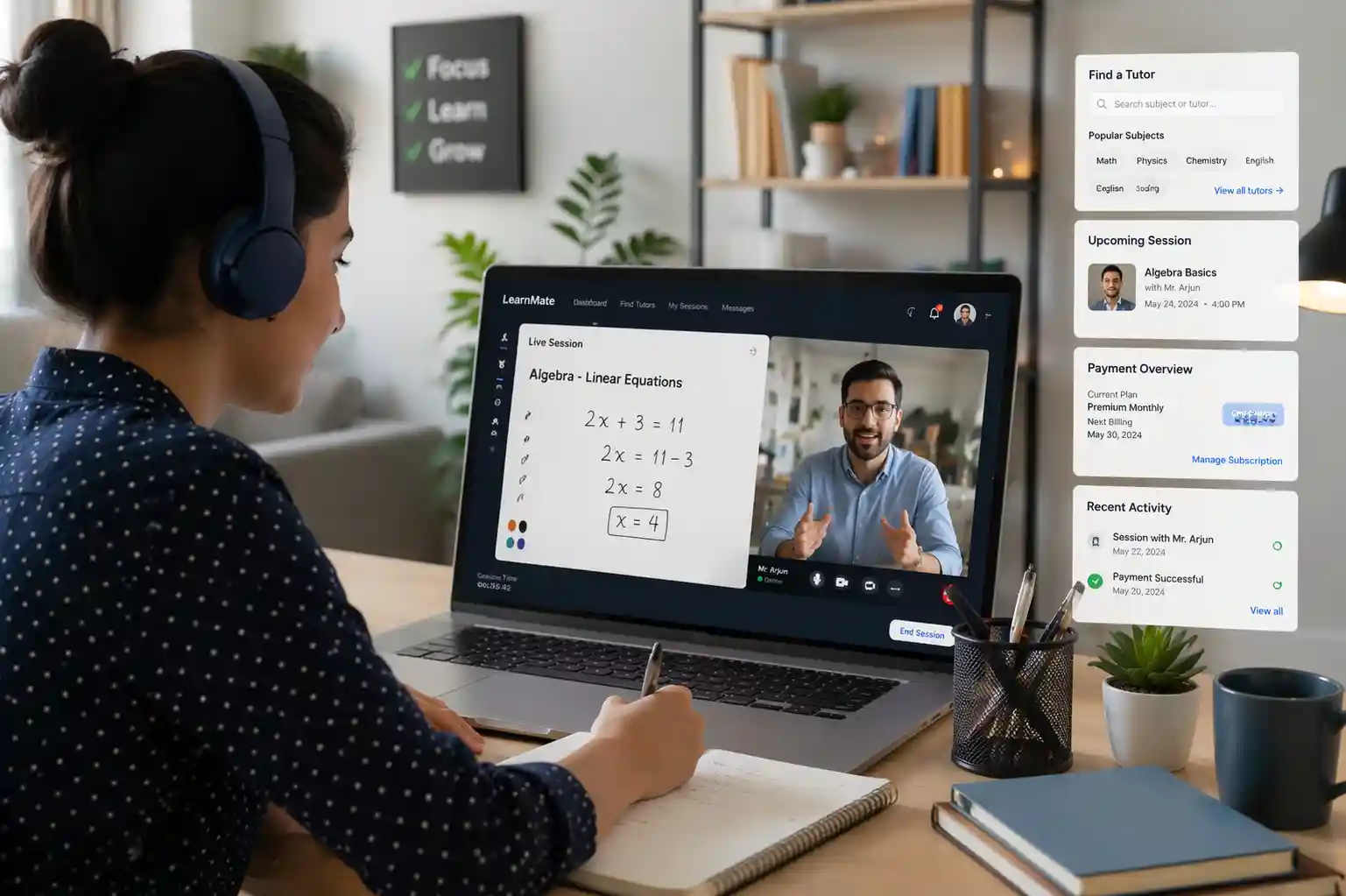
Tutor profiles, search, and booking flows
Live class with Zoom and WebRTC integration
Stripe-powered subscription billing and payouts
Ratings, reviews, and dispute management
Discuss your platform
Online tutoring session — tutor and student in a live video class
EdTech startups

MVPs & Growth-Stage EdTech Products

MVP builds in 10–14 weeks, investor-ready prototypes, and scalable product architecture from a team that builds and runs its own EdTech product. No rebuild needed at Series A.

MVP delivery in 10–14 weeks from signed scope
Scalable architecture from day one
Investor-ready demo and product documentation
Milestone-based delivery with weekly demos
See startup development
EdTech startup founders reviewing a learning platform MVP on screen
Government & NGO

Public Education & Workforce Programmes

Accessible, multilingual, offline-capable platforms for national education programmes, public workforce skilling initiatives, and government training mandates.
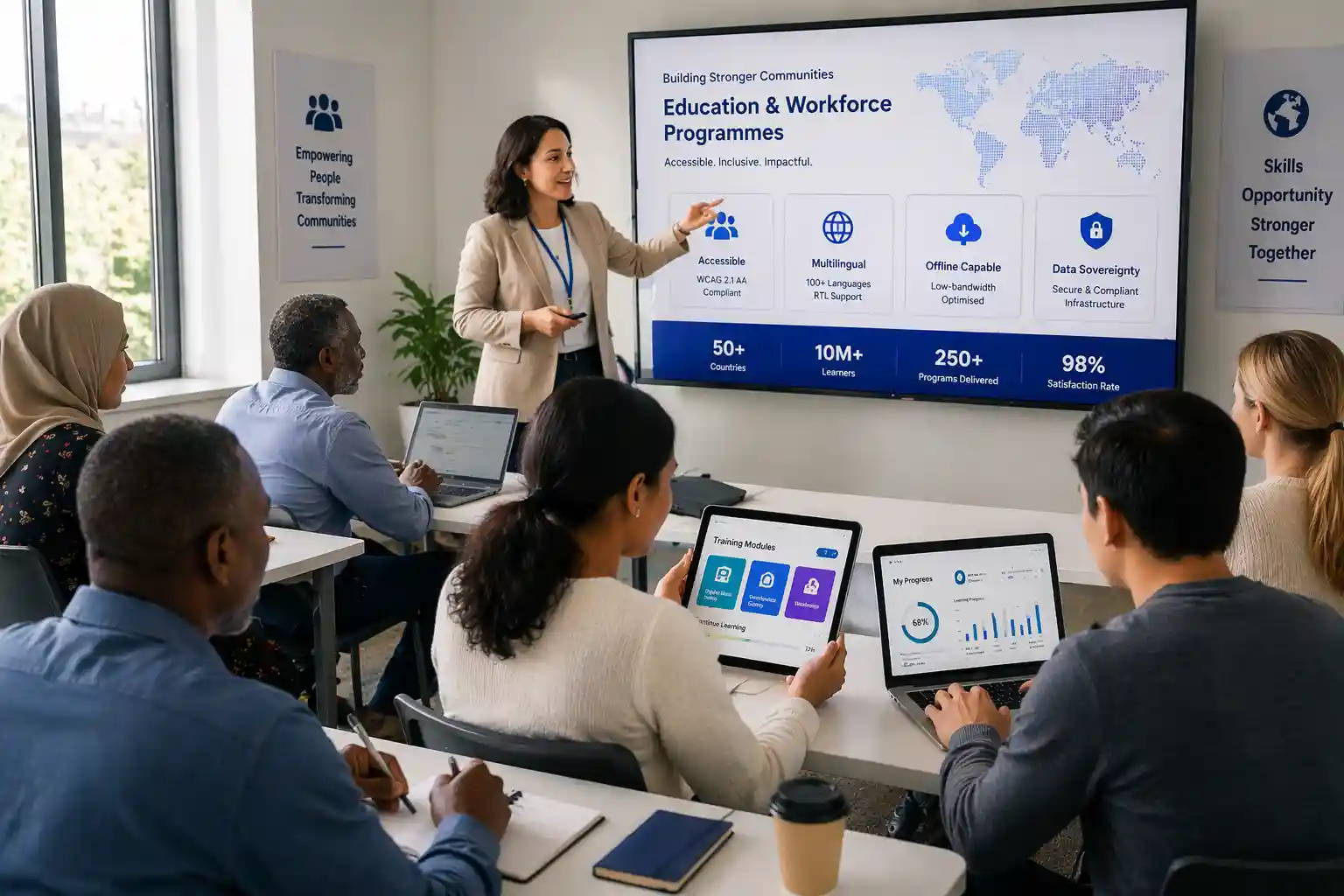
WCAG 2.1 AA and Section 508 accessibility
Multilingual UI with RTL language support
Offline-capable with low-bandwidth optimisation
Government data sovereignty requirements
Discuss your programme
Government workforce training programme — group learning session in a community setting
Why SDLC Corp

EdTech Software
Built by People
Who Run EdTech

Generic software agencies adapt enterprise patterns to education. We start from EdTech architecture — understanding SCORM data models, LRS integration, FERPA obligations, and the operational complexity of running digital learning at scale before a line of code is written.

We operate our own EdTech product

Praxis AI, our own institute management software, is active across institutions in India and the Middle East. We do not just build EdTech — we run it.

Full-stack EdTech capability

LMS, AI personalisation, education ERP, analytics, AR/VR, and legacy migration — one team, no vendor coordination. See our complete EdTech services.

Compliance engineered in from day one

SCORM, xAPI, FERPA, COPPA, GDPR, and WCAG 2.1 AA are architecture constraints — not post-launch checklists. Every build starts with a compliance gap analysis.

Verified by 94 Clutch reviews at 4.9 / 5

Verified outcomes from schools, universities, corporate L&D teams, and EdTech startups across the US, UK, Middle East, and India.
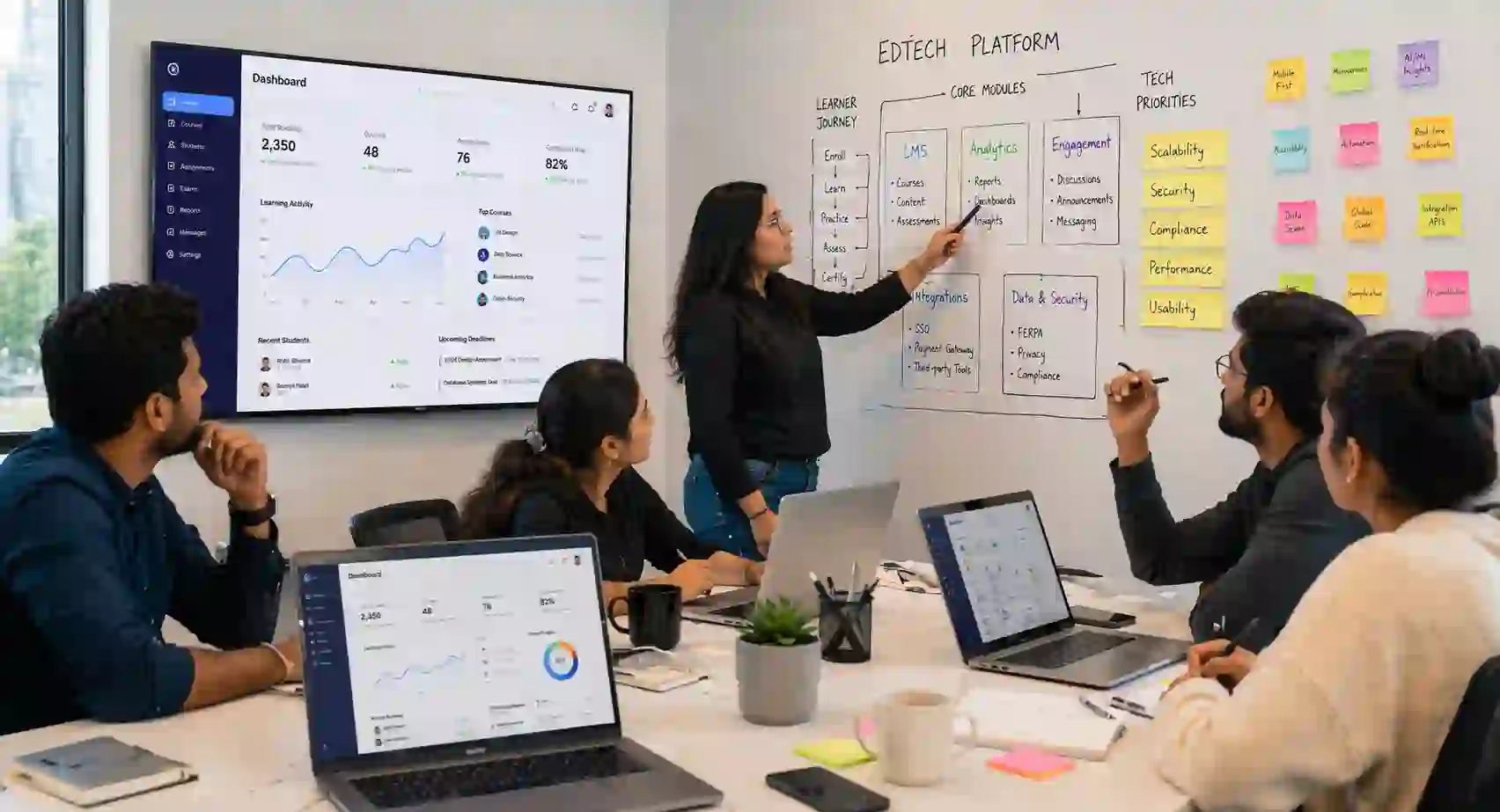
SDLC Corp EdTech development team collaborating on LMS and eLearning platform build
1M+Active learners on our platforms
250+EdTech projects delivered
Compliance & standards

Built for Compliance from
the Architecture Stage

We plan around your region, learner group, and delivery model. Compliance is treated as a product requirement from the start, not as a final-stage checklist.

Learning content standards

Support for SCORM 1.2, SCORM 2004, xAPI, AICC, and LRS-based tracking, with integration planning for content libraries and external LMS environments.

SCORM 1.2 SCORM 2004 xAPI AICC LRS

Student data privacy & security

Data handling controls, encryption in transit and at rest, role-based access, audit logs, and retention workflows aligned to the applicable requirements of your market, institution type, and learner profile.

FERPA COPPA GDPR PDPA ISO/IEC 27001

Accessibility

Accessible UI patterns, keyboard navigation, semantic structure, contrast checks, captions, and screen-reader support planned to align with WCAG 2.2 AA and related accessibility requirements.

WCAG 2.2 AA Section 508

Compliance gap review

We review your current platform against relevant standards and map practical remediation priorities before major redesign or development begins.

Region-specific compliance guidance

Requirements vary across the US, EU, UK, India, and the Middle East. Planning should reflect learner age group, institution type, data flows, and deployment model.

Technology stack

EdTech-Grade Technology

Open-source and cloud-native technologies chosen for reliability, maintainability, and EdTech-specific integration requirements — validated in education platforms handling 100K+ concurrent learners.

React
React
Angular
Angular
Vue.js
Vue.js
TypeScript
TypeScript
Node.js
Node.js
Java
Java
Python
Python
.NET Core
.NET Core
Laravel
Laravel
Flutter
Flutter
PostgreSQL
PostgreSQL
MongoDB
MongoDB
Redis
Redis
AWS
AWS
Azure
Azure
Docker
Docker
Kubernetes
Kubernetes
Elasticsearch
Elasticsearch
GraphQL
GraphQL
Google Cloud
GCP
AI & ML
OpenAI APILangChainTensorFlowHugging FaceCustom ML
LRS & eLearning
SCORM CloudLearning LockerADL LRSxAPI wrapper
Integrations
ZoomMS TeamsMoodleCanvas LMSStripeSalesforceGoogle Classroom

All technology choices are documented and handed over with your platform — no black-box dependencies, no lock-in.

Benefits & outcomes

What EdTech Organisations Achieve
With Custom Software

Typical outcomes from custom EdTech platforms designed around your learning model, workflows, and compliance requirements rather than generic LMS limitations.

Learner engagement

Stronger Course Completion

Adaptive learning paths, engagement features, and learner-progress visibility can improve completion compared with static, one-size-fits-all learning flows.

Operational efficiency
60%

Lower Admin Workload

A connected data layer across admissions, records, payments, and reporting helps reduce manual tasks across disconnected academic systems.

Time to launch
10–14w

MVP Delivery for EdTech Startups

A focused MVP covering core learning flows, basic administration, and one delivery model can often be planned and launched within a structured sprint cycle.

Platform scalability
1M+

Platforms Built for Growth

Custom architecture can be planned for large learner volumes, stable performance, and future expansion across regions, institutions, and product lines.

Compliance readiness
100%

Compliance Planned from Day One

Platforms can be designed around standards such as SCORM, FERPA, and GDPR based on the learner group, geography, and operating requirements.

FAQ

EdTech Dev FAQs

Everything you need to know about LMS development, SCORM compliance, FERPA, AI integration, legacy migration, and how we deliver EdTech software projects end-to-end.

Ask directly

What does an EdTech software development company build?

An EdTech software development company builds the full spectrum of education technology — learning management systems, eLearning apps, AI-powered tutoring platforms, student analytics dashboards, institution management ERP, virtual classrooms, assessment systems, gamification layers, and immersive AR/VR learning environments.

Unlike a generic software agency, an EdTech firm understands pedagogy, compliance standards such as SCORM and FERPA, and the operational complexity of running digital learning at scale. See our full EdTech app development services.

How much does EdTech software development cost?

MVP — core learning loop, basic admin, one delivery mode: $15,000–$40,000 USD · ships in 10–14 weeks

Full platform — LMS + assessments + live learning + payments + reporting: $50,000–$120,000+ USD · ships in 20–28 weeks

Enterprise — AI personalisation, AR/VR, SSO, multi-tenant, accreditation-ready: scoped individually after a free discovery call.

Do you build SCORM and xAPI-compliant eLearning platforms?

Yes — SCORM 1.2, SCORM 2004, xAPI (Tin Can API), and AICC compliance is standard on all LMS and eLearning platforms we build. We integrate with LRS providers including SCORM Cloud, Learning Locker, and ADL LRS so your learning activity data is fully trackable across systems and content types.

How do you handle FERPA and GDPR compliance for student data?

We apply geo-specific data handling from the architecture stage. US platforms: FERPA-compliant access controls, COPPA data minimisation for under-13, audit trails, and parental consent flows. European platforms: GDPR-aligned right-to-erasure and data residency controls. India: PDPA alignment. All platforms use encryption in transit and at rest, RBAC, and security event monitoring.

Can you add AI to an existing EdTech platform?

Yes — we integrate AI tutors, adaptive content engines, dropout prediction models, and automated grading into existing LMS or apps via API without a full rebuild. We use OpenAI API, LangChain, TensorFlow, and Hugging Face depending on the use case. Read more: AI for EdTech.

Can you migrate our legacy LMS to a modern platform?

Yes — we migrate from Moodle 2.x, custom-built platforms, deprecated SaaS tools, and on-premise systems to modern cloud-native architecture. Migration covers learner data, course content, completion records, and user accounts with zero data loss. We provide rollback plans at every milestone. Learn about our digital transformation approach.

What makes SDLC Corp different from other EdTech development companies?

1. We run our own EdTech product. Praxis AI is active across institutions — we have first-hand operational knowledge most vendors lack.

2. Compliance is standard, not an add-on. SCORM, xAPI, FERPA, and GDPR are included from the architecture stage in every build.

3. Full-stack EdTech coverage. Apps, ERP, AI, analytics, and legacy migration under one team. No vendor coordination needed.