Enterprise AI usually fails for predictable data reasons before it fails for model reasons. Fragmented entities, low-trust data, slow access, weak controls, and missing feedback loops make pilots look promising but make production unreliable.
- Enterprise AI depends on consistent business entities, reproducible data pipelines, governed access, and operational observability before it depends on model choice.
- Data modernization removes specific AI failure modes: contradictory context, stale features, access bottlenecks, and weak auditability.
- Modernization should be prioritized around the AI use case and its data dependencies rather than around a platform decision.
- AI readiness can be measured through data quality, freshness, lineage, access, reliability, and incident-response metrics.
Data modernization matters because each capability removes a specific production constraint. Integration reduces semantic inconsistency. Quality controls make training and inference reproducible.
Governance makes decisions traceable. Security enables sensitive use cases. Self-service reduces delivery bottlenecks, and observability exposes failures before they spread across AI systems.
For the broader transformation scope beyond the data layer, see What Is Enterprise AI Modernization. This article stays with the data capabilities that make that wider effort viable.
What Is Data Modernization for Enterprise AI?
Data modernization for AI is not a cloud migration with a new label. Moving a warehouse, upgrading a database engine, or buying another platform changes where data lives without changing whether an AI system can rely on it.
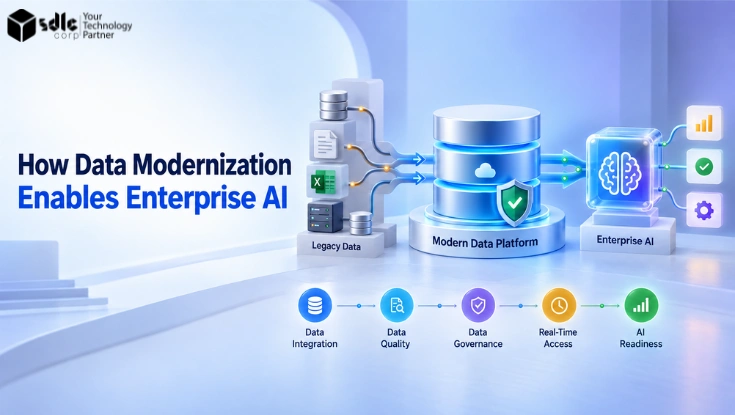
The working definition is narrower and more useful. Data modernization for enterprise AI combines integration, quality, governance, security, accessible data products, and observability.
Together they let an AI system retrieve the right information, reproduce how it was produced, prove who was allowed to see it, and detect quickly when any of that stops holding.
Each part carries weight. Integration settles what a customer or a product actually means. Quality settles whether the same input produces the same output next month. Governance settles who approved a change and what it affected.
Security settles who is allowed to see what, at query time. Data products settle how teams consume all of it without a ticket queue. Observability settles how fast anyone notices a break.
Integration, quality, governance, security, accessible data products, and observability. Remove any one of the six and the AI system inherits the gap, usually in production rather than in the pilot.
Why Legacy Data Prevents Enterprise AI From Scaling
Legacy estates rarely fail because data is missing. They fail because the same fact exists in several systems with different identifiers, different refresh schedules, and different permission models, and nothing decides which version is authoritative.
A pilot survives that. One team, one dataset, one engineer who knows which table to trust.
Production does not. As soon as an AI system serves several business processes, those gaps stop being inconveniences and become failure modes. Retrieval returns contradictory context. Live features drift away from training data.
Approvals stall because nobody can reconstruct the evidence chain. Access requests queue behind manual review, so the fastest path to a demo becomes a copy of production data sitting outside the controls that govern it.
The constraint is structural rather than a defect in one system, which is why a stronger model does not resolve it. The rest of this article maps each constraint to the capability that removes it.
Six Data Modernization Capabilities That Enable Enterprise AI
The table below is the short version of the argument, and the sections that follow work through each row in turn.
Each row moves from a legacy constraint to the AI failure it causes, the modernization response that removes it, and the outcome the business actually notices.
| Legacy constraint | AI failure | Modernization response | Business outcome |
|---|---|---|---|
| Conflicting entities | Contradictory context | Canonical models | Consistent AI outputs |
| Hidden quality issues | Unstable predictions | Quality gates | Reliable inference |
| Missing lineage | Slow approvals | Metadata and lineage | Auditability |
| Coarse permissions | Data exposure risk | Policy-aware access | Safer AI use |
| Manual access | Slow experimentation | Governed self-service | Faster delivery |
| Weak observability | Recurring incidents | Shared telemetry | Faster recovery |
1. Integration and Canonical Data Models
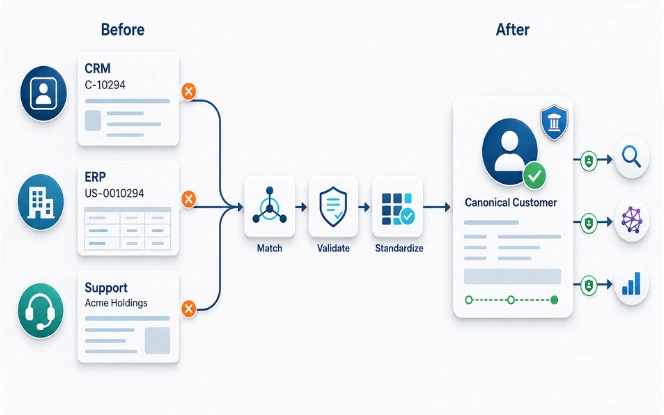
Legacy estates rarely fail because data is absent. They fail because the same customer, product, or transaction exists under conflicting identifiers, rules, and meanings across systems.
AI then learns from inconsistent records, retrieval returns contradictory context, and teams spend review cycles arguing over which definition is real.
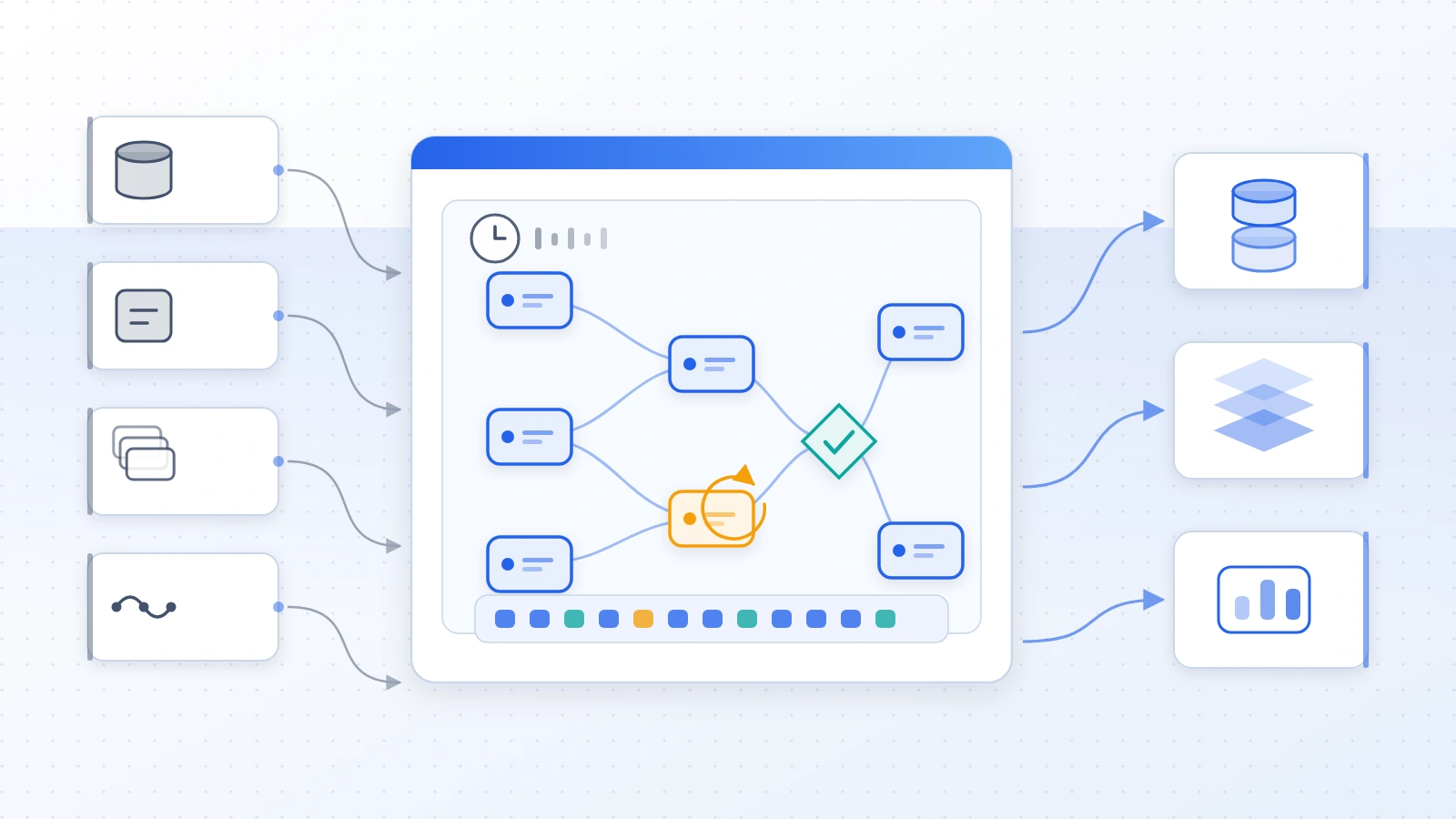
Modernization standardizes canonical entities, contracts, and transformation rules along the path from source to inference.
The practical gain is fewer schema mismatches, fewer semantic mismatches, and less training-serving skew when the same business concept appears in batch data, online features, and operational workflows.
- Before modernization
CRM holds the account as C-10294. The ERP holds it as US-0010294. The support platform holds it as Acme Holdings. Retrieval treats all three as separate customers and the assistant answers from whichever one it found first.
- After modernization
All three records resolve to one governed customer identity. Retrieval, features, and reporting describe the same account, and a contradiction becomes a data incident rather than a model mystery.
- Legacy constraint: fragmented business entities and incompatible source definitions.
- AI failure mode: contradictory context, duplicate signals, and brittle model behavior.
- Modernization capability: canonical entities, shared contracts, and governed transformation logic.
- Production outcome: more consistent features, cleaner retrieval, and faster approval of downstream use cases.
Canonical models reduce semantic mismatch and training-serving skew. They do not, by themselves, eliminate model drift.
If the open question is whether a specific use case has the source coverage it needs, how to assess data readiness for AI is the closer read.
If the constraint is target-state platform design, start with modern enterprise data architecture.
2. Data Quality and Feature Consistency
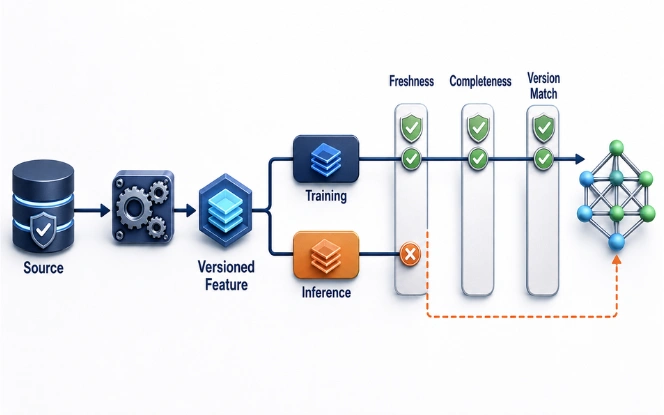
Production AI breaks when freshness, completeness, and transformation logic change faster than teams can detect.
Training data and live inference inputs drift apart, labels lose context, and downstream teams stop trusting the output even though the model itself has not changed.
Modernization closes that gap by making data and feature logic reproducible, versioned, and observable. Some estates use a feature store. Others use governed tables or service layers.
The requirement is not a single product pattern. The requirement is a pipeline that can explain what changed, when it changed, and which models were affected.
A worked example. A churn model is trained on a customer_status field refreshed nightly. A billing release moves that refresh to weekly. Nothing errors, no alert fires, and the model keeps scoring.
Six weeks later the retention team reports that flagged accounts had already cancelled. The model was correct on stale inputs. A freshness check on the serving path would have caught it on day two.
The baseline requirement is a versioned, reproducible data or feature pipeline, with freshness and completeness checked on the serving path rather than only at ingestion. A feature store is optional, not universal.
3. Governance, Lineage, and Auditability
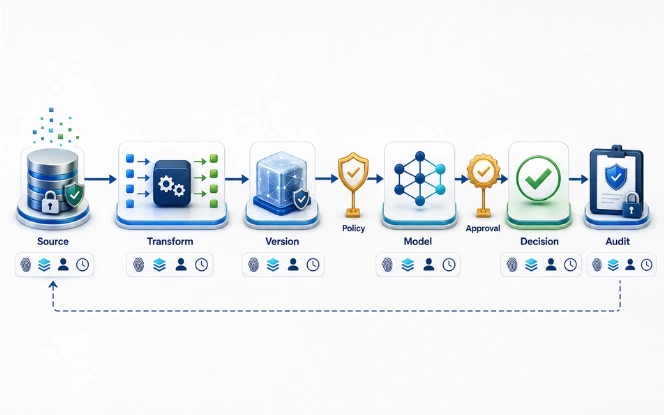
AI adoption slows when nobody can prove how a prediction or a generated answer was produced.
Without lineage, approvals turn into manual reconstruction, incidents take longer to investigate, and regulated use cases stall because teams cannot show the evidence chain from source data to business action.
Modernization creates a traceable path through metadata, lineage, versioning, and policy enforcement. That does not guarantee compliance on its own.
It gives governance, risk, and business owners the evidence they need to review changes, test controls, and investigate failures without rebuilding context from scratch.
- Legacy constraint: hidden transformations, manual approvals, and weak evidence capture.
- AI failure mode: slow review cycles, weak audit readiness, and unclear ownership.
- Modernization capability: lineage, versioning, policy checks, and machine-readable metadata.
- Production outcome: faster approvals, clearer accountability, and stronger incident analysis.
For an external baseline on traceability, lifecycle control, and continuous risk review, the NIST AI Risk Management Framework and its core functions are the usual reference point.
Organizations formalizing accountability across the AI lifecycle often map those functions onto the management system requirements in ISO/IEC 42001.
4. Security, Privacy, and Access Controls
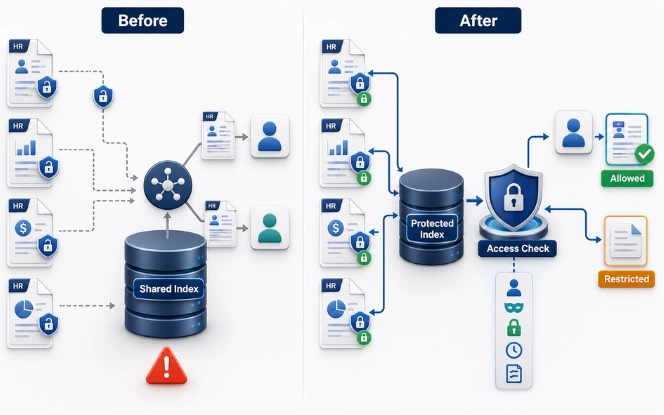
Many AI programs stall because data is technically available but operationally unsafe to use.
Overbroad access, weak segregation, or unclear retention rules force teams to choose between speed and control. That is not a model problem. It is a data operating problem.
Modernization makes identity, access, masking, and policy enforcement part of the platform rather than a manual exception process. Retrieval use cases are where this shows up first, because indexing quietly flattens permissions unless the design carries them through.
- Before modernization
An HR folder is crawled once into a shared vector index. Access was correct in the source system, but the index has no concept of it, so any employee who can query the assistant can surface severance letters.
- After modernization
Document and field permissions travel with the content into the index, and the caller's entitlements are evaluated at query time. The same assistant returns different results to different people, by design.
Privacy-preserving techniques such as differential privacy belong in the same conversation, but only where the design includes a formal privacy model, an explicit privacy budget, and an accepted utility trade-off.
For risk framing specific to LLM and retrieval systems, the OWASP Top 10 for LLM Applications covers the exposure patterns that access design is meant to prevent, while the NIST Privacy Framework covers the enterprise-level privacy risk management around them.
5. Self-Service Access and Data Platformization
AI teams lose momentum when every new dataset, schema change, or access request needs a ticket queue and manual coordination. Pilots then appear to work only because a few engineers are manually bridging the gaps behind the scenes.
Modernization turns trusted data access into a platform capability. Curated data products, shared contracts, reusable APIs, and governed self-service access reduce dependency bottlenecks without removing control.
The result is not chaos. It is faster iteration with clearer ownership and better auditability.
An implementation note that decides whether this works: a data product needs a named owner, a published contract, a stated freshness commitment, and a deprecation path.
Without those four, self-service produces a catalogue of orphaned datasets that teams trust less than the extracts they were replacing.
Self-service works when access is standardized, observable, and governed, not when it bypasses ownership. For the target capabilities behind these steps, see How to Build an AI-Ready Data Foundation.
6. Monitoring, Observability, and Operational Feedback
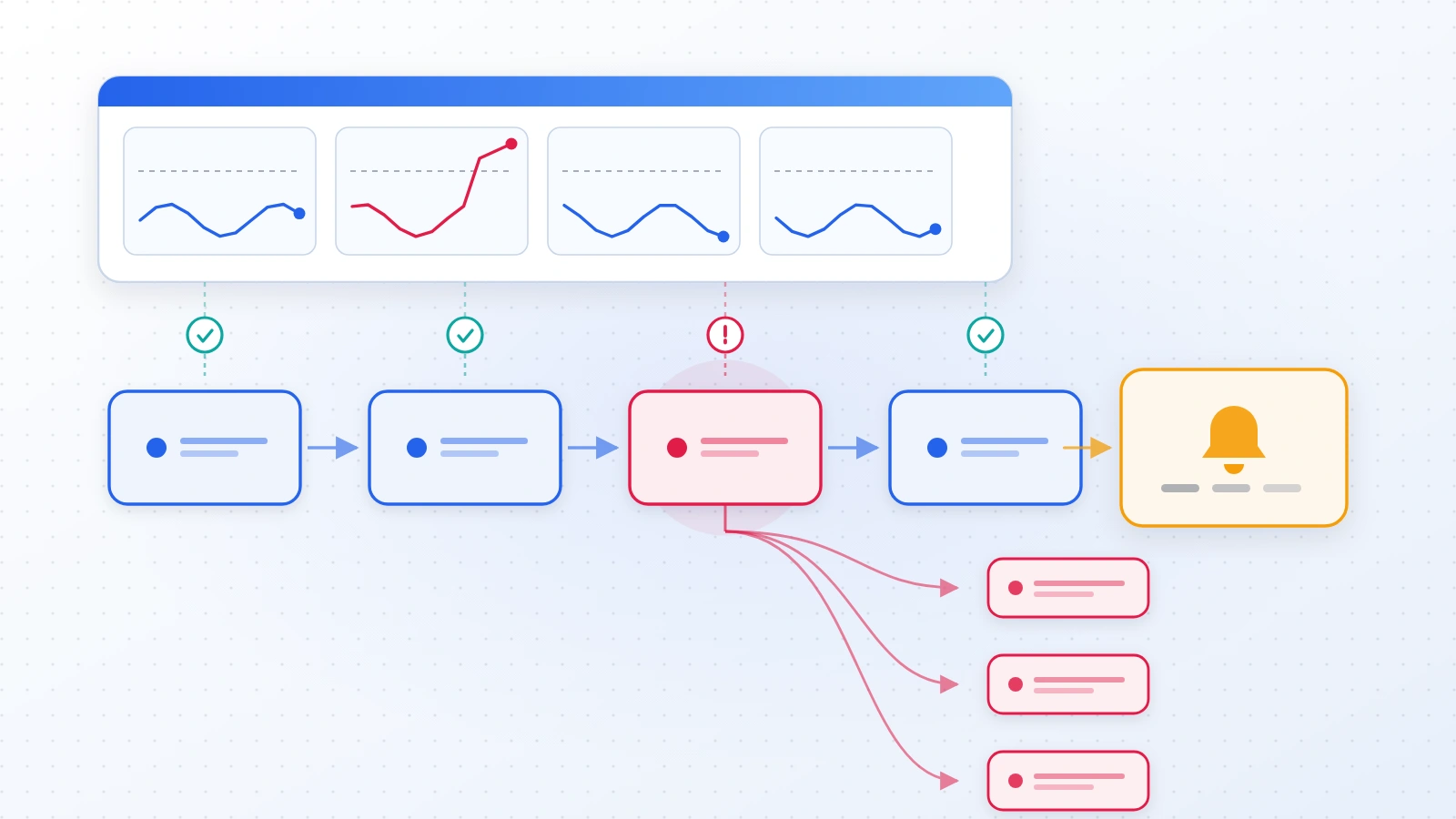
Even good platform changes do not stay good automatically. Freshness slips, upstream schemas move, permissions drift, and business processes change. Without a feedback loop, one data problem can break several AI use cases before anyone notices the pattern.
Modernization makes those signals visible across data, model, and business layers. Start with metrics, traces, and logs, then add AI-specific signals such as feature freshness, segment-level quality failures, retrieval misses, score instability, and business-outcome degradation.
Those signals tell teams where to retrain, where to fix data, and where to change workflow controls.
- Legacy constraint: weak observability across ingestion, transformation, and consumption.
- AI failure mode: recurring failures and slow remediation.
- Modernization capability: shared telemetry, threshold-based alerts, and replayable diagnostics.
- Production outcome: faster detection, clearer ownership, and lower incident impact.
Enterprise AI becomes reliable when platform teams can connect a data signal to its business consequence quickly.
Modernizing the data foundation and modernizing AI delivery are different layers of the same programme, and Data Modernization vs AI Modernization sets out where the line falls.
What Should Enterprises Modernize First for AI?
Capabilities explain what matters. Sequence decides what gets funded this quarter. The order below follows the dependencies rather than the org chart, so each step makes the next one cheaper.
- Define the AI use case and the data it actually needsIdentify the decisions, retrieval sources, features, documents, and business systems involved. A use case with named data dependencies can be scoped. One without them turns into a platform programme.
- Fix identity and semantic inconsistencyStandardize customers, products, suppliers, transactions, timestamps, and business definitions across the systems the use case touches. This is the step that stops contradictory context.
- Make pipelines reproducibleVersion transformations and enforce freshness, completeness, schema, and reconciliation checks, on the serving path as well as at ingestion.
- Establish access and lineageKnow who can access what, and preserve the evidence trail from source record to AI output. This is what unblocks approvals for sensitive use cases.
- Productize data accessExpose trusted datasets and services through governed, reusable interfaces with named owners, rather than one-off extracts that expire with the engineer who built them.
- Instrument production feedbackMonitor freshness, retrieval quality, schema changes, access failures, and business outcomes, and route each signal to a team that can act on it.
Steps one and two carry most of the value. An estate that resolves its business entities and knows what its AI use case depends on can defer platform decisions for a long time without stalling.
When those platform decisions do come due, the companion guide to cloud data modernization strategy covers workload scoring, target cloud architecture, and migration waves across the whole estate.
How to Measure Whether Your Data Foundation Is AI-Ready
Readiness is easier to argue about than to measure, which is why most programmes report platform milestones instead of data behaviour. The metrics below are observable in most estates without new tooling, and they change as modernization lands.
| Capability | Useful metric | Suggested target |
|---|---|---|
| Data quality | Failed quality checks by dataset | Zero unresolved failures on datasets that feed production AI |
| Freshness | Percentage of datasets meeting their freshness SLA | 95% to 99%, set per dataset tier, with the top of the range for production AI |
| Integration | Duplicate or conflicting business entities | Falling quarter on quarter against your own baseline |
| Governance | Lineage coverage for production AI | 100% of production AI use cases |
| Access | Average time to approve a data access request | Reducing against your own baseline |
| Reliability | Mean time to detect data failures | Reducing against your own baseline, with failures caught before users report them |
| Recovery | Mean time to restore affected datasets | Within the recovery objective agreed for each dataset |
| Retrieval | Rate of missing or inaccessible context | Trending down quarter on quarter |
| Operations | AI incidents caused by upstream data | Zero repeat incidents from the same root cause |
| Adoption | AI workflows running on governed data products | Rising each quarter, with every new production workflow on governed data |
Absolute targets apply where a metric works as a control, such as lineage coverage, unresolved quality failures and repeat incidents. Time and volume metrics depend on where your estate starts, so they are set against your own baseline.
The direction of travel over two or three quarters is the signal that matters, and a metric with no owner is a report rather than a control.
Common Data Modernization Mistakes That Slow AI
Most of these are reasonable decisions taken in the wrong order. They rarely fail visibly, which is what makes them expensive.
- Migrating before defining: lifting the estate to a new platform without settling business definitions moves the inconsistency instead of removing it, at higher cost and with a fresh migration to explain.
- Validating only at ingestion: checks at the front door miss the failures that matter for AI, which happen between training and serving. The serving path needs its own checks.
- Treating governance as a review gate: governance applied as an approval meeting slows delivery without producing evidence. Governance captured as metadata and lineage does the opposite.
- Flattening permissions during indexing: retrieval pipelines that drop source entitlements create an exposure that no amount of prompt engineering repairs later.
- Building a catalogue with no owners: self-service without named ownership, contracts, and deprecation paths produces datasets that teams trust less than the extracts they replaced.
- Modernizing everything at once: estate-wide transformation without a lead use case has no forcing function, so priorities follow whichever system is easiest to change rather than what AI depends on.
Final Takeaway
Enterprise AI reliability is not achieved by selecting a better model. It depends on whether the underlying data can be identified, reproduced, governed, accessed safely, observed, and corrected.
Every capability in this article maps to one of those verbs, and every failure mode traces back to one of them being absent.
The practical implication is about sequence. Modernize according to the failure modes of the AI use case in front of you, rather than attempting a platform-wide transformation with no priority order.
If the open decision is who should deliver this work, explore SDLC Corp's enterprise data and AI modernization services to assess the delivery approach, capabilities, and support required before moving forward.
If the data foundation is already in place and the next step is designing, integrating, deploying, and operating the AI application itself, AI development services covers that implementation layer.
Frequently Asked Questions
Not as a prerequisite programme, but as a prerequisite for the specific data a use case touches. Pilots often run fine on unmodernized data because one team manually bridges the gaps.
Production does not, because the same gaps become contradictory context, stale features, and stalled approvals. The practical answer is to modernize the data the use case depends on rather than the whole estate before starting.
Start with the business entities the use case reads and writes: customers, products, suppliers, transactions, and the timestamps and definitions attached to them.
Resolving identity and semantics removes contradictory context, which is the failure mode that affects retrieval, features, and reporting at the same time. Reproducible pipelines and access controls come next, because both are cheaper to build once the entities are settled.
Canonical data modeling aligns identifiers, timestamps, units, and business definitions across training and serving. That reduces semantic mismatch and training-serving skew, which makes model behavior more consistent.
It does not remove model drift caused by changing populations, behavior, or external conditions, so performance still needs ongoing monitoring and revalidation.
Critical controls include automated lineage capture, attribute-level access policies, documented approvals for data usage, and retention and deletion policies.
These controls create an auditable trail showing which datasets and transformations contributed to a decision, helping demonstrate compliance with regulations and internal risk requirements.
Measure it rather than assess it qualitatively. Useful indicators include the availability of versioned, reproducible data or feature pipelines, and lineage coverage for production AI.
Add SLA compliance for data freshness, average time to approve a data access request, and mean time to detect and remediate data issues.
Control metrics such as lineage coverage and unresolved quality failures warrant absolute targets, while time-based measures are best tracked against your own baseline.