An electronic gaming machine, also called an EGM, is a gaming device used in casinos, clubs, gaming lounges, pubs, and regulated gaming venues. It lets a player place a wager, interact with a game interface, and receive an outcome based on configured game logic, payout rules, and machine settings.
In simple terms, an EGM is the physical or terminal-based machine that runs electronic casino-style games. Slot machines are the most common example, but the term can also apply to video poker machines, video lottery terminals, electronic table game terminals, and other regulated gaming devices depending on the jurisdiction.
What Does EGM Mean?
EGM stands for Electronic Gaming Machine. The meaning can vary slightly by country, regulator, and venue type, but it generally refers to an electronic or electro-mechanical gaming device used for regulated wagering. In many markets, EGMs include slot machines, poker machines, video lottery terminals, and player terminals used in electronic table game setups.
Regulators often treat gaming machines and connected player terminals as controlled gaming equipment. For example, Singapore's Gambling Regulatory Authority notes that player terminals used in electronic table games are also gaming machines and must comply with technical standards for electronic gaming machines.
Is an EGM the Same as a Slot Machine?
A slot machine is one type of EGM, but not every EGM is only a slot machine. A traditional casino slot machine is usually an EGM because it uses electronic game logic, player input, payout rules, cabinet hardware, and accounting records. The broader EGM category can also include:
- Video slot machines
- Classic reel slot machines
- Video poker terminals
- Video lottery terminals
- Multi-game terminals
- Touchscreen casino terminals
- Electronic table game player terminals
- Distributed gaming terminals
So a slot machine is usually an EGM, but EGM is the broader technical and regulatory term.
For a broader explanation of slot game structure, you can also read our guide on how to create a slot machine game.
How Does an Electronic Gaming Machine Work?
An EGM works by combining player interaction, game software, payment or credit handling, outcome generation, display logic, and machine records. A simplified workflow looks like this:
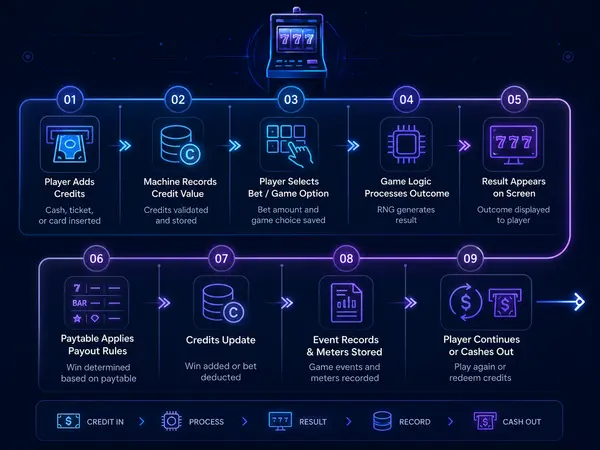
The player adds credits through cash, ticket, card, or another allowed method.
The machine records the credit value.
The player chooses a game, bet amount, denomination, or play option.
The game logic processes the spin, hand, draw, or round.
The outcome is displayed on the screen.
The machine applies the paytable and payout rules.
Credits are updated based on the result.
The system records events, meters, sessions, and configuration data.
The player can continue playing or cash out through an allowed method.
The visible game is only one part of the machine. Behind the screen, the EGM must also manage accounting, security, payout validation, audit records, configuration control, and communication with connected systems.
Main Components of an Electronic Gaming Machine
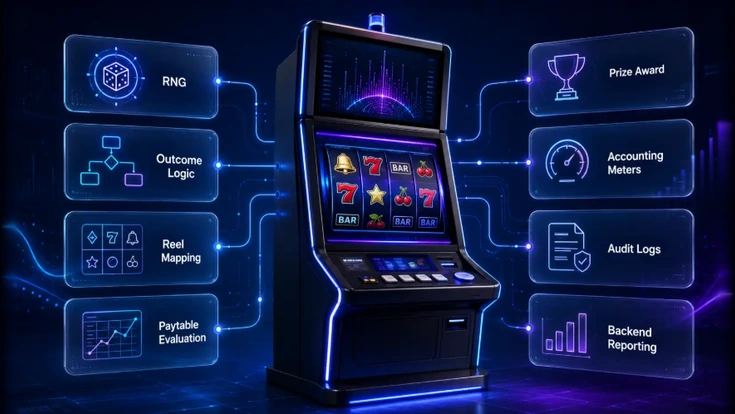
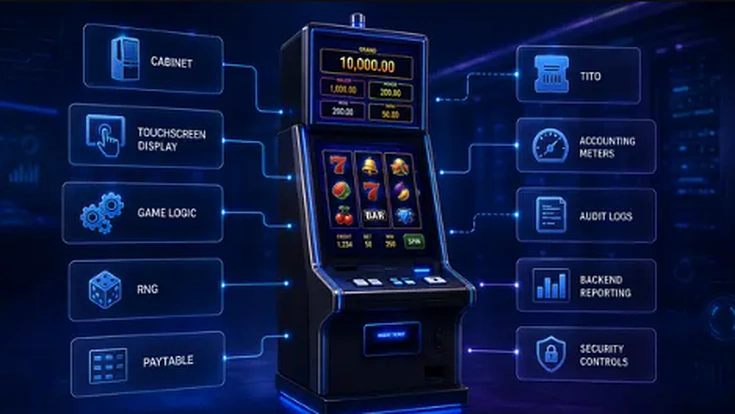
A complete EGM includes both hardware and software components. The EGM software layer controls game logic, payout behavior, records, reporting, and communication with connected systems. These parts work together to create a controlled, auditable, and venue-ready gaming experience.
Cabinet or Terminal Body
The physical structure housing the screen, controls, payment devices, printer, logic board, speakers, and lighting.
- Main and top displays
- Touchscreen and button panel
- Secure logic area
- Lockable access panels
- Power, cooling, and wiring
Game Display and Player Interface
Where the player sees and interacts with the game, usually a touchscreen or screen plus physical buttons.
- Reels or game board
- Bet and spin controls
- Paytable and help screens
- Credit and win display
- Responsible gaming messages
Game Logic
Controls how the game behaves: reel behavior, paylines, symbol values, bonus triggers, jackpot rules, and payout calculation.
- Reel structure and symbol mapping
- Paylines or ways-to-win
- Bonus features and free spins
- Wilds, scatters, multipliers
- Jackpot triggers
RNG or Outcome System
Random number generation or approved outcome logic that decides results, protected from external influence.
- Works with reel structure and paytable
- Aligned to volatility and RTP
- Integrity-focused selection
- Secure configuration
RTP, Volatility, and Paytable
The math model behind machine behavior: long-term return, win frequency and size, and payout structure.
- RTP: theoretical long-term return
- Volatility: frequency and size of wins
- Paytable: symbol and prize values
Payment, Credit, and Ticketing Devices
Hardware for accepting credits and returning value, including modern ticket-in ticket-out (TITO) flows.
- Bill validator and coin acceptor
- Card reader and ticket scanner
- Ticket printer
- Cashless and voucher systems
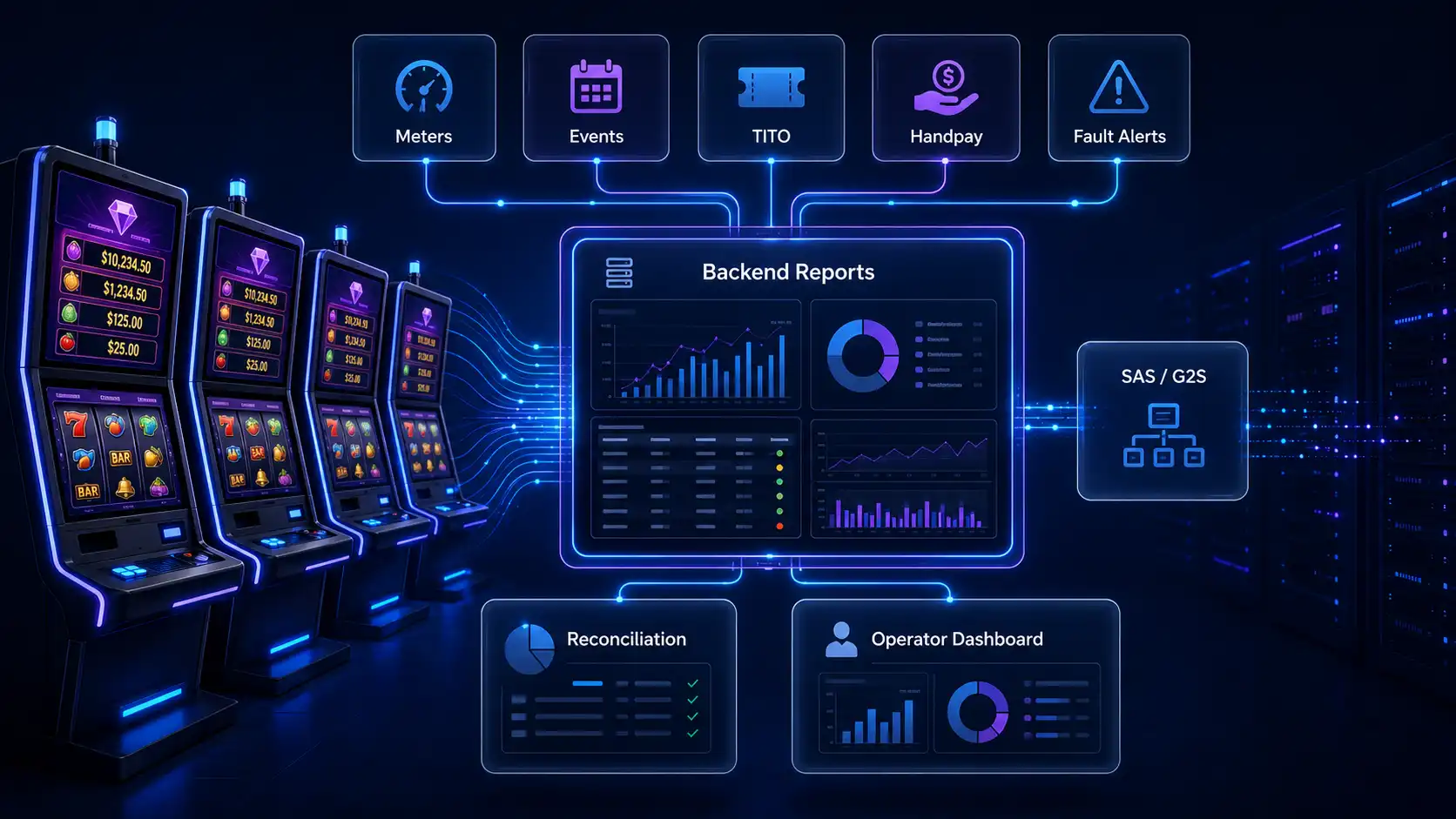
Accounting Meters and Event Records
Detailed records for operations, audit, and reporting that show exactly what happened on the machine.
- Credits in and out
- Games played, wins, losses
- Handpay and ticket events
- Door, tilt, and fault events
- Configuration changes
Backend Reporting and Casino System Connection
Links the machine to a casino management or monitoring system for reporting and oversight.
- Accounting and status reports
- Player tracking and ticket validation
- Jackpot monitoring and fault alerts
- Configuration records
Security and Access Controls
Protects game logic, configuration, payout records, and access to sensitive machine functions.
- Role-based access
- Encrypted communication
- Signed builds and hash checks
- Locked cabinet and protected logic areas
- Audit logs and tamper evidence
Common Types of Electronic Gaming Machines
EGMs can be grouped by game type, cabinet format, or operating model.
Classic Reel EGMs
Traditional slot layouts with three or five reels, fixed paylines, simple symbols, and straightforward payouts. Popular in venues that prefer familiar casino floor experiences.
Video Slot Machines
Digital screens with animated symbols, bonus rounds, free spins, and multipliers. Common in modern casinos for flexible themes and mechanics.
Progressive Jackpot EGMs
One or more machines connected to a jackpot pool that grows with wagers. Setups can be local, venue-wide, or networked across venues.
Multi-Game Terminals
Let players choose from multiple games on one machine, offering variety without separate cabinets for each title.
Video Lottery Terminals (VLTs)
Regulated terminals often connected to a central system, common in distributed gaming and lottery-linked environments.
Electronic Table Game Terminals
Player terminals for automated or semi-automated table games such as roulette, blackjack, or baccarat.
Common EGM Use Cases
Electronic gaming machines are used across different venue types and operating models.
Casino Gaming Floors
Slot machines, video poker, multi-game terminals, progressive jackpots, and electronic table game terminals, with focus on durability, reporting, and casino-system integration.
Clubs and Gaming Lounges
Regulated local gaming with simple operation, secure cash or ticket handling, reporting, and venue-level monitoring.
Distributed Gaming Venues
Terminals in bars, clubs, lounges, or approved retail locations, needing central monitoring and strict jurisdiction-specific controls.
Lottery-Linked Gaming
EGM-style terminals under lottery or government-controlled models using central systems and specific reporting rules.
Electronic Table Game Areas
Player terminals for placing bets electronically while the game may be automated or partially supported by live equipment.
EGM vs Online Slot Game
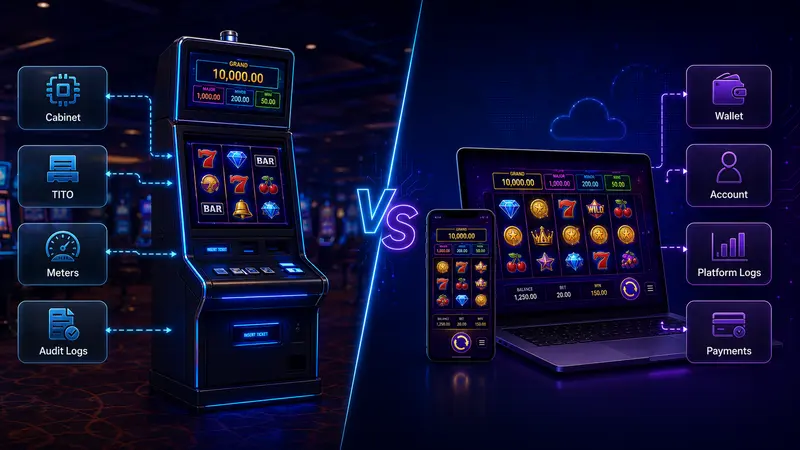
An EGM is not the same as an online slot game. An EGM is a physical or terminal-based gaming machine used in a regulated venue, usually including cabinet hardware, machine events, payment devices, ticketing, meters, cabinet security, and venue reporting. An online slot game is played through a web browser, mobile app, or online casino platform. The game theme may look similar, but the technical environment is different.
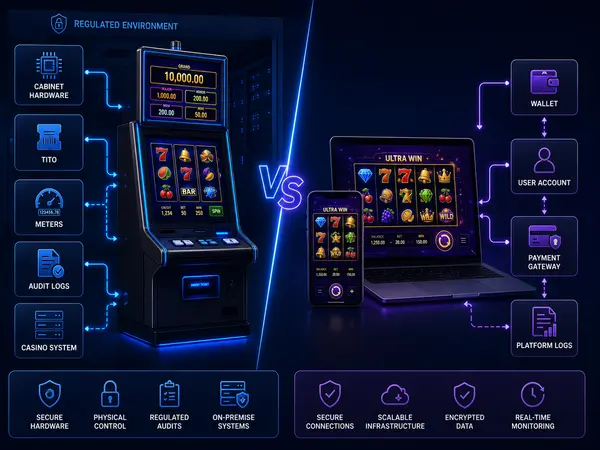
| Area | EGM | Online Slot Game |
|---|---|---|
| Format | Physical cabinet or terminal | Web or mobile |
| Venue | Casino, club, lounge, regulated floor | Online casino or mobile app |
| Hardware | Cabinet, screen, buttons, printer, validator | User device |
| Payment | Cash, ticket, card, TITO, venue systems | Wallet, payment gateway, account balance |
| Records | Machine meters, events, sessions, tickets | Platform logs, user logs, wallet records |
| Compliance | Machine, cabinet, venue, jurisdiction | Online gaming platform and jurisdiction |
| Integration | Casino systems, CMS, TITO, monitoring | Casino platform, wallet, KYC, payment systems |
Why EGM Components Matter
Every part of the machine affects operation, reporting, and review:
- The screen affects player interaction.
- The paytable affects payout behavior.
- The bill validator affects cash handling.
- The ticket printer affects TITO workflows.
- The logic board affects game control.
- The meters affect accounting.
- The audit logs affect review and investigation.
- The backend connection affects operator reporting.
- The cabinet design affects servicing and security.
A reliable EGM is not only about the visible game. It depends on the full machine environment, including hardware, software, records, security, and reporting.
Compliance and Jurisdiction Considerations
EGM requirements vary by jurisdiction. Operators, manufacturers, suppliers, and testing partners must review local rules before deployment. Gaming Laboratories International explains that each jurisdiction has the authority to set its own standards, although many use GLI standards as a starting point.
Common EGM compliance areas include:
- Game logic review
- RNG or outcome validation
- RTP and paytable review
- Cabinet security
- Payment device security
- TITO handling
- Accounting meters
- Audit logs
- Configuration controls
- Communication security
- Responsible gaming requirements
- Testing lab documentation
- Release and version control
What to Check Before Planning an EGM Setup
Before planning an EGM setup, define the machine, game, market, and operational model clearly. Useful questions include:
- Which jurisdiction is the machine intended for?
- Is the machine for a casino, club, lounge, or distributed venue?
- Will it be a slot machine, VLT, multi-game terminal, or electronic table game terminal?
- What cabinet hardware will be used?
- Will the machine need a bill validator, ticket printer, card reader, or TITO flow?
- Will the machine connect to a casino management system?
- What RTP, volatility, and paytable model is required?
- What reports and meters are needed?
- What audit logs and event records are required?
- Will an independent testing lab review the machine?
- What responsible gaming requirements apply?
- What security and release controls are needed?
Clear answers help avoid rework during design, development, testing, and certification preparation.
Frequently Asked Questions
An electronic gaming machine is a regulated gaming device that uses electronic or electro-mechanical systems to run casino-style games, process player input, apply game rules, display outcomes, and record machine activity.
EGM stands for electronic gaming machine.
Yes, most modern slot machines are EGMs. However, EGM is a broader term that can also include video poker machines, VLTs, multi-game terminals, and electronic table game terminals depending on the jurisdiction.
The main components include the cabinet, display, touchscreen or button panel, game logic, RNG or outcome system, paytable, payment devices, ticket printer, accounting meters, audit logs, security controls, and backend reporting connection.
TITO stands for ticket-in ticket-out. It allows a player to insert or collect value using a barcoded ticket instead of coins or direct cash payout.
RTP stands for return to player. It is the theoretical long-term return of the game based on its math model, paytable, and configuration.
A VLT, or video lottery terminal, is a type of regulated gaming terminal that is often connected to a central system. An EGM is the broader category that can include VLTs, slot machines, and other electronic gaming devices.
Yes. EGMs usually need technical review, jurisdiction-specific configuration, testing documentation, and approval from the relevant regulator or testing process before deployment.
No. EGMs can also be used in clubs, gaming lounges, pubs, lottery-linked environments, and distributed gaming venues where permitted by local regulation.
Final Thoughts
An electronic gaming machine is more than a casino game screen. It is a complete machine system that combines cabinet hardware, game software, payout rules, player controls, payment devices, ticketing, accounting records, security controls, and reporting.
For operators, suppliers, and product teams, understanding EGM meaning and components is important before planning a cabinet-ready gaming product. The machine must be designed around the target jurisdiction, cabinet hardware, player experience, payment flow, audit records, and technical review process from the beginning.