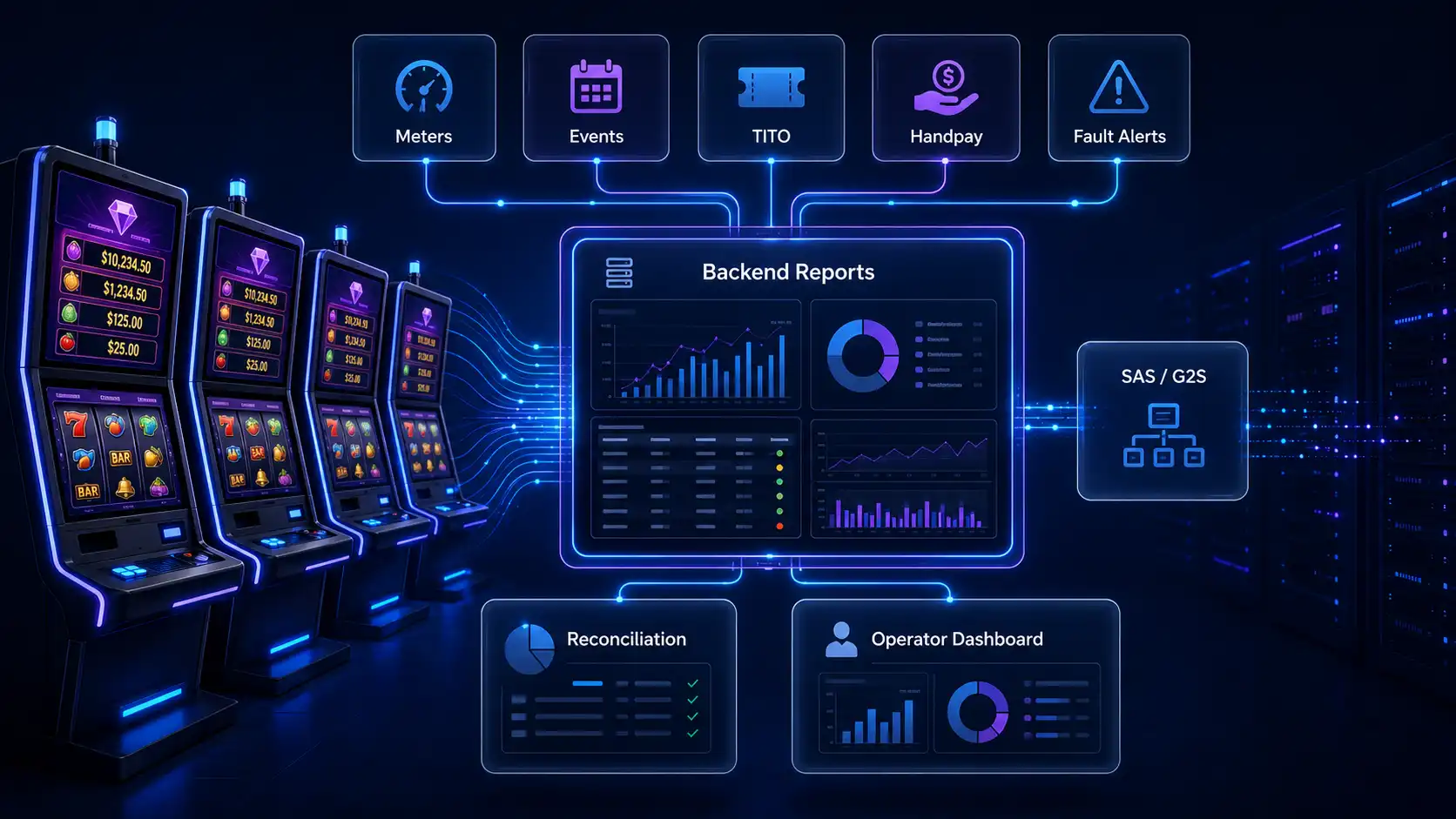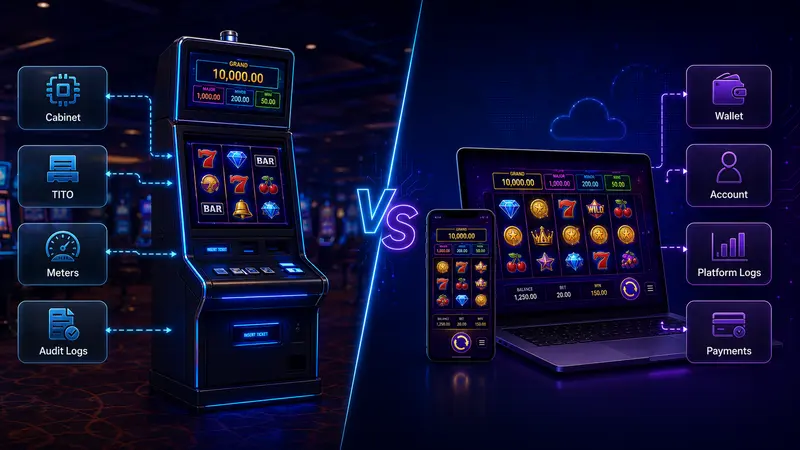
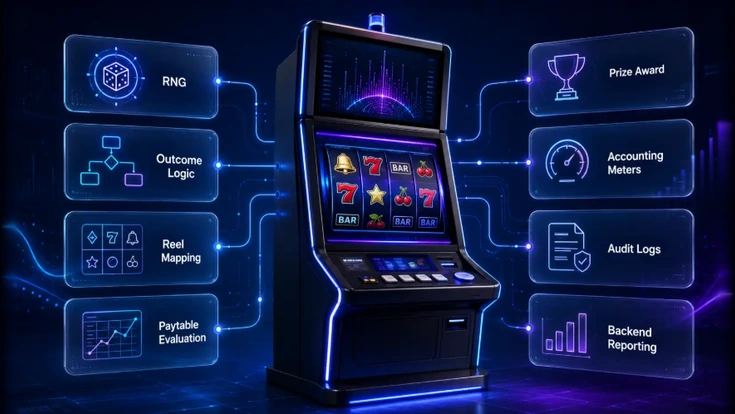
EGM RNG and game outcome testing check how slot machines and electronic gaming machines create and record results. The RNG selects an outcome. Then the game displays the symbols, the paytable checks the win, and the machine updates credits, meters, and audit records.
Quick Summary of EGM RNG and Game Outcome Testing
| Area | What It Means |
|---|---|
| EGM RNG | Random number generator used by the game to support outcome selection |
| Game outcome | The final result of a wagered play, such as symbols, win amount, bonus trigger, or losing result |
| Reel mapping | The process of connecting RNG values or outcome logic to reel positions, symbols, or result tables |
| Paytable evaluation | The process of checking the outcome against prize rules |
| Outcome testing | Review of RNG behavior, game result mapping, paytable logic, meters, and records |
| Operator value | Fairness review, issue investigation, game verification, reporting confidence |
What Is an RNG in an EGM?
An RNG, or random number generator, supports random result selection in a gaming machine. In an EGM, the RNG may use hardware, software, or both, depending on the machine design and local rules. For example, Nevada's technical standards define an RNG as a hardware, software, or combined device used for generating number values. The RNG does not create the visual spin.
Instead, it supports fair and unpredictable outcome selection according to the game's rules and math model. The visual reels, animations, sounds, and prize display form the player-facing layer. Below that layer, the RNG and game outcome logic control how results are selected and processed.
Why RNG Matters
Most importantly, the RNG supports game fairness and outcome integrity. Operators, labs, and technical reviewers may need to confirm that:
- Outcomes are not predictable
- The RNG is not using predictable or static behavior
- The game maps results correctly
- The displayed outcome matches the selected outcome
- The paytable evaluates the result correctly
- The correct prize is awarded
- Meters update correctly
- Event records support review
- Game behavior matches the approved math model
As a result, a strong RNG process improves confidence in the machine's game results.
RNG vs Game Outcome vs Reel Display
Although RNG, game outcome, and reel display are connected, they are not the same.
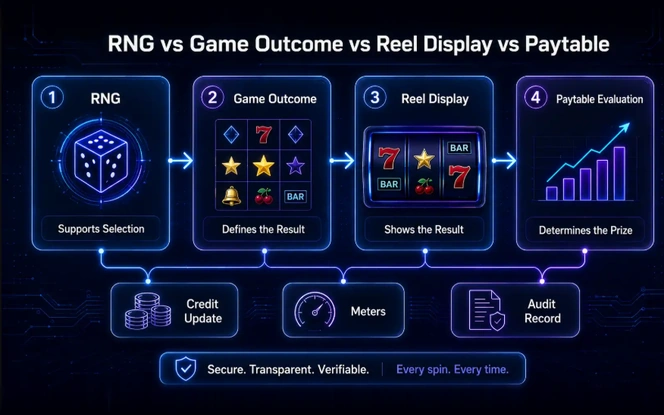
| Area | Meaning |
|---|---|
| RNG | Generates or supports random number selection |
| Game outcome | The actual result selected by the game logic |
| Reel display | The visual symbols or reels shown to the player |
| Paytable evaluation | Checks whether the displayed or mapped result pays |
| Meter update | Records the wager, win, payout, or credit change |
| Audit record | Captures important machine or event history where applicable |
How RNG Connects With Game Outcomes
The exact implementation varies by machine and game design. However, a simplified flow may look like this:
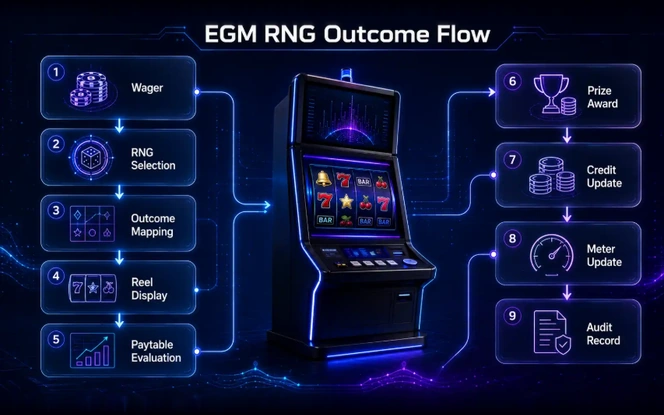
The player starts a game.
The machine accepts the wager.
The RNG or configured outcome logic supports result selection.
The game maps the selected value to reels, symbols, or outcome tables.
The display shows the result.
The paytable evaluates the result.
The machine awards credits if the result wins.
Credit meters and win meters update.
Audit logs or event records may update where needed.
Backend systems may receive reporting data.
This flow is the deeper technical layer behind how EGM slot machines work. The visual spin is not the source of fairness by itself. Instead, the outcome logic, math model, paytable evaluation, and records must work together.
RNG and Reel Mapping
Reel mapping connects the selected random value with the symbols or reel positions shown by the game. In a reel-based slot game, the game may use:
- Physical reel stops
- Virtual reel strips
- Weighted symbols
- Symbol tables
- Outcome tables
- Bonus trigger tables
- Jackpot trigger logic
- Feature-specific result tables
The RNG may select a number or a range of numbers. Next, the game maps that selection to a result according to its rules. For example, a selected value may map to:
- A losing result
- A small line win
- A scatter win
- A free spin trigger
- A bonus entry
- A jackpot trigger
- A specific reel stop
- A specific symbol arrangement
This mapping must match the game's approved math model.
RNG, Paytables, and PAR Sheets
The RNG does not decide prize values on its own. The paytable defines what a winning result pays. Meanwhile, the PAR sheet explains how the game is expected to perform over time. EGM paytables and PAR sheets help define:
- Prize values
- Winning combinations
- RTP
- Volatility
- Hit frequency
- Symbol weighting
- Reel strips
- Bonus probabilities
- Jackpot probabilities
- Feature contribution
In simple terms, the RNG supports outcome selection, while the paytable and math model explain what that outcome means.
This is why RNG testing, paytable testing, and PAR sheet review are connected.
RTP, Volatility, and RNG
RTP, volatility, and hit frequency all connect to outcome behavior. However, each one answers a different question.
RTP and RNG Are Not the Same
RTP and RNG are often confused with each other. RTP means return to player. It is a long-term theoretical value based on the game math. RNG refers to the randomization or random selection process used by the game. They are connected, but they are not the same.
| Area | RTP | RNG |
|---|---|---|
| Meaning | Theoretical long-term return | Randomization or random selection process |
| Purpose | Explains expected math performance | Supports unpredictable outcome selection |
| Reviewed through | PAR sheet, math model, simulations, testing | RNG tests, implementation review, statistical checks |
| Misunderstanding | RTP predicts a session result | RNG can be predicted by watching reels |
| Reality | RTP is long-term | RNG should support unpredictable outcomes |
A game can have a stated theoretical RTP, but the RNG and outcome mapping must still be tested to confirm the game behaves correctly.
Volatility and Hit Frequency
In addition, volatility and hit frequency connect to outcome testing. Volatility describes how wins are distributed. A high-volatility game may produce larger wins less often, while a low-volatility game may produce smaller wins more often. Hit frequency describes how often the game produces a winning result.
Outcome testing may check whether actual result behavior aligns with the expected math model. Even so, a short test run may not match the theoretical RTP exactly because short sessions can vary widely. Testing usually looks for whether the game behaves correctly across enough data, correct configuration, correct paytable evaluation, and correct record updates.
Why Game Outcome Testing Matters
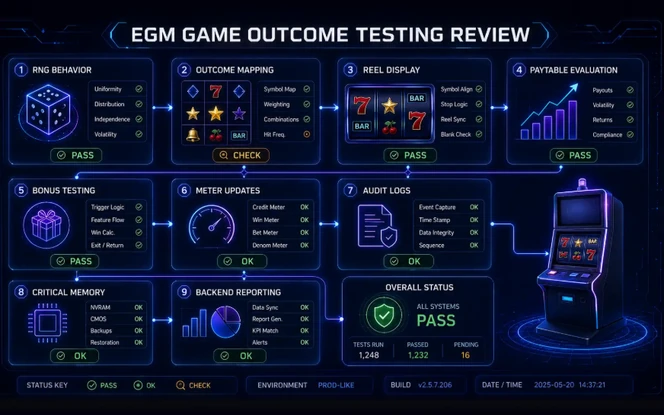
Game outcome testing matters because an EGM must do more than show a result. It must produce, evaluate, award, record, and report the result correctly. In addition, GLI-11 is commonly referenced for requirements covering RNG behavior, game rules, and machine records. Testing may help verify:
- RNG behavior
- Outcome mapping
- Reel or symbol display
- Paytable evaluation
- Bonus trigger behavior
- Jackpot trigger behavior
- Credit updates
- Meter updates
- Audit log records
- Backend reporting
- Recovery behavior after interruption
- Configuration consistency
If any one layer fails, the machine may create reporting issues, player disputes, or operational review problems. Therefore, each layer should be tested as part of the same outcome flow.
What Game Outcome Testing Usually Reviews
Game outcome testing can include several review areas. These areas extend from the RNG itself through to backend records.
RNG Behavior
RNG behavior review checks whether the RNG is implemented correctly and avoids predictable behavior. It may also review update cycles and the technical rules for the machine type and jurisdiction. For this reason, the review may include both technical inspection and statistical testing.
Outcome Mapping
Outcome mapping review checks whether RNG-supported values map correctly to symbols, reel stops, prizes, or feature results. This matters because the RNG can work correctly while the mapping layer is still wrong. For example, if a value maps to the wrong symbol pattern, the displayed result may not match the intended math model.
Reel and Symbol Display
Display review checks whether the machine shows the correct symbols, reels, or result screen after outcome selection. For a player, this is the visible part of the result. For operators, it must match the underlying game result. Testing may review whether:
- Reels stop in the correct positions
- Symbols match the selected outcome
- Animations do not misrepresent the result
- Bonus triggers display correctly
- Winning lines are highlighted correctly
- Prize messages match the paytable result
Paytable Evaluation
Paytable evaluation checks whether the machine awards the correct value for the selected result. This review may include:
- Line win evaluation
- Scatter win evaluation
- Wild substitution rules
- Multiplier rules
- Free spin triggers
- Bonus triggers
- Jackpot triggers
- Denomination-based prize values
- Bet-level prize values
- Max-bet eligibility rules
A paytable error can create wrong awards even when the RNG and display are correct.
Bonus and Feature Testing
Modern EGMs often include bonus rounds, free spins, multipliers, symbol upgrades, mystery awards, and progressive jackpots. Feature testing may review:
- Trigger probability
- Trigger display
- Feature entry
- Feature rules
- Retrigger behavior
- Multiplier behavior
- Bonus award calculation
- Jackpot contribution
- Jackpot eligibility
- Feature exit and return to base game
Because bonus features may carry a meaningful part of the game's RTP and player experience, they need careful testing.
Meter Update Testing
After an outcome is evaluated, the machine must update the correct records. Meter update testing may review:
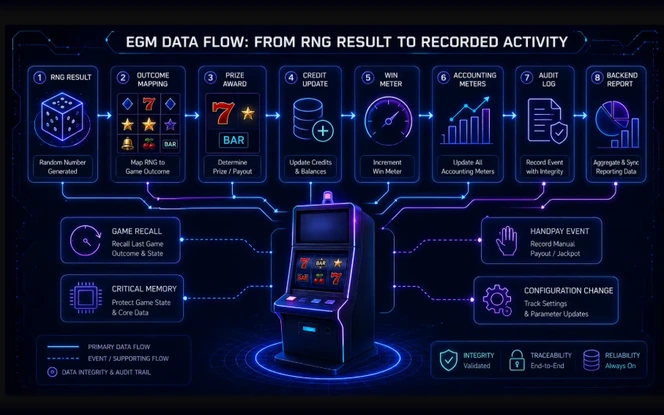
- Credits bet
- Credits won
- Credit meter
- Total wager meter
- Win meter
- Jackpot meter
- Handpay meter
- Ticket-out values
- Cancelled credit values
- Promotional credit values, where supported
EGM accounting meters help operators confirm what value moved during play.
Audit Log and Event Record Testing
Some outcome-related events may also connect with EGM audit logs and event records. Testing may review whether important events are recorded clearly, such as:
- Handpay conditions
- Jackpot events
- Power interruptions
- Recovery after restart
- Configuration changes
- Paytable changes
- Printer errors during payout
- Communication failures
- Machine faults during play
Audit logs help explain the sequence around a result or dispute.
Backend Reporting Testing
Modern EGMs may connect to casino management or monitoring systems. Backend reporting testing may review whether:
- Game activity is reported correctly
- Meter data is transmitted correctly
- Event records reach the backend
- Faults are visible to operators
- Ticket events match the ticket system
- Handpay records match machine records
- Communication failures are handled properly
- Delayed records are reconciled correctly
Ultimately, the machine record and backend record should tell the same story.
RNG Testing and Critical Memory
Critical memory matters because an EGM must preserve important state information through faults, power interruptions, and restarts. Testing may check whether the machine preserves:
- Current credits
- Meter values
- Game state
- Outcome state
- Event history
- Configuration data
- Pending payout state
- Recovery records
If the machine loses power during or after a game outcome, recovery behavior must remain clear and reviewable. The logic board, critical memory, and cabinet controls are part of the broader EGM cabinet components layer.
Common RNG Misunderstandings
The Reels Do Not "Decide" the Result by Themselves
In many digital EGMs, the visible reels are a display of the selected result. The outcome logic and mapping layer are what matter for result selection and evaluation.
RNG Does Not Mean Every Short Session Looks Balanced
Randomness can produce streaks, long gaps, and uneven short-term results. RTP is a long-term theoretical value, not a short-session guarantee.
A Good RNG Alone Is Not Enough
The RNG may work correctly, but the game can still have issues in outcome mapping, paytable evaluation, meter updates, or reporting.
Testing Does Not Predict the Next Spin
RNG and outcome testing do not identify future results. Testing reviews whether the machine behaves correctly and unpredictably within the approved design.
Visual Animation Is Not the Same as Outcome Logic
Animations help present the game to the player, but they should not misrepresent the selected result, prize award, or bonus trigger.
Operator Checklist for RNG and Outcome Review
Before approval or deployment, operators and product teams should review the following areas:
- RNG implementation
- RNG seeding behavior
- Outcome mapping
- Reel mapping
- Symbol distribution
- Paytable evaluation
- PAR sheet alignment
- RTP configuration
- Volatility model
- Hit frequency expectations
- Bonus trigger behavior
- Jackpot trigger behavior
- Denomination settings
- Bet-level settings
- Credit meter updates
- Wager meter updates
- Win meter updates
- Handpay meter updates
- Audit log records
- Game recall behavior
- Critical memory recovery
- Backend reporting consistency
- Configuration change records
- Jurisdiction-specific requirements
Overall, this checklist helps operators review RNG and outcome testing as part of the full EGM operating model.
Need Help Testing Your EGM RNG and Game Outcomes?
Improve RNG validation, outcome mapping, paytable checks, meter updates, and backend reporting with a structured testing approach.
Talk to Our EGM Testing ExpertsFAQs About EGM RNG and Game Outcome Testing
RNG means Random Number Generator. It is the software that selects each slot machine result.
The RNG continuously creates random numbers. When you press spin, one number is selected and matched to a game result.
Yes. On licensed slot machines, each spin is independent and is not affected by previous wins or losses.
Game outcome testing checks whether the machine selects, displays, evaluates, awards, records, and reports each result correctly.
No. RNG selects random outcomes, while RTP is the game's long-term theoretical return to players.
In many digital slot machines, the reels only display the selected result. The RNG and game logic determine the outcome.
Reel mapping connects RNG values to reel positions, symbols, or result tables used by the game.
Paytable evaluation checks whether a result wins and how much it should pay. An error can cause an incorrect award.
No. RNG testing cannot predict future results. It checks whether the machine works correctly and produces unpredictable outcomes.
Final Thoughts
EGM RNG and game outcome testing sit at the center of machine integrity. The RNG supports random outcome selection. The game logic maps the result. The paytable evaluates the prize. The machine updates credits and meters. Audit logs and backend reports help preserve the review trail.
For operators and technical teams, RNG testing should not be reviewed in isolation. It should be connected with paytables, PAR sheets, reel mapping, credit updates, accounting meters, audit logs, critical memory, and backend reporting. That full-chain view helps the EGM operate as a clear, fair, reviewable, and controlled gaming machine.