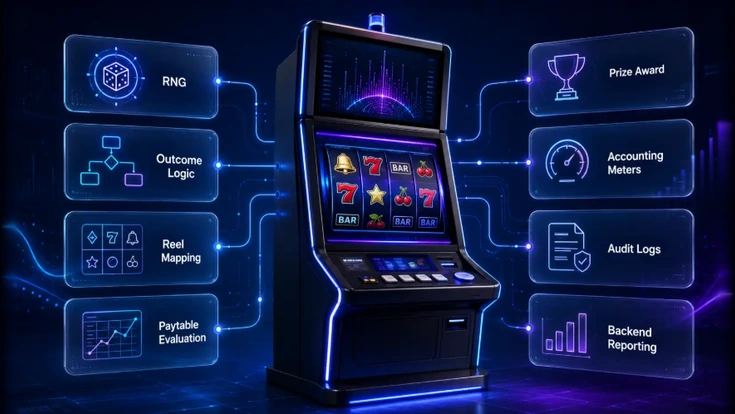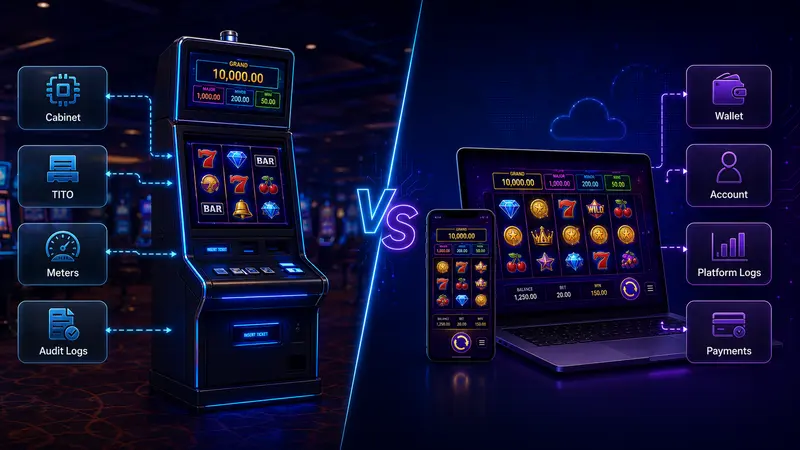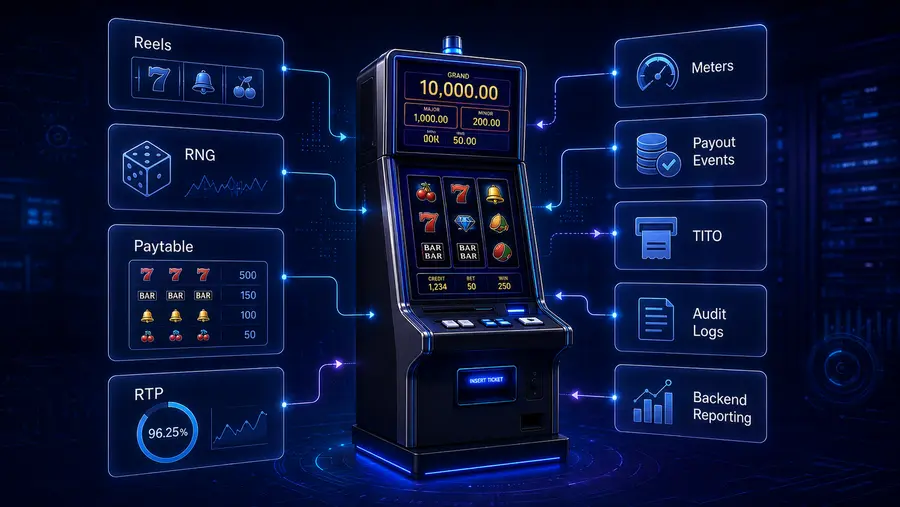
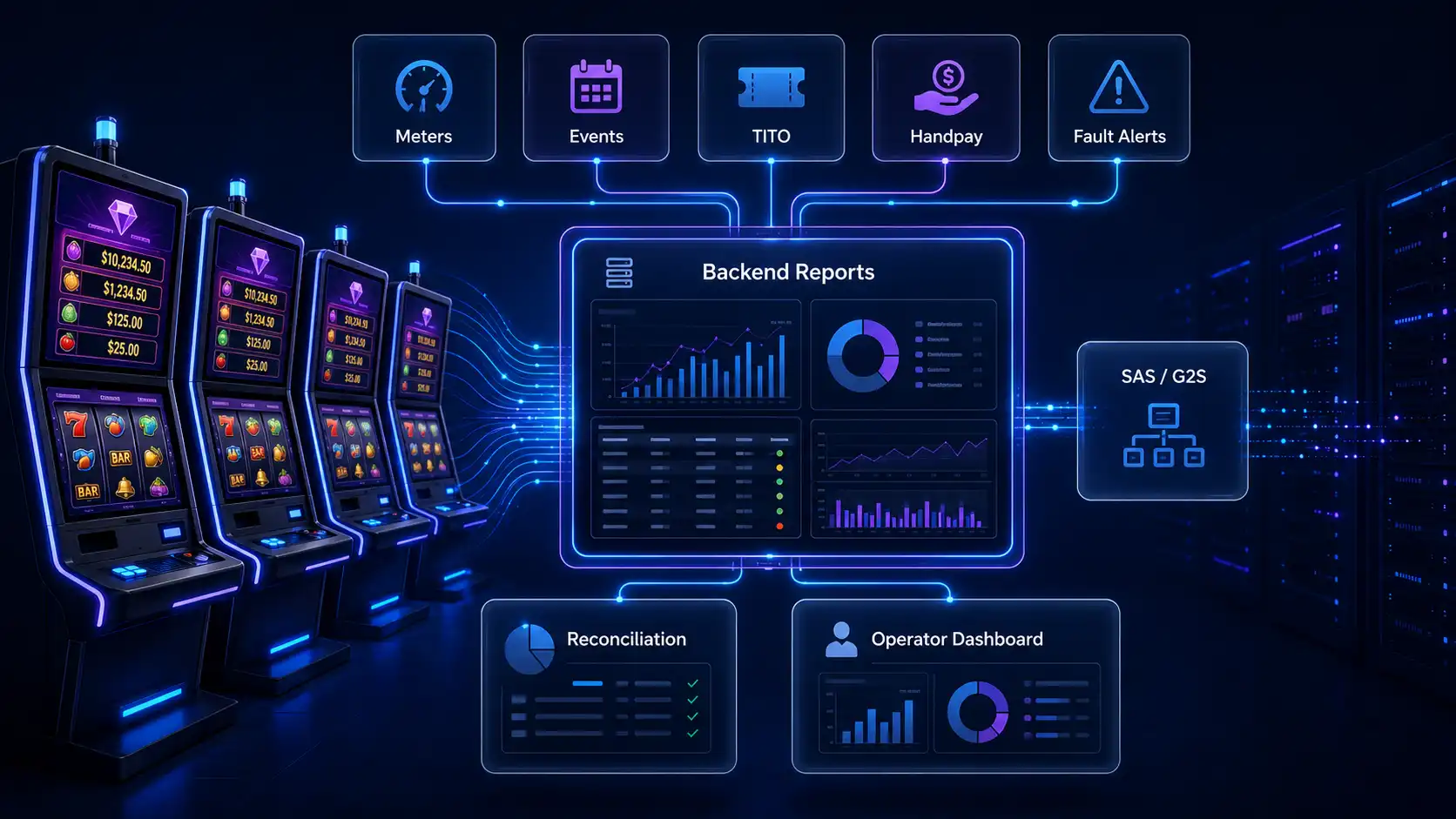
EGM monitoring and backend reporting systems help operators track what is happening across slot machines, terminals, and connected casino systems.
An electronic gaming machine can record wagers, wins, ticket activity, faults, door events, handpays, meter changes, and communication status. A backend reporting layer helps operators view that information outside the cabinet.
A slot machine monitoring system gives operators a clearer way to review machine status, meter changes, ticket activity, faults, and backend reporting records from one operating view.
This article explains how EGM monitoring systems and backend reporting systems connect machine data, accounting meters, events, TITO records, SAS/G2S messages, alerts, and reconciliation workflows.
Quick Summary of EGM Monitoring and Backend Reporting
| Area | What It Means |
|---|---|
| EGM monitoring system | A system that tracks machine status, events, faults, meters, and operational signals |
| Backend reporting | Dashboards and reports that summarize machine activity for operators |
| Core data | Meters, events, tickets, handpays, faults, machine status, and protocol messages |
| Communication layer | Protocol or host-system path between EGMs and backend systems |
| Operator value | Reconciliation, fault review, ticket review, machine alerts, and audit support |
What Is an EGM Monitoring System?
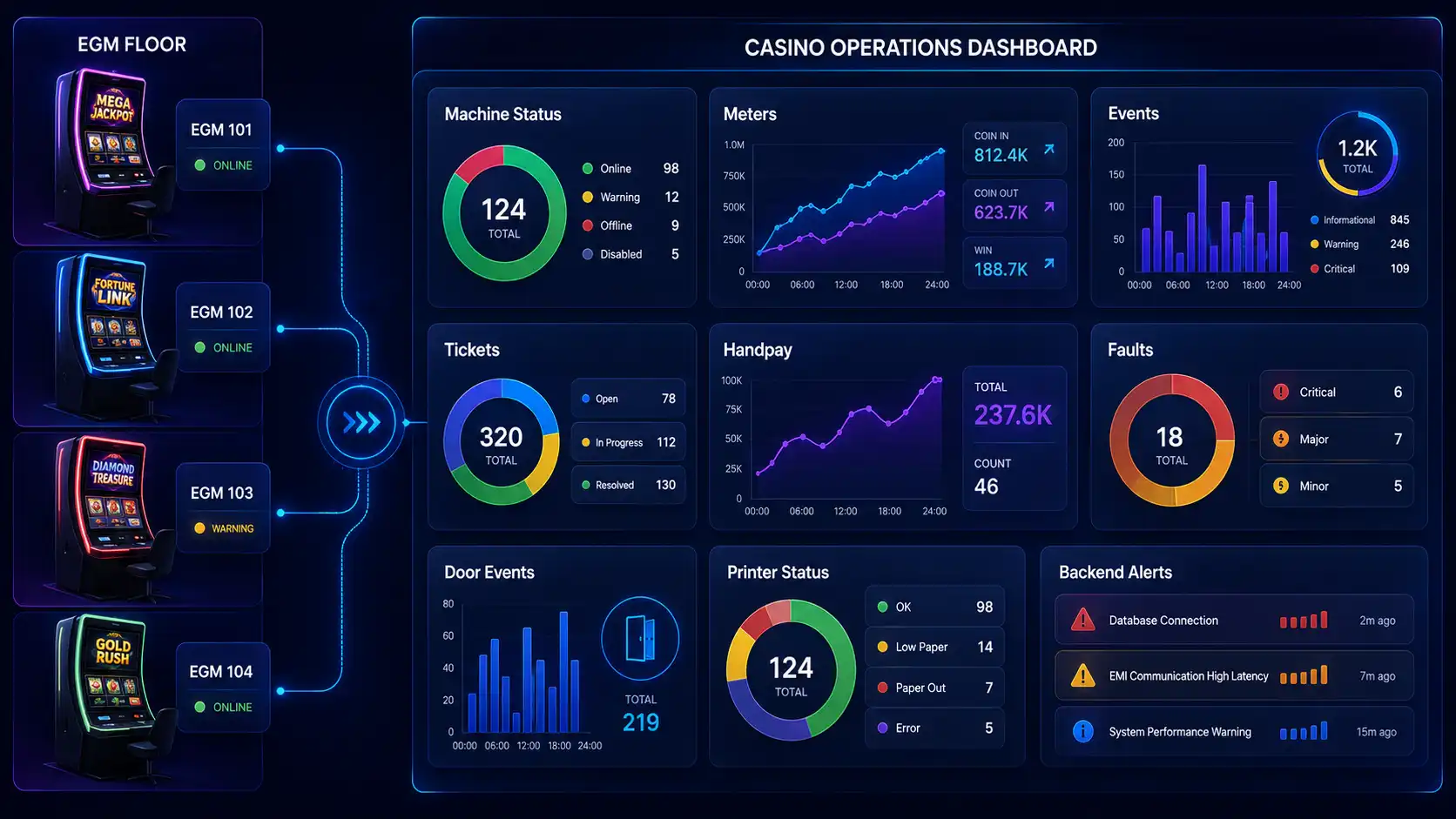
An EGM monitoring system is a system used to observe machine activity and machine health across a gaming floor or connected machine network.
It may help operators review:
- Machine online or offline status
- Meter activity
- Ticket-in and ticket-out activity
- Handpay or jackpot events
- Printer status
- Bill validator status
- Door events
- Cabinet faults
- Communication failures
- Machine alerts
- Backend report status
- Reconciliation exceptions
GLI's standards library lists GLI-13 as the standard for Monitoring and Control Systems and Validation Systems, which makes it a useful reference point when discussing machine monitoring and validation system requirements.
What Is EGM Backend Reporting?
EGM backend reporting is the reporting layer that helps operators view, compare, and analyze machine records. It may include dashboards, exports, exception reports, daily summaries, machine-level reports, floor-level summaries, and reconciliation views.
An EGM reporting system usually organizes machine data into reports, dashboards, alerts, and reconciliation views for operator review.
Backend reporting usually depends on machine data received through a host system, monitoring system, protocol layer, or casino management system.
Why Casinos Need Machine Monitoring
Casinos need machine monitoring because machine activity happens across many devices at the same time. Operators need a clear view of machine status, money movement, ticket movement, faults, and reportable events.
Monitoring helps teams identify issues faster, compare records more clearly, and avoid relying only on manual checks at the cabinet level.
How EGMs Send Data to Backend Systems
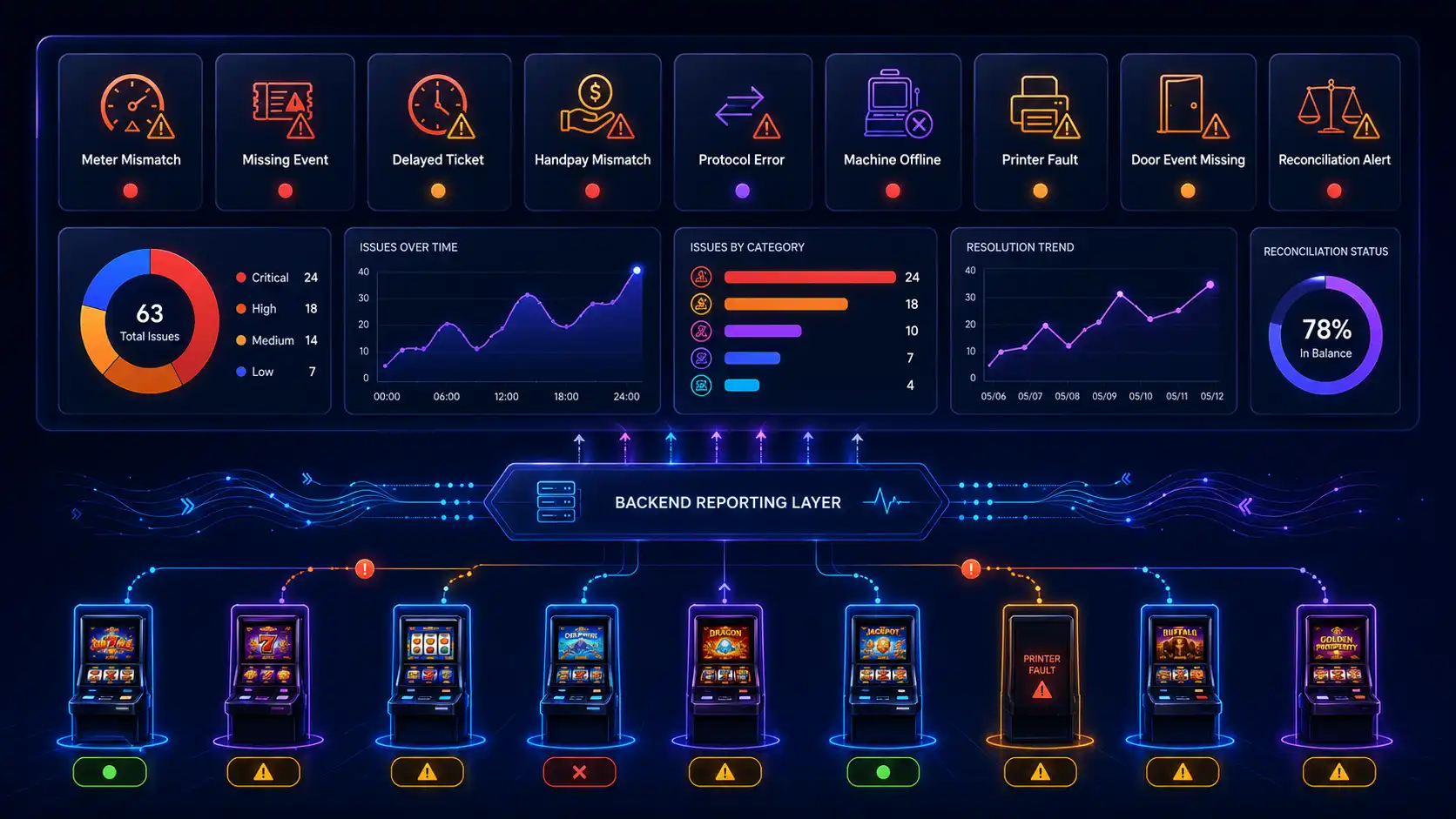
A slot machine backend system should not be treated as a separate island. It depends on clean machine data, protocol communication, host records, and reporting rules.
The exact architecture can vary by operator, jurisdiction, machine type, host system, and protocol support. A simplified flow may look like this:
The EGM records machine activity locally.
The protocol or communication layer exposes supported data.
A host or monitoring system receives machine records.
The backend stores meter, event, ticket, fault, and status data.
Dashboards and reports present the data to operators.
Exceptions trigger alerts, reviews, or reconciliation workflows.
SAS and G2S protocols help explain how slot machines can communicate machine records, meter values, events, tickets, and status information to connected systems.
Machine Data vs Backend Data
The machine is the source of many local records. The backend system is the review and reporting layer. Operators should not assume both are always identical without reconciliation.
| Area | Machine Record | Backend Record |
|---|---|---|
| Location | Stored or generated inside the EGM | Stored in host, monitoring, or reporting systems |
| Purpose | Machine operation and local history | Operator review, reports, alerts, and reconciliation |
| Risk | May not be visible remotely | May be delayed, missing, or mapped incorrectly |
| Best review | Local logs, meters, game recall | Dashboards, exports, exception reports |
Meter Reporting and Reconciliation
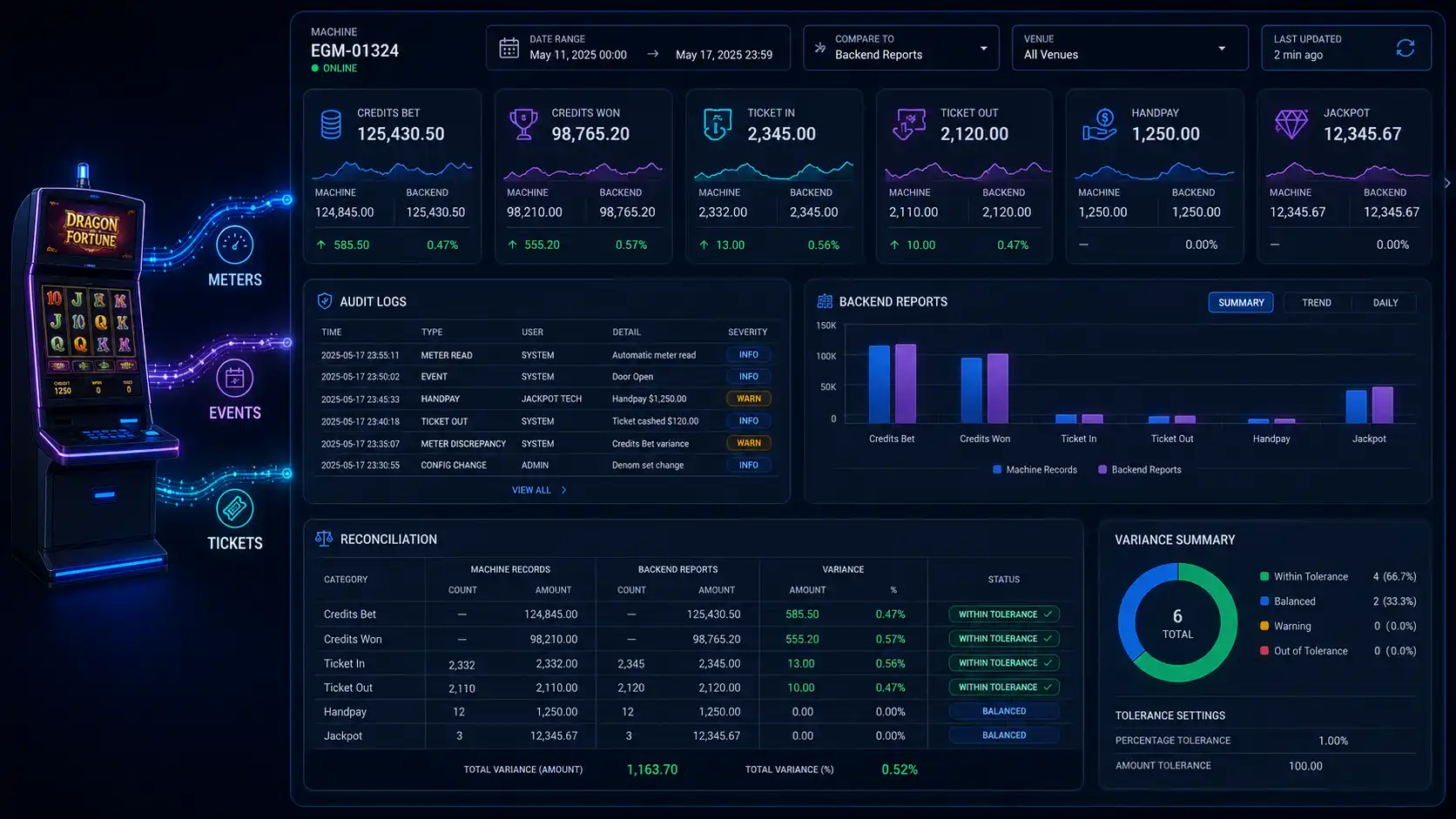
Meter reporting is one of the most important parts of EGM backend reporting.
EGM accounting meters help operators understand values such as wagers, wins, credits, ticket-in, ticket-out, handpays, jackpots, cancelled credits, and other value-related records.
Backend reporting may compare:
- Machine meter values
- Host meter values
- Ticket system records
- Cashier records
- Handpay records
- Jackpot records
- Shift reports
- Day-end reports
- Exception reports
- Reconciliation summaries
When these records do not match, operators need to investigate the timing, source system, machine log, protocol message, and backend mapping.
TITO, Ticket Records, and Voucher Reporting
TITO in slot machines depends on clear ticket-in and ticket-out records. A backend reporting system may need to show when a ticket was inserted, validated, accepted, rejected, printed, redeemed, or cancelled.
Ticket reporting usually connects the machine, ticket validation layer, cashier records, meter records, and backend reports.
Handpay, Jackpot, and Payout Reporting
Handpay and jackpot reporting helps operators review higher-value events and staff-supported payouts. Useful reporting fields may include machine ID, time, amount, trigger event, meter impact, attendant action, payout status, and related machine records.
If the handpay event and backend payout record do not align, operators may need to compare local machine records, backend event records, meter updates, and cashier or payout records.
Event Monitoring and Machine Alerts
Event monitoring helps operators see important machine activity that may require review or action.
EGM audit logs and event records explain the local machine history. Backend monitoring helps operators see some of those events at the system level, depending on the machine and supported reporting setup.
Common monitored events may include:
- Main door open
- Logic door open
- Power reset
- Printer fault
- Bill validator fault
- Ticket event
- Handpay event
- Jackpot event
- Communication failure
- Machine offline
- Configuration change
- Recovery event
Event monitoring is useful because operators can respond to machine problems without waiting for a player report or a manual inspection.
Faults, Door Events, and Cabinet Monitoring
EGM cabinet components such as door sensors, ticket printers, bill validators, logic areas, cash boxes, and network modules can create events that matter for monitoring.
For example, a printer fault may affect cashout. A door event may require review. A validator fault may affect ticket or bill intake. A network issue may affect host communication.
SAS/G2S Protocol Data in Reporting Systems
Machine-to-host protocols help determine what information can move from the EGM to the backend system.
Protocol data may include:
- Meter values
- Machine status
- Ticket events
- Door events
- Handpay events
- Fault events
- Player tracking activity
- Configuration data, where supported
- Communication status
- Reportable exceptions
GLI-13 covers Monitoring and Control Systems and Validation Systems, making it directly relevant when discussing backend monitoring, validation, reporting, and system records.
Outcome Results and Reporting Records
EGM RNG and game outcome testing explains how game outcomes lead to credit updates, win records, meter updates, and reviewable machine activity.
The backend system does not choose the outcome. It receives and reports records that happen after machine activity is evaluated and recorded.
Compliance and Auditability
Backend records can support review, but requirements vary by jurisdiction. Singapore's Gambling Regulatory Authority states that EGMs deployed in Singapore must be secure, reliable, and auditable. This is why clear machine records and backend reports matter.
EGM compliance testing should be reviewed with machine records, meter data, event records, ticket records, protocols, and backend reporting in mind.
Jurisdiction Examples for EGM Reporting Review
Singapore is only one example. EGM reporting, monitoring, testing, and record review rules vary by market. Operators should check the rules that apply in the exact jurisdiction where the machine is deployed.
| Jurisdiction Example | What It Shows for Operators |
|---|---|
| Nevada, USA | Nevada technical standards cover gaming devices and associated equipment, so operators should review machine rules, RNG behavior, meters, records, and connected equipment under state-specific requirements. |
| New Jersey, USA | New Jersey gaming equipment regulations show that U.S. casino requirements can be handled at the state level, with rules for approved equipment, gaming devices, and related controls. |
| Great Britain | The Gambling Commission gaming machine technical standards include requirements around game features, display notices, general machine operation, and metering. |
| New South Wales, Australia | NSW technical standards reference the Gaming Machine National Standard as guidance for gaming machines, game programs, and related equipment. |
The practical point is simple: backend reporting should be designed and reviewed around the jurisdiction, not only around the machine model or host system.
Dashboards Operators Usually Need
A useful EGM monitoring dashboard should not overload the operator with raw data only. It should organize the information into clear operational views.
| Dashboard View | What It Helps Review |
|---|---|
| Machine status | Online, offline, idle, active, fault, lockup, or communication state |
| Meter dashboard | Credits bet, credits won, ticket-in, ticket-out, handpays, jackpots |
| Ticket dashboard | Ticket validation, ticket printing, ticket redemption, ticket exceptions |
| Fault dashboard | Printer faults, validator faults, door events, offline machines, communication failures |
| Reconciliation dashboard | Machine records, host records, cashier records, ticket records, and exceptions |
The best dashboard is not the one with the most charts. It is the one that helps the operator find the next issue to review.
Common Backend Reporting Issues
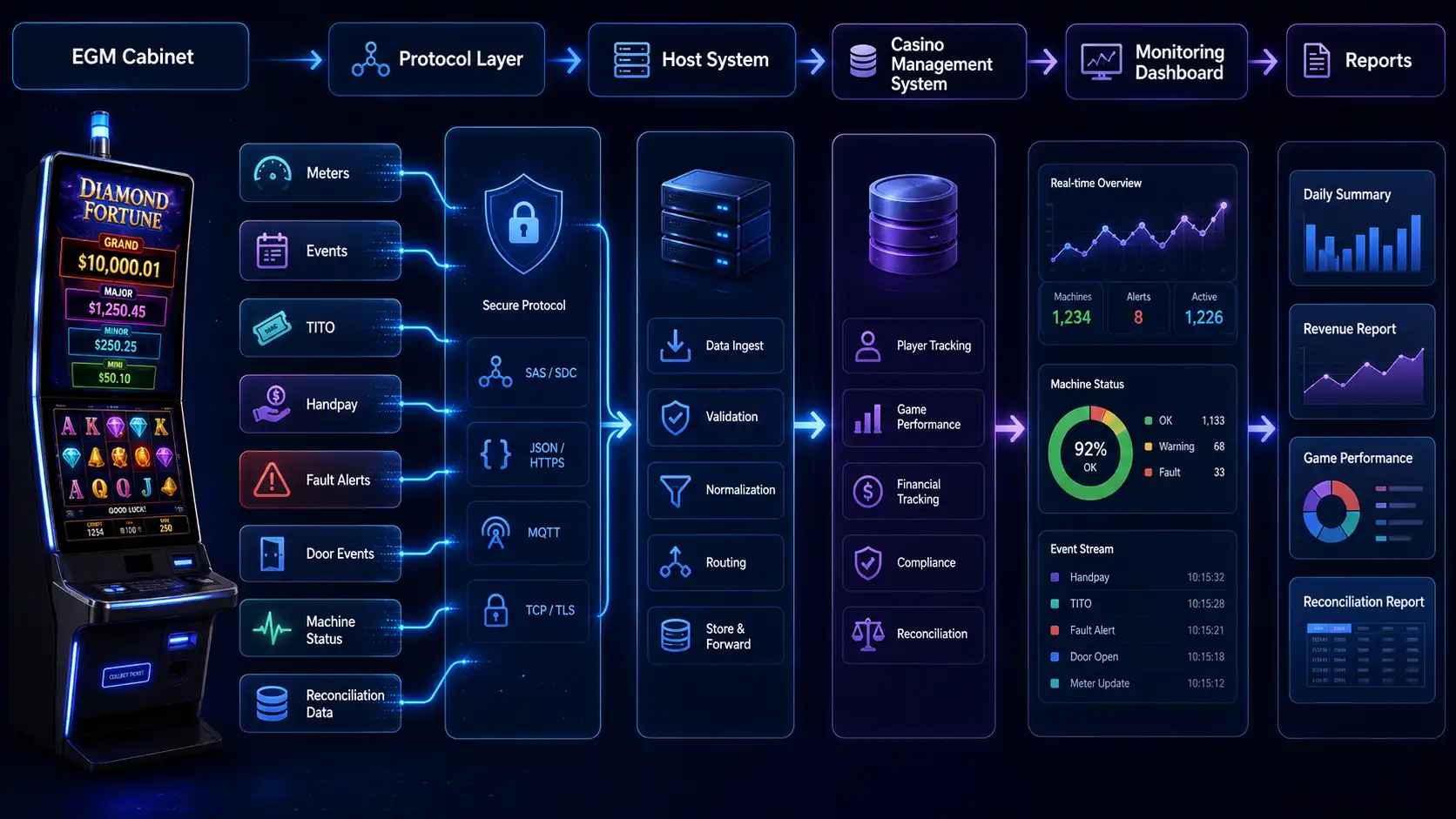
Backend reporting issues can happen even when the EGM itself is operating correctly. The problem may be in communication, mapping, timing, or report configuration.
Meter Mismatch
Machine meters and backend reports may not match because of timing, mapping, communication delays, or reconciliation windows.
Missing Event
An event may exist locally but not appear in the backend because of a protocol, host, or reporting issue.
Ticket Delay
Ticket records may appear late when validation, host communication, or reporting updates are delayed.
Protocol Error
A version, mapping, or communication issue can affect the records sent from the machine to the host.
Machine Offline
An offline machine may continue local activity but fail to send expected backend updates until communication is restored.
Device Fault
Printer, validator, or cabinet faults may be missed if alerts are not configured or received properly.
Operator Checklist for EGM Reporting Review
Operators and product teams should review:
- Machine status reporting
- Meter reporting coverage
- Ticket-in reporting
- Ticket-out reporting
- Handpay reporting
- Jackpot reporting
- Door event reporting
- Printer fault alerts
- Bill validator alerts
- Machine offline alerts
- Protocol status
- Backend report timing
- Meter mapping
- Event mapping
- Ticket validation records
- Cashier record comparison
- Exception reports
- Reconciliation workflow
- User access controls
- Export and audit review
- Report retention
- Delayed message handling
- Duplicate record handling
- Jurisdiction-specific requirements
This checklist helps operators review backend reporting as part of the full EGM operating model.
FAQs About EGM Monitoring and Backend Reporting
What is an EGM monitoring system?
What is EGM backend reporting?
How do EGMs send data to backend systems?
What data is usually tracked in EGM monitoring?
How do monitoring systems support reconciliation?
Do backend systems decide game outcomes?
How do TITO records connect with backend reporting?
Why do backend reporting mismatches happen?
What should operators review in an EGM reporting system?
Do EGM reporting requirements vary by jurisdiction?
Final Thoughts
EGM monitoring and backend reporting systems give operators a clearer view of machine activity across the floor.
They help connect accounting meters, tickets, handpays, faults, cabinet events, protocol messages, backend reports, and reconciliation workflows.
The goal is not only to collect data. The goal is to make machine activity easier to review, compare, investigate, and report.
A strong backend reporting setup helps operators identify issues faster, reconcile records more clearly, and keep the machine-to-system record trail easier to understand.