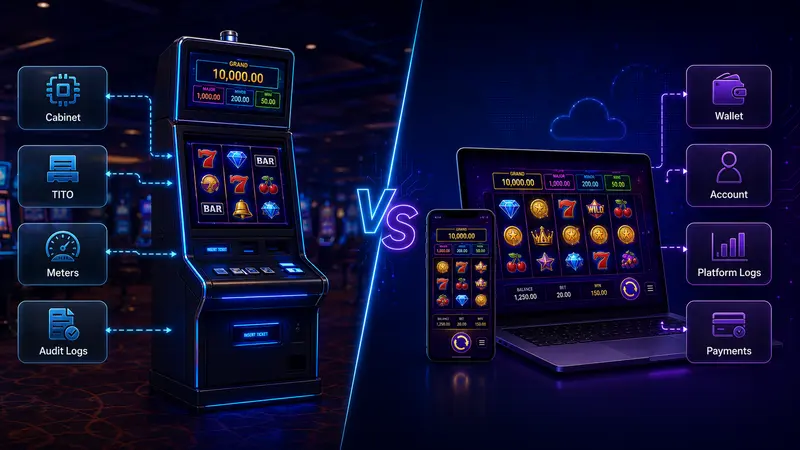
EGM slot machines and online slot games may look similar on the surface. Both can show reels, symbols, paylines, bonus rounds, RTP, and paytables. But for casino operators, they are very different products.
An EGM slot machine runs inside a physical cabinet or terminal. It may include a touchscreen, physical buttons, bill validator, ticket printer, TITO flow, accounting meters, cabinet events, local machine records, and casino-system integration. An online slot game runs through a browser, mobile app, or online casino platform. It depends on player accounts, wallets, payment gateways, platform logs, remote sessions, KYC flows, and online gambling platform controls.
A machine-first gaming product built around a physical cabinet, venue operations, and machine records.
A platform-first gaming product built around player accounts, wallets, and online platform controls.
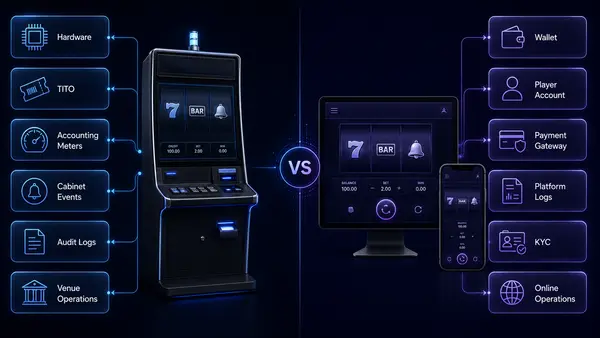
This difference affects hardware, compliance, payments, reporting, testing, operations, and the way casino operators plan rollout.
Quick Comparison: EGM vs Online Slot Game
| Area | EGM Slot Machine | Online Slot Game |
|---|---|---|
| Format | Physical cabinet or terminal | Web or mobile game |
| Venue | Casino floor, club, lounge, gaming venue | Online casino or mobile platform |
| Player input | Touchscreen, buttons, card, ticket, cash | Tap, click, account session |
| Payments | Cash, ticket, card, TITO, venue system | Wallet, payment gateway, player account |
| Records | Machine meters, cabinet events, ticket logs | Platform logs, wallet records, account logs |
| Compliance focus | Machine, cabinet, venue, jurisdiction | Platform, KYC, wallet, online jurisdiction |
| Operations | Floor management and machine servicing | Platform operations and user account support |
| Testing | Cabinet, hardware, game math, meters, events | Game client, platform, wallet, integrations |
| Deployment | Physical installation | Digital release |
What Each Product Is
EGM slot machines and online slot games follow two different operating models, even when the games look similar on screen.
What Is an EGM Slot Machine?
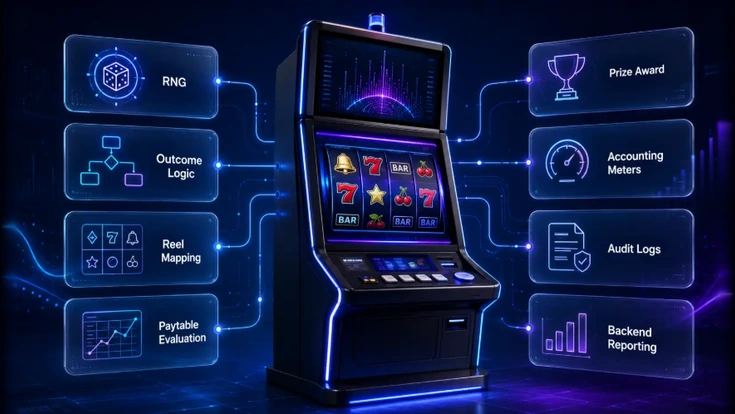
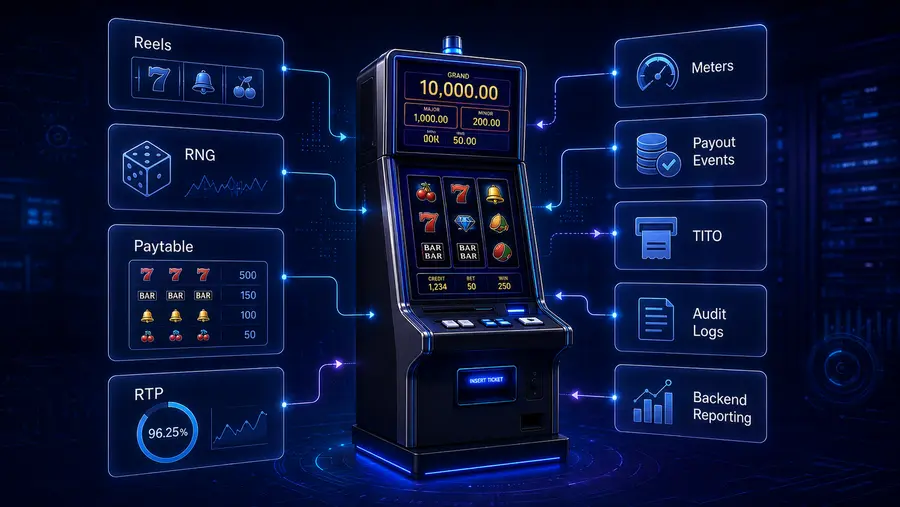
An EGM slot machine is a cabinet or terminal-based electronic gaming machine used in a regulated gaming environment. It combines:
- Game logic
- Reels and symbols
- RNG or outcome logic
- Paytable rules
- Credit handling
- Ticketing
- Accounting meters
- Cabinet events
- Audit logs
- Backend reporting
- Security controls
For an operator, an EGM is not only a game screen. It is a physical gaming system that must operate reliably on a casino floor or regulated venue. A machine may need to handle cash, tickets, cabinet access, printer errors, bill validator faults, power recovery, meter updates, and handpay events.
What Is an Online Slot Game?
An online slot game is a digital slot game played through a web browser, mobile browser, or casino app. It usually depends on an online casino platform for:
- Player registration
- Login and session control
- Wallet balance
- Deposits and withdrawals
- KYC and AML checks
- Game launch
- Remote game session
- Bonus management
- Platform logs
- Player reports
- Responsible gaming tools
The slot game itself may include reels, symbols, paylines, paytables, RTP, bonus rounds, and jackpot mechanics. But the operating environment is different from an EGM cabinet. An online slot game does not need a bill validator, ticket printer, cabinet lock, physical button panel, or machine door event. Instead, it needs platform integration, wallet accuracy, account-level logs, fraud controls, and online compliance workflows.
Main Difference for Casino Operators
The main difference is where the operational responsibility sits. With an EGM, the operator manages a physical gaming machine. With an online slot game, the operator manages a digital gaming experience inside a platform. That difference runs through hardware, payments, reporting, compliance, and support. An EGM operator needs to think about cabinet placement, venue rules, machine servicing, TITO, ticket validation, meters, cabinet security, floor reporting, and hardware events. An online operator needs to think about player onboarding, payment methods, KYC, wallet reconciliation, responsible gaming controls, server availability, remote sessions, game provider integrations, and digital fraud risks.
Hardware, Payments, and Game Logic Differences
Hardware, payment handling, and game logic shape how each product is built, deployed, and paid for.
Hardware and Venue Setup
EGM slot machines require physical hardware. A typical EGM cabinet may include:
- Main display
- Top display
- Touchscreen
- Button panel
- Bill validator
- Ticket printer
- Card reader
- Speakers
- Lighting
- Logic board
- Cabinet locks
- Secure internal compartments
- Power and communication wiring
This means the operator must plan physical installation, machine location, service access, network connectivity, power availability, and floor operations. The online model does not need cabinet hardware. The player uses their own device, such as a phone, tablet, laptop, or desktop. For online operators, the focus moves to device compatibility, browser support, mobile responsiveness, account security, and platform uptime.
Payment and Credit Handling
Payment handling is one of the biggest differences between EGMs and online slot games. An EGM may support:
- Cash insertion
- Ticket-in ticket-out
- Card-based credits
- Cashless venue systems
- Handpay events
- Voucher redemption
- Ticket validation
- Machine-level credit meters
TITO is especially important in many casino and venue environments. It allows a player to insert a barcoded ticket, play with the credited value, and print a new ticket during cashout. An online slot game usually uses:
- Player wallet
- Deposit methods
- Withdrawal methods
- Payment gateway
- Bonus balance
- Real-money balance
- Account transaction history
- Wallet logs
For operators, this changes reconciliation. In an EGM setup, reconciliation often involves machine meters, tickets, cash boxes, handpays, and venue systems. In an online setup, reconciliation usually involves wallet records, payment provider reports, game session logs, and player account balances.
RNG and Game Outcome Logic
Both models can use RNG or configured outcome systems, but the operating environment is different. In an EGM, the outcome logic is connected to the machine runtime, cabinet display, paytable, meters, event records, and physical machine state. In the online model, the outcome logic is usually handled through a remote game server, platform integration, or online game provider system. The result is then shown to the player through a browser or app interface. For operators, the important question is not only whether the game uses RNG. The bigger question is how the result is generated, recorded, protected, tested, and reconciled in that specific environment.
Paytables, RTP, and Volatility
Both EGM slot machines and online slot games use paytables, RTP, and volatility. A paytable defines winning combinations and payout values. RTP is the theoretical long-term return of the game. Volatility describes how the game pays over time. The difference is not the concept itself. The difference is how these rules are configured, reviewed, deployed, and monitored. In an EGM environment, paytable and RTP setup may connect to cabinet configuration, machine records, jurisdiction-specific settings, and technical review requirements. In an online slot environment, paytable and RTP setup may connect to game provider configuration, platform release control, jurisdiction selection, player-facing game information, and server-side reporting.
Records, Reporting, and Compliance Differences
The recordkeeping layer is where the two models separate most clearly, because each environment tracks different objects.
Meters, Logs, and Reporting
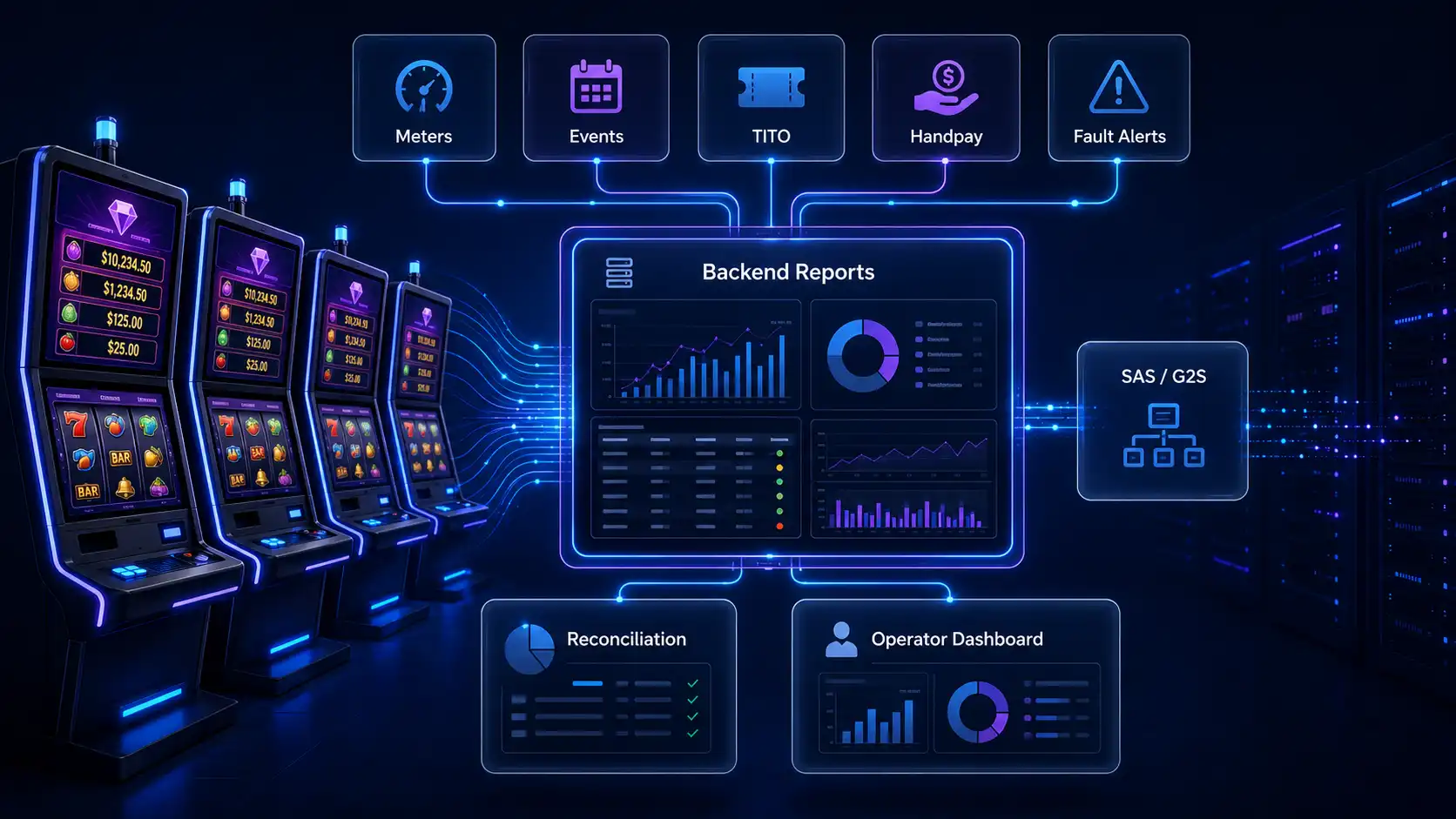
EGMs rely heavily on machine-level records. Common EGM records may include:
- Credits in
- Credits out
- Games played
- Total wagers
- Total wins
- Ticket-in values
- Ticket-out values
- Handpay events
- Door open events
- Printer events
- Bill validator events
- Cabinet faults
- Configuration changes
- Power loss events
These records help operators understand machine activity, player credits, payout behavior, service issues, and audit history. For EGM environments, GLI-11 is commonly referenced for gaming-device requirements, including accounting, metering, and machine record controls. Platform-based slots rely on platform and account-level records. Common online records may include:
- Player login
- Session start
- Session end
- Game launch
- Bet amount
- Win amount
- Wallet debit
- Wallet credit
- Bonus use
- Payment transaction
- Device or IP signal
- KYC status
- Responsible gaming action
- Account restriction
- Game provider round ID
TITO vs Wallet System
TITO and online wallets solve similar problems in different environments. TITO helps move value between physical gaming machines and cashier systems using barcoded tickets. An online wallet helps move value between a player account, payment method, game session, bonus system, and withdrawal process.
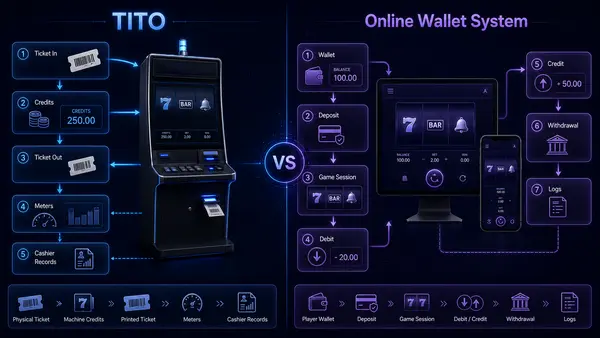
The Victorian Gambling and Casino Control Commission describes TITO as a system that lets patrons collect credits from a gaming machine through a barcoded ticket.
| Area | TITO in EGMs | Wallet in Online Slots |
|---|---|---|
| Value format | Ticket or machine credits | Account balance |
| User identity | May be ticket or session based | Account based |
| Cashout | Ticket print or cashier redemption | Withdrawal request |
| Records | Ticket records, meters, machine logs | Wallet logs, transaction history |
| Risk area | Ticket validation, printer errors, cash handling | Payment fraud, account abuse, chargebacks |
| Operator focus | Floor and cashier reconciliation | Wallet and payment reconciliation |
For operators, this is not just a payment feature. It changes reporting, support, security, and dispute handling.
Compliance and Jurisdiction Differences
EGM compliance and online slot compliance follow different paths. EGM compliance usually focuses on:
- Machine standards
- Cabinet security
- Game logic
- RNG or outcome review
- Accounting meters
- Event logs
- TITO handling
- Hardware events
- Power recovery
- Testing documentation
- Venue deployment rules
For example, Singapore's Gambling Regulatory Authority states that EGMs deployed in Singapore must be secure, reliable, and auditable. Online slot compliance usually focuses on:
- Online gambling licence requirements
- Player account controls
- KYC and AML processes
- Payment and wallet rules
- Game provider approval
- Responsible gaming tools
- Session records
- Data security
- Geo-restriction
- Platform audit trail
- Player dispute handling
Some concepts overlap, such as RNG, RTP, game fairness, auditability, and responsible gaming. But the implementation is different. Operators should review the target jurisdiction before choosing a product path. A cabinet-based EGM strategy and an online slot strategy may require different licences, testing flows, reporting systems, and operational processes.
Data and Reporting Differences
EGM reporting is usually machine-first. The operator wants to know:
- Which machine is active?
- How many credits went in?
- How many credits went out?
- Which meters changed?
- Were there any faults?
- Was there a handpay?
- Did the ticket printer work?
- Was the cabinet opened?
- Did the machine recover after power loss?
Online slot reporting is usually player-first and platform-first. The operator wants to know:
- Which player logged in?
- Which game was launched?
- What was the bet amount?
- What was the wallet movement?
- Was bonus balance used?
- Did the round complete?
- Was there a payment issue?
- Was the player restricted?
- Was KYC complete?
- Was the session within responsible gaming limits?
Both need strong reporting, but the reporting objects are different.
Operations, Player Experience, and Risk
Day-to-day operations look different in each model, from support workflows to the risks operators need to plan for.
Operational Support Differences
EGM support is physical and technical. Common EGM support scenarios include:
- Printer jam
- Bill validator fault
- Door open alert
- Touchscreen issue
- Button panel issue
- Power interruption
- Ticket validation issue
- Cabinet communication error
- Machine meter mismatch
- Handpay review
Online slot support is account and platform driven. Common online support scenarios include:
- Login problem
- Wallet balance dispute
- Deposit delay
- Withdrawal review
- Bonus not applied
- Game round not completed
- Session timeout
- Device compatibility issue
- KYC pending
- Responsible gaming restriction
This changes the support team structure. EGM operations need floor staff, technical service teams, cashier processes, and machine monitoring. Online operations need support agents, payment operations, fraud review, platform monitoring, and account compliance teams.
Player Experience Differences
The player experience is also different. In an EGM environment, the experience is shaped by:
- Cabinet design
- Screen size
- Button feel
- Touchscreen response
- Sound and lighting
- Seat and machine placement
- Casino floor atmosphere
- Ticket or cashout process
- Physical interaction with the machine
In an online slot environment, the experience is shaped by:
- Mobile loading speed
- App or browser interface
- Account login
- Wallet visibility
- Payment options
- Bonus prompts
- Touch controls
- Internet stability
- Game provider performance
- Responsible gaming messages
The same slot theme may need different UX treatment in each environment. A cabinet interface is not the same as a mobile interface.
Risk Differences for Operators
EGM operations and online slot operations carry different risk profiles. EGM operator risks may include:
- Hardware faults
- Ticket disputes
- Meter mismatch
- Cabinet tampering
- Printer errors
- Bill validator issues
- Power loss recovery
- Venue compliance gaps
- Physical servicing delays
Online slot operator risks may include:
- Wallet disputes
- Payment fraud
- Chargebacks
- Account takeover
- Bonus abuse
- Geo-location failures
- Platform downtime
- Game provider integration errors
- Data privacy issues
Operators should evaluate risk based on the operating environment, not only the game theme.
Which Option Fits Which Operator?
An EGM slot machine model may fit operators that run or support:
- Land-based casinos
- Gaming lounges
- Clubs or pubs with approved gaming areas
- Distributed gaming venues
- Venue-based gaming terminals
- Cabinet or terminal-based gaming products
An online slot game model may fit operators that run or support:
- Online casinos
- Mobile casino apps
- iGaming platforms
- Remote gaming brands
- Multi-provider game lobbies
- Account-based real-money gaming platforms
Some operators may use both models, but they should not treat them as the same product. The game design may overlap, but operations, compliance, reporting, and payment handling are different.
Common Mistakes Operators Should Avoid
Treating an EGM Like a Web Game
An EGM needs cabinet logic, meters, physical event records, ticketing, recovery handling, and venue-specific reporting. A web slot game structure cannot simply be copied into a cabinet environment.
Treating an Online Slot Like a Cabinet Machine
An online slot needs account flows, wallet integration, device compatibility, platform logs, KYC support, and online jurisdiction controls. Cabinet assumptions do not automatically apply.
Looking Only at RTP
RTP is important, but it does not describe the full player experience. Volatility, hit frequency, bonus design, and payout distribution also matter.
Ignoring Reporting Differences
EGMs need machine-level records. Online slots need account, wallet, session, and platform records. Operators should define reporting requirements early.
Underestimating Payment Complexity
TITO and online wallets are very different. Each affects reconciliation, customer support, fraud risk, and compliance review.
Checklist for Casino Operators
Before choosing between an EGM slot machine strategy and an online slot game strategy, operators should ask:
- Is the product for a physical venue or an online platform?
- Which jurisdiction applies?
- What licence or approval path is required?
- Will the game run in a cabinet, terminal, browser, or mobile app?
- How will credits or player balances be handled?
- Is TITO required?
- Is a wallet required?
- What reports are needed?
- What logs must be stored?
- What payment risks apply?
- What responsible gaming controls are required?
- What testing or certification process applies?
- Who will support faults, disputes, and player issues?
- What integrations are needed?
- How will changes be controlled after launch?
Working through these questions helps operators avoid choosing a product model based only on visual similarity.
FAQs About EGM vs Online Slot Games
The main difference is the operating environment. An EGM runs on a physical cabinet or terminal in a venue. An online slot game runs through a browser, mobile app, or online casino platform.
No. They may share game concepts like reels, symbols, RNG, RTP, and paytables, but their hardware, payments, reporting, compliance, and operational systems are different.
Many EGMs and online slot games use RNG or configured outcome logic, but the way outcomes are generated, protected, recorded, and reviewed depends on the system and jurisdiction.
EGMs need accounting meters to track machine-level activity such as credits in, credits out, wagers, wins, ticket values, handpay events, and other important machine records.
TITO means ticket-in ticket-out. It allows players to use barcoded tickets to add credits, cash out, redeem value, or continue play on another compatible machine.
No. Online slot games usually use player wallets and account balances instead of physical ticket-in ticket-out systems.
Both can be complex in different ways. EGMs are complex because of cabinet hardware, meters, TITO, machine events, and venue operations. Online slots are complex because of accounts, wallets, payments, KYC, platform integrations, and remote player support.
Yes, the same theme can sometimes be adapted for both, but the interface, operating model, compliance path, reporting, and payment systems usually need different planning.
Operators should first check the target market, jurisdiction, licence requirements, venue or platform model, payment flow, reporting needs, and testing requirements.
Final Thoughts
EGM slot machines and online slot games may share similar visual elements, but they are not the same operating model. EGMs are physical, machine-centered systems. They depend on cabinets, meters, TITO, cabinet events, machine records, and venue operations. Online slot games are platform-centered systems. They depend on accounts, wallets, payment gateways, remote sessions, platform logs, and online compliance workflows. For casino operators, the right choice depends on the market, licence path, venue model, payment flow, reporting needs, support process, and long-term operating strategy.