Casual & Board Game
Development Company
SDLC Corp builds casual and board games with intuitive controls, balanced mechanics, real-time multiplayer, AI opponents, and scalable backends. Backed by 106+ delivered games, we handle design, art, development, QA, launch, and LiveOps across mobile, web, PC, and console.
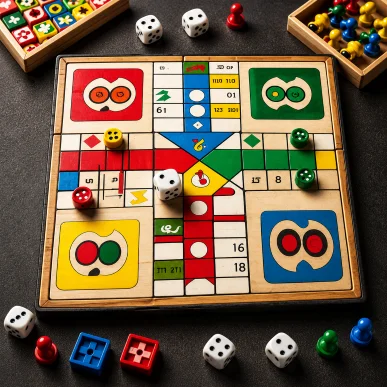
Ludo & Board
Card Games
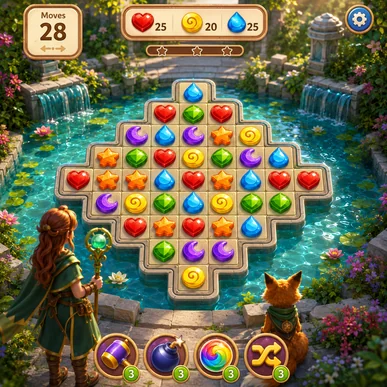
Puzzle & Match-3
Chess & Strategy
Hyper-Casual High-Quality Casual & Board Games We Develop.
Explore real game projects delivered by our team across mobile, web, PC, and console - where balanced mechanics, real-time multiplayer, AI opponents, and LiveOps come together into launch-ready titles players keep coming back to.
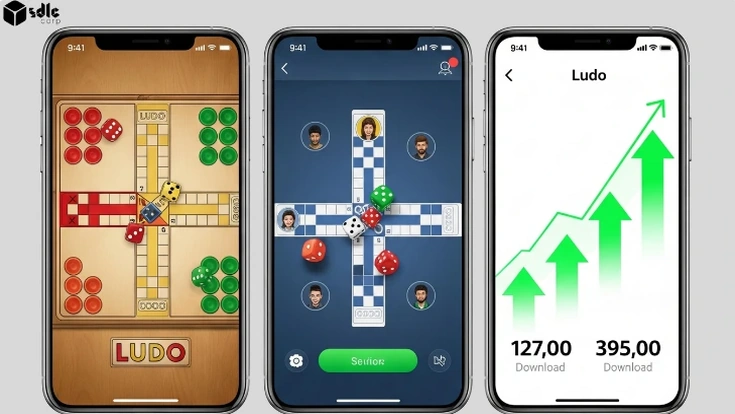
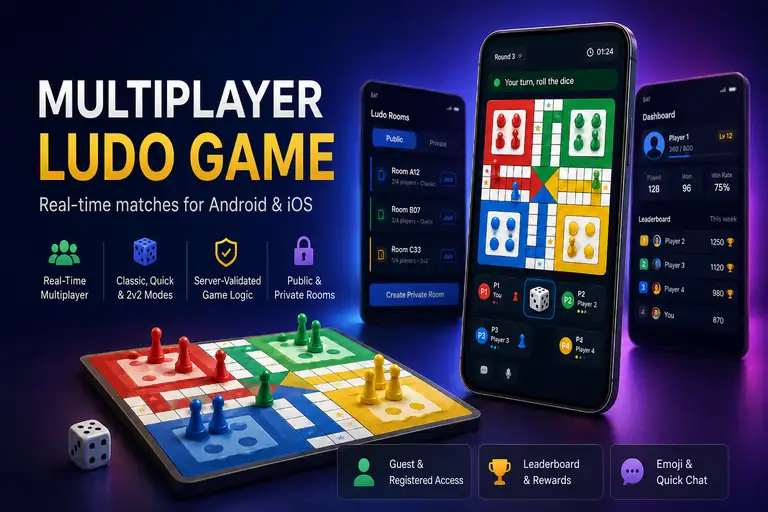
Real-Time Multiplayer Ludo Game for Android & iOS
Developed a release-ready Unity Ludo game with synchronized four-player matches, public and private rooms, timed turns, reconnection support, and server-validated dice and token moves across Classic, Quick, and 2v2 modes.
VR Soccer Game for Orange Jordan
Built a penalty shootout VR game for Orange's 5G launch to make network speed tangible to a live public audience. Every kick and goalkeeper reaction responded in under 20 milliseconds on the Orange 5G network.
Artyfact: Web3 NFT Gaming Marketplace on BSC
Full-stack rebuild of Artyfact's blockchain gaming platform on Binance Smart Chain. NFT marketplace, rarity-based asset discovery, wallet-first access, and on-chain token transparency delivered in one production cycle.
Have a Casual or Board Game Idea? Let’s Build It.
Talk to Our Game Experts → Casual & Board Game
Development Services
Build Ludo, board, card, carrom, chess, and arcade games for mobile, web, PC, and console with one team for design, development, QA, launch, and LiveOps.
Ludo Game Development
Launch Ludo games with private rooms, matchmaking, AI players, fair dice logic, tournaments, and cross-platform play.
Build a Ludo Game →Board Game Development
Turn classic or original board concepts into digital games with rule engines, turn systems, AI opponents, and multiplayer rooms.
Digitize Your Board Game →Card Game Development
Develop card games with deck logic, secure shuffling, private tables, matchmaking, tournaments, and scalable game servers.
Deal Your Card Game →Carrom Board Game Development
Ship carrom games with realistic board physics, precise striker aiming, ranked matches, practice modes, and seasonal events.
Start a Carrom Build →Chess Game Development
Build chess games with move validation, game clocks, tiered AI, ranked matchmaking, puzzles, analysis, and learning modes.
Develop a Chess Game →Arcade Game Development
Create runners, puzzles, stacking, and skill-based games with tight controls, level progression, leaderboards, and replayable sessions.
Start an Arcade Build →Need kids, RPG, or battle royale titles alongside your casual portfolio? Explore our game development services.
Building Engaging Games Across Casual and Board Genres
Each genre needs a different system at its core. Here's what actually changes between them and what your build depends on.
| Game Type | How It Plays | The System That Makes It Work | Platforms |
|---|---|---|---|
| Ludo | Dice rolls decide the race home | Server-side dice RNG that players can't spoof or replay | MobileWeb |
| Board | Turns, rules, and a bit of luck | A rules engine you can retune without shipping a new build | MobileWebPC |
| Card | Hands, melds, and scoring rounds | A provably fair shuffle and tamper-proof table state | MobileWebPC |
| Carrom | Aim, flick, and read the rebound | Striker physics and collision tuning that feel identical on every device | MobileWeb |
| Chess | Pure skill, no luck, clock running | A move-validation engine plus AI you can dial from beginner to brutal | MobileWebPC |
| Arcade & Casual | Reflex runs, 60 seconds at a time | A difficulty curve and reward loop that earns the next replay | MobileWebPCConsole |
Gameplay Features We Can
Integrate
The systems behind a casual or board game that players never see, and notice instantly when they're missing.
Rules Engine
Your rulebook as dependable logic: legal moves, turn order, scoring, penalties, win conditions, and the edge cases players will find.
Multiplayer & Matchmaking
Quick match, private rooms, friend invites, and teams, with reconnect handling that returns a player to their seat instead of out of the match.
AI Opponents
Bots that fill empty seats and keep offline play alive, with difficulty tiers and human-like move timing tuned per genre.
Progression & Rewards
Levels, unlocks, daily challenges, streaks, and currencies that give players a reason to open the game again tomorrow.
Leaderboards & Tournaments
Friend, regional, and seasonal boards, plus brackets, leagues, and prize tables for competitive and event-driven play.
Fair Play & Anti-Cheat
Server-side validation of every move, dice roll, shuffle, and result, with secure accounts and transactions behind it.
Flexible Development Models for Casual and Board Games
Flexible models based on project stage, production scope, timeline, budget, and internal team capacity, for casual and board games across mobile, web, PC, and console.
Game Co-Development
Best for studios with an in-house team that need extra expertise or production support on specific features, art, or systems.
Includes- Rules engines, matchmaking, and multiplayer
- AI opponents, game art, UI/UX, and QA
- Backend, LiveOps, and platform integration
Full-Cycle Game Development
Best for clients who want one managed team to own the full journey from concept and game design to launch and LiveOps.
Includes- Discovery, GDD, and prototype planning
- Design, art, mechanics, backend, and multiplayer
- QA, deployment, launch, and post-launch LiveOps
Dedicated Game Development Team
Best for publishers and product companies that need a stable team for long-term production or a continuous release schedule.
Includes- Game designers, developers, and engineers
- 2D/3D artists, QA testers, and project managers
- LiveOps, updates, and performance tuning
Simple to Play.
Built to Keep Players Coming Back.
Work with a team that builds scalable casual and board games for mobile, web, PC, and console with balanced mechanics, multiplayer, and LiveOps.
Talk to Our Casual Game Experts
Our Casual & Board Game Development Process
A structured workflow that keeps every milestone connected to a playable, reviewable result across mobile, web, PC, and console.
Discovery & Requirement Analysis
We review the game concept, target players, genre, platforms, rules, game modes, visual direction, monetization, multiplayer needs, and timeline.
Game Design & Prototyping
We define the core loop, controls, progression, economy, and win conditions, then build a playable prototype to validate the main mechanic for board, card, and Ludo games.
Game Art & Development
Our team builds boards, cards, characters, interfaces, animation, gameplay systems, AI, backend services, multiplayer, purchases, and analytics.
QA & Game Balancing
We test gameplay, rules, devices, performance, networking, AI, purchases, security, compatibility, and edge cases before release.
Launch & LiveOps
We handle platform submission, launch monitoring, bug fixes, analytics, balancing, seasonal events, new content, and ongoing maintenance.
Technologies Behind Our Casual & Board Game Development
From Unity and Godot to mobile platforms, WebGL, real-time multiplayer frameworks, cloud infrastructure, content pipelines, and launch-ready production tools for casual and board games.
Unity
Unreal Engine
Godot
WebGL
iOS
Android
Steam
Nintendo Switch
Meta
AWS
Photon
Firebase
Kubernetes
Google Cloud
Docker
NVIDIA
Blender
Autodesk Maya
Spine 2D
Figma
Cocos
Node.js
MySQL
PostgreSQL
Python
JavaScript
C++
Playstation
PHP
AndroidWhy Game Studios Trust SDLC Corp
“SDLC Corp built our real-time multiplayer Ludo game end to end - fair dice logic, lag-free matchmaking, and solid anti-cheat on a scalable backend. It runs smoothly across Android, iOS, and web, and our players keep coming back.”
Multiplayer Ludo Game Project ✓ Verified
Casual & Board Game Development Insights and Guides
Explore practical SDLC Corp guides on hyper-casual game design, Ludo and board game development, chess and AR-powered experiences, engagement mechanics, and monetization strategy.

Let's Discuss Your Game Project
Share your requirements, timeline, existing build, or game concept. SDLC Corp will review your project and recommend the right scope, team structure, and delivery approach.
What happens next?
We review your brief, estimate scope, and recommend the right team model.
- NDA Available
- 106+ Games Delivered
- Response Within 1 Business Day
No sales pressure. We reply with realistic scope and delivery recommendations.
Frequently Asked Questions
Straight answers on the casual and board games we build, pricing, timeline, ownership, multiplayer, AI opponents, engines, monetization, and post-launch support.
Games & Capabilities
SDLC Corp develops arcade, board, card, carrom, chess, kids, Ludo, RPG, and battle royale games for mobile, web, PC, and console.
Yes. Our team can review the physical components, rulebook, scoring, player actions, and edge cases before translating them into digital interfaces, rules logic, AI, and multiplayer systems.
Pricing, Timeline & Ownership
Indicative pricing: a simple single-platform game starts around $15,000–$40,000, a multiplayer game with AI usually runs $40,000–$90,000, and a full cross-platform title is $90,000+. A discovery phase gives the most accurate estimate.
A focused prototype may take several weeks. A complete game can require several months depending on mechanics, art, multiplayer, AI, platforms, backend services, content volume, and testing requirements.
Yes. Project handover can include source code, artwork, game design files, documentation, and builds according to the agreed ownership terms.
Multiplayer & AI
Yes. We build real-time and turn-based multiplayer with matchmaking, private rooms, friend invitations, reconnect handling, rankings, tournaments, chat, and synchronized game states.
Yes. AI opponents can be developed with different difficulty levels, strategies, response behavior, and legal-action validation according to the game rules.
Engine & Platform Strategy
Unity is often suitable for mobile, web, 2D, 3D, casual, board, and cross-platform games. Unreal Engine may suit visually advanced 3D projects. Godot, Cocos2d-x, Phaser, or custom technology may also be used depending on the project.
Monetization & Support
Yes. Monetization options can include advertisements, in-app purchases, premium access, subscriptions, passes, cosmetics, boosters, currencies, and downloadable content.
Yes. Post-launch services can include bug fixes, performance monitoring, new content, events, balancing, analytics, operating-system updates, platform support, and LiveOps.