
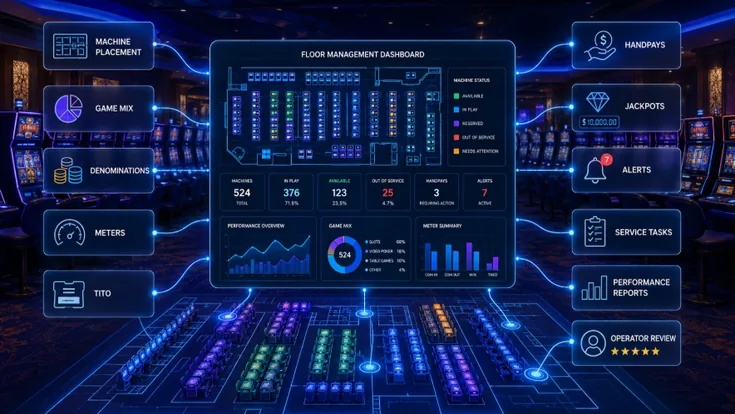
Casino slot machine floor management is the ongoing process of planning, placing, monitoring, reviewing, and improving slot machines across a casino floor.
It connects cabinet placement, game mix, denomination planning, machine mapping, meters, TITO records, handpays, jackpots, alerts, service tasks, audit logs, compliance records, and performance reports. A strong slot floor is not managed one cabinet at a time. It is managed as a connected operating environment.
In simple terms: slot floor management helps operators understand where machines are placed, how they perform, what issues need action, and how machine records support floor review.
Quick Summary of Casino Slot Machine Floor Management
| Area | What Operators Manage | Why It Matters |
|---|---|---|
| Floor layout | Machine placement, zones, paths, visibility, service access | Shapes player movement and operator response |
| Game mix | Cabinet type, themes, denominations, bet levels, volatility profile | Helps match machines to player segments and floor goals |
| Machine records | Meters, tickets, cashbox notes, handpays, jackpots | Supports accounting review and reconciliation |
| Monitoring | Status, alerts, faults, reports, service tasks | Helps teams see floor issues quickly |
| Performance review | Machine results, floor zone results, issue patterns, report trends | Supports better decisions about the floor mix |
| Compliance records | Approvals, audit logs, technical standards, event records | Supports jurisdiction-specific review and auditability |
What Is Casino Slot Machine Floor Management?
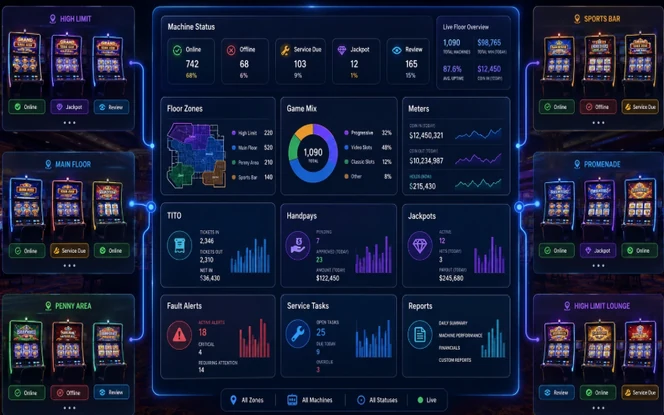
Casino slot machine floor management is the operator-side discipline of managing slot machines as a complete floor environment. It looks at machine placement, cabinet mix, game configuration, uptime, service needs, financial records, player-facing events, and performance trends.
It also depends on the basic machine structure of an electronic gaming machine. The cabinet, game logic, meters, ticket printer, validator, event records, and host connectivity all contribute to how the floor is managed.
Good floor management helps operators answer practical questions:
- Which machines are active?
- Which machines need review?
- Which floor zones are performing well?
- Which cabinets need service?
- Which games need attention?
- Are meters and tickets aligned?
- Are jackpots and handpays reviewed?
- Are alerts routed correctly?
- Are reports complete?
- Are audit records clear?
Slot Floor Layout and Machine Placement
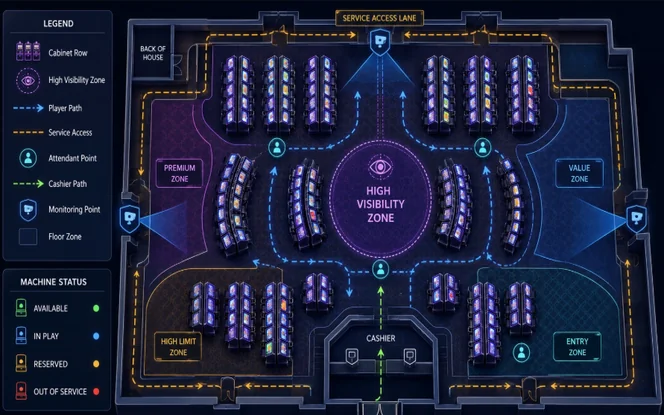
Slot floor layout is more than placing machines in rows. Operators think about player paths, visibility, cabinet access, service movement, cashier access, attendant response, security coverage, and the relationship between different machine zones.
Placement Factors Operators Review
- High-visibility zones
- Main walkways
- Quiet floor areas
- Premium cabinet areas
- Progressive bank placement
- Service access lanes
- Cashier proximity
- Attendant response path
- Security visibility
- Network and power access
- Player comfort
- Machine cluster balance
Placement decisions should also align with the machine's role. A premium cabinet, a low-denomination game, a progressive bank, and a high-limit game may need different floor treatment.
Game Mix, Cabinet Mix, and Denomination Planning
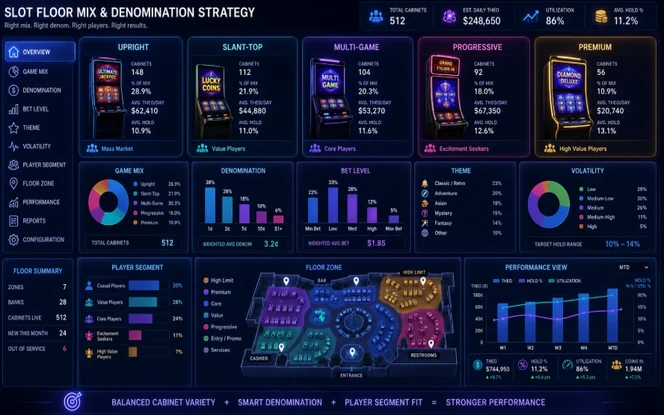
Game mix planning looks at what types of machines are on the floor and how they fit the intended customer base. Operators may review themes, cabinet styles, denomination levels, volatility profiles, progressive links, and player segment fit.
The technical side connects with how EGM slot machines work, because game math, paytables, RNG behavior, meters, and cabinet setup all affect how a machine should be reviewed.
Game Theme
Theme choice affects player recognition, floor variety, and whether the machine fits the surrounding cabinet bank.
Cabinet Type
Upright, slant-top, premium, multi-game, and progressive cabinets may each need different placement treatment.
Denomination
Denomination planning helps organize machines for different player budgets and floor zones.
Performance Fit
Operators compare game performance with floor zone, cabinet type, and player traffic before changing the mix.
Machine Mapping and Asset Tracking
Machine mapping connects a physical slot machine to the operator's floor plan, asset record, game record, reporting view, and service history.
A clean mapping record usually includes machine ID, cabinet type, floor zone, game title, denomination, host mapping, approval record, service status, and reporting group. Without accurate mapping, operators may review the wrong machine, pull the wrong report, or misunderstand a floor issue.
Meters, TITO, and Cashbox Review
Meters, tickets, and cashbox records are core parts of slot floor management. Operators use these records to understand machine activity, compare values, and support reconciliation. For deeper context, see EGM accounting meters and TITO in slot machines.
- Credits bet
- Credits won
- Games played
- Ticket-in value
- Ticket-out value
- Cashbox process
- Handpay value
- Jackpot value
- Meter compare
- Reconciliation review
Handpays, Jackpots, and Attendant Workflows
Handpays and jackpots are high-attention events on a slot floor. They may require attendant response, identity checks where required, machine review, report records, and floor documentation. Operators usually review the machine record, game recall where applicable, jackpot event, handpay record, attendant note, meter movement, and backend report before closing the workflow.
Monitoring, Alerts, and Service Tasks
Slot floor management depends on quick visibility into machine status and operational issues. Alerts may point to printer faults, validator issues, door events, communication failures, ticket issues, jackpot events, or machines that need service. This connects directly with EGM monitoring and backend reporting systems and the practical review flow in common EGM operational issues.
GLI-13 is useful in this area because monitoring and control environments include logging, searching, significant event reporting, financial and meter data collection, and reconciliation.
Slot Floor Performance Reports
Slot floor performance reports help operators understand how machines, floor zones, cabinet types, denominations, and game categories are performing over time. Reports may be reviewed daily, weekly, monthly, or around floor changes. The goal is not only to find high-performing machines. It is also to see patterns, issues, traffic effects, game mix gaps, and machines that may need repositioning or review.
Common Report Views
- Machine-level report
- Game-level report
- Denomination report
- Floor-zone report
- Cabinet-type report
- Meter movement report
- TITO activity report
- Handpay report
- Jackpot report
- Service issue report
Audit Logs and Compliance Records
Audit logs and compliance records support review when a machine has a fault, a dispute, a configuration question, a cabinet access event, or a reporting mismatch. Useful context includes EGM audit logs and event records, SAS and G2S protocols, and EGM compliance testing.
Jurisdiction-specific references include GLI standards, Nevada Technical Standard 1, Singapore GRA EGM standards, and Victoria gaming machine monitoring standards guidance.
Common Slot Floor Management Issues
Poor Floor Mapping
Machine IDs, floor zones, and reporting groups do not match cleanly, making review harder.
Weak Game Mix Balance
The floor may have too much of one cabinet type, theme, denomination, or player segment.
Meter Review Gaps
Machine records and report records are not compared clearly during floor review.
TITO Review Delays
Ticket issues are handled on the floor, but not always tied back to ticket records and reports.
Alert Fatigue
Too many low-priority alerts can make important machine issues harder to see quickly.
Unclear Review Ownership
Performance, service, accounting, and floor teams may review different parts without one clear closure path.
How Operators Review Floor Performance
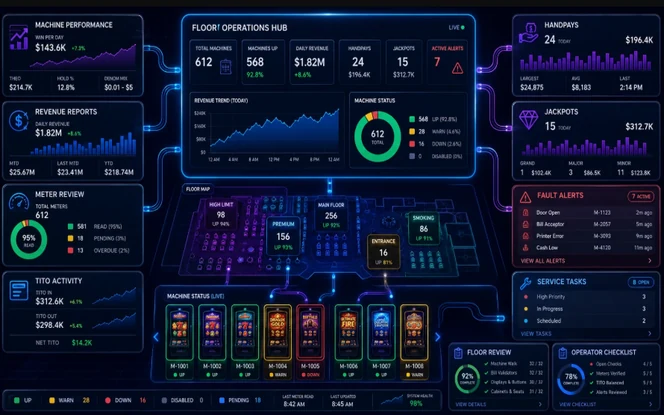
Operators review slot floor performance by comparing machine activity with floor context. A machine may perform differently because of placement, traffic, game theme, denomination, cabinet type, or service history.
| Review Area | What to Compare | Typical Decision |
|---|---|---|
| Machine performance | Machine results, game title, cabinet type, denomination | Keep, review, reposition, or replace |
| Floor zone | Traffic, visibility, nearby games, service access | Adjust layout or machine grouping |
| Issue pattern | Faults, tickets, alerts, service events | Service, retest, monitor, or escalate |
| Financial record | Meters, TITO, cashbox notes, reports | Reconcile or investigate mismatch |
| Player segment | Theme, denomination, bet level, cabinet comfort | Adjust game mix or zone strategy |
Slot Floor Management Checklist
- Machine IDs mapped
- Floor zones confirmed
- Cabinet mix reviewed
- Game mix reviewed
- Denominations checked
- Machine status visible
- Meters reviewed
- TITO activity reviewed
- Cashbox notes checked
- Handpays reviewed
- Jackpots reviewed
- Alert routing checked
- Service tasks tracked
- Audit logs reviewed
- Backend reports checked
- Floor performance reviewed
- Issue patterns reviewed
- Game movement documented
- Compliance records checked
- Responsible gaming notices reviewed
- Attendant workflows reviewed
- Cashier path reviewed
- Operator ownership assigned
- Next review date set
FAQs About Casino Slot Machine Floor Management
Casino slot machine floor management is the ongoing review of machine placement, game mix, cabinet mix, denominations, meters, tickets, handpays, jackpots, alerts, service tasks, reports, and operator workflows across a casino slot floor.
Slot floor layout affects player movement, machine visibility, service access, attendant response, cashier flow, monitoring coverage, and how easily operators can review machine performance.
Important records include accounting meters, ticket-in and ticket-out values, cashbox notes, handpay records, jackpot records, machine status, fault alerts, audit logs, service notes, and backend reports.
TITO supports slot floor operations by replacing coin handling with ticket-in and ticket-out records. These records support cashier review, meter comparison, redemption workflows, and reconciliation.
Game mix is the planned combination of cabinet types, themes, denominations, bet levels, volatility profiles, progressive games, and player-segment fit across the casino floor.
Operators usually compare machine performance, meter values, ticket activity, handpays, jackpots, floor zone performance, service events, and issue patterns across a defined reporting period.
Alerts and service tasks help operators respond to machine faults, printer problems, validator issues, communication gaps, jackpot events, and machines that need review or service.
Yes. Jurisdictions may define different requirements for machine approval, technical standards, meter records, ticket handling, monitoring, event logs, and compliance review.
A slot floor management checklist should include machine placement, game mix, denomination setup, meters, TITO, cashbox review, handpays, jackpots, alerts, reports, audit logs, service tasks, and performance review ownership.
Final Thoughts
Casino slot machine floor management brings together machine placement, game mix, records, alerts, service tasks, reports, and operator review.
The strongest floors are not managed only by looking at individual machines. They are managed by comparing machine performance with floor zone, cabinet type, denomination, service history, ticket activity, and reporting records.
When operators can connect placement, performance, accounting, alerts, and audit records, the slot floor becomes easier to monitor, easier to review, and easier to improve over time.