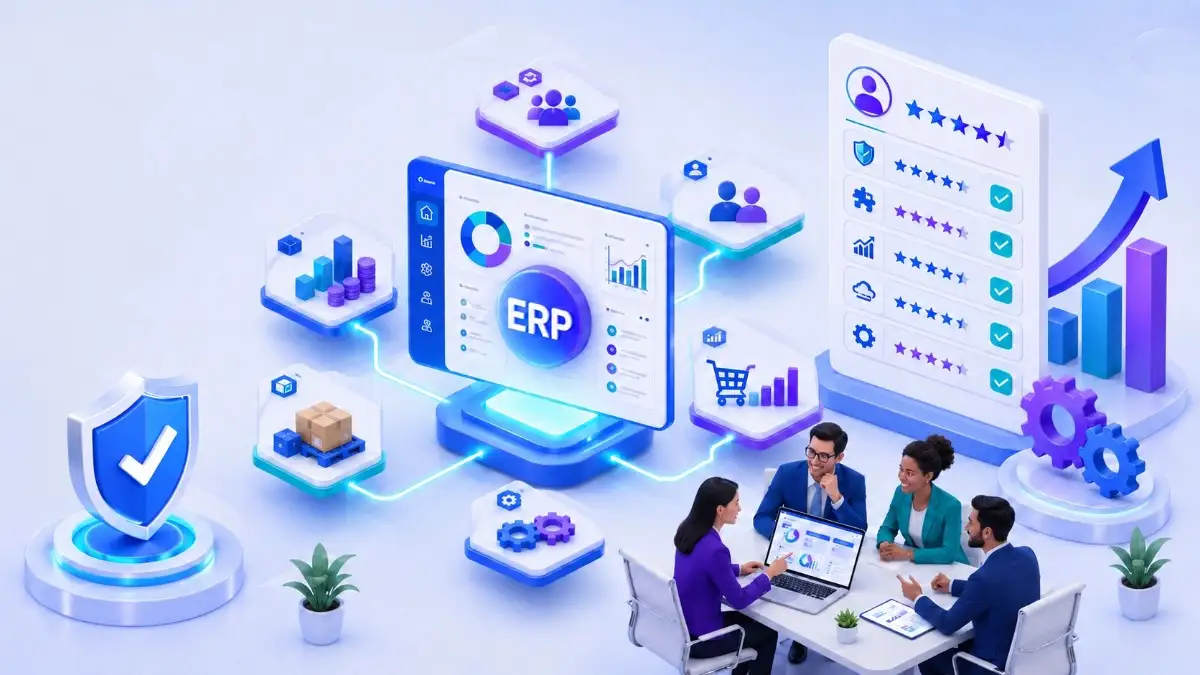
Choosing the right ERP system requires more than comparing features or vendor reputation. Businesses must align the platform with their goals, processes, integration needs, and future growth plans.
This guide explains how to choose the right ERP system using a structured evaluation process that reduces implementation risk and supports long-term business value.
Quick Answer
Knowing How to Choose the Right ERP System begins with understanding what ERP is. First, align the platform with your business objectives, operational requirements, and long-term growth strategy.
The right ERP system is not always the option with the most features or strongest brand recognition. Instead, compare solutions based on business fit, integration capabilities, scalability, deployment model, implementation expertise, and total cost of ownership. This approach helps you select a platform that delivers sustainable business value.
Key Takeaways
Define business outcomes first: Establish clear goals before comparing ERP platforms, vendors, or individual software features.
Evaluate long-term business value: Compare ERP systems by business fit, implementation capability, and operational value, not functionality alone.
Separate the two selection decisions: Assess the ERP software and the implementation partner as two distinct but equally important choices.
Use consistent evaluation criteria: Apply the same business and technical standards to every shortlisted ERP solution for an objective comparison.
Plan for future scalability: Choose an ERP platform that supports growth, evolving processes, and enterprise-wide integration beyond current needs.
How to Choose the Right ERP System: Assess Your Business Needs First
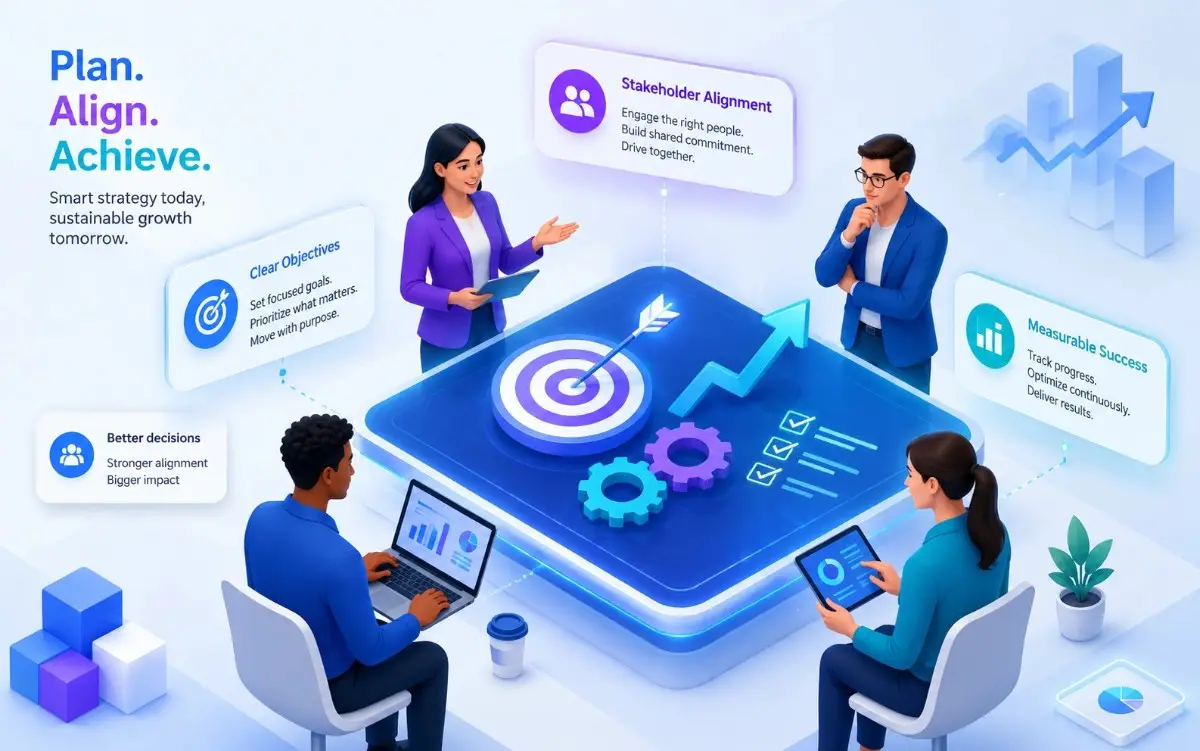
Learning how to choose an ERP system starts with understanding your business priorities before comparing software or vendors. Organizations with clear strategic objectives, defined operational requirements, and measurable success criteria are more likely to achieve successful outcomes.
In addition, Microsoft's guidance on finding the right ERP solution emphasizes reviewing business processes and technology requirements before selecting a platform. Gartner also notes that many ERP strategies lack strong alignment with overall business objectives. For this reason, strategic planning should be the first step.
Align Business Objectives
To begin, confirm that the ERP platform supports long-term strategic goals and measurable business outcomes.
Identify Operational Challenges
Next, identify the processes, bottlenecks, and inefficiencies that need the greatest improvement.
Plan for Future Growth
Then, review scalability, flexibility, and the system's ability to support evolving requirements.
Engage Key Stakeholders
Meanwhile, involve business leaders, IT teams, functional users, and executive sponsors from the beginning.
Define Success Criteria
Finally, use consistent business outcomes to evaluate every ERP solution rather than relying on feature lists.
The SDLC Corp ERP Selection Framework
If you are wondering how to choose an ERP system, follow a consistent ERP software evaluation process instead of comparing feature lists alone. The SDLC Corp ERP Selection Framework gives enterprise buyers a structured, business-first method for reviewing every option with the same criteria.
Rather than relying only on vendor claims, the framework focuses on the factors that influence implementation success and long-term value. Consequently, teams can compare shortlisted solutions more objectively.
| Evaluation Pillar | Key Question | Why It Matters |
|---|---|---|
| Business Alignment | Does the ERP support our strategic business objectives? | Ensures technology investments align with long-term organizational goals. |
| Functional Fit | Can it support our critical business processes with minimal customization? | Reduces implementation complexity and improves operational efficiency. |
| Integration Capability | Will it integrate seamlessly with our existing business systems and data? | Eliminates data silos and supports connected business operations. |
| Scalability | Can it support future growth, new users, locations, and acquisitions? | Protects long-term investment and reduces future replacement costs. |
| Security & Compliance | Does it meet our security, governance, and regulatory requirements? | Reduces operational and compliance risks. |
| Implementation Partner Expertise | Does the implementation partner have proven industry and platform experience? | Improves project delivery, user adoption, and long-term support. |
| Total Cost of Ownership (TCO) | What is the full lifecycle cost of the ERP solution? | Enables informed investment decisions beyond initial licensing costs. |
Using consistent evaluation criteria across every shortlisted ERP solution helps organizations compare vendors objectively, reduce implementation risk, and select a platform that delivers measurable business value over the long term, not simply the one with the most features.
Define Your ERP Requirements Before Comparing Solutions
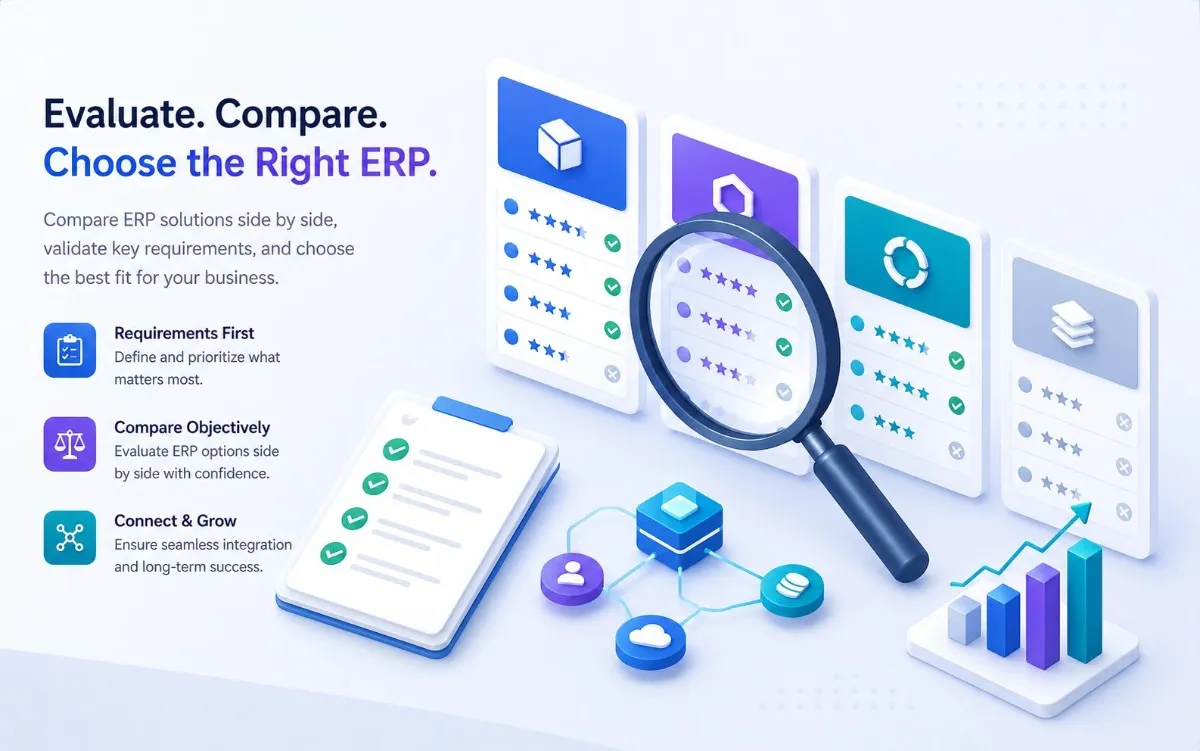
A critical step in how to choose an ERP system is documenting business and technical requirements before evaluating software. Well-defined requirements help organizations compare options based on business needs rather than feature lists. Therefore, the selection process becomes more objective and less risky.
Document the capabilities your organization needs today. At the same time, confirm that the solution can support future growth. Oracle's ERP implementation project plan also highlights process mapping, data preparation, integrations, team structure, and training as important planning priorities.
Functional Requirements
First, prioritize the business processes that create the greatest operational value. Then, confirm that the ERP supports critical workflows with minimal customization.
Technical Requirements
Next, define deployment, security, performance, and architecture expectations that align with your long-term IT strategy.
Reporting & Analytics
In addition, identify the dashboards, KPIs, and insights needed to support faster, data-driven decision-making.
Integration Requirements
Afterward, document every application that requires ERP integration to minimize complexity and data silos.
AI Capabilities
When relevant, evaluate AI features based on measurable business outcomes rather than vendor claims or feature volume.
Future Scalability
Finally, confirm that the enterprise ERP platform can support expansion, acquisitions, and evolving requirements without significant reconfiguration.
Choose the Right ERP Deployment Model: Cloud vs. Hybrid vs. On-Premises
Selecting the deployment model should not drive your ERP software decision. First, choose the platform that best meets your business requirements. Next, compare the types of ERP systems and determine whether Cloud ERP, Hybrid ERP, or On-Premises ERP best aligns with your security, compliance, integration, and operational needs.
Similarly, SAP recommends evaluating deployment after confirming functional fit. Oracle also highlights cloud ERP for its lower total cost of ownership and continuous updates.
| Criteria | Cloud ERP | Hybrid ERP | On-Premises ERP |
|---|---|---|---|
| Initial Cost | Lower upfront investment with subscription-based pricing | Moderate investment across cloud and on-premises environments | Higher upfront investment in infrastructure and software licenses |
| Scalability | Highly scalable with on-demand resources | Flexible expansion across cloud and on-premises workloads | Limited by existing infrastructure capacity |
| Security | Shared responsibility between the vendor and customer | Shared responsibility across both environments | Fully managed and controlled internally |
| Maintenance | Vendor-managed updates and maintenance | Shared maintenance responsibilities | Fully managed by the organization's IT team |
| Best Fit | Fast-growing organizations seeking agility | Businesses balancing modernization with compliance needs | Organizations requiring complete control over infrastructure and data |
Key takeaway: Choose the ERP platform based on business fit first, then select the deployment model that best supports your operational, security, and compliance requirements, not the other way around.
How to Evaluate ERP Vendors and Implementation Partners
Selecting the right ERP software is only half the decision. Equally important, you need an implementation partner with the expertise to deliver the solution effectively.
Use consistent ERP vendor selection criteria when assessing the software provider and implementation partner. In this way, you can reduce implementation risk and improve long-term adoption.
Vendor Capabilities
First, assess how well the platform supports business requirements, workflows, and long-term technology strategy.
Industry Expertise
Next, prioritize vendors and partners with proven experience in your industry, business size, and regulatory environment.
Implementation Methodology
Then, review governance, change management, go-live planning, risk controls, and hypercare support.
Support & Adoption
In addition, evaluate training, documentation, communication, and ongoing support for successful user adoption.
Post-Go-Live Services
Finally, confirm continuous optimization, system enhancements, and long-term operational support.
Key takeaway: Even the most capable ERP platform can fail without effective implementation. Gartner similarly emphasizes that implementation quality, user adoption, and ongoing support are critical factors influencing long-term ERP success.
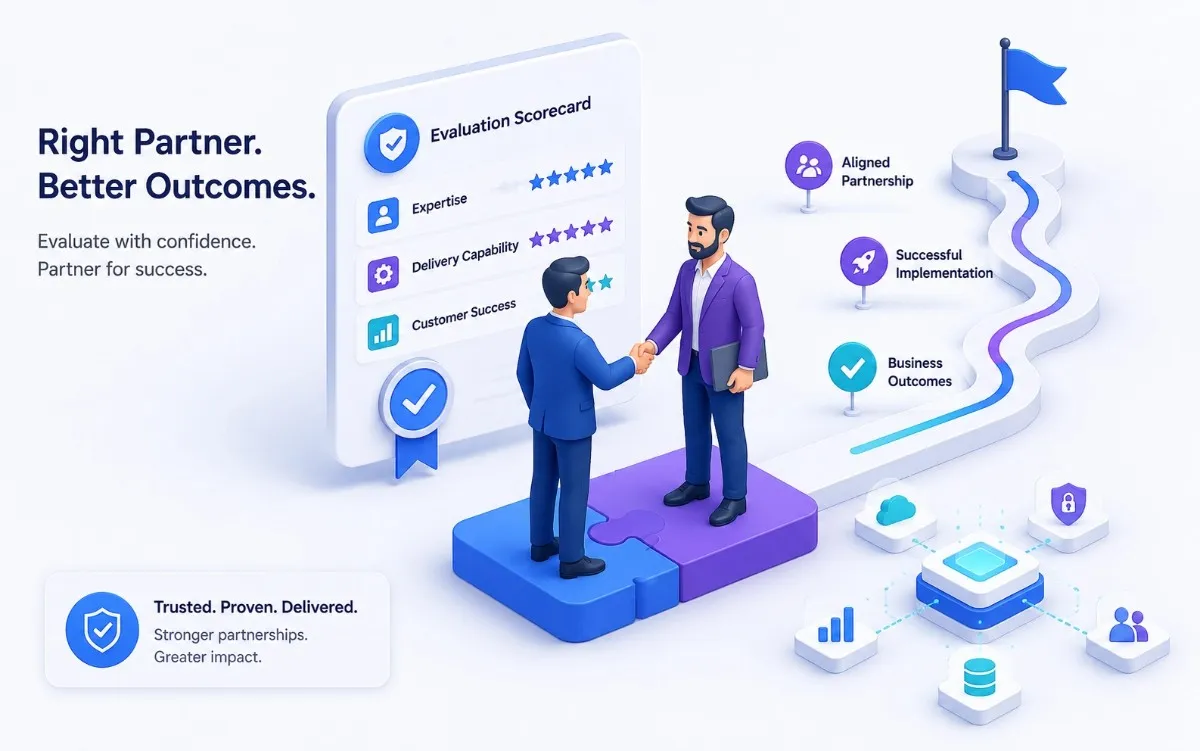
Turn ERP Evaluation Into a Confident Business Decision
Use a structured scorecard to compare ERP options based on business fit, delivery capability, risk, scalability, and long-term value, supported by experienced ERP consulting services.
Common ERP Selection Mistakes and How to Avoid Them
Most ERP selection challenges result from planning and execution decisions rather than software limitations. However, organizations can improve outcomes by defining clear requirements, evaluating vendors objectively, and managing customization carefully.
They should also follow a structured ERP implementation process with an experienced partner. Likewise, Gartner highlights governance, implementation quality, and change management as critical factors influencing long-term ERP success.
| Common Mistake | Business Impact | How to Avoid It |
|---|---|---|
| Choosing based only on price | Poor business fit and lower long-term value | Prioritize business requirements and total cost of ownership. |
| Weak requirements gathering | Incorrect ERP software selection | Define and prioritize ERP requirements before evaluating vendors. |
| Ignoring integrations | Data silos and operational inefficiencies | Assess ERP integration requirements early in the evaluation process. |
| Over-customization | Higher implementation costs and upgrade complexity | Configure standard functionality before considering customization. |
| Poor implementation planning | Project delays, low user adoption, and increased risk | Select an experienced implementation partner with proven delivery expertise. |
Make a Confident, Evidence-Based ERP Decision
Understanding How to Choose the Right ERP System requires more than comparing software features; it demands a structured evaluation of the ERP implementation process to align technology decisions with long-term business goals. Using the SDLC Corp ERP Selection Framework™, we help organizations make confident, objective ERP decisions by:
Evaluating ERP platforms against business and technical requirements.
Comparing ERP vendors using structured, business-first evaluation criteria.
Reducing implementation risk through ERP consulting experience and delivery expertise.
Planning end-to-end ERP implementation, including customization, integration, migration, and post-go-live support.
Building implementation roadmaps that improve user adoption, operational efficiency, and long-term business value.
For nonprofit selection, test award restrictions, donor reporting and country-office responsibilities using how to choose NGO ERP.
Conclusion
Understanding How to Choose the Right ERP System is ultimately about making informed business decisions, not simply comparing software features or vendor rankings. Above all, the process should begin with business priorities.
Organizations that define clear requirements and compare platforms with consistent business and technical criteria are better positioned to reduce project risk. Moreover, evaluating implementation partners with equal rigor can lead to stronger business outcomes.
A structured ERP evaluation process enables enterprise leaders to make confident technology investments that improve operational performance, support sustainable growth, and deliver long-term business value.
ERP System Selection FAQs
Answers to common questions about evaluating ERP software, vendors, deployment options, implementation partners, and project timelines.
Start by defining your business goals, operational requirements, and future growth plans. Compare ERP solutions based on business fit, integration capabilities, scalability, and implementation expertise rather than features or pricing alone.
Evaluate your business processes, functional requirements, integration needs, deployment preferences, budget, and long-term objectives. Establishing these priorities before comparing vendors helps you make a more informed ERP selection.
Compare ERP vendors using consistent criteria such as business fit, industry expertise, implementation methodology, security, scalability, support services, and total cost of ownership instead of relying on feature lists or brand reputation.
The right implementation partner helps with planning, configuration, data migration, integrations, user training, and post-go-live support, reducing implementation risks and improving long-term ERP success.
ERP selection typically takes 2–6 months, while implementation timelines vary based on business size, complexity, customization, and data migration requirements. Proper planning helps reduce delays and improve deployment outcomes.