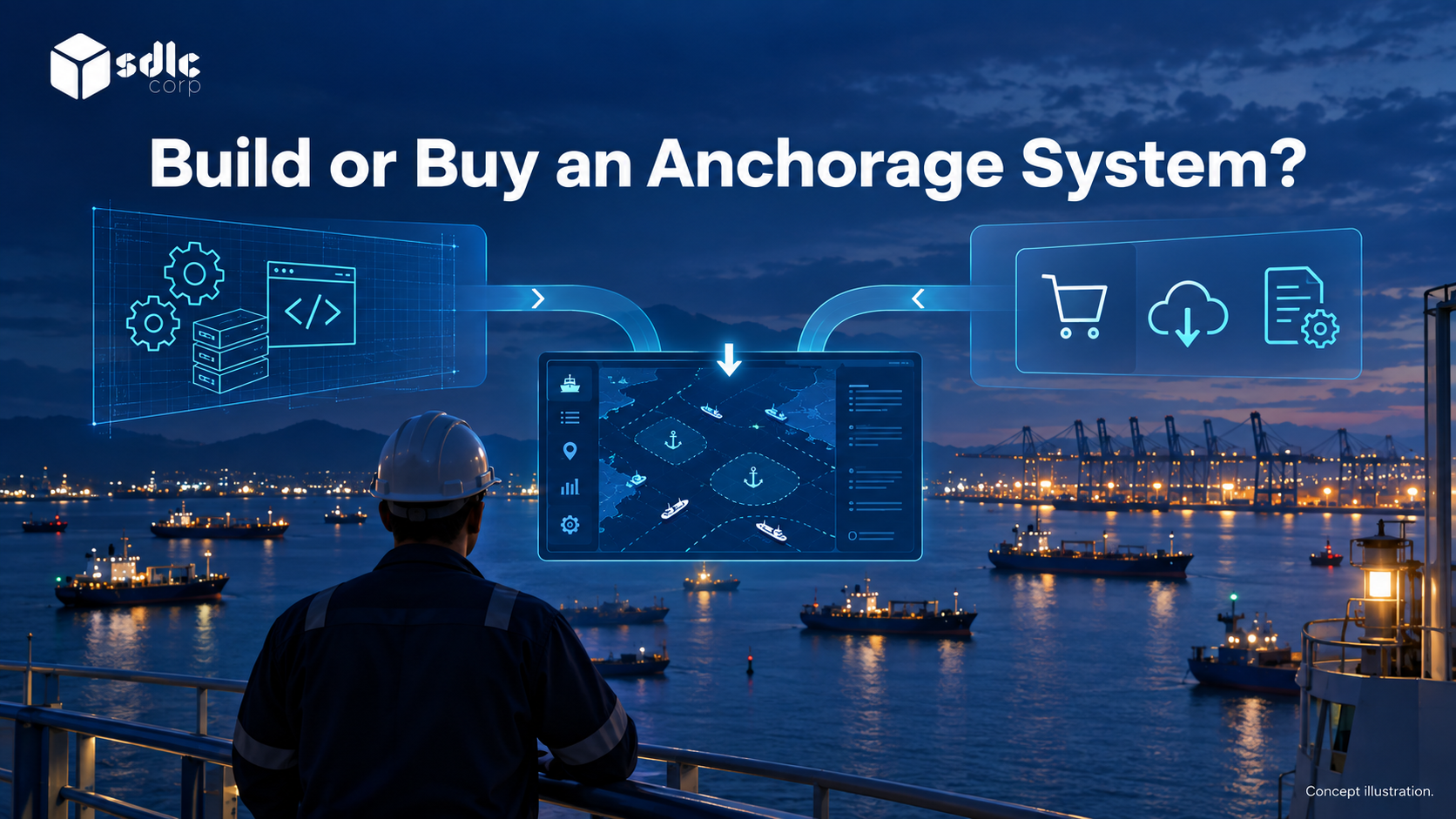
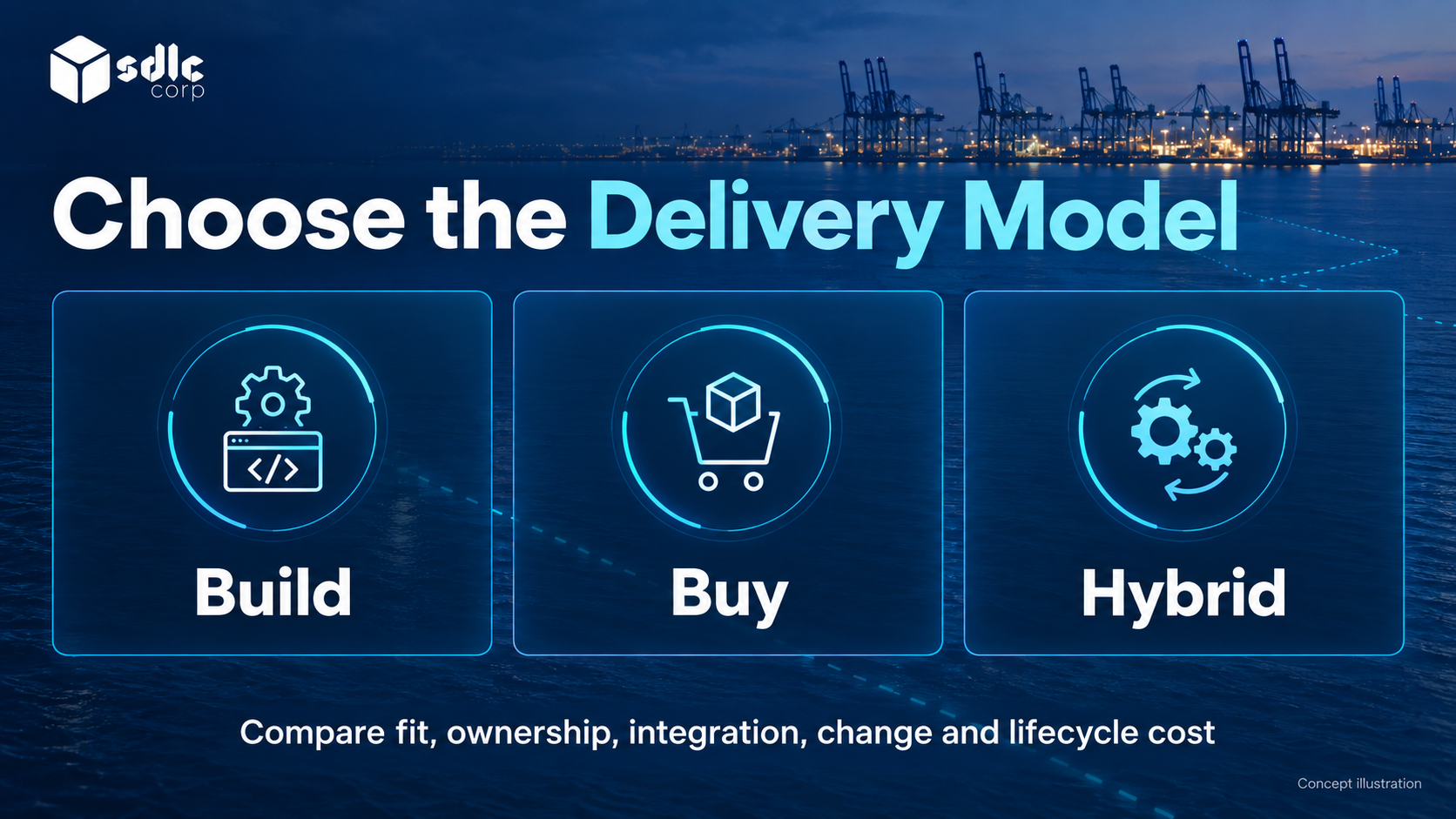
The build vs buy anchorage management system decision is about responsibility: building, buying and combining product with custom development transfer different responsibilities to the port. Compare the options on mandatory workflow fit, readiness, ownership costs and long-term maintainability.
An attractive score or purchase price does not resolve an unsupported operating model. The decision needs to explain who will maintain interfaces, handle incidents and deliver later changes for each option.
Choose a Sourcing Model the Port Can Sustain
Choose a supported product when its configuration meets mandatory workflows and its release and support model is acceptable.
Consider building when essential needs cannot be met through a supportable product and the port can fund engineering, security and operations over the system's life. A hybrid combines a supported core with explicitly owned extensions or interfaces.
Separate Feasibility from Preference
| Model | Condition That Makes It Feasible | Condition That Keeps It Unresolved |
|---|---|---|
| Buy and configure | Mandatory workflow and interface fit demonstrated | Required behavior depends on uncommitted product change |
| Build | Funded delivery and ongoing ownership | Project developers exist but maintenance capacity is unassigned |
| Hybrid | Product and custom boundaries have support owners | An extension has no upgrade or compatibility responsibility |
Compare ownership cost after these conditions are understood. Use supplier estimates and internal effort over the same period, including change, support and exit. A lower assumed cost is not evidence that an option is operationally feasible.
The ownership worksheet below records evidence for each feasible option. Resolve missing workflow, interface and support commitments before making a recommendation.
Build vs Buy Anchorage Management System: Process Fit, Integration and Ownership Criteria
Work through these factors with the people who own the constraints, and record the evidence supporting each comparison.
| Factor | Favors Buy | Favors Build |
|---|---|---|
| Process uniqueness | Workflow resembles common practice | Rules are genuinely local and non-negotiable |
| Integration complexity | Standard interfaces, few counterparties | Unusual systems, bespoke sensor estate |
| Time to value | Operational need is near term | Timeline tolerates a development cycle |
| Control and intellectual property (IP) | Product direction acceptable | Port requires ownership of the asset |
| Internal capability | No team to maintain software | Team exists and will persist |
| Change frequency | Requirements stable | Continuous local change expected |
Include configuration limits, upgrade support and exit rights from Custom vs COTS Anchorage Management Software when assessing each option's long-term fit.
Can Configuration Satisfy Your Local Approval Rules?
Identify the Difference That Actually Requires Custom Behavior
Test claims of process uniqueness against documented operating constraints.
Settle the scope question first: whether the port needs anchorage management, berth management or both changes what "unique" is being measured against. Separate the parts that are genuinely local from the parts that are simply familiar.
A rule imposed by an authority, a local regulation or a physical constraint is genuinely local. A rule inherited from the previous system may be a workaround or may encode a valid control.
Confirm its purpose with the accountable owner before deciding to retain, redesign or retire it. Go through the workflow and identify the purpose of each rule before comparing sourcing options.
Example: A Local Approval Sequence Differs
Suppose the port uses an extra approval step. First establish whether a product can configure that step while preserving permissions and audit history. If it can, the difference may not justify a custom application.
If it cannot, describe the missing behavior and its consequences before comparing an extension with a build. The decision turns on the demonstrated gap.
Start with the shared anchorage workflow capabilities. Then identify the specific local rules that cannot be met through supported configuration.
Weigh Integration Honestly
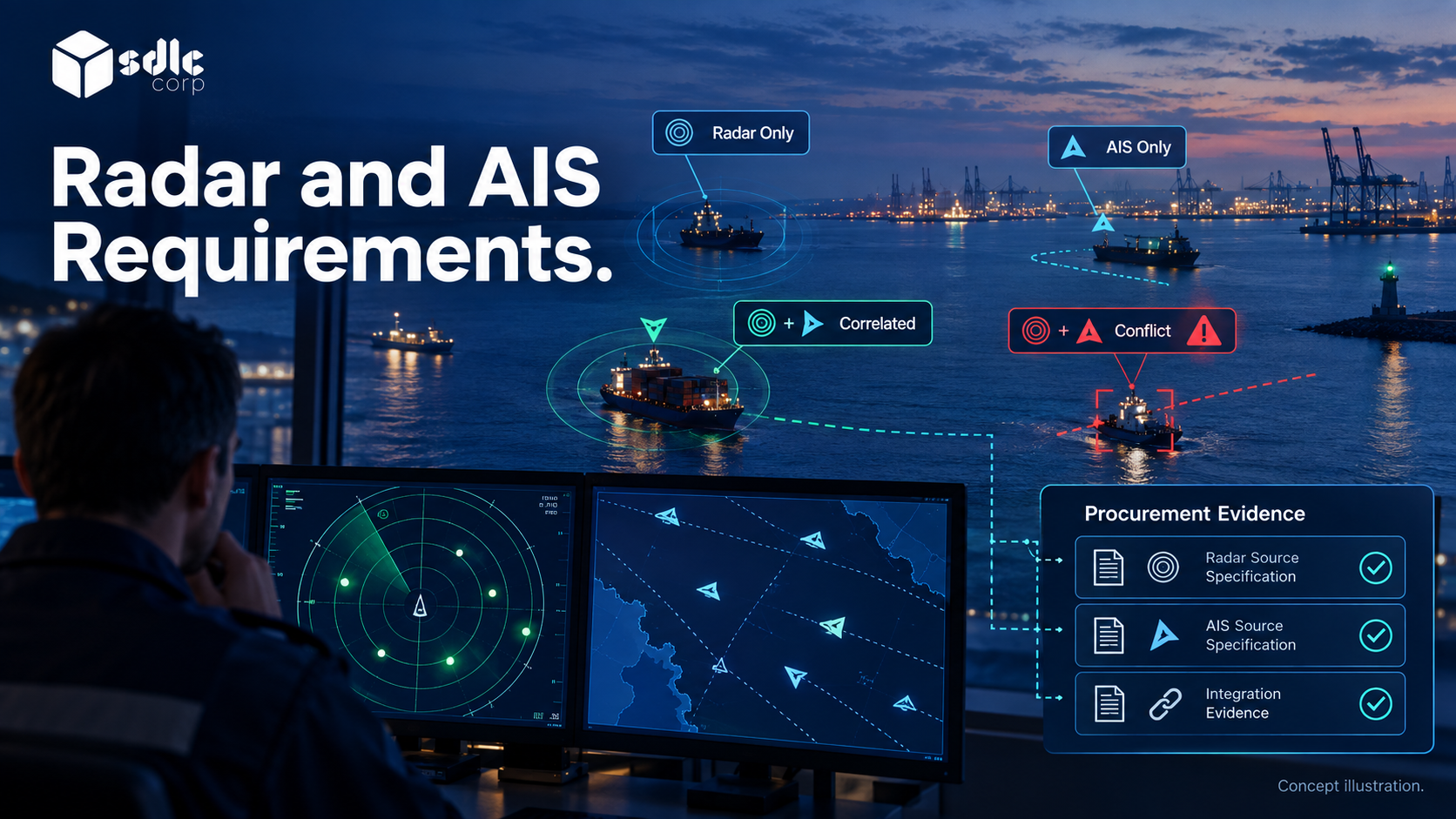
Both choices must satisfy the same integration outcomes, but their effort can differ substantially. Verify existing connectors, interface fit, licensing and testing needs instead of assuming that a product includes a usable connection.
What does change between the options is flexibility. A documented extension model may support an unusual interface, but it still needs a fit test. Check whether each local requirement needs configuration, an extension or a supplier change.
Ask specifically how a new interface is added and by whom. Complete the Anchorage Management Integration Checklist before comparing options, because it makes the delivery and maintenance effort visible.
Count the Costs Both Options Defer
Each option has a cost that appears later and is usually left out of the first comparison.
- Buy: configuration limits reached, change requests, upgrade compatibility, license growth, exit
- Build: maintenance, security patching, staff continuity, documentation, and the second system that eventually integrates with it
A build is not finished at go-live; it acquires an owner for its lifetime.
A port without a persistent team should weight this heavily, because an unmaintained custom system can accumulate security, support and change problems. Legacy Anchorage Management System Modernization describes that outcome.
Consider the Hybrid Shape Deliberately
One option is a configurable product for requests, allocation, queues, mapping and audit, with custom development for integrations, local rules and reporting. Evaluate whether that boundary preserves maintainability, delivery speed and the control the port actually requires.
Make the boundary explicit. Which components are product, which are custom, who supports each, and what happens at an upgrade. An undesigned hybrid becomes a product nobody can upgrade because of customizations nobody documented.
Apply mandatory security, deployment and data governance gates before comparing preferences.
Residency alone does not require custom software: a licensed product in an approved environment may qualify. Source code and intellectual property rights depend on the contract, not simply on whether the solution is custom.
Compare Ownership with Local Inputs
Use the same accepted scope and ownership period for every feasible option. Keep the worksheet blank until the port and suppliers supply evidence; an unsupported price or weighted total cannot establish which sourcing model is appropriate.
| Decision Input | Buy | Build | Hybrid | Evidence Needed |
|---|---|---|---|---|
| Mandatory workflow fit | To assess | To assess | To assess | Demonstrated normal and exception paths |
| Interface feasibility | To confirm | To confirm | To confirm | Supported contracts, permission and source-side work |
| Initial delivery cost | To quote | To estimate | To quote and estimate | Scope, internal effort and dependencies |
| Recurring ownership | To quote | To resource | To assign across boundaries | Maintenance, support, upgrades and staffing |
| Change and upgrade duty | To confirm | To assign | To agree per component | Supported extension policy and regression evidence |
| Exit and retained data | To agree | To plan | To agree | Export, rights, handover and support transition |
For a hybrid, identify the product core and every supported extension or interface. Give each component a support owner and an upgrade test.
A port-specific rule does not automatically require core modification; establish whether configuration or a supported extension can meet it.
Document the preferred option with its conditions: what evidence is still missing, who will obtain it, which commitment is required before contract and what would make the recommendation change.
A mandatory failure remains unresolved even when an option looks attractive elsewhere.
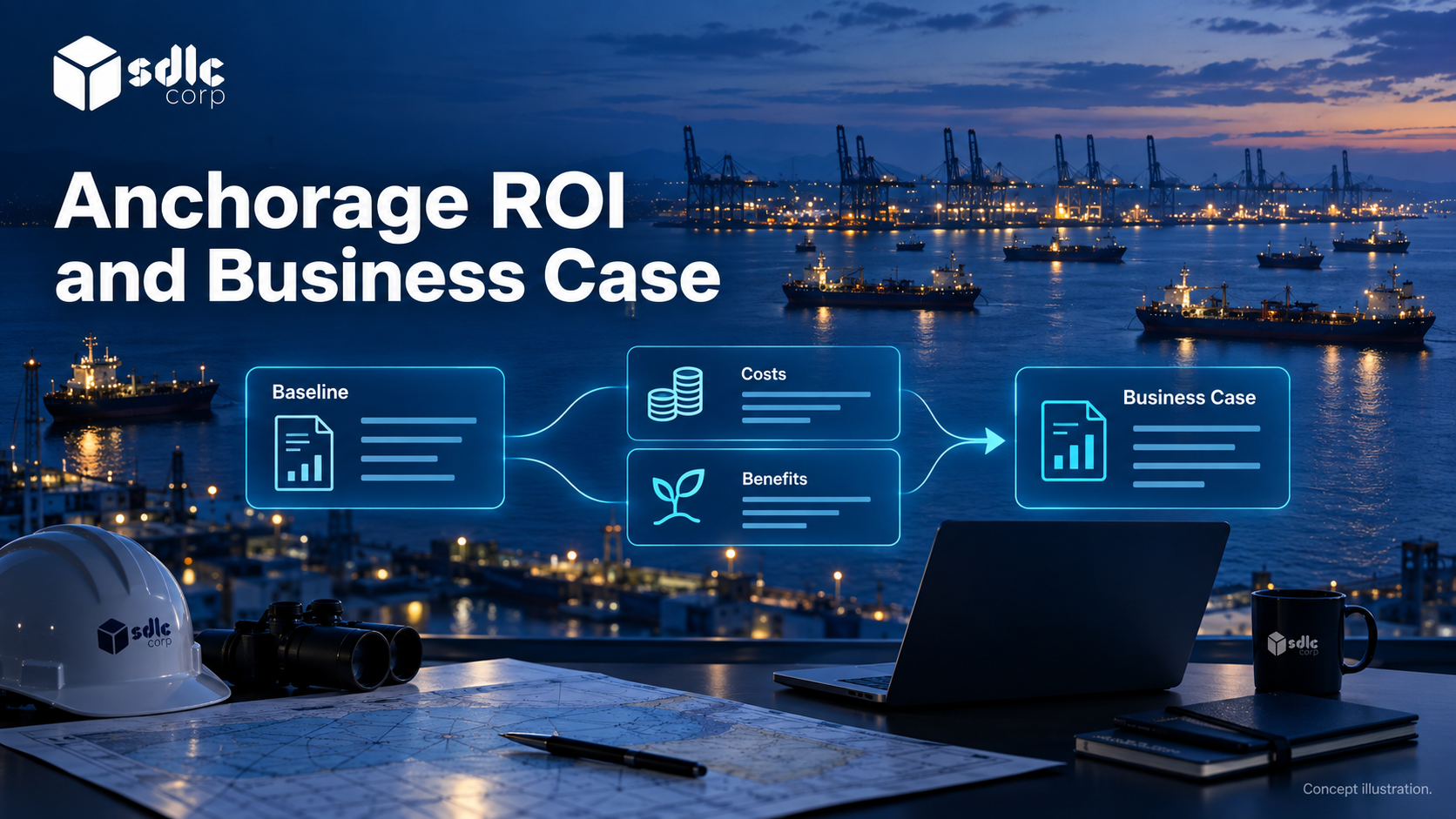
Anchorage Management System Cost helps separate supplier quotes, internal effort and recurring obligations without inventing comparable market prices.
Conclusion
For a build vs buy anchorage management system decision, compare the eligible sourcing options using the same workflow and ownership period. Include maintenance capacity, supplier dependencies and the work required when interfaces or operating rules change.
Choose the model the port can sustain, and record the conditions behind that choice. Review it when those conditions materially change rather than defending the original decision after its assumptions no longer apply.
Review Sourcing Options with SDLC Corp
Consider SDLC Corp's Software Consulting Services when comparing sourcing options that include the Anchorage Management Software. Bring the workflow fit gaps, interface inventory and ownership worksheet.
Ask where configuration is sufficient, where a supported extension is needed and who would maintain each boundary, with recurring responsibilities and exit conditions made explicit before choosing build, buy or a hybrid approach.
Frequently Asked Questions
When Is a Hybrid Approach Worth Considering?
Consider it when a supported product meets the core workflow but specific interfaces or extensions need separate development. Define the boundary and responsibility for upgrades so the combination does not leave support gaps.
Does Having Developers Make Building Cheaper?
Not automatically. Include their delivery and maintenance effort, security and support duties, continuity and the other work they would defer. Compare those costs over the same period as the purchased option.
When Should the Decision Be Reviewed?
Revisit it when workflow fit, internal capacity, supplier support or integration requirements change materially. Keep the original assumptions and evidence so the review can identify what changed.