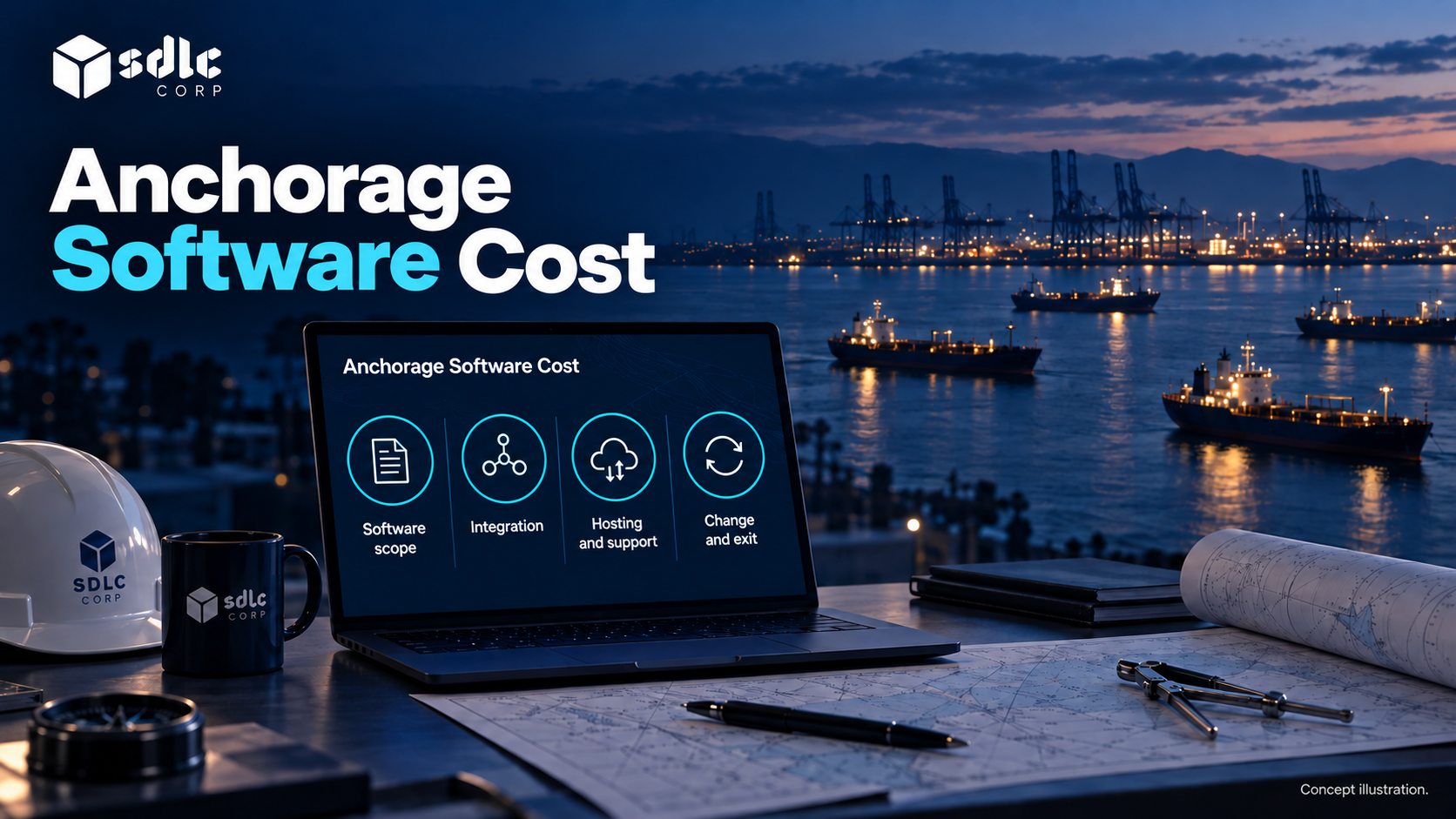
Anchorage management system cost for a full-scale SDLC Corp implementation starts from approximately USD 2 million, with maintenance and support quoted separately from Year 2 onward.
That is SDLC Corp's starting commercial position, not an independent market benchmark or a fixed quote for every port. The final proposal depends on workflows, installed interfaces, data migration, deployment and acceptance scope.
Compare what each quotation includes before comparing totals. A smaller module or another supplier's subscription is not automatically equivalent to a full implementation.
What the Anchorage Management System Cost Figure Means
The starting figure opens a scope discussion. It does not say which incumbent-system fees, licenses, infrastructure, taxes or future enhancements are included, so get a written inclusion schedule before treating it as a budget.
Separate the initial implementation from the recurring service. Maintenance covers agreed corrective work and supported updates; operational support depends on coverage, severity handling, response obligations and escalation.
| Commercial Item | Stated Position | What the Proposal Must Confirm |
|---|---|---|
| Initial full-scale implementation | Starts from approximately USD 2 million | Included workflows, interfaces, environments, migration, training and acceptance scope |
| Year 1 support arrangements | Confirm in the implementation proposal | Warranty, initial support, coverage and any separately charged services |
| Years 2 to 5 maintenance and support | Quoted separately according to agreed scope and service coverage | Annual amounts, renewal terms, exclusions and escalation obligations |
| New integrations and enhancements | Separately scoped and quoted | Deliverables, source-side dependencies, acceptance and ongoing support impact |
Do not derive an annual support percentage or a multi-year total from the starting price. An unpriced recurring item is an unresolved cost, not a zero.
Define the Scope Before Comparing Quotations
Start with the operating tasks to support: requests, eligibility checks, proposals, approvals, changes, release and the history needed to reconstruct each decision.
Agree which users and operating areas are in scope, then list exceptions such as unavailable inputs or a changed restriction.
Separate existing product capability, supported configuration, extensions and new development. Two suppliers can use the same feature name while assuming different workflows, permissions and test obligations.
Include the port's own contribution: access approvals, operational specialists, test participation, data cleanup and training time. Keep these visible beside supplier charges.
Which Anchorage Management System Features Belong in the First Release? separates the working core from optional capability before you request an estimate.
Identify the Cost Drivers That Need Discovery
Interfaces and Source-Side Work
An interface estimate needs more than a system name: installed version, permitted operations, documentation, sample records, authentication, test access and recovery contract. An existing read feed does not prove authorized writes are available.
Identify who pays for incumbent changes, gateway licenses, data feeds and test environments. Price adapter development separately from source-side work, so a missing permission never becomes a hidden assumption.
Migration, Deployment and Acceptance
Migration effort depends on source quality, identity matching, retained history and reconciliation rules. Deployment depends on the approved architecture, network access, environments and continuity needs.
Acceptance effort depends on the workflows and failure cases that must be demonstrated, not the number of screens.
Use the worksheet below to gather comparable inputs. It is deliberately unpriced: each supplier should fill it from the agreed scope, not a generic allowance.
| Cost Driver | Scope Input to Supply | Supplier Amount and Basis | Port or Third-Party Dependency |
|---|---|---|---|
| Workflow and configuration | Required states, roles, rules and exceptions | To be quoted with inclusion list | Named operational owners |
| Interfaces | Installed versions, supported reads and writes, and recovery paths | Quote each connection and source-side work separately | Access, licenses and incumbent support |
| Migration | Source records, quality issues and retained history | Quote mapping, cleanup, rehearsal and reconciliation | Source owner and approved correction rules |
| Deployment | Environments, network boundary and continuity needs | Separate setup from recurring infrastructure | Infrastructure and identity teams |
| Acceptance and training | Scenarios, evidence, users and handover | State included cycles and change conditions | Operator availability and sign-off owners |
| Maintenance and support | Coverage, severity definitions and service boundaries | Separate recurring proposal | Third-party escalation commitments |
| Exit | Export scope, schema, history and assistance | State inclusion or a separately quoted service | Retention and handover requirements |
The Anchorage Management Integration Checklist surfaces missing permissions, test access and source-side work that can change an interface estimate.
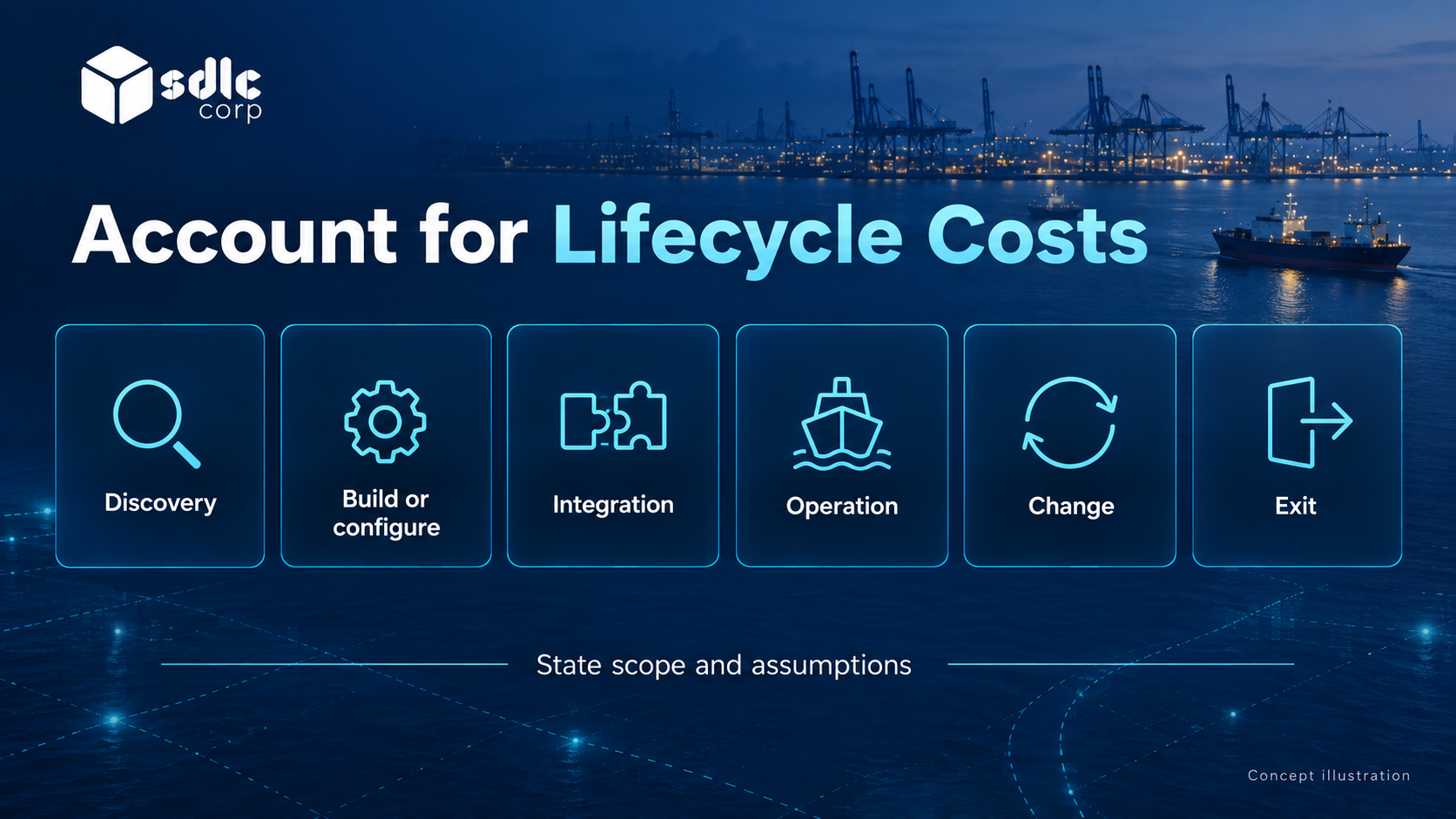
Separate Maintenance from Additional Scope
Maintenance covers defects, supported updates and compatibility changes. Enhancements add a capability or change accepted behavior. The line matters when an incumbent changes its interface or the port adds an operating area.
Ask the proposal to name the incident owner when the application, network and an external feed fail together. Coverage hours must come from the agreed operating requirement, not an assumed standard package.
Keep infrastructure, map or data services, third-party licenses and optional enhancements as separate lines, and check each is not already included elsewhere.
The Anchorage Management SLA and Support Checklist specifies the coverage and incident boundaries behind the recurring quote.
Build Total Cost of Ownership from Quoted Inputs
Total cost of ownership (TCO) combines implementation, recurring operation, approved changes and exit obligations over the chosen term. Compare offers in one currency, period and tax basis.
Separate committed prices from estimates and unresolved dependencies. The GAO Cost Estimating and Assessment Guide sets out this discipline for life-cycle cost estimates, including how to document uncertainty.
Illustrative Five-Year TCO Layout
Illustrative example
| Cost Line | Year 1 | Year 2 | Year 3 | Year 4 | Year 5 | Basis |
|---|---|---|---|---|---|---|
| Implementation | From quote | None | None | None | None | Accepted scope and milestones |
| Maintenance and support | Per proposal | From quote | From quote | From quote | From quote | Recurring offer and renewal terms |
| Infrastructure and licensed services | From quote | From quote | From quote | From quote | From quote | Hosting, software and feed commitments |
| Planned changes | From quote | From quote | From quote | From quote | From quote | Committed work only |
| Exit and handover | None | None | None | None | From quote | Agreed export and assistance terms |
| Contingency | Port estimate | Port estimate | None | None | None | Named risks still under discovery |
Every cell is filled from a quote or a documented port estimate. A formula does not supply missing prices, so leave the total provisional until material items have a basis.
Compare build, buy and hybrid options over the same scope and period. The Anchorage Management System Vendor Evaluation Scorecard shows how to turn normalized cost into a rating.
Plan for Contingency and Payment Milestones
Discovery routinely changes interface and migration estimates. Hold a contingency reserve for scope still under discovery, tie it to named risks such as unconfirmed write access, and release it only when a risk materializes or closes.
Link payments to accepted deliverables rather than calendar dates. A milestone paid on acceptance keeps supplier and port attention on working evidence.
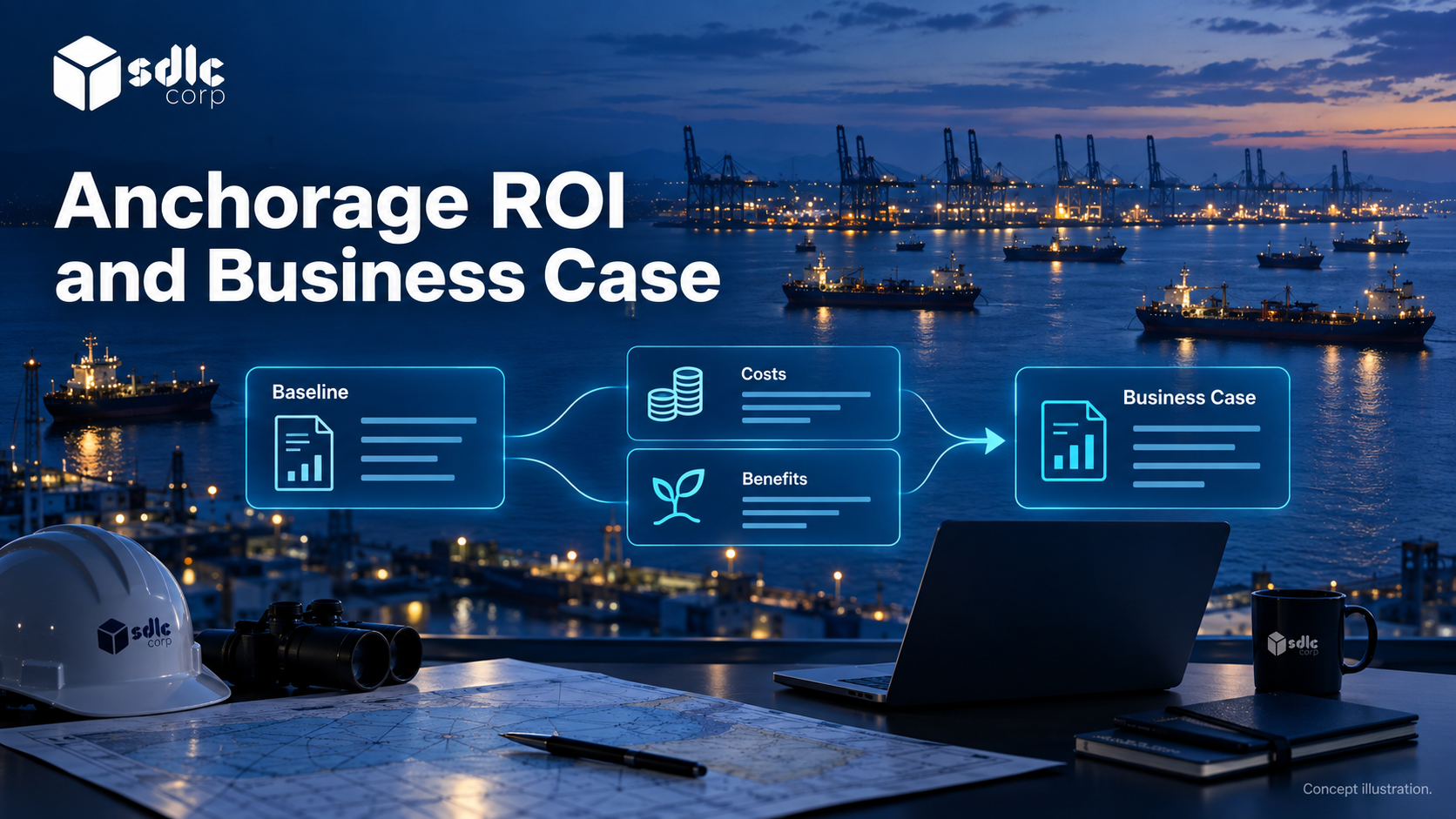
Also record what the current process costs: manual reconciliation effort, spreadsheet workarounds and repeated data entry. That baseline lets the business case compare like with like, without unsupported savings claims.
Connect the Price to Deliverables and Acceptance
Each priced deliverable needs an owner, a dependency and an acceptance condition. For an interface, that includes a normal exchange, a rejected request, an uncertain acknowledgment and recovery without duplicate changes.
For migration, it includes reconciliation and an agreed treatment of rejected records.
Compare exclusions alongside the amount. A lower headline figure may shift work to the port or leave source-side access unpriced.
The priced-dependency structure in How to Write an Anchorage Management System RFP makes those differences visible before you commit a budget.
Conclusion
Treat the stated anchorage management system cost as the start of a scope discussion, and obtain an itemized proposal showing what the implementation includes and what depends on the port or another supplier.
Keep maintenance separate, hold contingency against named risks, and build the ownership total only from quoted inputs.
Request a Scope-Based Estimate from SDLC Corp
Contact SDLC Corp to evaluate our Anchorage Management Software against your workflows, installed interfaces and deployment requirements. Bring the cost-driver worksheet.
We will provide a written implementation scope with inclusions, exclusions, dependencies and acceptance conditions, with maintenance, support and enhancements quoted separately for a consistent comparison.
Frequently Asked Questions
What Is SDLC Corp's Starting Implementation Price?
SDLC Corp states that full-scale implementation starts from approximately USD 2 million. It is a supplier-specific starting position, not a market average or a fixed quote. The agreed scope determines the proposal.
Are Maintenance and Support Included in That Figure?
Maintenance and support are charged separately from Year 2 onward. Confirm Year 1 support and warranty arrangements in the implementation proposal, and get recurring coverage, amounts and exclusions in writing.
Can We Calculate a Five-Year Total from the Starting Price?
Not reliably. You also need recurring support, infrastructure, third-party and change costs. Build the total from actual commercial terms for the selected period.
Why Does Anchorage Management System Cost Vary So Much Between Quotes?
Quotes often assume different scope: which interfaces are included, who does source-side work, how much history migrates and what acceptance requires. Normalize those assumptions before comparing totals.
How Much Contingency Should We Hold?
Size it from the risks still open after discovery, such as unconfirmed interface access or unknown data quality, rather than a fixed percentage. Release it as each named risk closes.
How Should Payments Be Structured?
Tie payments to accepted deliverables rather than calendar dates. Each milestone should name the evidence that proves acceptance, so payment follows working results.