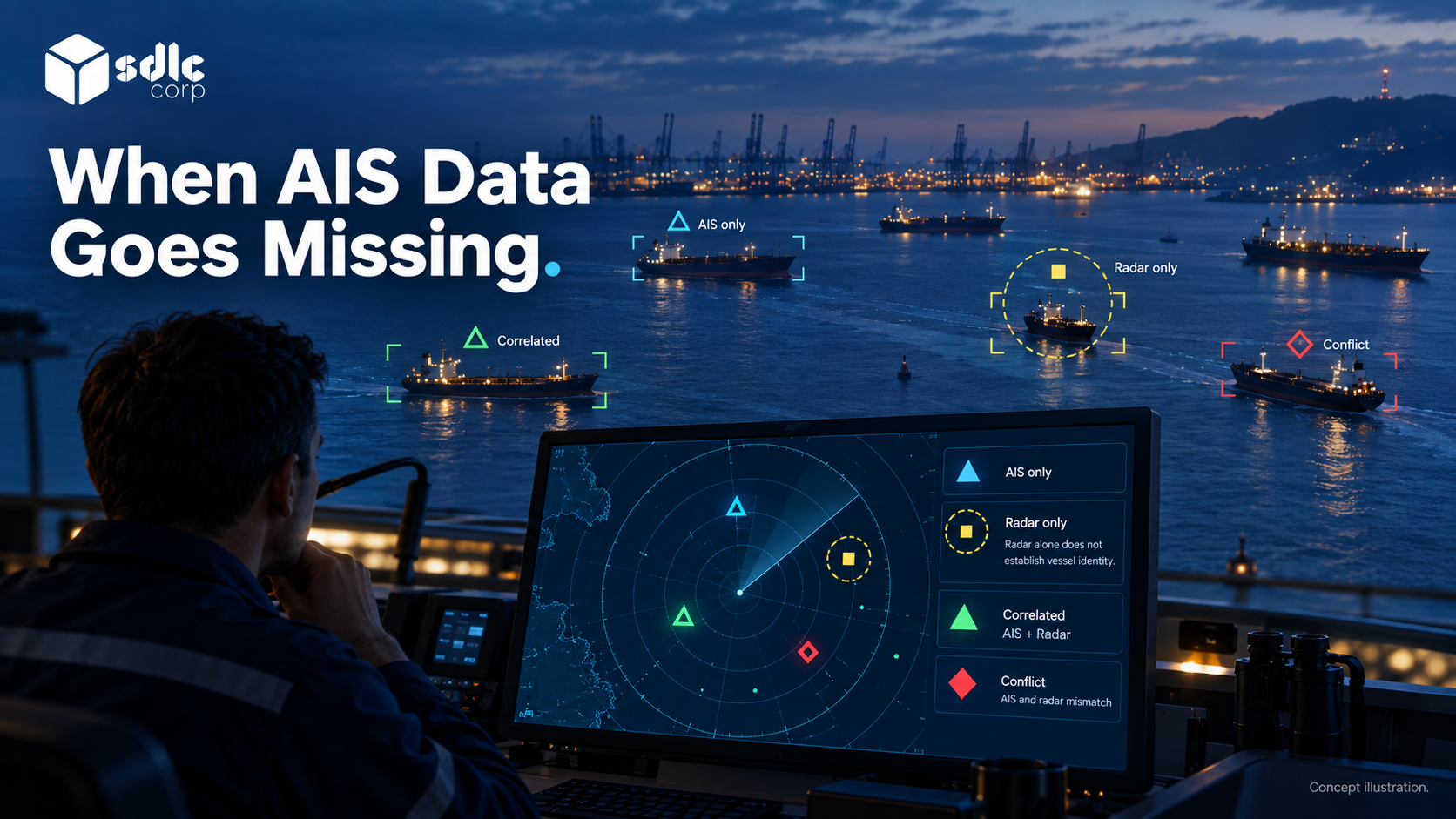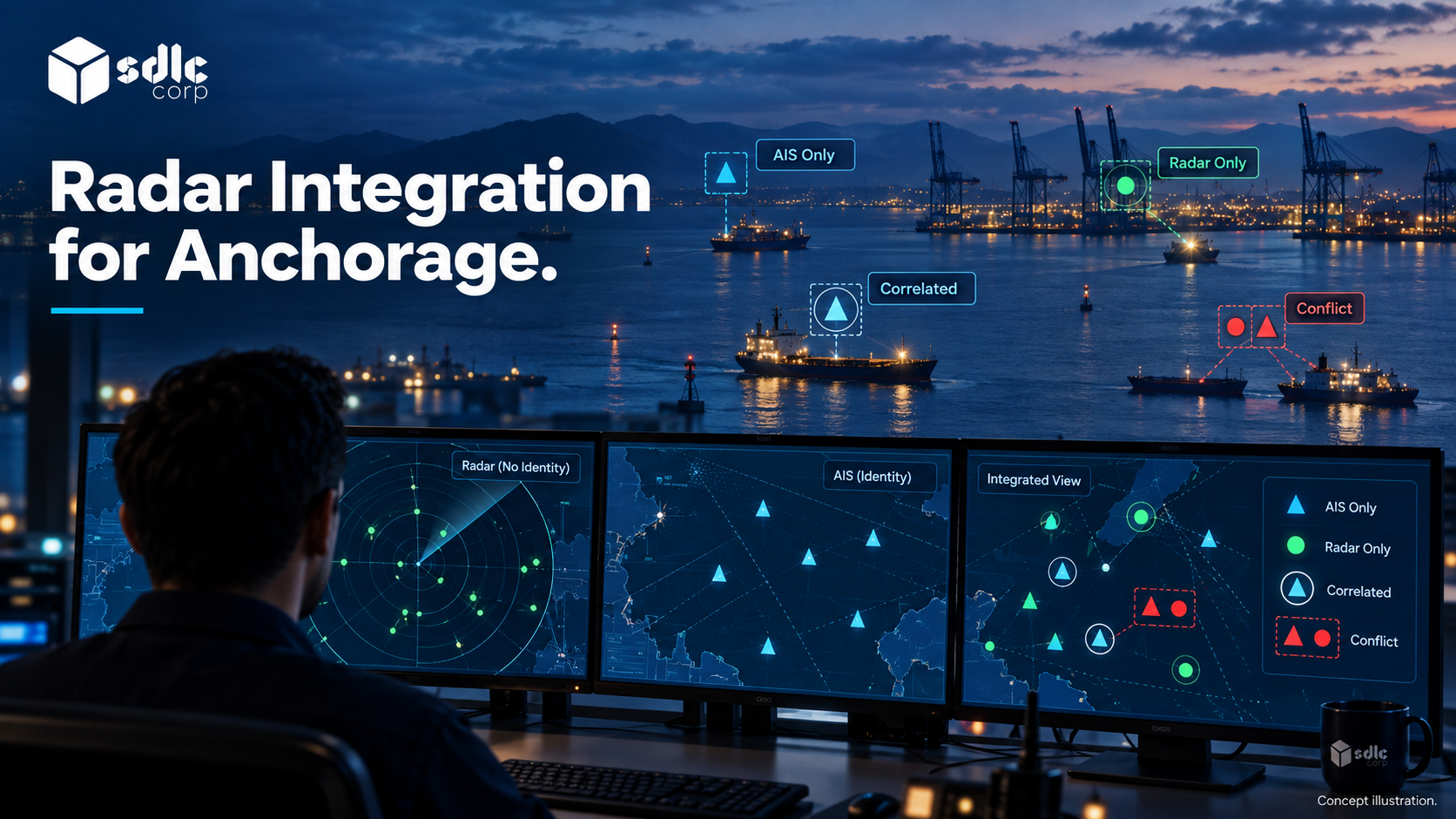
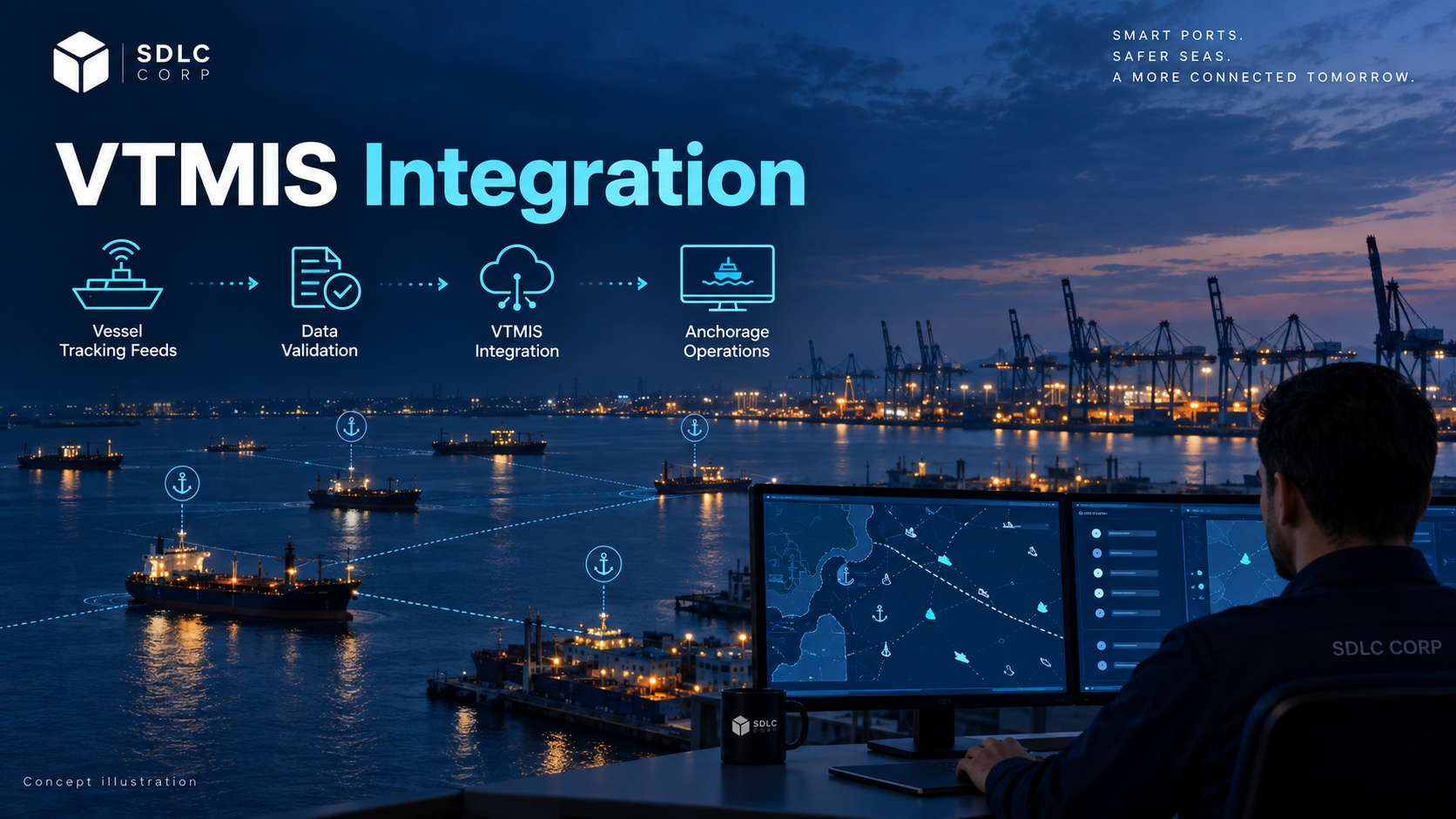
Integrating a Vessel Traffic Management and Information System (VTMIS) with anchorage software starts with two separate questions: what information may the application read, and what changes may it submit? Permission to receive observations does not authorize changes to the source system.
The difficult case is a write that receives no response. The application needs a way to discover the authoritative result before retrying, while keeping rejected, pending and accepted changes distinguishable to the operator.
Choose The First VTMIS To Anchorage Workflow
VTMIS functions, services and writable interfaces are implementation-specific. Confirm the installed capabilities, supported interface and permission with its owner. Its name does not establish which observations, workflow operations or writes are available.
Choose a workflow such as showing the latest available vessel observation beside an anchorage request. Identify the users, required fields, acceptable delay, and the action the information supports. A phrase such as synchronize everything hides different ownership and availability requirements.
Confirm the traffic service and platform responsibilities before implementation. The new application may consume information from a VTMIS without becoming responsible for the traffic service itself. The overall anchorage system architecture should show that boundary clearly.
List the installed VTMIS version, supported interfaces, network route, test access and support terms. Request sample data and a contact who can explain what each field means. Record any dependency on an incumbent supplier as part of scope and schedule, rather than assuming access will arrive during development.
The integration readiness gates record whether the required permission, contract and test access are confirmed or still blocked.
Specify Vessel IDs, Call References, Timestamps And Versions
| Contract Element | Required Decision | Acceptance Evidence |
|---|---|---|
| Vessel and call identity | Stable identifiers and matching rules | A vessel with multiple calls remains distinguishable |
| Observation time | Source time, receipt time and time zone | A delayed update is visibly recognized |
| State ownership | Which system may change each field | Unauthorized overwrites are rejected |
| Delivery behavior | Ordering, retry and duplication expectations | Replayed messages do not repeat a business action |
| Corrections | Reconciliation and manual review rules | A disputed record retains its history |
Separate vessel identity from a port call record. A recurring vessel can have multiple requests over time, and an identifier correction must not merge unrelated calls. Keep an internal reference that remains stable when a source label changes. Place unmatched records in a review queue with the original payload reference and a clear owner.
Example Of A Call-Linked Observation Contract
Illustrative example
Build the application programming interface (API) contract worksheet from the incumbent interface documentation before estimating development. Replace the sample entries with the fields and operations the installed system supports.
| Field | Sample Contract Value | Validation Result |
|---|---|---|
| observation_id | traffic A:O-55 | Same identifier on retransmission; one stored observation |
| vessel_reference / call_id | V-18 / C-182 | Match to this visit, not another visit by V-18 |
| observed_at | 2026-09-18T10:14:32Z | Provider derived complete time with provenance |
| received_at | 2026-09-18T10:14:35Z | Three second age at receipt |
| source_revision | 84 | Older revisions cannot replace newer current state |
| allocation_status | Read from anchorage approval owner | Traffic observation cannot overwrite approval |
Walk one sample through rejection, matching and presentation. Then resend it and delay an earlier version. The expected result is a traceable observation associated with the intended call, with duplicates handled according to the contract and no change to approval authority.
Trace the Automatic Identification System (AIS), VTMIS and anchorage exchange so observation time, receipt time and application state retain their different meanings.
A Read Contract And An Uncertain Write
Illustrative example
The contract uses call C-182 to trace a read and a write. Map the fields and operations to the supported source interface.
| Field | Sample Value | Source Of Authority |
|---|---|---|
| call_id | C-182 | Shared identity mapping |
| observation_id | O-55 | Traffic source |
| observed_at | 2026-09-18T10:14:32Z | Provider timestamp with declared provenance |
| source_revision | 84 | Traffic source |
| requested_zone | B | Anchorage request originator |
| allocation_status | pending | Authorized allocation workflow |
Read, Submit, Lose The Response, Reconcile
| Time | Exchange | Stored Result |
|---|---|---|
| 10:14:35 | Read source revision 84 | O-55 stored; no allocation change |
| 10:15:00 | Authorized user submits change operation OP-41 | Local status: submitted, outcome unknown |
| 10:15:01 | Network loses the response | OP-41 remains uncertain; no second operation created |
| 10:16:00 | Query operation status using OP-41 | Source reports accepted as revision 85 |
| 10:16:01 | Reconcile local state to revision 85 | Accepted result recorded with source reference |
If the source has no operation status lookup, reconciliation needs an agreed audit or record query before a retry. If it rejects OP-41, preserve the rejection and leave the previous accepted state intact. Read-only interfaces stop at observations: a proposed write must remain local until a supported, authorized route exists.
A Rejected Change Leaves The Accepted Record Intact
In this second sequence, the local request was prepared against revision 85, but the authorized source has already reached revision 86. The requested zone is a proposed change, not permission to move.
{
  "operation_id": "OP-42",
  "call_id": "C-182",
  "expected_revision": 85,
  "requested_zone": "C"
}
{
"operation_id": "OP-42",
"status": "rejected",
"reason": "revision_conflict",
"current_revision": 86,
"accepted_zone": "B"
}| Step | Local Result | Source Result |
|---|---|---|
| Before OP-42 | Zone B, revision 85 cached | Zone B, revision 86 current |
| Rejection received | OP-42 rejected; proposal C retained for review | Revision 86 unchanged |
| Reconciliation read | Cache updated to revision 86 | No new write |
| User still wants Zone C | New reviewed operation with a new identifier | Approval remains subject to the supported authority model |
Retrying the rejected OP-42 unchanged cannot resolve the version conflict. Reconciliation updates the local record; a separately authorized new operation is required to propose another change.
Separate Observations From Commands
Define What Each Exchange Is Allowed To Change
A position update is an observation. An approved allocation is a business decision. A request to update another system is a command. Representing these separately helps prevent a tracking event from unintentionally creating or canceling an allocation.
Preserve the event identifier, source, source timestamp, receipt timestamp, schema version, and correlation reference where available. When an interface omits a useful field, document the limitation and the agreed substitute. Do not invent a reliable ordering guarantee from timestamps alone.
Choose event notifications for transitions that need prompt handling and supported read APIs for current state or reconciliation. A periodic comparison can detect records missed while a connection was unavailable. This pattern should fit the actual source contract; it is not a reason to introduce a broker where a simpler supported interface meets the requirement.
Handle Duplicates, Late Data And Conflicts
Design handlers to recognize an already processed event or an already completed business action. The integration should be able to receive a retry without creating a second allocation. Store enough processing evidence to explain why an update was accepted, ignored, or sent for review.
Late observations should remain available for history without silently reversing a newer approved decision. Define precedence per field or transition. A duty officer's temporary override should have a reason, scope, and expiry or review condition; otherwise, an emergency correction can become an undocumented permanent rule.
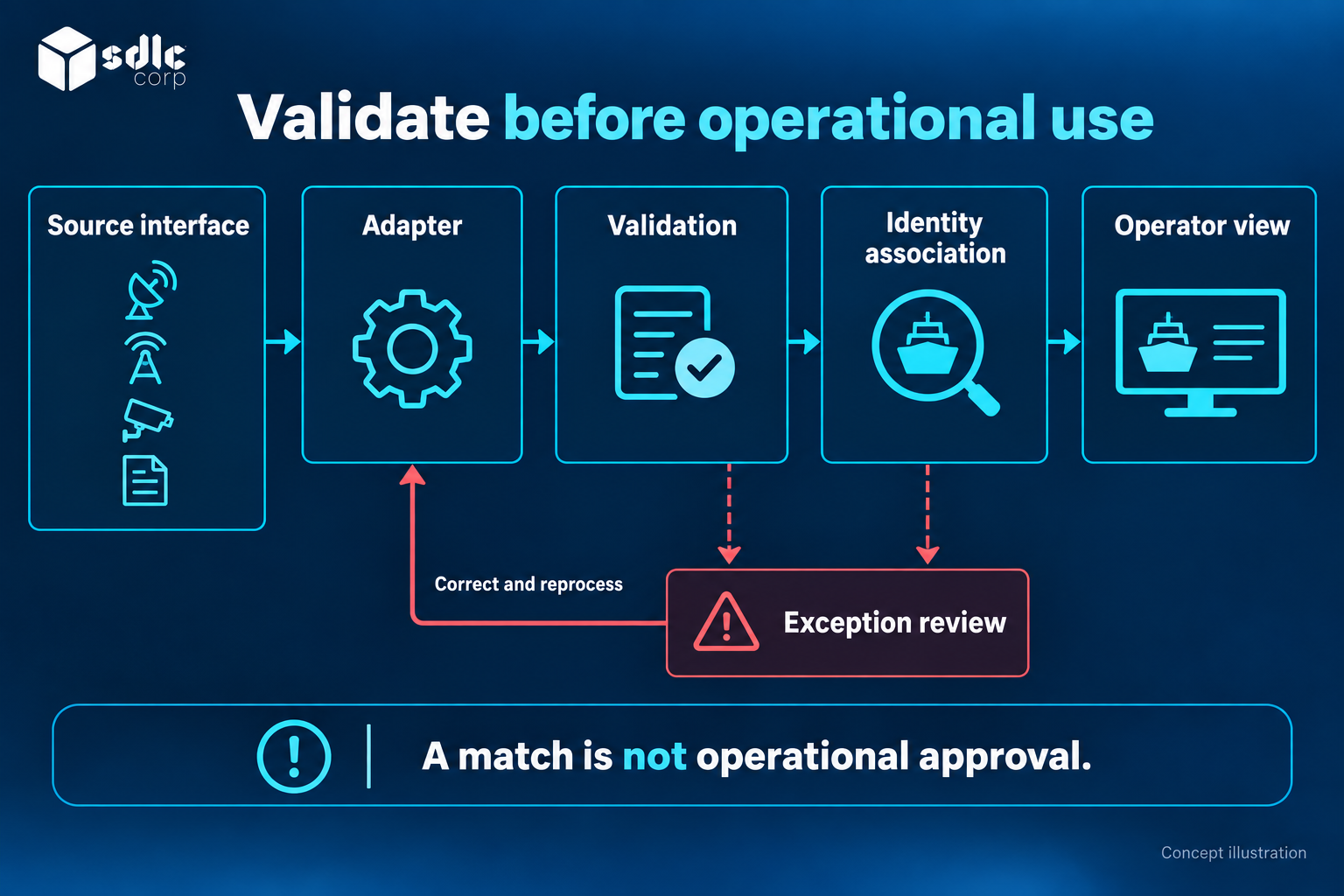
When data conflicts, show both values and where they came from. Send unresolved differences to a named reviewer. Do not choose a value simply because that system was queried last. Include this behavior in the functional and nonfunctional requirements baseline.
The field-authority and conflict-resolution model prevents a later-arriving message from overriding a fact owned by another party.
Design For Degraded Operation
Define when information becomes stale and what the operator may do in that state. Different facts may need different thresholds. A cached map can retain situational context, but the interface should not label it current after the feed has stopped.
Limit automatic retries and set aside records that keep failing. Give support staff an approved way to replay them. Record manual actions so they can be compared with incoming updates during recovery. Test both a short interruption and a gap longer than the source can replay.
Monitoring should distinguish transport failure, authentication failure, rejected data, processing delay, and business rule rejection. Assign each condition to a support owner. A single red integration light gives operators little help when several suppliers are involved.
Distinguish Connection Recovery From Record Recovery
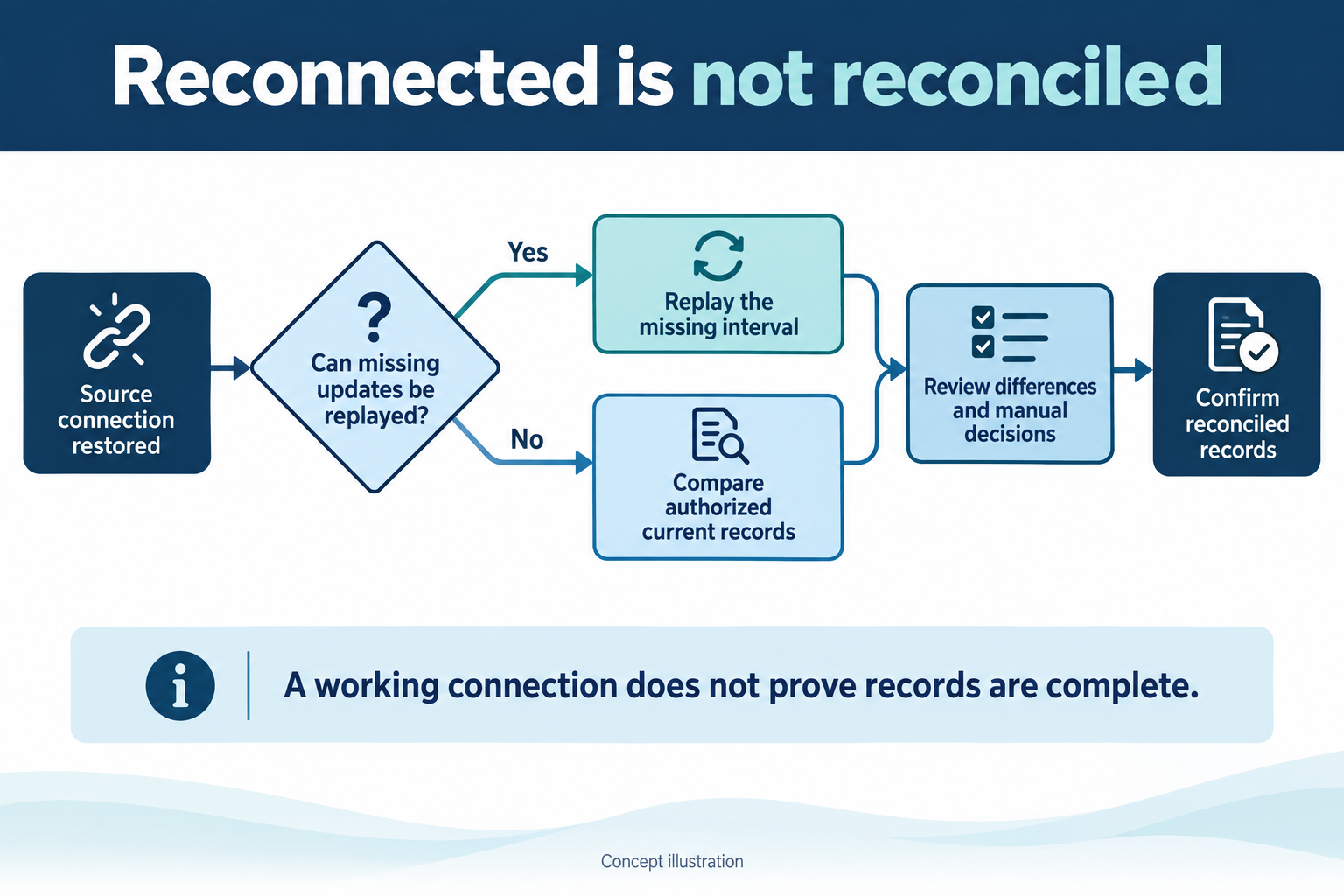
In a recovery test, first restore the connection, then compare the affected records. These are separate pass conditions. A green connection indicator confirms little about updates missed during the outage. Have the test team identify the gap, reconcile the affected calls and inspect any decisions made manually.
If the source cannot replay the missing period, the specification needs an agreed alternative, such as an authorized current state comparison with unresolved differences sent for review.
Specify Security And Observability
Limit each integration identity to the operations and records it needs. Test authorization at the object level, not only whether a token is accepted. The Open Worldwide Application Security Project (OWASP) API Security Top 10 identifies broken object-level authorization as an API risk that requires explicit permission checks on each requested record.
Keep credentials outside source code, use the approved secret store, and plan rotation with the source owner. Log correlation references and decisions without routinely copying secrets or excessive sensitive payload data into support logs. Agree access, retention, and redaction with the port's security team.
Test Read Access, Reconciliation And Writes Separately
Begin with interface discovery and a contract test against representative data. Next, run a read-only integration with visible freshness and reconciliation. Introduce supervised workflow updates only after ownership, permissions, and recovery are accepted. Finally, test operational support and cutover with the teams that will run the service.
The integration obligations in the procurement request for proposal (RFP) should name test environments, source-side work, performance measurement conditions, failure scenarios, and acceptance owners. Define latency as a measured interval between agreed points; do not substitute a vendor's demonstration speed for the port's acceptance target.
The design is ready for implementation planning when read access, authorized writes, reconciliation and recovery each have an owner and an acceptance test.
For a project reference, review the anchorage integration case study and check whether it documents comparable interface access, ownership and recovery conditions. Carry unanswered questions into evaluation rather than inferring that its connection matches yours.
Conclusion
Accept the integration only after a normal read, a rejected write and an unanswered write each produce an explainable record. For the unanswered request, demonstrate how reconciliation establishes whether the source applied the change.
If authorized writes are unavailable, define a useful release based on permitted reads and the existing approval process. Do not leave write access as an unstated delivery assumption.
Discuss A VTMIS Integration Review With SDLC Corp
Bring the installed traffic-system contract and permitted sample records to an SDLC Corp consultation on the anchorage management system and software integration services. Ask for separate scope and acceptance conditions for reads, authorized writes, uncertain acknowledgements and reconciliation. The response should identify source-owner responsibilities and unverified access assumptions before proposing an implementation sequence, price or delivery date.
Frequently Asked Questions
Can Integration Begin With Read Access Only?
Yes, when the goal is visibility into permitted observations or call information. Document which changes still occur in the source system and how the anchorage application receives the resulting state.
What Should Happen After A Write Times Out?
Check the source using the operation identifier or other agreed reconciliation method. A timeout does not prove failure. Retry only under the contract's duplicate handling rules, preserving the original request and discovered result.
Is A Message Broker Required?
Not for every integration. Use the source's supported interface and evaluate delivery, ordering and recovery needs. A broker is justified when its capabilities solve a defined requirement and the team can operate it.