
- Home
- Case Studies
- Anchorage Management System
Anchorage Management System
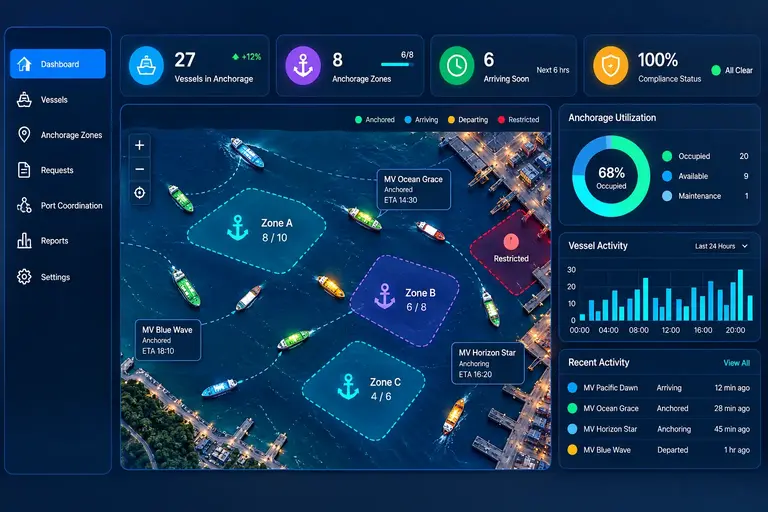
SDLC Corp built a centralized Anchorage Management System for a maritime operations client, replacing manual vessel requests, calls, and separate records with one digital workflow for anchorage allocation, real-time vessel monitoring, and port operations management.
- Vessel requests, allocation, monitoring, and alerts in one workflow
- Clearer view of vessel activity for port teams
- Operators stay in control of anchorage decisions
Project at a Glance
The project focused on digitizing the complete anchorage workflow rather than adding another standalone port application.
- Primary Users
- 4User Groups
- Port operators, marine control, shipping agents, and admins.
- Key Capabilities
- 5Core Capabilities
- Vessels, allocation, live monitoring, alerts, and reporting.
- Integration Focus
- 4Data Streams
- Vessel, port, marine, and operational data in one flow.
- Operational Scope
- 1Operational Environment
- Requests, availability, locations, activity, and history.

Project type: Digital Transformation
Client Challenges in
Anchorage Operations
Anchorage operations depended on information spread across different processes. Operators had to collect vessel details, check available areas, coordinate with teams, and track status changes manually.
challenges
This created several practical challenges:
- Manual vessel request handling
- Separate vessel and operational records
- Limited visibility into anchorage availability
- Repeated coordination through calls and emails
- Manual allocation checks
- Limited real-time vessel visibility
- Time-consuming reporting and historical review
- No automated alerts for vessel status changes
The client needed a digital anchorage management system that could organize these activities without removing operator control.
Anchorage Management System We Built
SDLC Corp developed a centralized Anchorage Management System around the client's day-to-day port workflow.
Vessel Request Management
Incoming vessel requests moved into a structured digital process.
Vessel details, arrival information, and request status in one place.Anchorage Availability and Allocation
A clear view of available, occupied, reserved, and restricted anchorage areas.
Operators review vessel and marine conditions before confirming an assignment.Real-Time Vessel Monitoring
Vessel positions, active assignments, and anchorage activity in one shared operational view.
Current vessel status without checking separate sources.Alerts and Operational Records
Configured alerts flag status changes, allocation conflicts, and operational exceptions.
Requests, assignments, and history kept for reporting and review.How the System Works
The system supports the vessel from the initial request through anchorage activity and final movement.
- Vessel Request
- Vessel Information
- Anchorage Availability
- Operational Review
- Anchorage Selection
- Operator Approval
- Real-Time Monitoring
- Berth Movement or Departure
One operating picture
Vessel and anchorage information enters the same workflow, so operators can review the current operating picture before making an assignment.
Connected, not isolated
The platform can also connect with relevant vessel, port, and marine data sources through an integration layer. This helps the Anchorage Management System work as part of the wider port operations management environment instead of becoming another isolated application.
For organizations with similar operational requirements, this type of platform fits within SDLC Corp's broader custom software development services for workflow-driven enterprise systems.
Technology Stack & Architecture
The system follows an integration-ready, real-time data architecture built around operational data, vessel workflows, and secure user access.
- AI/ML: Python, Predictive Analytics, Anomaly Detection
- Backend: Node.js, WebSockets, REST APIs
- Maritime Integration: AIS, VTS, VTMS/VTMIS, PRISM
- GIS & Maps: 2D GIS, Nautical Charts, 3D Maps, Geofencing
- Database: PostgreSQL + PostGIS
- Frontend: React, TypeScript
- Optimization: WALLPACK-MHDF, Dynamic Anchorage Assignment
Before and After
Digital Transformation
The project did more than replace spreadsheets. It created a consistent flow of information across vessel requests, allocation, monitoring, and reporting.
| # | Before | After8 operational shifts |
|---|---|---|
| 01 | Manual vessel requests | Structured digital requests |
| 02 | Calls and emails | Centralized operational workflow |
| 03 | Separate vessel records | Unified vessel information |
| 04 | Manual availability checks | Clear anchorage status |
| 05 | Manual allocation checks | Structured allocation workflow |
| 06 | Limited vessel visibility | Real-time vessel monitoring |
| 07 | Repeated status checks | Shared operational view |
| 08 | Manual historical tracking | Centralized operational records |
What Changed After Implementation
The result was a stronger digital foundation for continued port digital transformation and future maritime system integration.
One Operational View
Port teams gained a central place to review vessel requests, anchorage status, active assignments, and operational updates.
More Structured Anchorage Decisions
Operators could review vessel and anchorage information through one defined allocation workflow rather than collecting it from separate sources.
Better Vessel Visibility
Real-time monitoring provided a clearer picture of incoming and active vessels across anchorage operations.
Less Dependence on Manual Coordination
Shared requests, assignments, and status information reduced the need to rely on repeated calls, emails, and separate records.
Stronger Operational History
Requests, assignments, and status changes could be maintained in a structured record, making later review and reporting easier.
One Connected Anchorage
Management System
The client moved from fragmented anchorage processes to a centralized digital operating model.
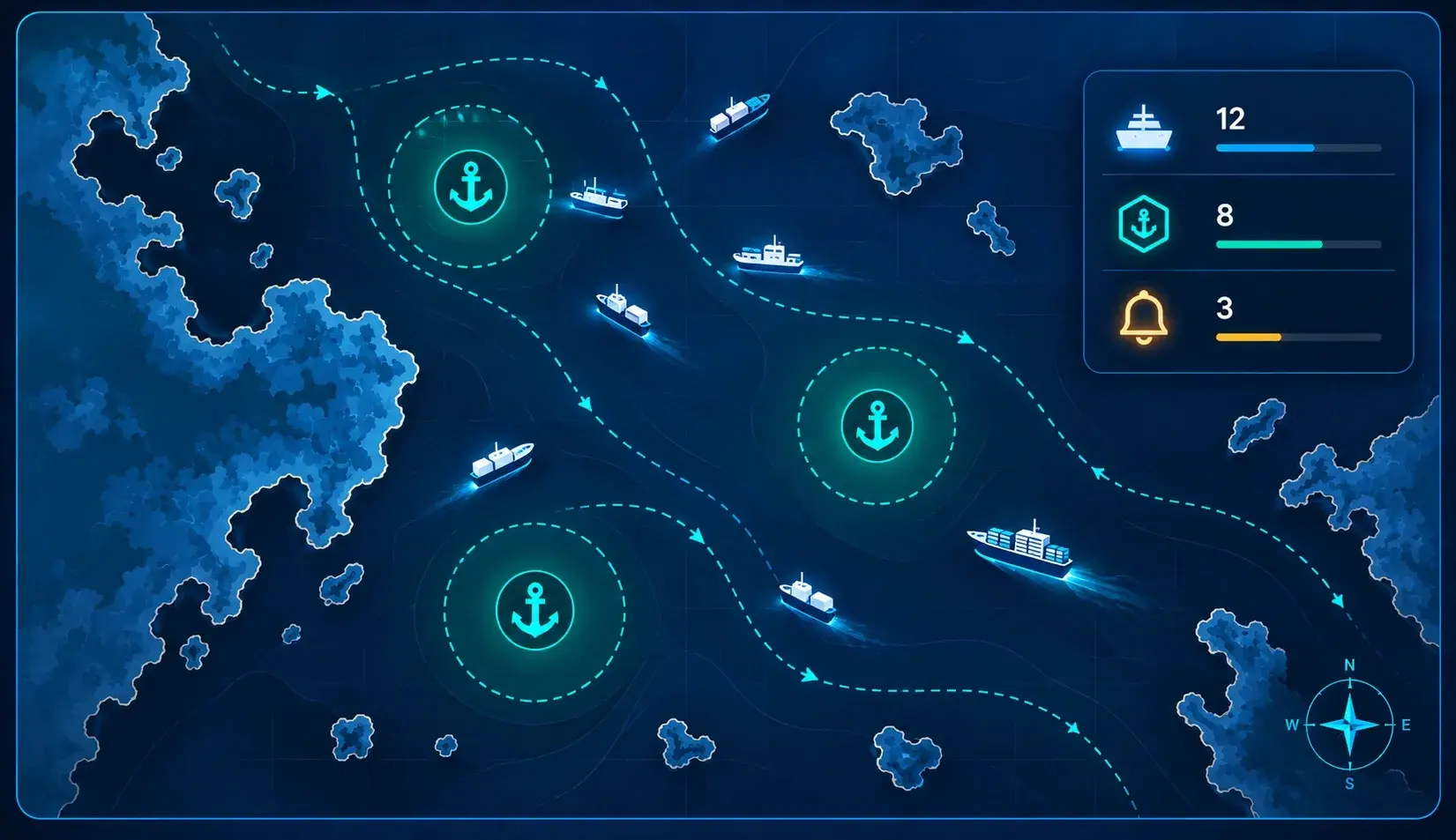
Connected in One Workflow
The new Anchorage Management System connected vessel requests, availability, allocation, monitoring, alerts, and operational history within one workflow.
More importantly, it gave port teams clearer access to the information needed for daily anchorage operations.
Scalable Base for Growth
The project also established a scalable base for future integration with wider vessel and port systems.
Modernize Your Maritime Operations
SDLC Corp builds enterprise platforms that connect operational workflows, data, integrations, and user roles for vessel, anchorage, and port operations.
Frequently Asked Questions
Quick answers about the Anchorage Management System, how it works, and what it changed for the client's anchorage operations.
01What Is An Anchorage Management System?
An Anchorage Management System helps port teams manage vessel requests, anchorage availability, vessel assignments, monitoring, and operational records in one platform.
02Why Did The Client Need To Digitize Anchorage Operations?
The existing process depended on manual checks, separate records, calls, and emails. The client needed a centralized workflow that improved visibility across vessel requests, anchorage status, and daily operations.
03How Does The Anchorage Allocation Process Work?
Operators review vessel information together with current anchorage availability. Where relevant data is available, they can also consider vessel dimensions, draft, water depth, nearby vessels, weather, tides, and operational restrictions before confirming an assignment.
04Can The System Monitor Vessels In Real Time?
Yes, the platform can support real-time vessel monitoring when connected with IoT-based vessel-position sensors or AIS data sources. Operators can then view active vessels, current assignments, and operational status from one interface. Most commercial ships already broadcast AIS, since SOLAS Chapter V, regulation 19 requires it on vessels of 300 gross tonnage and upwards on international voyages.
05Can The Anchorage Management System Integrate With Existing Port Systems?
Yes. The platform can use APIs and integration services to exchange information with vessel, port, marine, weather, tide, and other operational data sources supported by the project. Connections to billing or finance platforms can follow the same approach used when planning an ERP integration architecture.
06Who Uses The Anchorage Management System?
The main users can include port operators, marine control teams, shipping agents, administrators, and management. Access can be configured according to each user's operational role, in line with standard enterprise data security controls.
07What Information Does The System Maintain?
The platform can maintain vessel requests, vessel details, anchorage assignments, status changes, operational alerts, and historical activity. This creates a structured record for reporting and later review.
08What Was The Main Outcome Of The Project?
The project moved anchorage operations from fragmented processes into a centralized digital workflow. Port teams gained clearer access to vessel information, anchorage status, assignments, monitoring, and operational records.
- Contact Us
Let’s Talk About Your Anchorage System
What happens next?
- We review your requirements
- Strategy call with experts
- Clear roadmap & estimate
- NDA Protected
- Enterprise Grade Delivery
- Global Clients
