Introduction
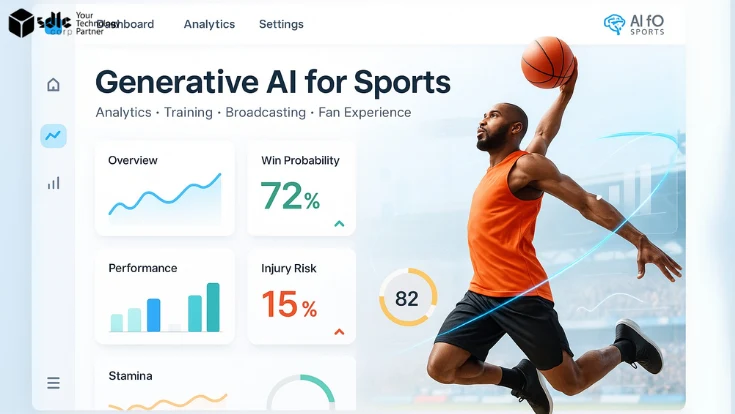
Generative AI is reshaping industries, and sports is no exception. This technology uses advanced algorithms to create, predict, and simulate data. In sports, it’s not just about analyzing past games — it’s about generating future possibilities. From improving athlete performance to personalizing fan experiences, generative AI is emerging as a powerful tool for athletes, coaches, broadcasters, and fans.
In this blog, we explore how generative AI is transforming sports, backed by real applications, data insights, and industry use cases.

Understanding Generative AI in the Sports Context
Generative AI refers to AI systems that can create new data, insights, or simulations based on patterns in existing information. Unlike traditional AI, which primarily analyzes and classifies data, generative AI can produce new content, whether that’s simulating a game scenario, generating a highlight reel, or designing a personalized training plan.
Industries adopting these capabilities often integrate them into broader Generative AI development services to support practical applications.
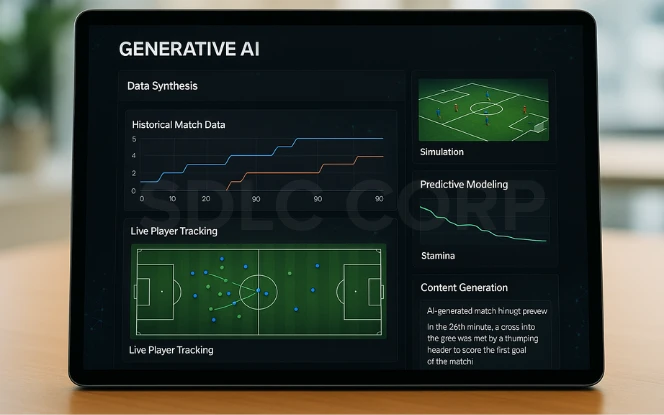
Core capabilities in sports include:
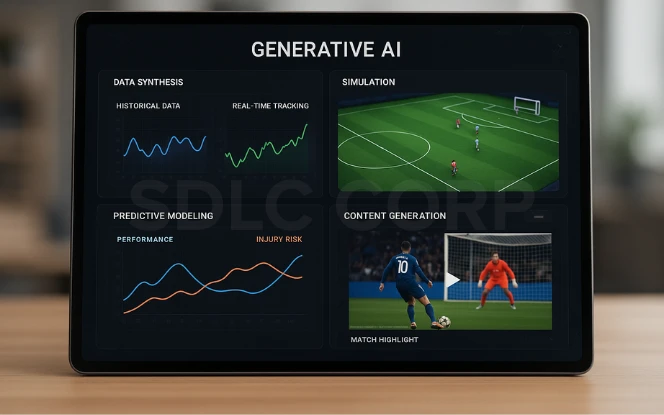
- Data synthesis: Combining historical match data with real-time inputs.
- Simulation: Replaying potential match scenarios based on current conditions.
- Predictive modeling: Anticipating performance outcomes and injury risks.
- Content generation: Creating match commentary, visual highlights, and fan-targeted media.
Enhancing Athlete Training and Performance
Applications:
- Personalized plans: AI analyzes player statistics, health data, and positional requirements to generate specific drills.
- Simulated scenarios: Basketball teams can simulate different opponent defenses to practice targeted strategies.
- Real-time feedback: Wearable sensors feed live data to AI models, which generate performance reports and improvement suggestions instantly.
Example: Tennis players are using AI systems that simulate hundreds of serve-return combinations to improve reaction times and accuracy.
AI-Powered Sports Analytics
Sports teams have long used analytics to gain a competitive edge. Generative AI takes this further by predicting outcomes and generating strategies.
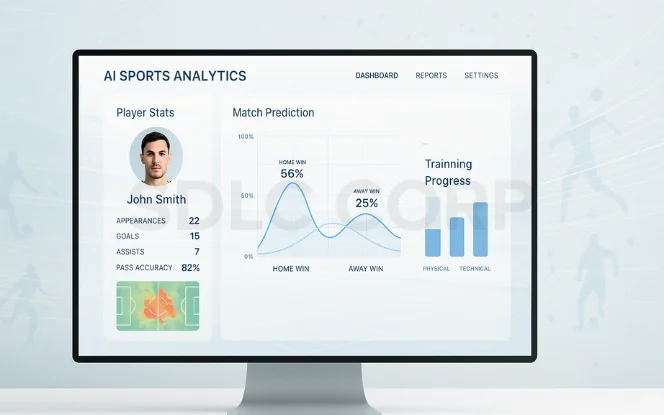
- Match predictions: AI combines weather data, player fatigue, and historical results to forecast performance.
- Opponent analysis: AI models generate simulations of how an opponent might adapt mid-game.
- Data storytelling: Instead of raw numbers, AI produces visualized insights, making decision-making faster and more intuitive.
Sports Injury Prevention and Recovery

One of the most valuable uses of generative AI is in injury prevention.
- Biomechanical analysis: AI models study player movements to detect patterns that may lead to injuries.
- Customized recovery: AI generates recovery schedules tailored to the individual, considering injury type, healing rate, and physical condition.
- Real-world example: Soccer teams have used AI to reduce ACL injury risks by analyzing player posture and movement during training.
Generative AI in Sports Broadcasting and Content Creation
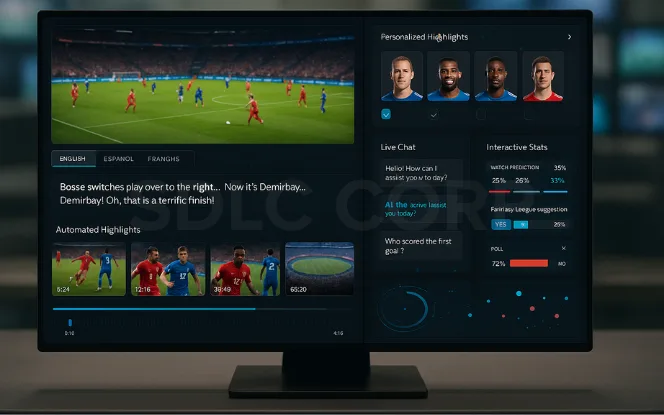
Sports broadcasting is being transformed by AI’s ability to generate content instantly.
- Automated commentary: AI can provide multilingual commentary in real time.
- Highlight creation: Systems generate match summaries and highlights within seconds after the game ends.
- Fan personalization: Viewers can receive custom highlight packages focusing on their favorite players or moments.
Enhancing Fan Engagement

Fan interaction is no longer one-size-fits-all.
- Interactive chatbots: AI-powered bots can answer fan questions, offer match statistics, and even predict game results.
- AR/VR experiences: Generative AI helps create immersive experiences such as virtual stadium tours or real-time match simulations.
- Fantasy sports support: AI generates personalized tips and player performance predictions for fantasy leagues.
Ethical Considerations and Limitations
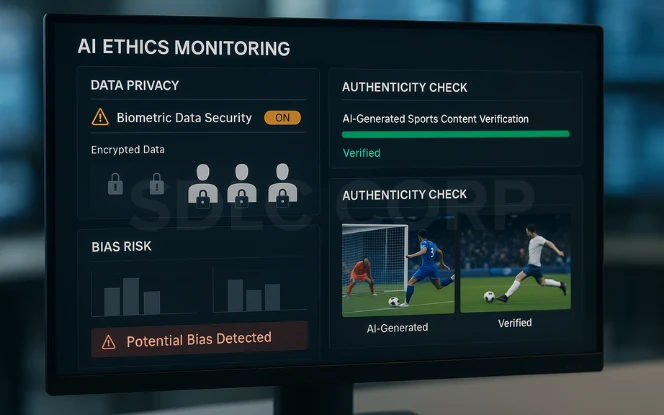
While the potential is vast, generative AI in sports raises important questions.
- Data privacy: Athlete biometric data must be protected from misuse.
- Bias risk: If AI models are trained on unbalanced data, predictions may be skewed.
- Authenticity: There’s a need to ensure that AI-generated sports content doesn’t mislead fans.
- Data privacy: Athlete biometric data must be protected from misuse.
The Future of Generative AI in Sports
The next wave of generative AI in sports will integrate deeply with wearable technology, allowing real-time health and performance monitoring. Multi-modal AI will merge text, video, and voice to create more immersive fan experiences. Predictive health analytics will help extend athlete careers by anticipating injuries before they occur.
Performance Analysis and Decision Support
Teams and analysts rely on timely insights to guide training and match strategy. Generative AI can help consolidate statistics, generate summaries from complex datasets, and support review sessions. In these scenarios, a Generative AI consulting company may assist in evaluating appropriate use cases, setting review processes, and ensuring outputs are interpreted responsibly.

Integration with Sports Technology Platforms
Generative AI tools often integrate with analytics software, athlete management systems, and fan engagement platforms. Reliable integration requires stable infrastructure and clear data flows. Sports organisations may rely on AI development services to connect generative models with existing systems while maintaining performance and data integrity.
Conclusion
Generative AI is driving a major shift in sports — from the training ground to the broadcast booth. Its ability to create, simulate, and personalize offers clear benefits for athletes, coaches, and fans. However, responsible adoption is key to ensuring that the technology enhances rather than disrupts the integrity of sports. As the field evolves, organizations may seek to hire generative AI developers to design solutions that balance innovation with ethical standards.
Have an generative AI idea in mind? Contact us today to start building with SDLC Corp’s expert development team.
Related Blogs You Should Explore:
FAQ's
What is generative AI in sports?
Generative AI in sports uses advanced algorithms to create new data, simulations, and insights. It can produce game scenarios, personalized training plans, match highlights, and fan-focused content based on historical and real-time information.
How can generative AI improve athlete performance?
It analyzes player data to design customized training routines, simulate opponent strategies, and provide real-time performance feedback, helping athletes refine skills and reduce weaknesses.
Can generative AI help prevent sports injuries?
Yes. It uses biomechanical analysis to detect risky movement patterns and create recovery schedules tailored to an athlete’s injury type, healing rate, and fitness level.
How does generative AI enhance fan engagement?
It enables interactive chatbots, AR/VR experiences, and personalized highlight reels, giving fans tailored content and immersive ways to follow their favorite teams or players.
What role does generative AI play in sports broadcasting?
It can generate automated commentary, create match summaries within seconds, and offer fans custom highlight packages based on their preferences.
What are the main ethical concerns with generative AI in sports?
Key concerns include protecting athlete biometric data, avoiding bias in AI predictions, and ensuring that AI-generated content remains accurate and authentic.