
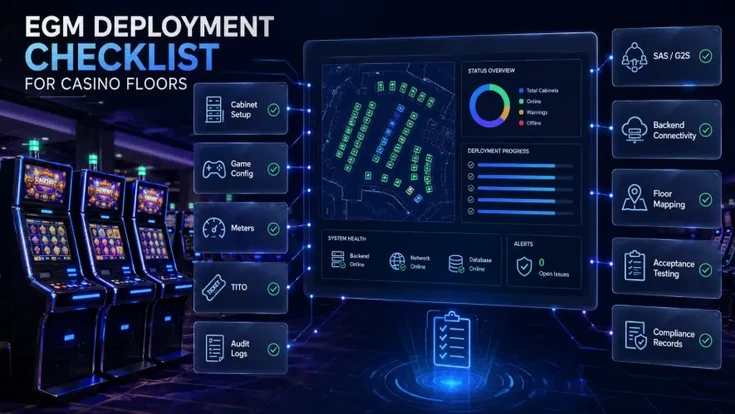
An EGM deployment checklist helps casino teams launch machines safely and smoothly by checking hardware, game settings, meters, TITO, backend connections, floor placement, reporting, and compliance records before the machine goes live.
In simple terms: deployment means preparing the cabinet, validating the game setup, confirming machine records, testing connectivity, and verifying that the machine is ready to operate as part of the wider casino floor environment.
Quick Summary of EGM Deployment
| Area | What It Covers | Why It Matters |
|---|---|---|
| Planning | Machine selection, floor zone, cabinet type, game mix, denomination strategy | Sets the right starting point before the machine reaches the floor |
| Cabinet setup | Peripherals, sensors, validator, printer, card reader, network link | Confirms the machine hardware is connected and testable |
| Game configuration | Theme, denomination, bet level, approved options, paytable alignment | Helps the launched machine match the intended floor plan and review record |
| Accounting | Meters, tickets, cashbox process, reconciliation rules | Supports accurate machine records after launch |
| Monitoring | SAS or G2S connectivity, alerts, backend reports, dashboard visibility | Helps operators see the machine as part of floor operations |
| Compliance | Approval records, technical standards, event logs, auditability | Supports launch readiness under the applicable jurisdiction |
What Is EGM Deployment?
EGM deployment is the process of preparing a machine for operation on a casino floor. It includes physical placement, cabinet readiness, approved configuration, meter setup, ticket handling, event logging, host communication, and operator review.
Deployment should not be treated as only a floor move or installation task. A machine can be physically installed and still not be operationally ready. That is why deployment checklists usually combine floor operations, technical validation, and reporting review.
Pre-Deployment Planning
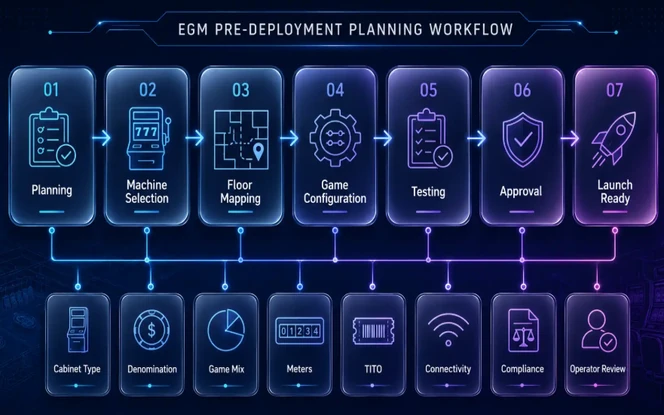
Pre-deployment planning helps teams confirm the machine, floor location, configuration, and post-launch workflow.
- Floor zone and traffic context
- Cabinet style and footprint
- Player segment fit
- Game theme and feature mix
- Denomination strategy
- Power and network readiness
- Cashier and attendant proximity
- Monitoring coverage
- Host system mapping
- Launch timing
- Testing ownership
- Approval and sign-off path
Skipping this stage can create floor-fit problems later, even when the machine works correctly.
Cabinet and Peripheral Checklist
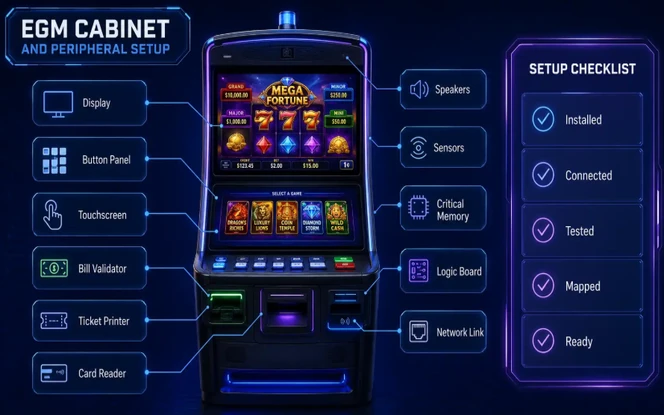
Check every machine at the cabinet level before launch.
Review the display, button deck, validator, printer, speakers, logic board, critical memory, network path, card reader, and any other approved attachment.
A clear understanding of EGM cabinet components helps teams see how each part supports the machine record after launch.
Display and Input Controls
Check the display, touchscreen, button panel, denomination buttons, and any player-facing controls used by the approved game.
Validator and Ticket Devices
Confirm bill acceptance, ticket acceptance, printer status, and paper path readiness before TITO testing begins.
Network and Host Path
Verify that the machine can reach the required floor systems and that monitoring visibility is available.
Logic and Critical Memory
Review whether the core machine logic, secure areas, and preservation of key records are behaving as expected.
Game Configuration Checklist
Game configuration review confirms that the deployed machine matches the approved design and floor plan.
Teams should check denomination settings, bet ranges, enabled features, progressive links, and approved menu options.
Operators normally compare the live setup against the machine planning sheet, vendor documentation, and the broader context explained in how EGM slot machines work.
RNG, Paytable, and PAR Sheet Review
Before launch, operators should confirm the correct game math and review package.
This check may include the approved paytable, RTP configuration, denomination behavior, and related math documentation.
These checks connect directly with EGM paytables and PAR sheets and the deeper machine-behavior layer described in EGM RNG and game outcome testing.
Teams do not usually retest the full math model on the floor. They still need to confirm that the deployed configuration matches the approved game record.
Meter and Accounting Setup
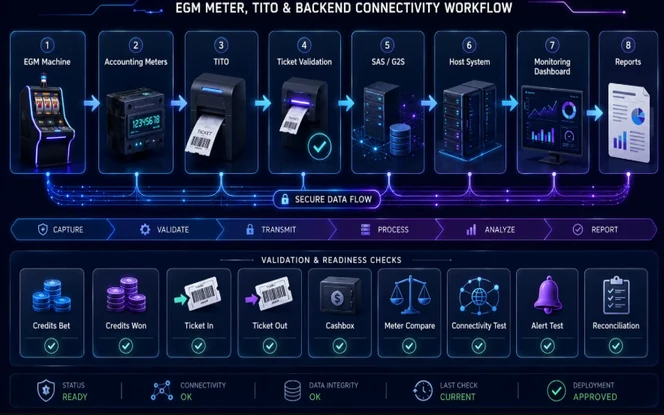
Accounting setup is a critical deployment stage.
Operators need confidence that the machine records wagers, wins, tickets, jackpots, handpays, and related values correctly before live play begins.
Align this review with EGM accounting meters. This makes it easier to compare machine values with later backend reports.
- Starting meter state
- Credits bet
- Credits won
- Games played
- Cashbox count process
- Handpay values
- Jackpot values
- Ticket-in values
- Ticket-out values
- Meter compare and reconciliation
TITO and Ticket Validation Setup
Test ticket behavior before launch.
Insert a valid ticket, add credits, cash out, print a new ticket, and confirm that each record appears in the machine and connected systems.
Operators should also confirm that cashier and redemption workflows behave as expected. This stage links directly with TITO in slot machines.
When TITO issues are missed before go-live, they often create avoidable support and reconciliation work after the machine reaches the floor.
Audit Logs and Event Records
Event record review confirms whether the machine captures important operational activity.
Key records include cabinet access, power resets, printer issues, validator issues, handpay conditions, jackpot conditions, and communication failures.
Review this stage alongside EGM audit logs and event records.
The goal is to confirm that each event supports later floor review and issue investigation.
SAS or G2S and Backend Connectivity
Deployment testing should confirm communication with the required floor and host systems.
Checks may include meter visibility, event transmission, ticket data, alert routing, and machine status updates.
The review should reflect the broader operating context explained in SAS and G2S protocols and EGM monitoring and backend reporting systems.
Floor Placement and Machine Mapping
Floor deployment needs both a physical and operational check.
Confirm the correct zone, floor-map position, access, visibility, and attendant workflow before launch.
The placement review connects back to slot machines for casino floors, where floor traffic, player path, visibility, and monitoring points shape how the machine performs after launch.
Monitoring, Alerts, and Reporting
Before launch, confirm that the machine appears in the correct dashboards.
Operators should also verify that status changes, faults, and major events are visible from the operator side.
Typical launch checks include:
- Machine online status
- Alert visibility
- Fault event visibility
- Ticket event reporting
- Meter display in reports
- Floor dashboard placement
- Host record visibility
- Report timing
- Attendant alert routing
- Basic reconciliation support
Compliance and Certification Records
Launch readiness also depends on complete compliance records.
Confirm the correct approval, configuration record, and technical reference package for the applicable jurisdiction.
At this stage, EGM compliance testing becomes relevant. Different markets may define different requirements for machine approval, event logging, reporting, notices, and monitoring.
Official standards and jurisdiction examples include GLI standards, GLI-11, Nevada Technical Standard 1, and Singapore GRA EGM standards.
Operator Acceptance Testing
Operator acceptance testing is the final readiness review before active floor use.
It confirms that the machine works correctly in the operator's environment, not only in isolation.
A structured acceptance test should cover cabinet readiness, configuration, meter behavior, ticket flow, alerts, reports, and sign-off records.
Common Deployment Mistakes
Configuration Mismatch
The machine is installed physically, but the active settings do not match the approved or planned configuration.
Meter Mapping Gaps
The machine records activity locally, but the expected values are not visible or aligned in downstream reports.
Incomplete TITO Testing
Ticket insertion or cashout appears to work once, but the full validation and reporting path was never tested clearly.
Weak Connectivity Review
The machine is powered and playable, but monitoring visibility, alert routing, or host communication is incomplete.
Missing Launch Records
Sign-off, approval references, or acceptance notes are incomplete, which makes later review harder.
Poor Floor Fit
The machine is technically ready, but the selected floor zone does not fit the intended traffic or operating workflow.
Final EGM Deployment Checklist
- Jurisdiction confirmed
- Approval record checked
- Cabinet type confirmed
- Peripherals installed
- Validator tested
- Printer tested
- Network link checked
- Game configuration reviewed
- Denomination reviewed
- Paytable record reviewed
- PAR sheet reference confirmed
- Meter baseline checked
- TITO flow tested
- Cashbox process confirmed
- Event logs reviewed
- Host communication tested
- Dashboard visibility confirmed
- Alerts confirmed
- Backend reports checked
- Floor mapping confirmed
- Launch sign-off recorded
- Operator acceptance completed
- Launch readiness confirmed
- Post-launch review owner assigned
Ready to Launch Your EGM Floor?
Plan, test, and deploy your electronic gaming machines with clearer setup checks, stronger reporting, and reliable launch support.
Talk to Our EGM ExpertsFAQs About EGM Deployment
What is an EGM deployment checklist?
An EGM deployment checklist is a structured review of cabinet setup, game configuration, meter mapping, TITO flow, audit records, backend connectivity, floor placement, and compliance documents before a machine goes live on a casino floor.
Why does pre-deployment planning matter for EGMs?
Pre-deployment planning helps operators confirm cabinet type, game mix, floor zone, denomination setup, connectivity, and review workflows before launch. It reduces avoidable issues after the machine reaches the floor.
What should operators test before launching an EGM?
Operators should test peripherals, meter reporting, ticket handling, event logs, host connectivity, alerts, backend reports, handpay conditions, and acceptance workflows before launch.
How do slot machines actually work?
Slot machines use random number generators to decide each result. Every spin is independent, so previous wins or losses do not affect the next spin.
How does TITO affect EGM deployment?
TITO setup affects ticket printing, ticket acceptance, validation records, and cashier or redemption workflows. Operators need to test ticket-in and ticket-out behavior before floor launch.
What happens when a slot machine malfunctions?
Stop playing and contact casino staff immediately. They will check the machine, game records, and casino rules before deciding the outcome.
Can you really win big on slot machines?
Yes, large wins are possible, but they are rare and never guaranteed. Set a budget and play for entertainment, not as a way to make money.
Do EGM deployment requirements vary by jurisdiction?
Yes. Jurisdictions may define different requirements for machine approval, technical standards, meters, ticket handling, monitoring, reporting, and compliance records.
What is operator acceptance testing for EGMs?
Operator acceptance testing is the final confirmation that the machine, peripherals, meters, tickets, event logs, host communication, reports, and launch records all work as expected in the operator's environment.
Final Thoughts
An EGM deployment checklist helps casino teams turn technical readiness into operational readiness.
The machine should be reviewed not only as a cabinet, but as part of a wider operating environment that includes floor placement, meters, tickets, event logs, connectivity, reports, and launch records.
When cabinet setup, configuration, accounting records, TITO flow, alerts, and backend reports all support the same story, deployment becomes easier to control and easier to review after launch.