Telecom Software
DevelopmentServices

Custom telecom software for MNOs, MVNOs, CSPs, and ISPs — AI-powered OSS/BSS platforms, 5G network management, VoIP systems, billing software, and self-service portals built for telecommunications-grade reliability, compliance, and carrier-scale performance.

Telecom network infrastructure
$109BOSS/BSS Market by 2030
13%CAGR — Telecom Software Market
6.3B5G Subscriptions by 2030
64.5%Cloud Deployments by 2030
$25BIoT Telecom Platforms 2030
Our Services

Telecom Software
Development Services

End-to-end custom software for telecommunications companies — from OSS/BSS modernisation and 5G platforms to VoIP infrastructure, billing systems, and telecom analytics.

01

OSS Development

Custom Operations Support Systems — network management, service provisioning, fault management, network inventory, and configuration management for MNOs, MVNOs, and CSPs.

02

BSS Development

Business Support Systems covering billing, order management, CRM, revenue management, customer self-care portals, and subscription lifecycle management.

03

Billing & Revenue Management

Usage-based billing, prepaid/postpaid systems, convergent billing, interconnect billing, and revenue assurance platforms aligned to telecom billing complexity.

04

VoIP & UCaaS Platforms

Voice over IP infrastructure, call routing systems, SIP trunking platforms, unified communications, and video conferencing solutions for telecom providers.

05

5G Network Software

5G core network interfaces, network slicing management, edge computing integration, capacity planning tools, and RAN optimization software for SA and NSA 5G.

06

Network Management Systems

End-to-end network performance monitoring, fault detection, automated alerts, traffic analysis, and SLA management platforms across 2G, 3G, 4G, and 5G infrastructure.

07

IoT Platform Development

Telecom IoT platforms — device management, M2M connectivity, SIM management, data pipeline integration, and billing for connected device ecosystems.

08

Telecom API Development

Open APIs, REST/SOAP integration layers, TM Forum-aligned APIs, third-party integrations, and developer portals for telecom ecosystem connectivity.

09

Customer Self-Service Portals

Self-service web and mobile platforms enabling subscribers to manage accounts, payments, subscription plans, and support requests independently.

010

Network Security Software

Telecom security platforms — fraud detection, DDoS protection, GDPR compliance tooling, audit logging, and secure network perimeter solutions.

011

Legacy System Modernisation

Migration of legacy OSS/BSS monoliths to cloud-native microservices architectures — zero-downtime migration preserving data integrity throughout the transition.

012

AI & Automation

AI-powered network optimisation, predictive maintenance, intelligent customer support, generative AI for telecom, and RPA-based process automation.

OSS & BSS Deep Dive

OSS vs BSS:
What We Build and Why

The OSS/BSS market will grow from $68.79B in 2024 to $109B by 2030. Understanding what each system does is essential to building the right telecom software architecture from day one.

Operations Support Systems
OSS
The operational backbone — network management, service provisioning, fault detection, and infrastructure inventory. OSS software keeps the network running.
Network ManagementCentralises network operations — performance monitoring, device configurations, inventory tracking, and fault management across all infrastructure.
Service ProvisioningAutomates activation, configuration, and delivery of telecom services — ensuring seamless onboarding for subscribers with high service quality.
Fault ManagementDetects, isolates, and resolves network faults in real time — minimising service disruption through automated alerting and root cause analysis.
Network InventoryReal-time database of physical and virtual network resources — fibre, switches, routers, and virtualised functions — for capacity planning and optimisation.
+
Business Support Systems
BSS
Customer-facing commercial operations — billing, CRM, order management, and revenue management. BSS software monetises the network and manages subscriber relationships.
Billing SystemsConvergent billing for prepaid, postpaid, usage-based, and bundled services — handling complex pricing, discounts, and multi-currency processing.
CRM IntegrationCustomer relationship management for support, sales, and marketing — enabling hyper-personalisation and intelligent process automation at scale.
Order ManagementEnd-to-end order lifecycle — service requests, modifications, upgrades, downgrades, and cancellations across complex product bundles.
Revenue ManagementPricing engine, discount management, promotional campaigns, and revenue assurance — closing leakage before it impacts financial reporting.
$109B
Global OSS/BSS market projected by 2030 — 13% CAGR driven by 5G, IoT, and cloud-native transformation
5G & Future Technologies

Software for the
Next-Gen Network

By 2030, global 5G subscriptions will reach 6.3 billion. 5G and IoT are the primary drivers of the $109B OSS/BSS market expansion — every operator needs custom software to capitalise on this infrastructure shift.

6.3B5G subscriptions by 2030
$109BOSS/BSS market by 2030
13%CAGR — telecom software market
64.5%Cloud deployments share by 2030
Discuss Your 5G Project

5G Core Network Software

5G SA/NSA core interfaces, network slicing management, UPF, and AMF/SMF control plane software for next-gen mobile networks.

IoT & M2M Connectivity

Device management platforms, SIM provisioning, M2M data pipelines, and billing integration for IoT across smart cities and industrial verticals.

Cloud-Native Telecom

SDN, NFV, and cloud-native microservices replacing legacy hardware-dependent systems — enabling faster releases and elastic scaling.

AI-Driven Network Ops

Self-optimising networks using ML for predictive maintenance, intelligent fault remediation, and automated capacity management.

Why SDLC Corp

Telecom Software
Built by Telecom
Specialists

Generic software shops adapt enterprise patterns to telecom. We start from telecom architecture — understanding BSS/OSS integration, CDR formats, MVNO business models, and network-grade reliability requirements before a line of code is written.

Telecom Domain Expertise

Our engineers understand TM Forum frameworks, 3GPP specifications, OSS/BSS integration patterns, and the regulatory environments of major telecom markets globally.

Carrier-Grade Scalability

We build software that handles 100M+ CDR records daily, processes real-time billing events at sub-second latency, and maintains 99.99% uptime SLAs across distributed infrastructure.

Security & Compliance First

GDPR, NIST, and regional regulatory compliance embedded in every architecture — not added before launch. Our security frameworks align with telecom-specific threat models including OSS/BSS attack surfaces.

Legacy & Modern Integration

We connect modern cloud-native platforms to 20-year-old BSS monoliths without disruption — using API gateway patterns, event streaming, and the strangler-fig migration approach. See our telecom ERP approach.

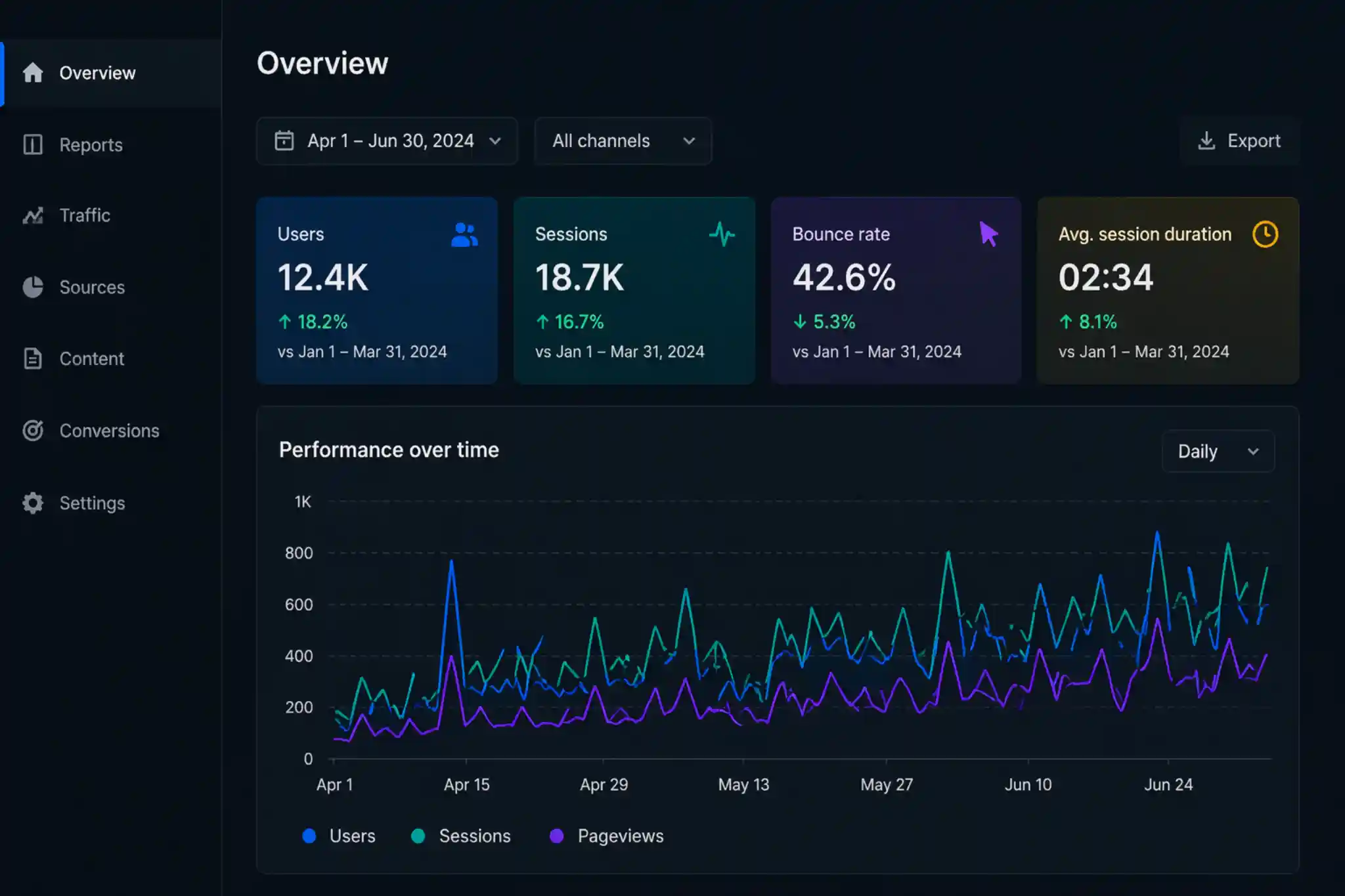
telecom OSS BSS dashboard with network analytics
99.99%Uptime SLA delivered
100M+CDRs processed daily
Industries We Serve

Telecom Software for
Every Communications Sector

We build custom telecom software for every type of communications provider — from global MNOs and MVNOs to specialised satellite, maritime, and enterprise telecom operators.

MNOs & Tier-1 CarriersMVNOsCloud Communications (CCaaS)ISPs & Broadband ProvidersVoIP & UCaaS Providers5G OperatorsSatellite TelecomOTT Messaging PlatformsEnterprise TelecomSmart City NetworksIndustrial IoT TelecomHealthcare TelecomMaritime CommunicationsAviation Connectivity
Technology Stack

Telecom-Grade
Technology

Open-source and cloud-native technologies chosen for carrier-grade reliability, scalability, and regulatory acceptance — validated in high-throughput telecom production environments handling 100M+ daily events.

React
React
Angular
Angular
Node.js
Node.js
Java
Java
Python
Python
.NET
.NET
Go
Go
Kotlin
Kotlin
AWS
AWS
Azure
Azure
GCP
GCP
Docker
Docker
Kubernetes
Kubernetes
Kafka
Kafka
PostgreSQL
PostgreSQL
MongoDB
MongoDB
Redis
Redis
Elastic
Elastic
React Native
React Native
Swift
Swift

Plus telecom-specific protocols and standards: SIP / RTP · DIAMETER · SS7 · SMPP · HL7 FHIR for health telco · TM Forum APIs · 3GPP · ETSI NFV

Our Process

Telecom Software
Development Methodology

A four-stage delivery process built for the complexity of telecom infrastructure — where a missed integration or data model error can affect millions of subscribers and trigger regulatory consequences.

Discovery & Architecture Scoping

Discovery & Architecture Scoping

We audit your existing OSS/BSS landscape, integration dependencies, legacy system constraints, and regulatory obligations — then produce a compliance-reviewed architecture design before any development begins.

Outcome: Detailed functional specification, data architecture diagram, and integration map.

System Design & API Contract Definition

Design the microservices topology, data models, API contracts, and event streaming architecture — with telecom protocol handling (SIP, DIAMETER, SMPP, TM Forum APIs) and security layer specification.

Outcome: TM Forum-aligned API contracts, service boundary definitions, and security design.
System Design & API Contract Definition
Agile Development with Telecom Domain Review

Agile Development with Telecom Domain Review

Two-week sprints with working software reviewed by telecom domain experts alongside technical stakeholders. End-to-end testing of OSS/BSS integrations runs in parallel with feature development.

Outcome: Tested, integrated modules delivered every sprint — not staged for a single big release.

Deployment & Go-Live Support

Zero-downtime deployment using blue-green or canary strategies — with parallel running of old and new systems before full cutover. Comprehensive monitoring, alerting, and SLA-aligned uptime management from day one.

Outcome: Production launch with 24/7 monitoring, incident response, and rollback capability.
Deployment & Go-Live Support
Benefits & Outcomes

What Telecom Operators
Achieve With Custom Software

Measurable outcomes from telecom software built for your specific infrastructure — not benchmarks from generic enterprise platforms that were never designed for carrier-scale operations.

Service Velocity

Faster Service Launch Cycles

Cloud-native OSS/BSS platforms replace 6–12 month release cycles with continuous deployment — new tariffs and service bundles go live in days, not quarters.

Revenue Assurance
3%

Gross Revenue Recovered

Automated billing assurance detects unrated traffic, misconfigured tariff plans, and interconnect errors — recovering 1–3% of gross revenue that legacy BSS systems silently lose every cycle.

Fraud Prevention
91%

Fraud Detection Accuracy

ML-based fraud systems identify subscription fraud, SIM cloning, and call spoofing at 91%+ accuracy — far beyond what rule-based legacy detection can achieve at real-time payment speeds.

Operational Efficiency
50%

Reduction in Unplanned Outages

AI-driven predictive maintenance and real-time network monitoring reduces unplanned network interventions by 35–50% — cutting the customer-facing incidents that directly drive churn.

Customer Experience
80%

Self-Service Account Management

Customer self-service portals handle 80%+ of account changes digitally — reducing call centre volume, cutting support costs, and improving NPS through faster resolution without agent involvement.

FAQ

Telecom Dev FAQs

Everything you need to know about OSS/BSS, 5G software, VoIP, billing systems, protocols, and how we deliver telecom software development projects end-to-end.

Ask directly

What is telecom software development?

Telecom software development builds custom software for telecommunications companies — OSS, BSS, billing platforms, VoIP applications, network management tools, 5G software, and self-service portals. Custom software replaces legacy monoliths and generic off-the-shelf tools that cannot handle telecom-specific workflows, data volumes, or regulatory requirements.

What is the difference between OSS and BSS?

OSS (Operations Support Systems) covers the operational backbone — network management, service provisioning, fault detection, and network inventory. BSS (Business Support Systems) covers customer-facing commercial operations — billing, CRM, order management, and revenue management. Both must be tightly integrated for seamless end-to-end telecom service delivery. The global OSS/BSS market will reach $109B by 2030.

How long does telecom software development take?

Focused modules — a customer self-service portal or billing component — typically take 2–4 months. Full OSS/BSS platform builds are phased over 6–18 months depending on legacy integration complexity, data migration scope, and regulatory requirements. We share a realistic timeline after a scoped discovery engagement, not before understanding your specific architecture.

Do you work with MVNOs and CSPs?

Yes. We work with MNOs, MVNOs, CSPs, ISPs, satellite providers, and VoIP companies. Our telecom software development covers network management, customer management, billing, and telecom analytics across multiple regions and regulatory environments.

What 5G software development services do you provide?

We build 5G network management software, network slicing platforms, edge computing integration layers, 5G core interfaces, and capacity planning tools. We also develop software for O-RAN architectures and support operators deploying SA (standalone) and NSA (non-standalone) 5G networks. Read our generative AI for telecommunications capabilities.

What telecom protocols and standards do you support?

We build software supporting SIP, RTP, SS7, DIAMETER, SMPP, SNMP, and NETCONF protocols. Our OSS/BSS platforms align to TM Forum eTOM/SID/API frameworks, 3GPP specifications, ETSI NFV standards, and regional regulatory requirements including GDPR, FCC, and Ofcom compliance.

Can you modernise our legacy OSS/BSS?

Yes. Legacy OSS/BSS modernisation is a core speciality. We use API gateway patterns, event streaming (Apache Kafka), and the strangler-fig migration approach — allowing new microservices to run alongside legacy monoliths with zero service disruption until full cutover is safe. See how we approach telecom ERP modernisation.

Let’s Streamline Your Telecom Data Workflows

Automate telecom documents, extract critical data, and integrate with OSS/BSS systems for faster operations and better accuracy.

What happens after you submit?