Odoo Asset Management for Multi Location Tracking
Disconnected spreadsheets and manual depreciation tracking slowed reporting workflows and reduced asset visibility across departments. The Odoo Asset Management Module centralizes asset records, maintenance activity, and audit reporting inside one easy-to-manage system.
Product Hunt Listed
Trusted Software Partner
Multiple Products Listed
Project Snapshot
Project Snapshot and Deployment Scope for Odoo Asset Management
A clear overview of the Odoo Asset Management deployment, including business size, departments involved, asset categories, and implementation goals.
Industry
Manufacturing and service business with many asset types across different locations.
Company Size
The company worked with 250+ staff across finance, repair, and admin teams.
Project Duration
The Odoo asset setup was completed within 8 weeks.
Setup Environment
The system was used inside the company’s own Odoo setup.
Setup Scope
The project covered asset tracking, repair work, QR-based checks, and reports.
Departments Involved
Finance, repair, buying, and admin teams used the asset system.
Asset Types Managed
The system managed machines, IT tools, warehouse assets, and office items.
Core Objective
The goal was to keep asset records, tracking, and reports in one place.
About the Client
Client Environment and Asset Management Challenges
The company managed assets across many teams and locations. Finance, repair, purchase, and business teams needed clear asset records, value tracking, and reports inside Odoo.
As the asset count grew, teams found it hard to work with separate sheets, manual records, and slow report checks.
The company needed a centralized Odoo asset management workflow to simplify tracking, improve reporting accuracy, and reduce manual coordination effort.
Repair Tracking and Service Updates
Maintenance teams monitored repair activity, inspection records, and recurring service schedules for business assets across facilities.
Finance and Asset Value Tracking
Finance teams handled depreciation schedules, asset valuation records, and monthly accounting processes.

Challenges
Challenges Before Implementing Odoo Asset Management
Disconnected asset records, manual depreciation workflows, and fragmented maintenance tracking reduced reporting accuracy and slowed operational visibility across departments.
Asset Ownership Verification Was Slow
Managers could not quickly verify which employee, department, or facility used a specific asset. Teams also updated transfer records manually, which delayed reporting reviews and internal verification.
Depreciation Processing Required Manual Work
Finance teams calculated depreciation entries manually for multiple asset categories every month. As a result, financial closing cycles required extra validation before posting records.
Maintenance Records Remained Disconnected
Repair logs, inspection history, and service schedules stayed separate from asset records. Therefore, technicians and managers had to switch between files to verify equipment condition and repair activity.
Audit Preparation Consumed Significant Time
Audit preparation delayed finance reviews because teams manually verified asset value records, ownership history, procurement details, and maintenance logs from disconnected systems.
Teams spent significant time validating asset ownership, asset value records, and maintenance history because information remained distributed across spreadsheets and disconnected tracking files.
Solution
Building a Connected Asset Management Workflow Inside Odoo
The company centralized asset lifecycle tracking, asset value automation, and maintenance coordination inside one connected Odoo system.
Centralized Asset Lifecycle Visibility
Teams tracked procurement records, ownership history, depreciation activity, maintenance logs, disposal status, and transfer history from one connected system.
Automated Depreciation Scheduling
Odoo generated asset schedules and accounting entries based on configured rules, reducing repetitive monthly posting effort and improving reporting consistency.
QR and Barcode Asset Identification
Each asset received a QR code or barcode identifier, allowing employees to scan assets and access assignment records, maintenance activity, depreciation details, and ownership history.
Connected Maintenance Processes
Many businesses choose to Hire Odoo Developer teams to improve maintenance coordination and connected asset workflows.
Employee and Department Allocation Tracking
Managers monitored employee assignments, department transfers, handover activity, and movement history more accurately across business locations.
Audit-Ready Financial Reporting
Finance teams generated asset summaries, asset valuation reports, transfer history records, and audit-ready documentation directly from Odoo during reporting cycles.
Asset Process
Connected Asset Process Using Odoo Asset Management
The Odoo workflow created a structured process for asset registration, depreciation automation, maintenance coordination, and audit reporting.
Asset Registration and Grouping
Advanced Odoo Customization helped organize assets based on department, asset type, and accounting structure.
QR and Barcode Assignment
The system automatically generated unique identifiers to simplify asset verification during audits, inspections, and reporting reviews.
Employee and Location Assignment
Assets were assigned to employees, warehouses, departments, or facilities while maintaining complete movement history and ownership tracking.
Auto Asset Value Tracking
Odoo automatically generated depreciation schedules and accounting entries according to configured financial rules.
Repair and Service Updates
Maintenance teams updated technician notes, repair activity, inspection findings, and recurring service schedules directly from connected asset records.
Reporting and Audit Reviews
Connected Odoo Integration improved valuation reporting, maintenance visibility, and audit record management across departments.
Configured Features
Asset Tracking and Depreciation Features Configured in Odoo
The setup helped the team track assets, manage asset value, update repair work, and create finance reports inside Odoo.
Centralized Asset Records Improved Visibility
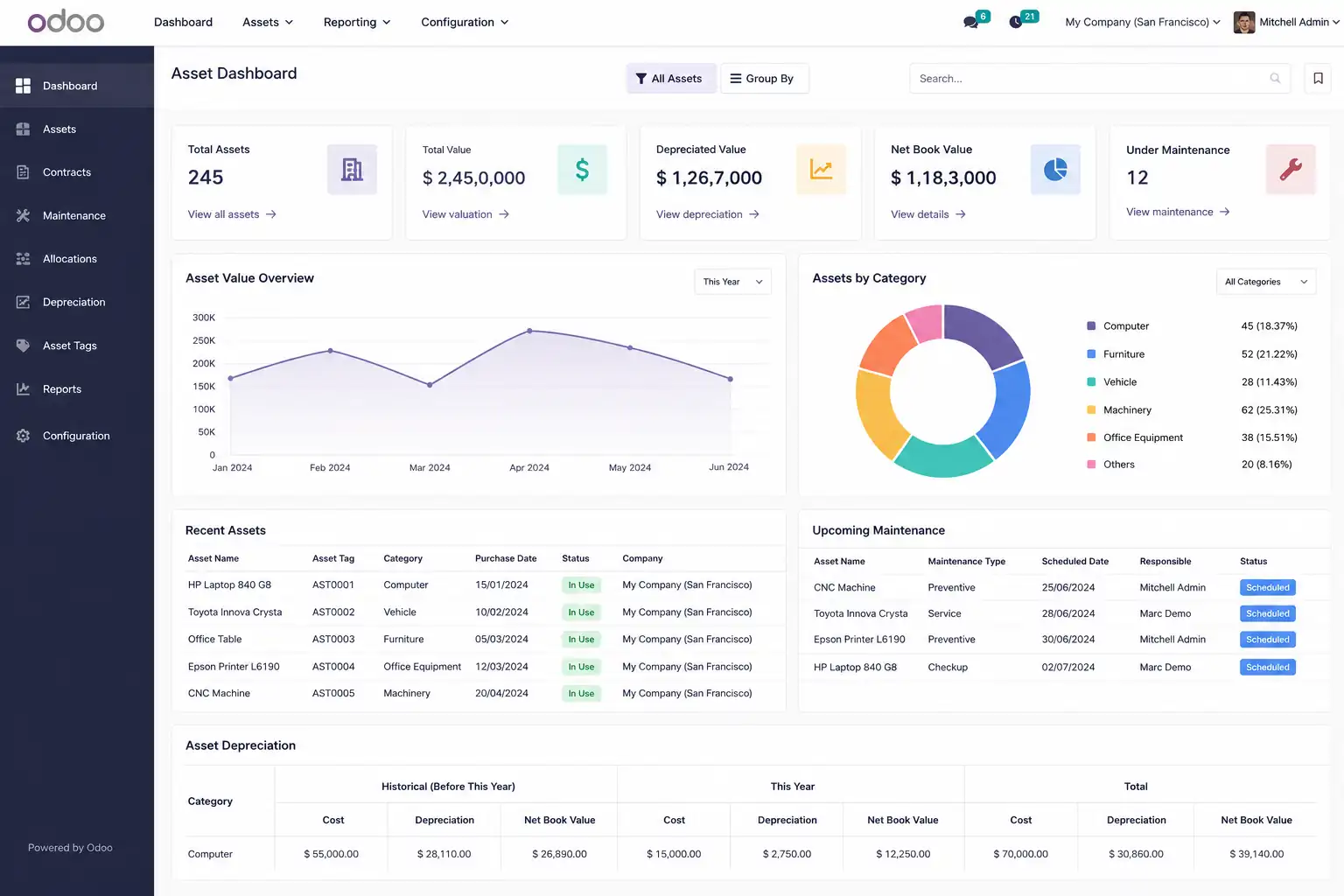
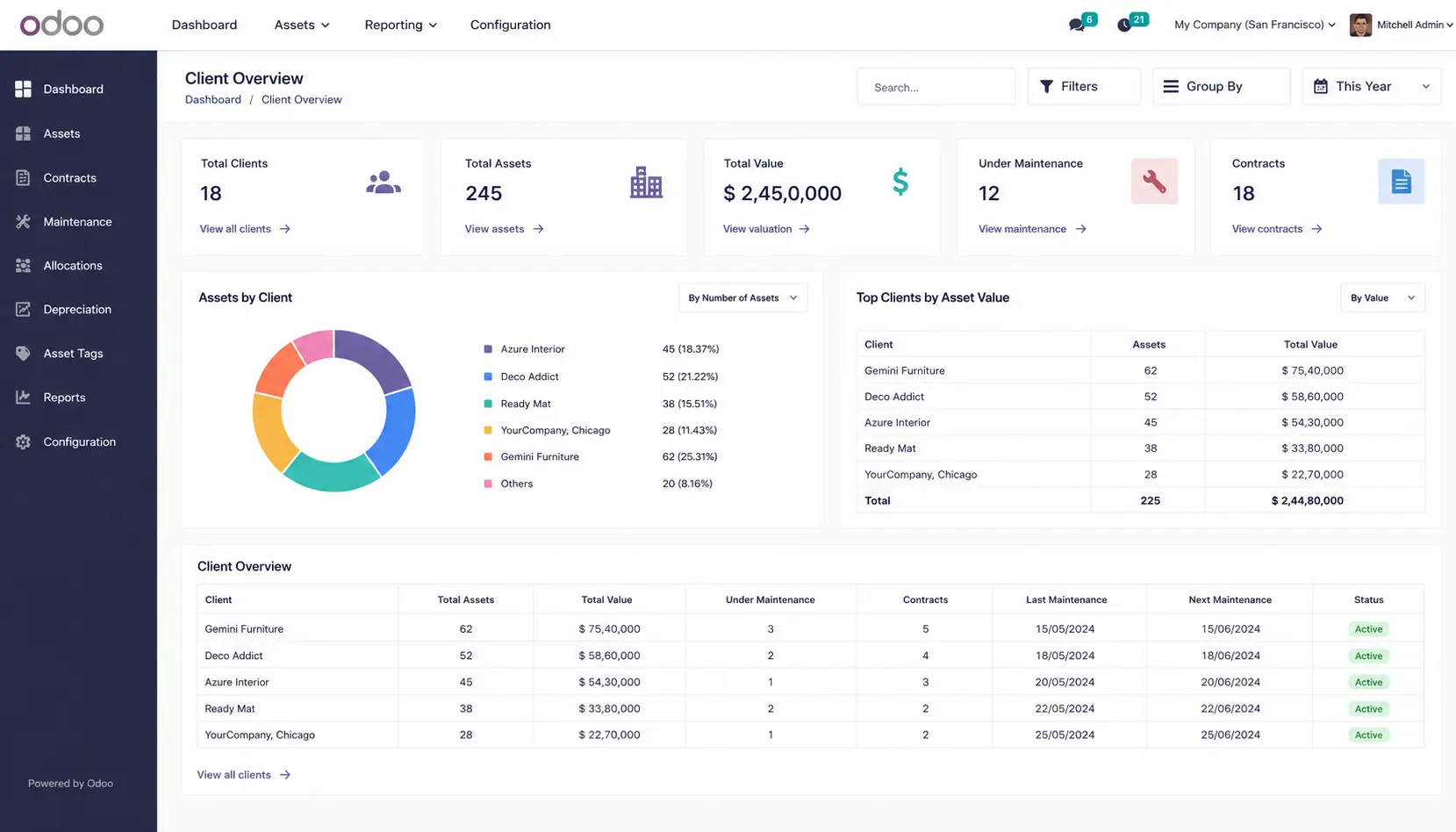
Teams reviewed acquisition details, ownership history, depreciation activity, maintenance records, and disposal status directly from centralized Odoo dashboards.
Depreciation Workflows Became More Consistent
Finance teams configured depreciation methods, schedules, accounting rules, and posting structures inside Odoo. Scheduled automation then generated entries across asset categories.
QR and Barcode Checks Reduced Manual Search
Asset verification became faster because teams scanned QR codes and barcode identifiers during audits, inspections, maintenance activity, and reporting reviews.
System-Wide Asset Visibility Improved Across Facilities
Managers monitored assets across warehouses, departments, and office locations from one connected system instead of depending on manual reporting coordination.
Maintenance Reviews Became Easier to Manage
Technicians and maintenance supervisors accessed repair history, inspection records, pending service activity, and recurring service schedules from connected asset profiles.
Asset Assignment Tracking Improved Responsibility
Managers tracked employee allocations, department transfers, and ownership records more accurately across the organization.
Technology Architecture
Technology Architecture Behind the Odoo Implementation
The setup used Odoo’s backend framework, QR workflows, and reporting architecture to automate asset lifecycle management and financial reporting.
JavaScript
Handles interactive dashboards, reporting views, and QR scan workflows to improve user visibility and faster asset monitoring.
Python ORM
Manages depreciation automation, asset process, and reporting logic while reducing repetitive operational processing.
PostgreSQL
Stores asset records, maintenance history, transfer logs, and financial data in one centralized system for better reporting accuracy.
QR & Barcode
Simplifies asset verification, tracking, and ownership validation across departments and business locations.
Depreciation Logic
Automates asset scheduling and financial posting to improve consistency during monthly accounting cycles.
Odoo Reporting Framework
Generates audit-ready financial and asset reports to support faster compliance reviews and operational reporting.
Results
Results After Implementing Odoo Asset Management
The centralized Odoo Implementation improved reporting coordination, reduced repetitive accounting effort, and strengthened asset traceability across facilities.
40% Faster Asset Checks During Audits
QR and barcode-based identification reduced the time required to verify asset ownership, status, and location records during audits and inspections.
60% Less Manual Asset Value Work
Automated asset scheduling significantly reduced repetitive accounting work during monthly financial closing cycles.
30% Faster Report Check Process
Finance teams generated depreciation summaries, ownership records, maintenance history, and valuation reports directly from Odoo instead of manually validating spreadsheets.
Single Asset Records Improved Team Work
Finance, repair, procurement, and business teams worked from the same centralized asset records, which improved reporting accuracy and reduced duplicate tracking effort.
Repair Teams Got Faster Service Updates
Repair teams accessed repair history, recurring service schedules, inspection records, and equipment condition updates directly from connected asset profiles.
Better Asset Tracking Across Many Locations
Teams monitored distributed assets across warehouses, departments, and facilities from one centralized system without depending on disconnected reporting workflows.
Teams got faster access to asset records, asset value reports, repair history, and audit data because all asset details were managed inside Odoo.
Need Better Asset Tracking and Depreciation Control?
SDLC Corp helps businesses centralize asset records, automate depreciation schedules, improve maintenance tracking, and simplify audit reporting inside Odoo.
- Get Started
Let’s Connect Your Asset Tracking in Odoo
Get expert guidance on asset lifecycle management, depreciation automation, maintenance tracking, and audit ready reporting workflows inside Odoo.
What happens after you submit?
- Asset workflow and reporting requirement review
- Consultation with Odoo implementation specialists
- Deployment guidance for multi-location asset management
- Secure Integration
- Odoo-Ready
- Global Clients