
Matchbox Neto Marketplace Integration

SDLC Corp developed custom Node.js middleware so Matchbox could connect its Neto commerce system with multiple marketplace APIs. In addition, the integration handles product listings, inventory updates, marketplace orders and dispatch tracking in one connected process.
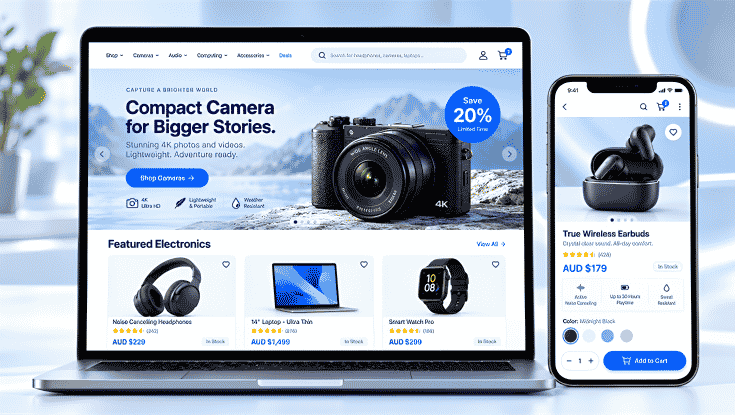
Electronics ecommerce website on a laptop beside a mobile shopping app displaying wireless earbuds.
Project Snapshot

The ProjectAt A Glance

Overall, Matchbox’s project brought its central commerce records and marketplace workflows together.

Client

KG Electronics (Matchbox)

Namely, an ecommerce retailer managing product and order information across multiple sales channels.

Platform

Neto

Specifically, the central system for products, inventory, orders and dispatch records.

Built With

Node.js And MongoDB

Node.js and Express handled connectors, while MongoDB supported transaction records.

Delivered By

SDLC Corp

Overall, custom connector development and integration architecture.

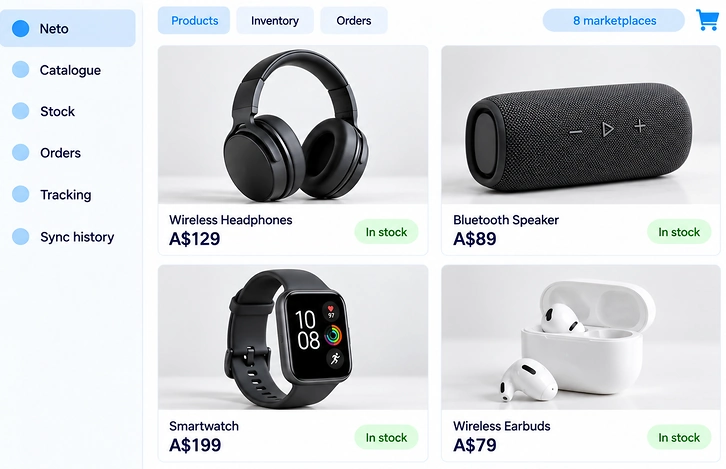
Neto ecommerce catalogue screen showing electronics, prices, stock status and eight marketplace channels.
Overview

One Neto Catalogue,Multiple Channels

Matchbox managed its catalogue, stock and orders in Neto while selling through multiple marketplaces. However, each channel used its own listing and order format. We kept Neto at the centre of the integration so the team could work with familiar records.

We preserved marketplace order references during import to support fulfilment and reconciliation. Therefore, we never treated an order from one channel as an unrelated transaction.

We also considered repeat submissions and missing acknowledgements when defining the order flow. Those checks were important because a failed API response does not always mean the original order was rejected.

The Challenge

Multichannel SellingProblems To Solve

Matchbox faced a familiar multichannel problem, because one product or order could appear differently on each marketplace. So we had to account for differences in required fields, update timing and order references.

01

Listing Formats

First, marketplaces require different category, variant and product attributes.

02

Stock Accuracy

Second, a stock change in Neto needs a matching update in the seller channel.

03

Order Handling

Third, imported orders need their original channel IDs for reliable reconciliation.

04

Dispatch Updates

Next, tracking data must match the correct external order after fulfilment.

05

Pricing Rules

Similarly, price and offer fields may differ between marketplace APIs.

06

Failure Visibility

Finally, failed requests and missed acknowledgements must be easy to investigate.

01 / 06
The Solution

Connectors BuiltAround Neto

So we built a middleware layer to separate Neto's data model from each marketplace's API requirements. Shared processing handled common tasks, while individual connectors dealt with channel-specific fields. Explore our software integration services.

Plan A Similar Integration

Neto ERP

In short, the central source for catalogue, stock and order data.

Custom MiddlewareProcessing Layer

Meanwhile, shared processing coordinated validation, routing and API requests.

Marketplace APIsSales Channels

Likewise, channel adapters translated platform-specific records.

Scheduled Jobs

In addition, scheduled tasks triggered regular updates without manual exports.

Sync History

Besides that, transaction references supported checks and follow-up investigation.

Failure Alerts

Equally, failure notifications highlighted requests that needed attention.

Core Workflow

Data MovementAcross The Connector

Overall, we connected four data movements between Neto and the sales channels. Moreover, each had a defined direction and a distinct record to check.

Automate Your Marketplace Workflow
01

Product Listings

NetoMarketplace

First, we converted product fields and variations into each channel’s listing structure.

Target: accepted listing update
Neto
Marketplace
02

Stock Updates

NetoMarketplace

Second, we sent stock and offer changes from Neto to the marketplace API.

Target: acknowledged stock update
Neto
Marketplace
03

Order Import

MarketplaceNeto

Third, we brought orders into Neto and retained external order IDs for reconciliation.

Target: traceable Neto order
Marketplace
Neto
04

Tracking Return

NetoMarketplace

Finally, we matched carrier and tracking data with the originating marketplace order.

Target: acknowledged dispatch update
Neto
Marketplace
Technology

Technology Stack & Architecture

Specifically, Node.js and Express powered the API-handling layer. MongoDB held synchronization references, while scheduling, HTTP-request and email utilities supported routine jobs and failure notifications.

  • Runtime: Node.js · Express · JavaScript. Namely, Express apps host API routes, marketplace requests and channel-specific rules.
  • Data & Jobs: MongoDB · Mongoose ODM · node-schedule. Meanwhile, this layer stores offers, orders, products, sync history, snapshots and job references.
  • API & Alerts: Axios · Nodemailer · CSV / JSON snapshots. Together with those, HTTP requests, diagnostic records and alerts supported troubleshooting.
Marketplace Coverage

Marketplace ChannelsIn Scope

Altogether, the Matchbox scope named eight marketplaces. We designed channel-specific handling for listing fields, order formats and fulfilment data while keeping the Neto integration consistent.
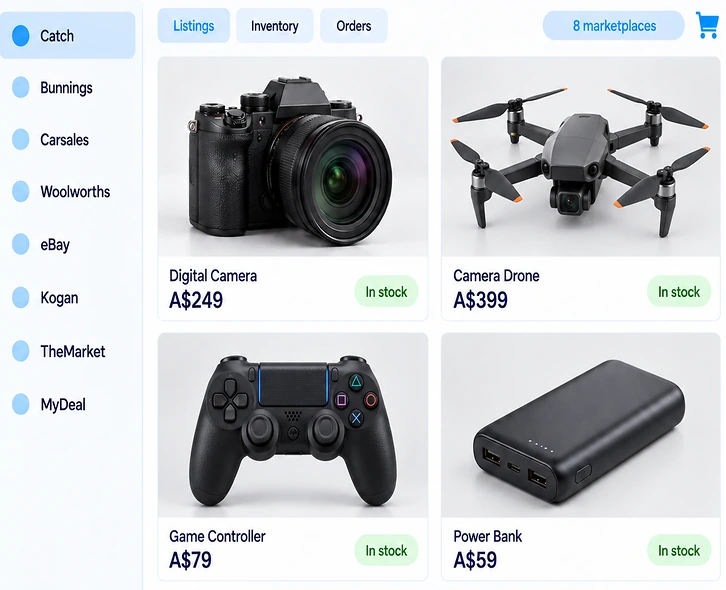
Ecommerce marketplace screen listing eight supported channels beside camera, drone, controller and power bank products.

Altogether, the marketplaces included in the Matchbox integration scope

C
Catch
B
Bunnings
C
Carsales
W
Woolworths
e
eBay
K
Kogan
T
TheMarket
M
MyDeal
Results

Integration DeliveryFor Matchbox

Overall, our work connected the key marketplace workflows with Neto. These deliverables describe integration capabilities rather than unverified traffic or revenue gains.

Scheduled Data Exchange

First, we added scheduled flows for selected catalogue and inventory updates.

Stock Update Routing

Second, we routed inventory changes from Neto to the relevant channel endpoints.

Marketplace Order Import

Third, we retained marketplace identifiers when bringing order records into Neto.

Dispatch Status Return

Finally, we mapped dispatch information back to the corresponding external orders.

01 / 04
Engineering Review

Engineering Decisions Behind The Integration

So we made three design decisions to keep Neto and marketplace workflows manageable.

01. Channel Mapping

First, we kept marketplace-specific field mapping inside its connector. Consequently, Neto product and order records stayed consistent.

02. Data Validation

We retained external order references and checked incoming records before import. Hence, we gained a way to recognize repeat requests.

03. Operational Visibility

Third, we recorded sync activity and exposed failures for follow-up. Thus, exceptions became easier to trace than a silent background job.

Channel-specific mapping: For example, eBay and Bunnings can require different product attributes. Therefore, we kept those mapping rules separate.

Planning a similar integration? Then explore software integration services, see ecommerce development capabilities, or discuss your marketplace connector requirements.

Next Step

Planning AMarketplace Integration?

Need to connect your commerce system with marketplaces? First, tell us your channels and order workflow. Then we can scope the integration and testing with you.

Discuss Your Integration
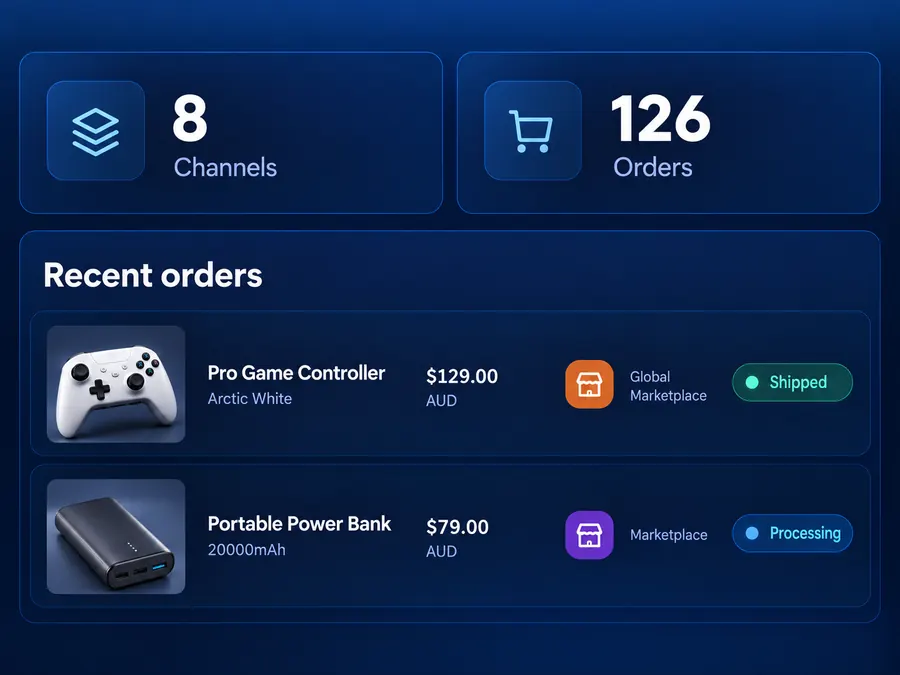

Illustrative ecommerce marketplace order dashboard showing channel and order information.

Let’s Talk About Your Product

Get expert guidance on scope, architecture, timelines, and delivery approach so you can move forward with confidence.

What happens next?