LLM Engineering Enterprise Ready

LLM Development
Services

Build LLM applications that understand natural language, work with your business systems and support real business workflows.

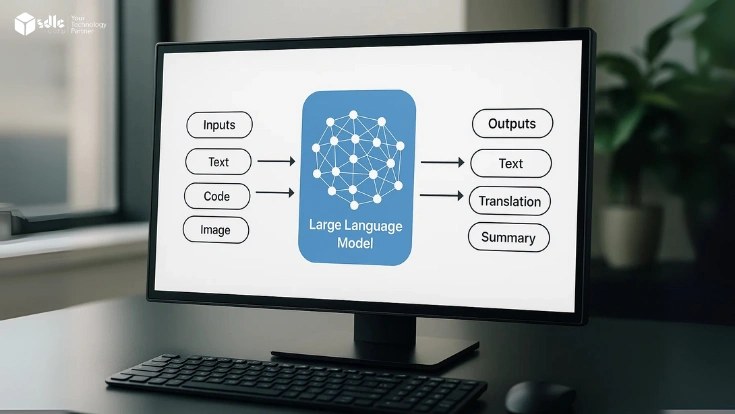
Our LLM development services cover custom application development, model integration, fine tuning, prompt and context engineering, structured outputs, evaluation, private deployment and production optimization.

Proven AI Delivery

50+Enterprise Clients
400+AI Specialists
98%On Time Delivery
10+ Yearsof Experience

Trusted by Fortune Global 500 leaders, governments & top universities across 30+ countries

Powered by leading cloud & AI platforms

AWS
Google Cloud
Microsoft Azure
NVIDIA
OpenAI
Anthropic
Gemini
Grok
Perplexity
Google AI
AWS
Google Cloud
Microsoft Azure
NVIDIA
OpenAI
Anthropic
Gemini
Grok
Perplexity
Google AI

Recognized by leading industry reviewers

Awards & industry recognition

Top AI Development Company by Selected FirmsTop IT Consulting, SI & Managed Services Company by ITRateTop Web Development Company by Selected FirmsTop Service Provider 2025 by RightFirmsTop App Development Company by AppDevelopmentCompaniesTop Software Development Company by Selected FirmsBest Support Company 2025 by SoftwareSuggestTop AI App Developers by C2C Reviews
LLM Development

LLM Development
Services

Build large language model applications around your products, users, workflows and existing business systems.

Build

Custom LLM Development

Develop LLM applications for business specific tasks such as summarization, classification, information extraction, reasoning, drafting and natural language interaction.

Applications

LLM Application Development

Build web applications, internal tools, enterprise assistants and APIs powered by commercial or open language models.

Integration

LLM Integration Services

Integrate GPT, Claude, Gemini, Llama, Mistral and other suitable models into existing applications, CRM, ERP, databases and enterprise workflows.

Adaptation

LLM Fine Tuning

Adapt suitable models for specialized terminology, response patterns, structured outputs, classification and repeatable business tasks.

Instructions

Prompt and Context Engineering

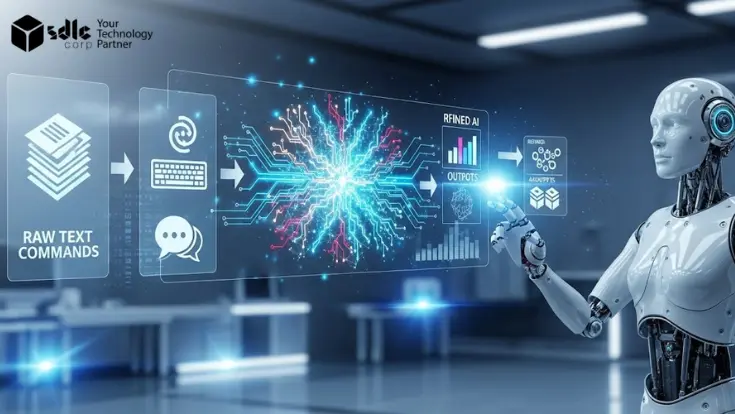
Design reusable instructions, context flows, examples and output structures that improve model consistency across production requests.

Testing

LLM Evaluation

Test model responses for task accuracy, instruction following, output validity, consistency, latency and application specific requirements.

Need your application to answer from proprietary or frequently changing information? Explore RAG Development Services.

Solutions

LLM Solutions
We Build

Build language model applications around the way your teams already work.

Conversation

Conversational AI Assistants

Build intelligent text based assistants for customer service, employee support, guided workflows and application experiences.

In product

Enterprise Copilots

Embed language model assistance into business software so users can summarize, draft, classify and complete work without switching applications.

Access

Natural Language Interfaces

Let users interact with ERP, CRM, databases and business applications through everyday language.

Documents

Document Intelligence Apps

Build LLM applications for summarization, comparison, classification, extraction and document review.

Schemas

Structured Output Systems

Convert free form requests into JSON, classifications, workflow instructions and other application ready formats.

Process

LLM Workflow Automation

Use language models for intent interpretation, summaries, drafting and structured reasoning inside larger automated business processes.

Building a customer facing chatbot specifically? Explore our AI Chatbot Development Services.

Products & systems

LLM Products
& Systems

Named products and delivered engagements where a language model does a defined job inside a real application.

3 entries · scroll to reveal
01 / 03 Product
Conversational AI Platform SDLC Corp

Convera

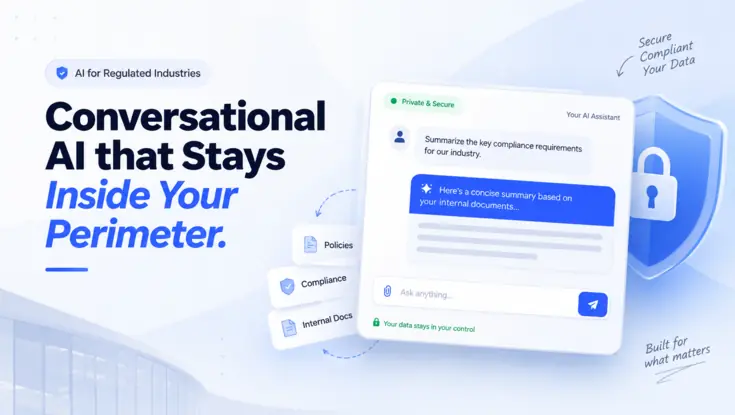
A secure conversational AI platform for enterprise and regulated environments. Convera combines language models, conversation controls, multilingual interaction, model flexibility and enterprise integrations across chat, voice and internal workflows.

Models run where the organization needs them: open weight models fully offline, or commercial models through approved private endpoints.

Best proof forConversational AI · model choice · private LLMs · multilingual interaction

  • Commercial and open LLM support
  • Llama and Mistral deployment
  • Private and air gapped model hosting
  • Multilingual conversations
  • Configurable guardrails
  • Visual workflow builder
  • Officer in the loop handoff
  • Enterprise IAM and SSO
  • Voice and multimodal interaction
  • 39 documented use cases across 6 sectors
Explore Convera
Convera enterprise conversational AI platform with configurable language models

Convera supports commercial and open language models within enterprise conversational workflows

50+Languages Supported
Llama & MistralSelf Hosted Weights
3Deployment Models
Officer-in-the-LoopHuman Escalation
02 / 03 Product
Natural Language ERP Assistant SDLC Corp

Odoo AI Assistant

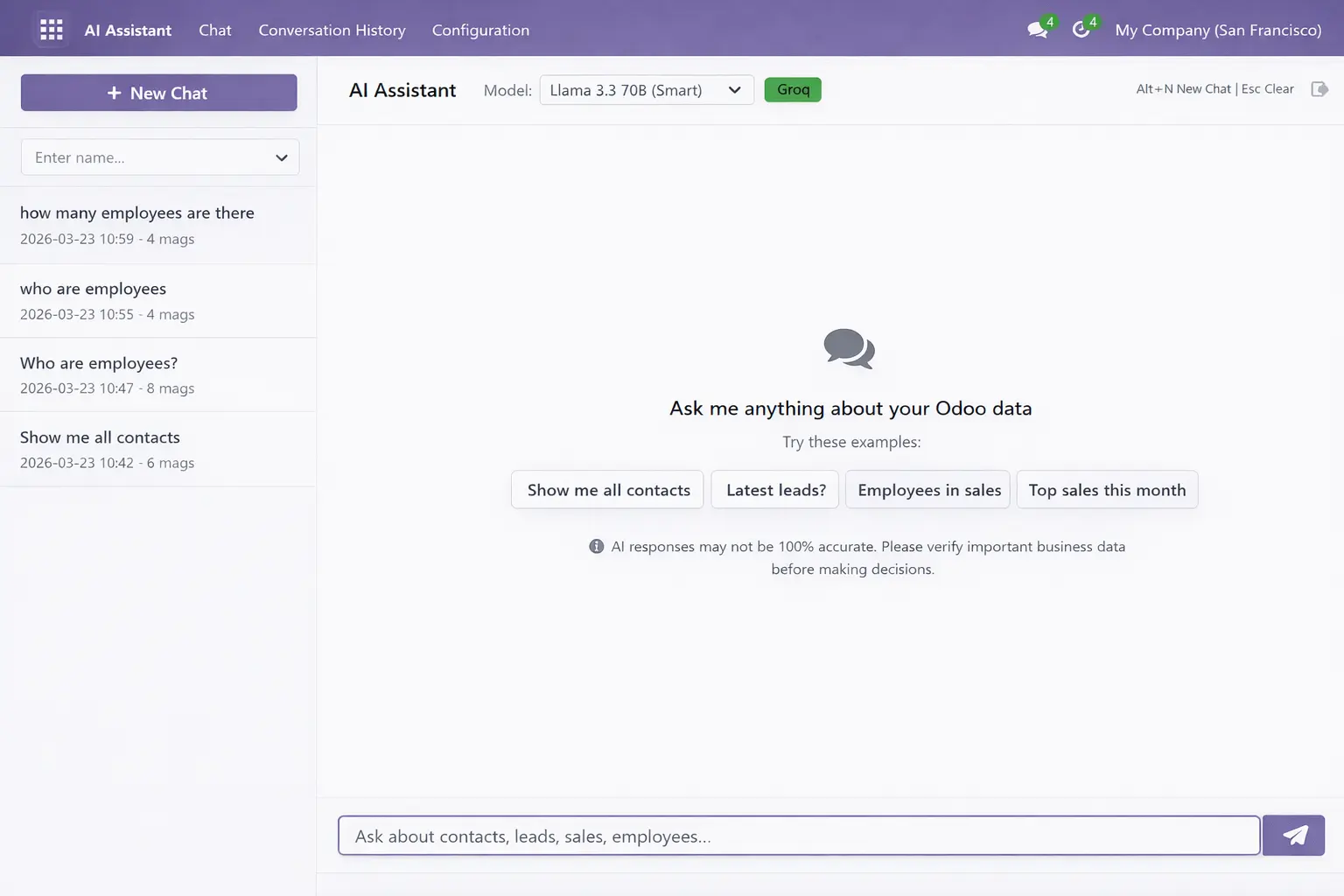
Ask business questions in plain English and receive structured answers from live ERP workflows.

The assistant interprets the request, selects a model, builds the required query, retrieves current Odoo information through controlled application logic and formats the result for the user.

Best proof forNatural language interface · model integration · structured outputs · enterprise software integration

  • Natural language understanding
  • Prompt refinement
  • Model selection
  • Automatic model fallback
  • Query generation
  • Structured response formatting
  • Conversation history
  • CSV and JSON outputs
Explore Odoo AI Assistant
Odoo AI Assistant chat window returning structured ERP results from a plain-English query

Natural-language access to live ERP workflows through Odoo AI Assistant

18+Business Areas
6AI Models
4xFaster Plain-English Queries
Role-BasedAccess
03 / 03 Case Study
LLM Workflow Automation SDLC Corp

QuantusTechnik

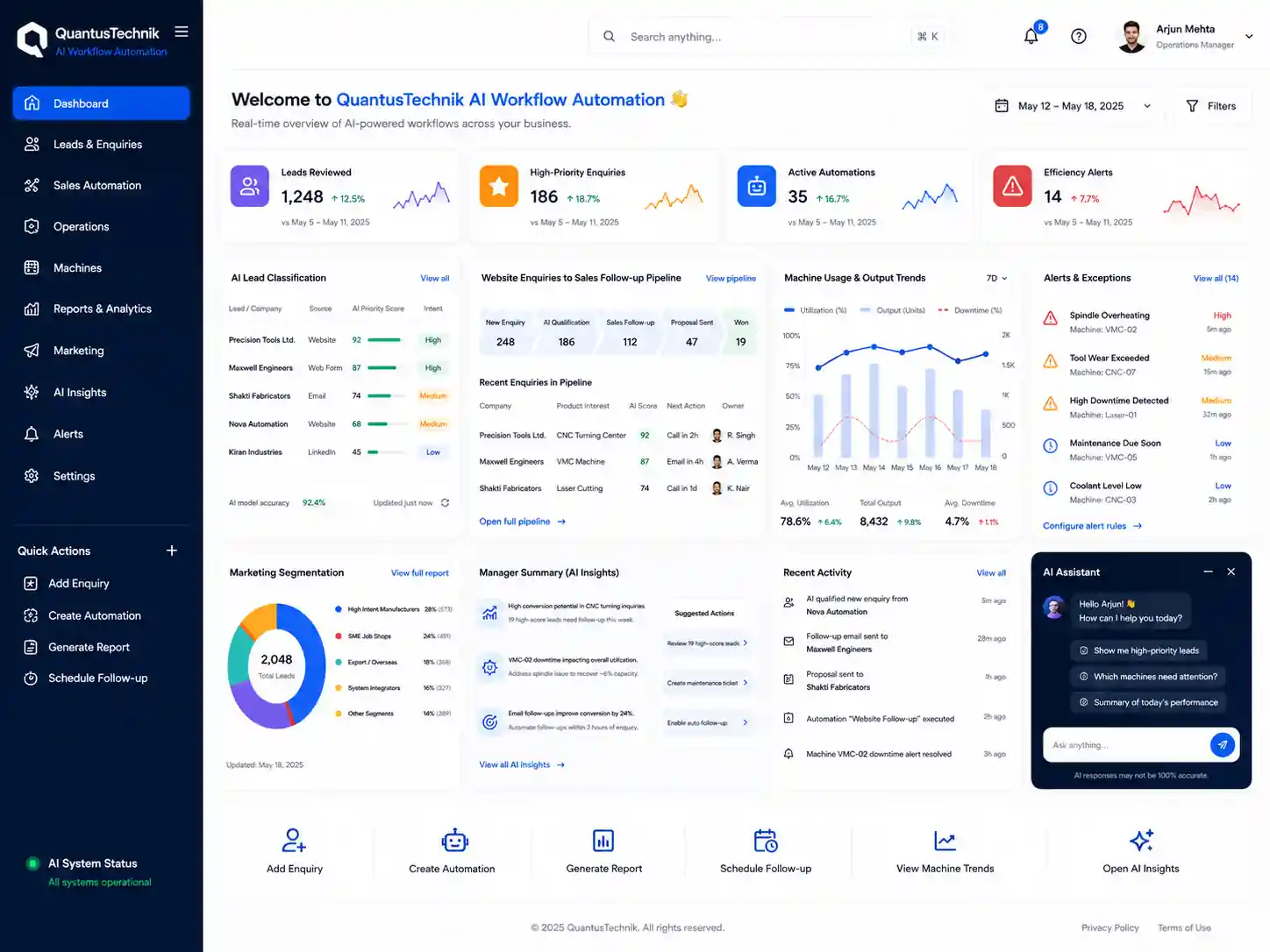
LLMs were embedded into sales and operational workflows to understand enquiries, prepare summaries and generate structured manager ready outputs.

GPT-4o with LangChain interprets intent, prepares concise summaries and produces structured outputs for downstream processes.

Best proof forGPT-4o · intent understanding · summarization · structured outputs · workflow automation

  • GPT-4o
  • Intent understanding
  • Summarization
  • Structured outputs
  • Prompt management
  • Manager notes
  • Automated workflow handoff
View Full Case Study
LLM workflow automation dashboard for enquiry analysis and manager reporting

GPT-4o and LangChain support enquiry understanding and structured reporting in the QuantusTechnik workflow

20 → 5 minLead Review
4 hr → 45 minManager Reporting
95%Follow-Up Visibility
3x FasterCampaign Segmentation

Need conversational AI grounded in proprietary content? See our website grounded RAG chatbot implementation.

Outcomes

What LLMs
Can Improve

Language models can reduce the manual effort involved in text heavy and language driven workflows.

Speed

Faster Information Work

Summarize, classify, compare and transform information without repeating the same manual tasks.

Access

Natural Language Access

Give users a simpler way to interact with complex software and structured business systems.

Reliability

Consistent Outputs

Use prompts, schemas and validation rules to produce outputs that fit downstream workflows.

Choice

Flexible Model Use

Route workloads to models based on quality, latency, privacy and operating requirements instead of relying on one model for every task.

Integration

Connect Your
Business Systems

LLM applications become more useful when they operate inside the systems your teams already use.

Customers

CRM Systems

Summarize interactions, classify requests, prepare notes and assist users working with customer information.

Operations

ERP Platforms

Give authorized users natural language access to operational and transactional workflows.

Software

Business Applications

Embed language capabilities into internal portals, SaaS products and custom software.

Data

Databases

Connect language workflows with structured information through controlled application logic.

Services

APIs

Use internal and third party services as part of application workflows.

Content

Document Systems

Process contracts, reports, forms, correspondence and other language heavy business information.

For broader custom artificial intelligence requirements, explore our AI Development Services.

Architecture

LLM Application
Architecture

A production LLM application needs more than a connection to a model API.

Layer 01

Application Logic

Control the task, workflow rules, permissions and application behavior surrounding each model request.

Layer 02

Prompt and Context

Provide the model with clear instructions, conversation state, examples and application specific context.

Layer 03

Model Routing

Select the appropriate model according to task complexity, quality requirements, latency and operating cost.

Layer 04

LLM Inference

Process each request using the commercial or open language model selected for the workload.

Layer 05

Structured Outputs

Return predictable schemas, JSON or application specific formats where downstream systems require them.

Layer 06

Output Validation

Check generated values, formats and application rules before another system uses the model response.

Layer 07

Observability

Track model calls, latency, failures, token usage and application behavior.

Layer 08

Application Response

Deliver the validated result through the product, API, workflow or user interface.

Model Strategy

Model Selection
and Routing

The best model depends on the task. We select and route models according to what the application actually needs.

Reasoning

OpenAI

Use suitable OpenAI models for reasoning, language generation, coding, structured outputs and other supported workloads.

Context

Anthropic Claude

Integrate Claude models where their capabilities fit the application's language, reasoning and context requirements.

Multimodal

Google Gemini

Use Gemini models for suitable language and multimodal application requirements.

Open weight

Llama

Deploy open weight Llama models where organizations need greater control over hosting and infrastructure.

Private

Mistral

Use suitable Mistral models for enterprise and privately hosted language model workloads.

Model Selection Factors

What decides which model handles a given request

Task qualityReasoning requirementsContext lengthResponse latencyStructured output supportPrivacy requirementsDeployment optionsThroughputOperating cost
Adaptation

Fine Tuning
and Adaptation

Fine tuning helps when an application needs repeatable model behavior rather than access to frequently changing information.

Vocabulary

Domain Terminology

Adapt suitable models to handle specialized terminology more consistently.

Formats

Structured Outputs

Improve performance on tasks where predictable formats are important.

Routing

Classification

Adapt models for repeatable intent, routing and categorization tasks.

Tone

Response Patterns

Improve consistency in tone, terminology and expected response structure.

Examples

Task Adaptation

Train suitable models using representative examples for specialized business workflows.

Following

Instruction Tuning

Improve how suitable models interpret and follow task specific instructions.

Need a model to answer using private or frequently updated knowledge instead? Explore RAG Development Services.

Prompting

Prompt and Context
Engineering

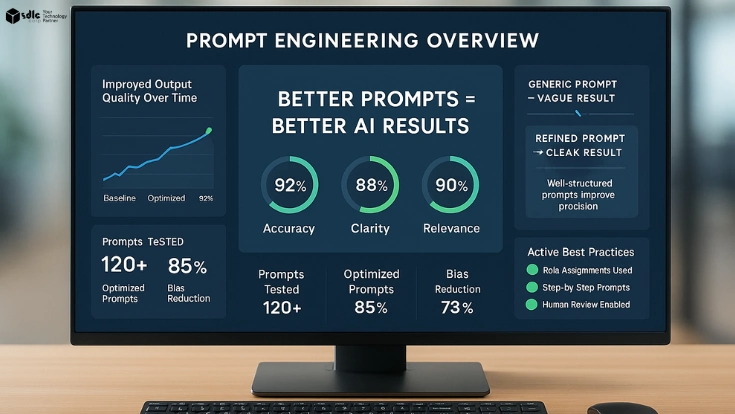
Production applications need more than a successful one off prompt. We design reusable prompt and context patterns for real application workloads.

Boundaries

System Instructions

Define task boundaries, expected behavior and response requirements.

Inputs

Structured Prompts

Give models clear inputs, task definitions and expected output formats.

State

Context Management

Control which conversation history and application information reaches each model request.

Examples

Few Shot Examples

Use representative examples where they improve task consistency.

Schemas

Structured Outputs

Return defined schemas for applications that require predictable downstream processing.

Regression

Prompt Testing

Compare prompt versions against representative test cases before production release.

Read Prompt Engineering Best Practices.

Evaluation

Evaluate
LLM Quality

A production LLM should be measured against the tasks users actually perform.

Results

Task Accuracy

Check whether outputs satisfy expected results for representative application scenarios.

Compliance

Instruction Following

Measure whether the model consistently follows system and user requirements.

Schemas

Structured Output Quality

Validate schemas, required fields, formats and values used by downstream applications.

Stability

Response Consistency

Test whether similar requests produce sufficiently stable results.

Boundaries

Refusal Behavior

Check how the application handles unsupported, prohibited or incomplete requests.

Speed

Latency

Measure whether model response times meet the application's performance requirements.

Change

Regression Testing

Compare results after changes to models, prompts, context strategies or application logic.

Security

Secure
LLM Applications

Security should cover the complete application around the model.

Identity

Authentication

Control who can access the LLM application.

Permissions

Authorization

Restrict application functions and business information according to user permissions.

Data

Data Controls

Define what information can be supplied to models and how sensitive data should be handled.

Validation

Output Validation

Check model generated data before downstream applications process it.

Traceability

Audit Logging

Record relevant user, application and model activity.

Providers

Provider Controls

Configure approved model providers, credentials, regions and application access.

Deployment

Private
LLM Deployment

Choose the deployment model that matches your workload, infrastructure and data requirements.

Controlled

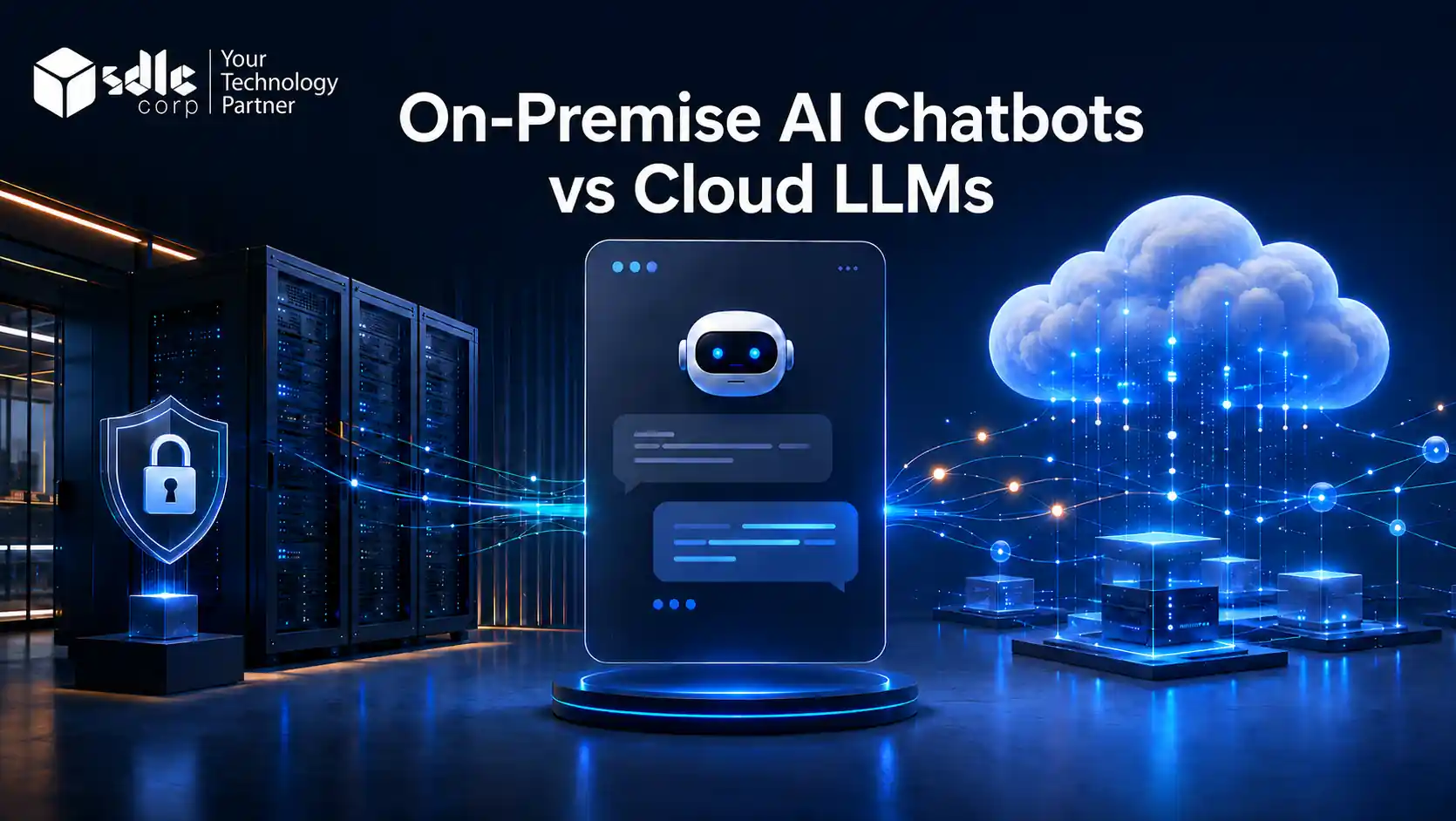
Private Cloud

Deploy model services within controlled cloud environments.

Owned

On Premise

Run suitable open weight models on infrastructure operated by your organization.

Mixed

Hybrid Deployment

Route different workloads between private and managed model environments.

Isolated

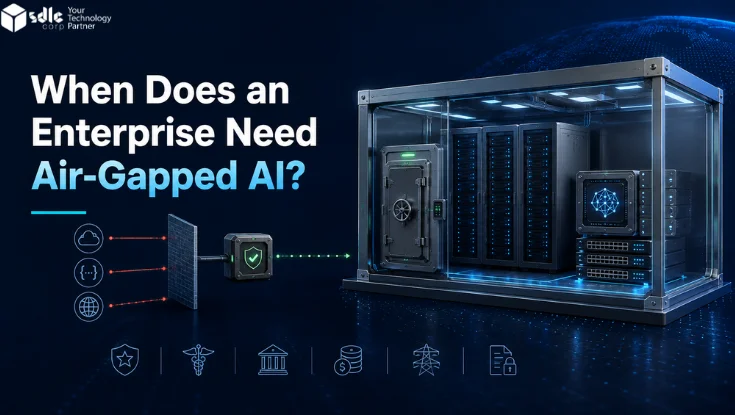
Air Gapped Deployment

Run suitable models and supporting services inside isolated environments without public runtime connectivity.

Read the Air Gapped AI Deployment Guide.

Optimization

Production
LLM Optimization

Improve model performance without treating every quality or cost problem as a model replacement problem.

Routing

Model Routing

Send different workloads to models based on task complexity, latency and quality requirements.

Context

Context Optimization

Reduce unnecessary context and provide only the information required by the current task.

Reuse

Prompt Caching

Reuse eligible prompt components where provider and application architecture support it.

Perceived speed

Response Streaming

Improve perceived response time for interactive applications.

Resilience

Failure Handling

Use retries, fallbacks and application rules when model requests fail.

Telemetry

Usage Monitoring

Track requests, tokens, latency, errors and model usage across production workflows.

Upgrades

Model Versioning

Evaluate model upgrades before changing production behavior.

Industries

LLM Solutions
by Industry

The same engineering pattern, shaped by the documents, regulations and access rules of each sector.

Controlled

Financial Services

Build assistants for document review, reporting, operational analysis and controlled internal business workflows.

Regulated

Healthcare

Support approved documentation, administrative tasks and language intensive operational workflows.

Documents

Legal

Summarize documents, extract clauses, classify information and assist controlled legal work.

Technical

Manufacturing

Interpret technical enquiries, summarize operational information and assist teams working with product or machine related content.

Operations

Logistics

Process business communication, summarize shipment information and support document intensive operational workflows.

Cross functional

Enterprise Operations

Add language capabilities to finance, HR, support, sales and internal business applications.

Technology

LLM
Technology Stack

We work with commercial and open technologies across the LLM application stack.

Language Models

Commercial and open weight models selected per workload

OpenAIClaudeGeminiLlamaMistral
LLM Frameworks

Orchestration, agents and application scaffolding

LangChainLlamaIndexLangGraphHugging Face
Model Serving

Inference runtimes for self hosted open weight models

vLLMNVIDIA NIMHugging Face TGIllama.cpp
Engineering

Application services and integration layers

PythonNode.jsREST APIsMicroservices
Infrastructure

Cloud, container and orchestration platforms

AWSMicrosoft AzureGoogle CloudDockerKubernetes
Application Data

State, caching and enterprise connectivity

PostgreSQLRedisEnterprise APIsBusiness Systems
Client Stories

Real Stories.
Real Impact.

Founders, CEOs, and operating leaders share what it's like to build with SDLC Corp.

Client story

Eric Leist

CEO, Edgerton Strategies

Client story

Doug Schmidt

CEO, Roofaid USA

Client story

Reyzal Razmi

All Star Influencers

What clients say
01 / 05
They approached our Salesforce discovery with real technical depth, uncovered structural gaps others missed, and delivered a solution that worked exactly as promised.
SDLC CORP built a mobile application that met our strategic requirements with strong technical execution. The solution performs reliably and has become an important operational asset.
They saw inefficiencies in our Salesforce workflow and redesigned our entire quote-to-cash system. We now operate faster, cleaner, and with better accuracy.
From planning to post-launch, SDLC Corp guided us every step of the way. Their support makes them more than a vendor. They're a trusted partner.
The SDLC Corp team scaled our platform with impressive technical expertise, ensuring it's secure, robust, and ready for future growth.
What clients say
01 / 05
The SDLC Corp team scaled our platform with impressive technical expertise, ensuring it's secure, robust, and ready for future growth.
From planning to post-launch, SDLC Corp guided us every step of the way. Their support makes them more than a vendor. They're a trusted partner.
They saw inefficiencies in our Salesforce workflow and redesigned our entire quote-to-cash system. We now operate faster, cleaner, and with better accuracy.
SDLC CORP built a mobile application that met our strategic requirements with strong technical execution. The solution performs reliably and has become an important operational asset.
They approached our Salesforce discovery with real technical depth, uncovered structural gaps others missed, and delivered a solution that worked exactly as promised.
By the Numbers

10+ Years of
Experience.

Technology teams supporting enterprise projects across industries and regions.

Drag to spin
3,400+
Projects Delivered
across 12 industries
400+
AI Specialists
Top 1% global talent
10+
Years of Experience
shipping at enterprise scale
1,200+
Global Engineers
across 6 continents
30+
Countries Served
global regulatory regimes
50+
Enterprise Clients
Fortune 500 to challengers
Delivery

Our LLM
Development Process

Five stages from initial use case definition to a measured application running in production.

01

Discover

Define users, workflows, tasks, integrations, expected outputs and measurable success criteria.

02

Design

Select the model approach and design the application, prompt, context, security and integration architecture.

03

Build

Develop model workflows, backend services, interfaces and business system integrations.

04

Evaluate

Test outputs against representative business scenarios, application rules and quality requirements.

05

Deploy

Launch the application in the selected environment and monitor production behavior.

LLM Audit

Improve
Existing LLM Apps

Already using language models but getting inconsistent quality, slow responses or rising operating costs? We can evaluate the complete application and identify where performance is being lost.

Common LLM Issues

Where application quality is usually lost

Inconsistent responses
Weak system instructions
Poor prompt structure
Excessive context
Invalid structured outputs
Poor model selection
Slow responses
High token usage
Weak fallback logic
Missing evaluation datasets
Model provider dependency
Uncontrolled model upgrades
Poor workflow integration

We identify the underlying issue before replacing models or rebuilding the application.

Read the LLM guide.

Why SDLC Corp

Why Choose
SDLC Corp

One engineering partner for the full LLM application lifecycle, from model selection through production operation.

End to End

Complete LLM Engineering

Build the entire application around the language model, including backend services, interfaces, workflow logic and integrations.

Model Choice

Model Flexible Architecture

Choose commercial or open models according to workload requirements instead of locking the application to one provider.

Systems

Enterprise Integration

Connect LLM applications with the business systems your teams already use.

Measured

Production Evaluation

Measure model and application behavior throughout development.

Anywhere

Deployment Flexibility

Support cloud, private, hybrid and suitable on premise model deployments.

50+Enterprise Clients
400+AI Specialists
98%On Time Delivery
Get Started

Build Your
LLM Application

Turn language model capabilities into a production application connected to your business workflows and systems.

From enterprise assistants and natural language interfaces to document applications, structured output systems and embedded copilots, our LLM development team can take your project from architecture through deployment.


Contact Us

Share a few details about your project, and we’ll get back to you soon.

Let's Talk About Your Project

FAQ

Frequently Asked
Questions.

The questions teams ask most often before starting an LLM engagement.

LLM development services cover the design, development, integration and deployment of applications powered by large language models.

Services can include model selection, model integration, fine tuning, prompt engineering, structured outputs, application development, evaluation, private deployment and production optimization.

LLMs can support enterprise assistants, business copilots, document processing, summarization, classification, information extraction, natural language interfaces and workflow assistance.

Usually not.

Many enterprise applications can use existing commercial or open models while engineering focuses on application logic, integrations, prompts, workflows and evaluation.

Training a foundation model from scratch requires substantially more data, infrastructure and specialized resources.

Custom LLM development involves building an application around language models for a specific business requirement.

This can include model selection, prompts, APIs, structured outputs, system integrations, evaluation and deployment.

LLM integration connects a language model with an existing product, software application or enterprise workflow.

The integration can handle model requests, prompts, responses, structured outputs, permissions, logging and application rules.

Fine tuning adapts an existing model using additional training examples.

It can improve specialized task behavior, terminology, classification, response patterns or structured outputs.

Use RAG when an application needs access to proprietary or frequently changing information.

Fine tuning is generally better suited to changing model behavior rather than storing current business knowledge.

Yes.

LLM applications can integrate with CRM, ERP, databases, APIs, document platforms and existing custom software.

Yes.

Applications can use commercial models, open weight models or a combination depending on quality, infrastructure, privacy, latency and operating requirements.

Suitable open weight models can run on private infrastructure when the available hardware, model license and workload requirements support local deployment.

Private LLM deployment runs suitable models and supporting application services within infrastructure controlled or isolated according to organizational requirements.

The deployment can use private cloud, on premise, hybrid or isolated environments.

Evaluation depends on the task.

Common measures include response accuracy, instruction following, structured output validity, consistency, latency, refusal behavior and application specific task completion.

Yes.

We can review model selection, prompts, context handling, structured outputs, integration logic, latency, token usage, failure handling and evaluation workflows to identify where improvements are needed.

An LLM is the language model that interprets or generates language.

RAG is a separate application architecture that retrieves external information and gives that information to a model when responding.

Organizations that specifically need retrieval, vector search, enterprise knowledge access or source grounded answers should use dedicated RAG Development Services.