Retail Software Development

Retail Software Development Company

We build retail software for omnichannel commerce, POS operations, inventory management, loyalty workflows, and connected store management. Each solution can be shaped around the retailer’s operating model, sales channels, and day-to-day business workflows.

Recognized on
Request a Proposal
What we build

Retail software development services

We build retail software around your sales model, operating workflows, and existing systems. Our services cover eCommerce platforms, POS software, retail analytics, AI-supported experiences, and integrations with ERP, CRM, and back-office tools.

01 eCommerce

eCommerce Software Development

We develop retail eCommerce platforms for B2B, B2C, D2C, and marketplace models. These systems can support large catalogs, pricing rules, promotions, checkout flows, and integrations with ERP, CRM, and fulfillment tools.

B2B eCommerce platform development
B2B eCommerce Account-based pricing, bulk ordering, approval workflows, and ERP-connected checkout.
B2C storefronts Retail storefronts with promotions, loyalty support, and smoother checkout journeys.
D2C headless commerce Headless storefront builds with custom front ends and Salesforce Commerce Cloud implementation.
Marketplace and multi-vendor Seller onboarding, commission handling, catalog control, and unified order flows.
02 POS & In-store

POS Software & Omnichannel Integration

We build POS software that connects store billing, inventory, loyalty, and pricing with online and mobile channels. This helps teams work with a more consistent view of stock, baskets, and customer activity across locations.

Odoo POS development
Custom POS software Multi-store POS with offline support, inventory sync, and loyalty integration.
Odoo POS for retail Retail ERP support with POS, inventory, purchasing, and workflow customization.
Omnichannel sync Shared inventory, connected customer profiles, and channel-aligned order data.
Fulfillment and OMS Click and collect, ship-from-store, routing support, and order tracking workflows.
03 AI & Intelligence

AI for Retail & Personalization

We add AI features where they support a clear retail use case, such as product recommendations, demand forecasting, workflow automation, and assisted merchandising decisions. These capabilities can be connected with your existing retail systems and data sources.

Retail AI consulting
AI personalization Product recommendations based on session behavior, purchase history, and customer profiles.
Demand forecasting Forecasting models for SKU planning by season, store, and product movement.
AR shopping experiences Virtual try-on and visual shopping features for categories such as fashion, eyewear, and furniture.
Retail process automation Automation support for orders, invoicing, returns, and supplier workflows.
04 Analytics & ERP

Retail Analytics, BI & System Integration

We build analytics and reporting tools that help retail teams track SKU performance, sales trends, customer behavior, and store activity. We also connect retail software with ERP, CRM, and third-party systems to reduce manual work and improve operational visibility.

Retail BI services
SKU-level analytics Sales velocity, margin visibility, and location-based performance tracking.
Store traffic insights Store heat mapping, dwell time analysis, and queue monitoring where relevant.
ERP and CRM integration Connect Odoo integration services, Salesforce consulting, SAP, and custom back-office systems.
Connected retail monitoring Smart shelf alerts, replenishment support, and operational dashboards for store teams.
Platform selection guide

Shopify vs Salesforce Commerce Cloud vs Custom

Choosing the right platform depends on your workflows, integrations, and growth plans. Each option supports a different level of flexibility and operational control.

Off-the-shelf
Shopify Plus
A fast way to launch standard retail stores. However, customization and integrations can require additional development as complexity increases.
Fast go-to-market
App ecosystem
Lower setup complexity
Advanced B2B workflows and ERP integrations may need extra customization.
Custom build
Custom Retail Software
A flexible approach when packaged platforms do not fully match your workflows. It allows better control over features, integrations, and scaling.
Fully customizable
Flexible integrations
Scalable architecture
No platform dependency
Requires more planning time and upfront investment compared to standard platforms.

Not sure which fits your business? Book a platform consultation

Case studies

Retail software case studies
and outcomes

Retail businesses often need better coordination across POS, inventory, and eCommerce operations. These examples show how the right system setup can support smoother workflows and more connected retail operations.

UAE food retail software case study with Odoo POS and omnichannel operations UAE · Food Retail · Odoo POS

Mair Food Retail — UAE omnichannel retail operations

This retailer was managing multiple store locations with disconnected POS terminals, manual stock processes, and limited online coordination. As a result, we implemented Odoo POS and connected key retail operations across store, online, and supply chain workflows.
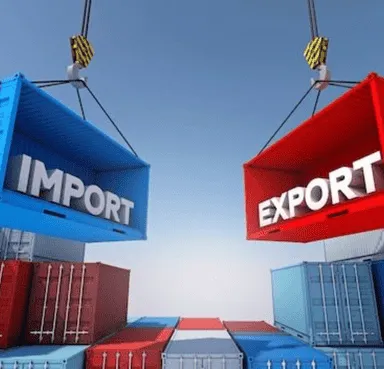
Multi-store Retail operations brought into one workflow
Better sync Improved coordination across inventory and sales channels
6 months Approximate delivery timeline
Read full case study
Multi-location retail POS and inventory case study with Odoo POS Multi-location · POS · Inventory

Odoo POS — multi-location retail operations

A growing retail chain needed better coordination between POS activity and inventory across locations. Therefore, we implemented Odoo POS with central inventory sync and reordering workflows to support more consistent checkout and stock visibility.

Faster checkout Improved transaction flow at store level
Lower stock friction Better visibility into inventory movement
Read full case study
eCommerce and Odoo integration case study for retail operations scaling eCommerce · Odoo · Scaling

eCommerce scaling with an integrated Odoo setup

An online retailer was dealing with fragmented back-office processes as order volume increased. Meanwhile, the business needed better coordination between store operations, warehouse activity, and customer service, so we built an integrated Odoo-based workflow to support that growth.

Higher capacity Operational setup prepared for greater order volume
Less manual work Improved process flow across teams
Read full case study

Need more project examples? We can share additional retail case studies and delivery details based on your platform, workflow, or business model.

Request detailed case studies
Why choose us

Why businesses choose SDLC Corp

After reviewing platforms and real project outcomes, choosing the right development partner becomes the next step. Our approach focuses on building systems that align with real retail workflows.

Workflow-focused development

We design retail systems around your operations, including inventory, POS, and order flows. As a result, the software aligns with how your team actually works.

Integration-ready systems

Retail platforms connect with ERP, CRM, and third-party tools. This helps reduce manual work and improves data consistency across systems.

Omnichannel experience support

Online and store operations work together. Therefore, customers and teams experience more consistent interactions across channels.

Built for scale and change

Systems are structured to handle growth, seasonal demand, and evolving retail workflows without frequent rebuilds.

Flexible platform approach

We work with Shopify, Salesforce, Odoo, or custom builds based on your needs. This ensures the solution fits your business instead of forcing a single platform.

Practical delivery experience

Our work includes POS systems, ecommerce platforms, and retail integrations. Each project focuses on solving operational challenges rather than adding unnecessary complexity.

Have a retail project in mind? Let’s discuss the right approach based on your workflows and platform needs.

Talk to our team
UAE & GCC retail delivery

Retail software delivery experience
for UAE and GCC markets

Retail operations in the UAE and wider GCC often require bilingual experiences, VAT-ready workflows, marketplace connectivity, and regional commerce support. Because of that, this work needs both retail system knowledge and regional implementation awareness.

Arabic and English retail UX

Interfaces can be prepared for bilingual customer journeys, including catalog, checkout, and store-facing workflows where needed.

VAT-ready retail workflows

Retail systems may need VAT calculation, invoice handling, and finance-friendly checkout logic for day-to-day operations.

Marketplace and channel connectivity

Where relevant, integrations can be scoped for regional marketplaces and connected sales channels to improve catalog and order coordination.

Cross-border GCC operations support

In addition, workflows can be designed for multi-currency operations, regional shipping rules, and connected inventory visibility across markets.

Discuss UAE or GCC retail requirements
UAE food retail software case study with Odoo POS and omnichannel operations
UAE · Food retail · Odoo POS

Mair Food Retail — UAE omnichannel retail operations

This project involved multi-location food retail workflows with disconnected POS activity and limited online coordination. As a result, the implementation focused on connecting store and online operations more effectively.

Multi-storeRetail coordination across locations
Better syncImproved visibility across operations
6 monthsApproximate delivery timeline
Read full case study
Why this matters: regional retail projects often involve language, tax, channel, and operations requirements that should be addressed early in planning, not added later as patches.
Retail software development cost

How much does retail software cost?

Pricing varies based on system scope, integrations, and platform choice. In most cases, costs differ depending on workflows, number of sales channels, and required customisation.

Project type Investment range Timeline
POS software integration

Odoo POS or custom point-of-sale for retail operations with inventory sync.

$15,000–$50,000
Depends on store count
6–12 weeks
Standard setup
eCommerce platform development

B2B or B2C ecommerce with catalogue, checkout, and payments.

$30,000–$80,000
Varies by features
2–4 months
Standard integrations
Omnichannel retail platform

POS, ecommerce, and marketplace integration with unified inventory.

$100,000–$300,000
Depends on channels
4–10 months
Phased delivery
Salesforce Commerce Cloud

SFCC storefront with CRM and enterprise integrations.

$150,000–$400,000
Enterprise scope
6–12 months
Large-scale build
Custom retail platform

Fully custom solution including catalogue, orders, inventory, and analytics.

$200,000–$500,000+
Complex workflows
8–18 months
Dedicated team
Note: Costs depend on integrations, data migration, and custom workflows. Therefore, a scoped discussion helps define accurate estimates. Request a cost breakdown
Outcomes & results

Retail outcomes clients
observe after delivery

Connected retail systems help improve coordination across sales, inventory, and operations. These examples highlight how better system alignment supports smoother day-to-day workflows.

Sales coordination

Improved consistency across store and online sales workflows

When POS, inventory, and eCommerce systems are aligned, customer journeys become more consistent. As a result, teams can manage pricing, availability, and orders with fewer gaps across channels.

Inventory visibility

Better stock tracking across locations and channels

Once systems are connected, inventory data becomes more reliable across stores and warehouses. In turn, teams spend less time resolving mismatches and manual updates.

Order handling

More efficient processing of higher order volumes

As workflows are streamlined, order processing becomes more structured. Consequently, businesses can handle increased demand without heavily expanding manual effort.

Delivery experience

Project experience across POS, inventory, and omnichannel workflows

Retail implementations often involve store operations, eCommerce integration, and inventory coordination. Therefore, delivery experience needs to cover multiple workflows rather than a single system.

* Outcomes depend on project scope, integrations, and operational workflows.

Discuss the retail outcome you want to improve

Talk to our team
FAQ

Retail software questions answered

These are common questions from retail teams evaluating software platforms, implementation scope, cost, and delivery timelines.

01

What is retail software development?

Retail software development involves building systems such as ecommerce platforms, POS solutions, inventory tools, and omnichannel software designed around retail workflows.

02

How much does retail software development cost?

Costs vary depending on scope, integrations, and platform choice. Smaller systems may require lower investment, while larger retail platforms involve broader implementation effort.

03

Should I choose Shopify, Salesforce Commerce Cloud, or custom software?

The right option depends on workflow complexity and growth plans. Shopify supports standard ecommerce, whereas Salesforce Commerce Cloud fits enterprise retail. Custom solutions are used when workflows exceed platform limitations.

04

Can you build Odoo POS and ERP solutions?

Yes. Odoo can be used to build POS systems, inventory workflows, and full retail ERP solutions based on business requirements.

05

What is omnichannel retail software?

Omnichannel retail software connects store, ecommerce, mobile, and marketplace operations into one system so inventory, orders, and customer data remain aligned across channels.

06

How long does retail software development take?

Timelines depend on scope and complexity. Smaller systems may take weeks, while larger platforms typically take several months with phased delivery.

Get Started

Plan the Right Retail Software for Your Operations

Share your retail workflows, sales channels, inventory setup, or system requirements. Based on that, we help you define a practical approach for building or improving your retail platform.

What happens next?

  • First, we review your current retail systems, POS setup, and operational workflows
  • Next, we map integrations such as inventory, ecommerce, ERP, and third-party tools
  • Then, we outline a clear implementation approach with timelines and next steps
Omnichannel Workflows Inventory Integration Retail Operations