AI Governance Consulting
Services
Turn AI governance from policy documents into controls your teams can actually use.
Our AI governance consulting services help organizations inventory AI systems, classify risk, define policies, establish decision rights, create lifecycle controls, set evidence requirements, govern models and vendors, and build practical oversight for AI operating in production.
Proven AI Delivery
Trusted by Fortune Global 500 leaders, governments & top universities across 30+ countries










Powered by leading cloud & AI platforms
Awards & industry recognition


AI Governance Consulting
Services
Build a governance system that gives business, technology, risk and compliance teams clear rules for how AI is approved, operated, changed and retired.
Structure
AI Governance Framework
The policies, controls and evidence requirements that apply across your AI portfolio - inventory requirements, use-case risk tiers, lifecycle gates, minimum evidence, model and vendor controls, exception rules, monitoring and retirement.
Authority
AI Governance Operating Model
Who makes governance decisions and how those decisions move - decision rights, accountable owners, governance forums, reviewer responsibilities, delegated authority, escalation paths, approval timelines and evidence ownership.
Rules
AI Policy Development
Practical policies for how AI may be selected, developed, procured, tested, deployed, monitored and used - specific enough to guide delivery teams rather than repeating broad ethical principles.
Proportion
AI Risk Management
Classify AI use cases by potential business, legal, operational, security and user impact, and apply more controls where impact is higher instead of forcing every system through the same process.
Models
Model Governance
Requirements for model selection, evaluation, approval, version changes, performance review and retirement.
Principles
Responsible AI Governance
Translate accountability, transparency, human oversight, privacy, reliability and fairness into operational requirements rather than statements of intent.
Need a broader AI strategy rather than a dedicated governance program? Explore AI Consulting Services.
Questions We
Help Answer
AI governance should make important decisions clearer.
Inventory
What AI Systems Do We Have?
Create an inventory covering internal AI applications, embedded AI, purchased platforms, third-party models and experimental systems.
Proportion
Which Systems Need More Oversight?
Define risk classification criteria so governance effort is proportional to potential impact.
Authority
Who Can Approve an AI Use Case?
Assign decision rights instead of allowing accountability to disappear inside committees.
Proof
What Evidence Is Required?
Define the documentation, tests, reviews and approvals required before each lifecycle decision.
Oversight
When Must a Human Review?
Set clear human-oversight requirements for sensitive outputs, recommendations or actions.
Change
What Happens When AI Changes?
Define when changes to models, prompts, data, providers or use cases require re-evaluation.
Every one of these is a question an auditor, a regulator or a board can ask with no warning.
What You
Receive
A governance engagement should leave your organization with usable operating artifacts.
Artifact
AI Governance Framework
A documented structure covering governance principles, control categories, risk tiers, lifecycle requirements, evidence standards, exceptions, monitoring and retirement.
Artifact
AI Inventory Model
The fields required to record AI systems consistently: system name, business and technical owner, use case, model or provider, data used, user population, deployment environment, level of autonomy, risk classification, approval status and review date.
Artifact
Risk Classification Model
A practical method for assigning different levels of oversight, so effort follows impact.
Artifact
Control Library
Reusable controls across access, data, model evaluation, human oversight, logging, monitoring, change management, third-party AI and incident response.
Artifact
Decision Rights Matrix
Who may approve, reject, escalate, grant exceptions, authorize changes, and pause or stop an AI system.
Artifact
Evidence Requirements
What teams must provide before a governance decision can be made.
Artifact
Governance Roadmap
A phased plan for implementing and improving governance across the AI portfolio.
Artifact
Operating Templates
Intake forms, review checklists, exception requests and approval records, so the framework is something teams fill in rather than something they read.
The exact artifact set depends on the engagement and on what already exists.
Build an
AI Inventory
Governance starts with knowing where AI exists. An inventory should cover far more than internally developed models.
Built
Custom AI Systems
Applications and models built by internal or external development teams.
Generative
Generative AI Applications
LLM, RAG, conversational and generative-media applications.
Acting
AI Agents
Systems capable of selecting tools, completing workflows or performing actions.
Embedded
Embedded AI
AI functionality included inside enterprise applications and SaaS platforms.
External
Third-Party AI
Externally provided AI services, models and business applications.
Unmanaged
Experimental AI
Proofs of concept, pilots and employee-led experiments that may not yet be formally managed.
A complete inventory creates the foundation for risk classification, ownership and review. Embedded and employee-led AI is where most inventories are incomplete.

AI Risk
Classification
Not every AI system requires the same controls. A practical governance program classifies systems according to potential impact.

AI used for limited internal assistance where outputs are easily reviewed and errors have limited consequences.
AI affecting operational workflows, customer interactions or important business processes.
AI influencing significant financial, legal, safety, employment, access or other consequential decisions.
Factor
Intended Use and Users
What the system is for, and who it affects.
Factor
Decision Impact
What happens when the output is wrong.
Factor
Data Sensitivity
What information the system handles.
Factor
Autonomy and Reversibility
Whether it acts, and whether the action can be undone.
Factor
Scale and Exposure
How many decisions, and how visible externally.
Risk classification should consider more than the model. Higher-risk systems should require stronger evidence and more frequent review.
AI Lifecycle
Governance
Governance should follow the AI system throughout its lifecycle, not stop at the approval to build.
Gate 01
Intake
Record the proposed use case, business owner, intended users and initial risk information.
Gate 02
Classification
Assign an appropriate governance tier and identify required reviewers.
Gate 03
Design Review
Confirm architecture, data use, security, human oversight and evaluation requirements.
Gate 04
Build and Validate
Generate the required technical and operational evidence.
Gate 05
Pre-Deployment Approval
Review whether defined acceptance criteria have been met.
Gate 06
Production Monitoring
Track quality, changes, incidents and relevant operational signals.
Gate 07
Change Review
Re-evaluate the system when material changes occur.

Gate 08
Retirement
Document shutdown, data handling and replacement requirements when the system leaves service.

Most governance programmes cover gates 01 to 05 and stop. The ones that hold up under audit cover 06 to 08 as well.
Governance
Decision Rights
AI governance works only when someone has authority to make decisions.
Accountable
Business Owner
Owns the business outcome and accepts responsibility for how the AI is used.
Implementation
Technical Owner
Owns implementation, integration, technical operation and remediation.
Data
Data Owner
Approves appropriate use of business data.
Security
Security
Reviews security architecture, access and technical exposure.
Assurance
Risk or Compliance
Reviews requirements relevant to higher-impact use cases.
Standards
AI Governance Function
Maintains governance standards, coordinates review and manages exceptions.
Escalation
Executive Oversight
Handles major exceptions or decisions beyond delegated authority.
Rule
One Accountable Owner
Each important governance decision should have exactly one clearly accountable owner, not a committee that shares the blame.
How these roles operate in practice is covered in our enterprise AI governance operating model.
AI Governance
Operating Model
Policies define what should happen. The operating model defines how governance actually gets done.
Enterprise
Governance Council
Set enterprise standards and make decisions that require organization-wide authority.
Intake
Use-Case Review
Review proposed AI systems before teams make significant implementation commitments.
Technical
Technical Review
Assess architecture, data use, evaluation and deployment evidence.
Variance
Exception Review
Handle requests that cannot meet a standard control.
Operating
Production Review
Review operating systems when performance changes, incidents occur or major modifications are proposed.
Authority
Escalation
Define exactly when a decision must move to a more senior authority.
The goal is governance that is controlled without becoming unnecessarily slow.
AI Policy
Development
AI policies should provide delivery teams with clear operating rules, not restate principles they cannot action.
Use
Acceptable AI Use
Define which business uses are approved, restricted or prohibited.
Data
Data Use
Establish requirements for sensitive, confidential and personal information.
Models
Model Selection
Define requirements for approved models and providers.
Oversight
Human Oversight
State when AI output requires review or approval.
Vendors
External AI Services
Define conditions for using third-party AI platforms.
Records
Logging and Records
Specify which AI interactions, decisions and changes must be recorded.
Change
Model Changes
Define when updates trigger testing or governance review.
Variance
Exceptions
Create a controlled process for situations where standard requirements cannot be met.
A policy a delivery team cannot apply on a Tuesday afternoon is not a policy.
Model
Governance
Models can change even when the application around them does not. Governance should make model changes visible and reviewable.
Register
Model Inventory
Track the models and versions used by important systems.
Rationale
Model Selection Criteria
Document why a model is appropriate for the workload.
Testing
Evaluation Requirements
Define representative tests and acceptance criteria.
Versions
Version Management
Record significant model upgrades and replacements.
Operating
Performance Monitoring
Track relevant production quality indicators.
Boundaries
Limitations
Document known limitations and expected failure conditions.
End
Retirement
Define when models should be replaced or removed.
Provenance
Change Attribution
Record who changed a model, when, and against which approval - so a behaviour change can be traced to a decision.
A provider-side model update can change system behaviour without anyone in your organization deploying anything.
Third-Party
AI Governance
Many enterprise AI systems depend on external vendors, so governance has to cover more than internally developed models.
Register
Vendor Inventory
Record which AI providers are used across the organization.
Scope
Use-Case Approval
Avoid allowing an approved vendor to automatically imply every possible use case is approved.
Data
Data Handling
Understand what information is supplied to external services.
Change
Model Changes
Identify how provider-driven model changes may affect your application.
Continuity
Availability
Plan for provider outages and service changes where the system is operationally important.
Exit
Exit Planning
Understand the effort required to move away from a provider if business requirements change.
Vendor approval and use-case approval are different decisions, and conflating them is one of the most common governance gaps we find.
Human
Oversight
Human review should be designed around the consequence of an AI output or action.
Verify
Human Review
Require people to verify selected AI outputs before they are used.
Authorize
Human Approval
Require an authorized user to approve higher-impact actions.
Correct
Human Override
Allow users to correct or reject an AI recommendation.
Route
Escalation
Route ambiguous or unsupported situations to people.
Halt
Stop Authority
Define who can suspend an AI system when important controls fail.
Design
Proportionate Placement
The goal is not a person after every AI output. It is human authority where it matters.
Oversight placed everywhere is oversight nobody performs.
Governance for
Agentic AI
Agents introduce additional governance requirements because they may take actions rather than only generate information.
Access
Tool Permissions
Define exactly which applications, APIs and functions an agent can access.
Limits
Action Boundaries
State which actions are automatic and which require approval.
Identity
Identity
Ensure tool calls are associated with an appropriate user, service or agent identity.
Evidence
Execution Traces
Record important agent steps and tool usage.
Recovery
Reversibility
Design important workflows so incorrect actions can be stopped or corrected where possible.
Handover
Escalation
Define situations where the agent must transfer control to a person.
For implementation of agentic systems, use our dedicated Agentic AI Development Services.
Governance for
Generative AI
Generative AI introduces additional concerns around model behavior, prompts, outputs and third-party providers.
Configuration
Prompt Governance
Define requirements for important system instructions and controlled configuration changes.
Quality
Output Evaluation
Test quality against representative use cases.
Exposure
Sensitive Information
Control what users and applications can send to generative models.
Change
Model Changes
Review significant provider or model changes before production adoption.
Publishing
Content Controls
Define requirements for externally published or business-critical generated content.
Rights
Provenance and Disclosure
Decide where generated material must be identifiable as AI-generated and how that is recorded.
For implementation, use our Generative AI Development Services or LLM Development Services.
RAG
Governance
Retrieval-based applications require governance across both the language model and the information supplied to it.
Sources
Source Approval
Define which repositories and datasets can be used.
Permissions
Access Enforcement
Apply existing source permissions where required.
Currency
Data Freshness
Define how indexed information is updated.
Quality
Retrieval Evaluation
Measure whether relevant information is being returned.
Support
Citation and Grounding
Evaluate whether important claims are supported by retrieved evidence.
Leakage
Permission Bypass Testing
Test that retrieval cannot surface content a user would not be allowed to open directly.
For RAG engineering, use our dedicated RAG Development Services.
Data and Lineage
Governance
AI decisions are difficult to investigate when teams cannot trace the information behind them.
Origin
Source Traceability
Record where important model inputs originate.
Processing
Transformations
Track significant processing steps between source data and AI use.
Accountability
Ownership
Identify who is accountable for important datasets.
Fitness
Data Quality
Define quality requirements for information that materially affects AI behavior.
Blast Radius
Change Impact
Understand which systems may be affected when data changes.
Record
Evidence
Maintain enough lineage to investigate material issues and support governance review.
Evidence-Based
Governance
Approval should be based on evidence rather than statements such as “the model looks accurate.”
Inputs
Representative Test Set
Examples that reflect real user and business scenarios.
Thresholds
Acceptance Criteria
Defined thresholds for important quality measures.
Security
Security Review
Evidence that security requirements have been addressed.
Data
Data Review
Confirmation that required data controls are in place.
Design
Human Oversight Design
Documentation showing where review, approval or escalation occurs.
Results
Evaluation Results
Recorded results for required test scenarios.
Operating
Monitoring Plan
Defined signals and thresholds for production operation.
Decisions
Approvals
Recorded decisions from accountable owners and reviewers.
The evidence standard itself is set by risk tier - our enterprise AI governance framework covers how.
AI Monitoring
and Re-Review
Governance should continue after deployment. Most of what changes about an AI system changes after it goes live.
Quality
Quality Monitoring
Track relevant application and model quality.
Signal
Human Overrides
Watch how often users reject or change AI output - a rising override rate is an early warning.
Failures
Incidents
Record significant failures and control breaches.
Change
Model Changes
Trigger review when models or providers materially change.
Inputs
Data Changes
Reassess systems when important source data changes.
Scope
User Population Changes
Review whether controls remain appropriate when an application expands to new users.
Authority
Autonomy Changes
Re-evaluate systems when AI receives additional authority.
Cadence
Scheduled Re-Review
Set review frequency by risk tier, so higher-impact systems come back around sooner.
Human override rate is the most underused governance signal in production.
AI Exception
Management
A mature governance program needs a controlled way to handle exceptions - because the alternative is teams routing around governance entirely.
Request
Exception Request
Document which requirement cannot be met and why.
Mitigation
Compensating Controls
Identify alternative controls that reduce the remaining risk.
Authority
Accountable Approval
Require the appropriate authority to accept the exception.
Expiry
Expiry Date
Avoid permanent exceptions by default.
Revisit
Re-Review
Reassess whether the exception is still required.
Record
Evidence
Maintain a record of the decision and supporting rationale.
An exception process that is slower than ignoring governance will be ignored.
AI Regulatory
Readiness
Requirements differ by industry, jurisdiction and use case, so a governance program should build reusable organizational capabilities rather than being designed around one regulation alone.
Know
AI Inventory
Know where AI exists.
Tier
Risk Classification
Identify which systems require stronger controls.
Own
Documented Ownership
Assign responsibility for each system.
Prove
Technical Evidence
Maintain evaluation, testing and monitoring records.
Oversee
Human Oversight
Document where people retain decision authority.
Track
Change Management
Maintain records of important system modifications.
Retain
Audit Trail
Preserve governance decisions, approvals and relevant operational evidence.
Sector
Public Sector Requirements
Government AI carries its own expectations around PII, vendor risk and human oversight.
Legal and compliance teams should determine the specific regulatory obligations that apply to the organization. This is not legal advice.
AI Governance
by Industry
The control system is consistent. What counts as high impact is not.
Finance
Financial Services
Govern model-driven recommendations, customer workflows, fraud systems and other high-impact AI applications with defined ownership and review controls.
Health
Healthcare
Create clear oversight for AI used in administrative, operational and clinical-support contexts.
Public
Government
Establish AI inventories, accountable owners, procurement controls, review gates and transparent operating processes.
Industry
Manufacturing
Govern predictive, vision and autonomous systems across production and operational environments.
Logistics
Logistics
Manage AI used across document processing, operational decisions, service and automation workflows.
Enterprise
Enterprise Operations
Apply consistent governance across HR, finance, IT, customer service, sales and internal productivity applications.
Read the Government AI Governance guide for public-sector specifics.
Governance Across
AI Types
Governance covers the whole portfolio, but the engineering belongs to the teams that build each kind of system.
Agents
Agentic AI Development Services
Build AI agents with controlled tool access, approval gates and human escalation.
Explore Agentic AI DevelopmentGenerative
Generative AI Development Services
Build generation systems with brand control, human review and provenance.
Explore Generative AI DevelopmentLLM
LLM Development Services
Build language-model applications with evaluation, model controls and secure deployment.
Explore LLM Development ServicesRAG
RAG Development Services
Build enterprise retrieval systems with source permissions, evaluation and grounded responses.
Explore RAG Development ServicesGenAI Strategy
Generative AI Consulting Services
Assess GenAI opportunities, readiness, architecture and implementation priorities.
Explore Generative AI ConsultingGovernance sets the control requirements. These teams implement systems that meet them.
Governance
in Production
Governance becomes meaningful when controls exist inside real workflows. These are systems where the controls are already published.
Decision Intelligence with Human Approval
Our Decision Intelligence architecture is published as “Governed by Design: Explainable. Auditable. Reversible.” - human approval is built in from the first sprint rather than the last.
You set the confidence threshold. Below it, the decision escalates to a person instead of guessing, and every automated decision ships with a fallback path and a manual override.
Best proof forcontrols that live inside the decision flow, not beside it in a document
- Confidence thresholds
- Human approval
- Explainable recommendations
- Business rules applied
- Full audit trail
- Manual override
- Controlled escalation
- Reversible actions

Published on our Decision Intelligence page.
Data AI Ninja
AI-powered document extraction combined with human verification, validation rules, confidence scoring and activity tracking - reviewers check extracted values beside the original document, which keeps approval control with the finance team.
It demonstrates how AI can reduce manual effort without removing review control from the business process.
Best proof forautomation that removes typing, not oversight
- Confidence scoring
- Human verification
- Validation rules
- Error checks
- Approval control
- Audit and activity tracking
- Structured exports
- Reviewer activity history
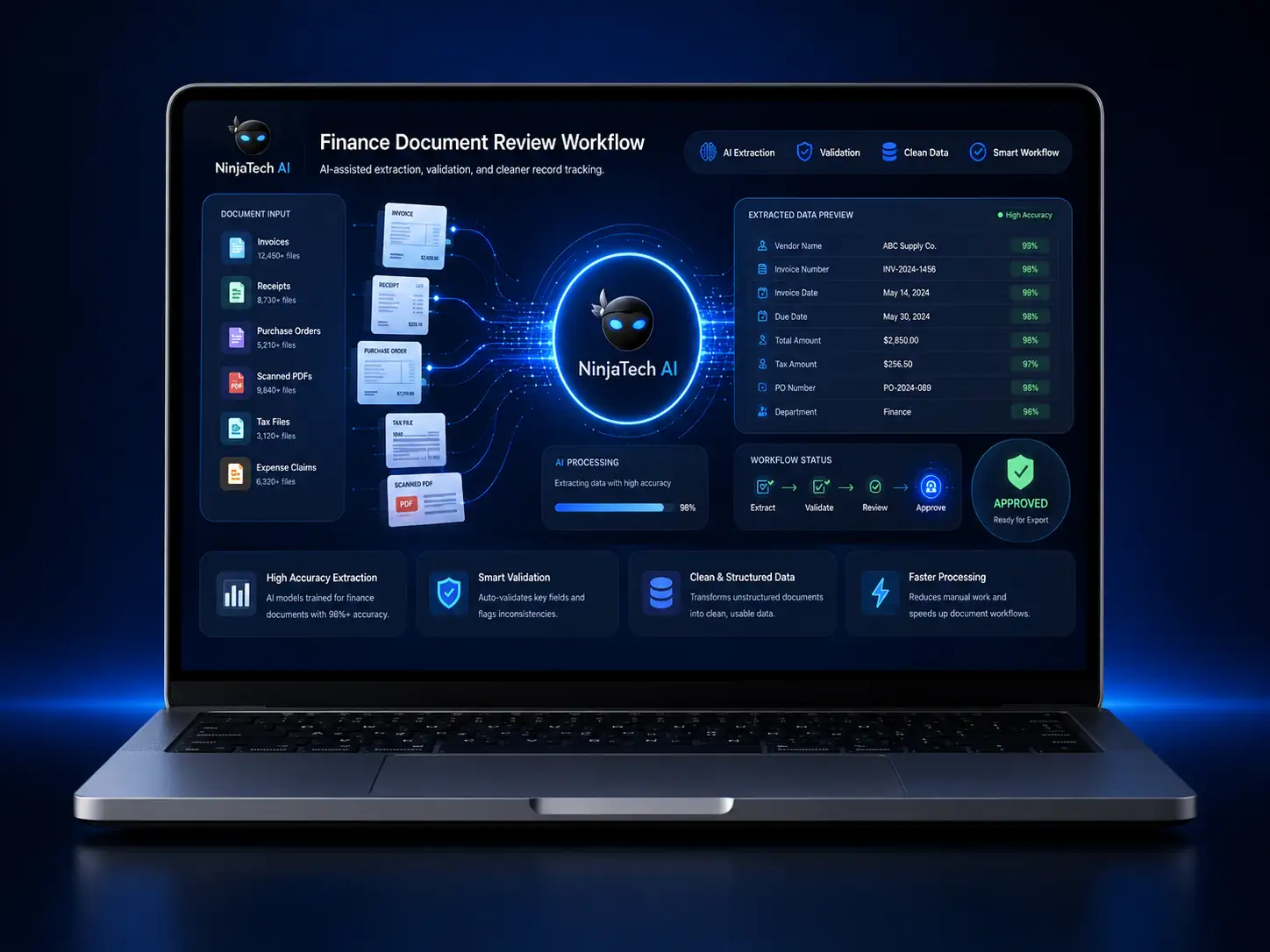
Featured image from the Data AI Ninja case study.
Published Governance Frameworks
Our published governance research includes practical frameworks that can be adapted into enterprise operating requirements rather than read and shelved.
The framework covers inventory, risk tiers, lifecycle gates, evidence standards, exceptions, monitoring and retirement. The operating model covers decision rights, forums, delegated authority, escalation and evidence ownership. Lineage covers source-to-decision traceability.
Best proof fora governance structure already written down and publicly defensible
- AI inventory
- Risk tiers
- Lifecycle gates
- Evidence standards
- Exceptions
- Monitoring
- Retirement
- Delegated authority
Figures and control descriptions here are quoted from the pages that publish them, not restated from memory.
Real Stories.
Real Impact.
Founders, CEOs, and operating leaders share what it's like to build with SDLC Corp.
Eric Leist
CEO, Edgerton Strategies
Doug Schmidt
CEO, Roofaid USA

Reyzal Razmi
All Star Influencers



They approached our Salesforce discovery with real technical depth, uncovered structural gaps others missed, and delivered a solution that worked exactly as promised.
SDLC CORP built a mobile application that met our strategic requirements with strong technical execution. The solution performs reliably and has become an important operational asset.
They saw inefficiencies in our Salesforce workflow and redesigned our entire quote-to-cash system. We now operate faster, cleaner, and with better accuracy.
From planning to post-launch, SDLC Corp guided us every step of the way. Their support makes them more than a vendor. They're a trusted partner.
The SDLC Corp team scaled our platform with impressive technical expertise, ensuring it's secure, robust, and ready for future growth.


The SDLC Corp team scaled our platform with impressive technical expertise, ensuring it's secure, robust, and ready for future growth.
From planning to post-launch, SDLC Corp guided us every step of the way. Their support makes them more than a vendor. They're a trusted partner.
They saw inefficiencies in our Salesforce workflow and redesigned our entire quote-to-cash system. We now operate faster, cleaner, and with better accuracy.
SDLC CORP built a mobile application that met our strategic requirements with strong technical execution. The solution performs reliably and has become an important operational asset.
They approached our Salesforce discovery with real technical depth, uncovered structural gaps others missed, and delivered a solution that worked exactly as promised.
10+ Years of
Experience.
Governance advice from teams that also design, build and operate the AI systems being governed.
Our AI
Governance Process
Six stages, ending in governance that operates rather than governance that is documented.
Discover
Understand the AI portfolio, current policies, organizational structure, existing controls and governance concerns.
Inventory
Create or improve the inventory of AI systems, models, vendors and important use cases.
Classify
Define risk tiers and classify representative systems.
Design
Develop governance controls, decision rights, policies, evidence requirements and operating processes.
Operationalize
Create practical templates, review forums, handoffs and governance workflows that teams can use.
Improve
Measure governance effectiveness and refine controls as the AI portfolio changes.
90-Day
Governance Roadmap
The exact program depends on organizational size and maturity, but an initial roadmap can follow three stages.
Days 1-30
Discover and Baseline
Stakeholder interviews, current-state assessment, AI inventory, existing policy review, representative use-case review and governance-gap analysis.
Days 31-60
Design Governance
Risk classification, control library, lifecycle gates, decision rights, evidence requirements, operating model and exception process.
Days 61-90
Operationalize
Pilot governance workflow, templates, review forums, reporting requirements, training, first governance reviews and an improvement backlog.
The output is a governance system in use on real systems, not a framework document waiting for adoption.
Improve Existing
AI Governance
Already have an AI policy but struggle to apply it consistently? We review the operating system around the policy.
Signs a governance program is not operating
The objective is not to create more governance documentation. It is to make governance usable.
If the question is where to apply AI rather than how to control it, start with AI consulting services.
Why Choose
SDLC Corp
Governance designed by people who have to live with it downstream.
Both Sides
Governance and Engineering Together
Governance recommendations are informed by teams that also design and operate production AI systems.
Specific
Practical Control Design
Translate broad principles into specific controls, evidence and decision requirements.
Proportionate
Risk-Based Governance
Apply stronger oversight where potential impact is higher instead of treating every AI system equally.
End to End
Lifecycle Approach
Govern AI from intake through production changes and retirement.
Workable
Delivery-Aware Operating Model
Design governance that can operate alongside real product, engineering, security and business teams.
AI Governance
vs AI Consulting
Two different questions, and conflating them is how governance ends up as an appendix to a roadmap.
Use this service when the main question is: how should we control and oversee AI across the organization?
Use broader AI consulting when the primary questions are about where to apply AI and what to build first.
Question
How Do We Control It?
Governance answers oversight, authority and evidence.
Question
Where Do We Apply It?
Consulting answers opportunity and sequencing.
Output
A Control System
Framework, operating model, policies, controls.
Output
A Roadmap
Use cases, priorities, business case.
Together
They Reinforce
A roadmap without controls stalls at the first high-impact use case.
Explore AI Consulting Services for organization-wide strategy.
AI Governance
vs GenAI Consulting
One covers the portfolio. The other covers a technology family.
Organization-wide controls for AI systems across models, machine learning, generative AI, agents and embedded AI.
Strategy and readiness specifically for foundation-model and generative-AI initiatives.
Scope
Portfolio-Wide
Every AI system, however it was acquired.
Scope
One Technology Family
Foundation-model initiatives specifically.
Depth
Controls and Authority
How AI is approved, operated and changed.
Depth
Opportunity and Readiness
Whether and where to build.
Overlap
One Initiative vs the Portfolio
A GenAI engagement may identify governance requirements for one initiative; this builds the structure across all of them.
Related
AI Services
Governance sets the requirements. These are the engagements that meet them.
Strategy
AI Consulting Services
Define organization-wide AI strategy, use cases and transformation priorities.
Explore AI Consulting ServicesGenAI Strategy
Generative AI Consulting Services
Assess GenAI opportunities, readiness, architecture and implementation priorities.
Explore Generative AI ConsultingAgents
Agentic AI Development Services
Build AI agents with controlled tool access, approval gates and human escalation.
Explore Agentic AI DevelopmentLLM
LLM Development Services
Build language-model applications with evaluation, model controls and secure deployment.
Explore LLM Development ServicesRAG
RAG Development Services
Build enterprise retrieval systems with source permissions, evaluation and grounded responses.
Explore RAG Development ServicesAI Governance
Resources
The published research this page's framework is built on.
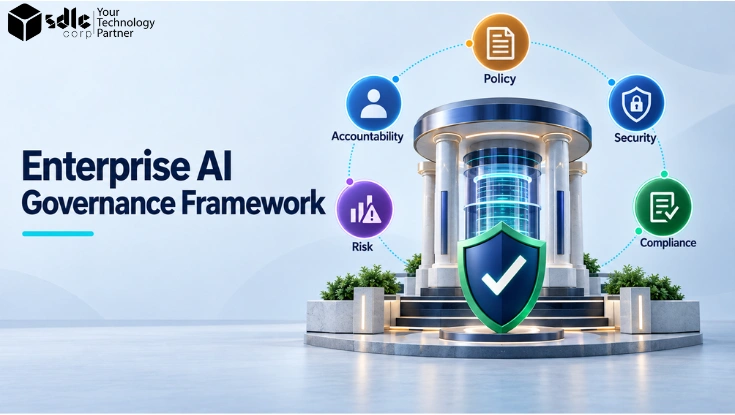
FrameworkEnterprise AI Governance Framework
How to structure AI inventory, risk tiers, lifecycle gates, evidence, exceptions and monitoring.
Read the governance framework
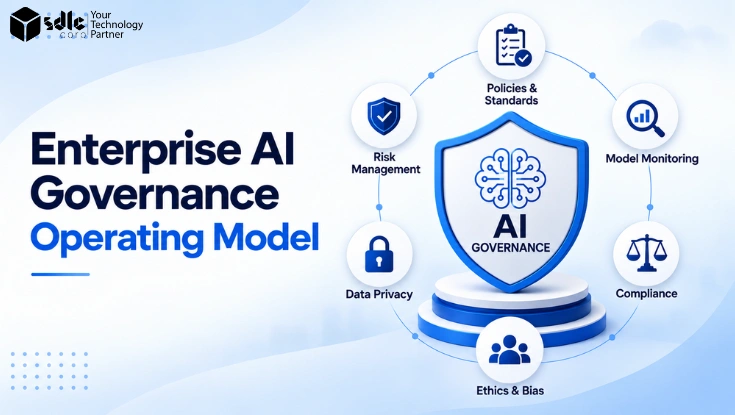
Operating ModelAI Governance Operating Model
How decision rights, governance forums, delegated authority and escalation turn policy into day-to-day governance.
Read the operating model
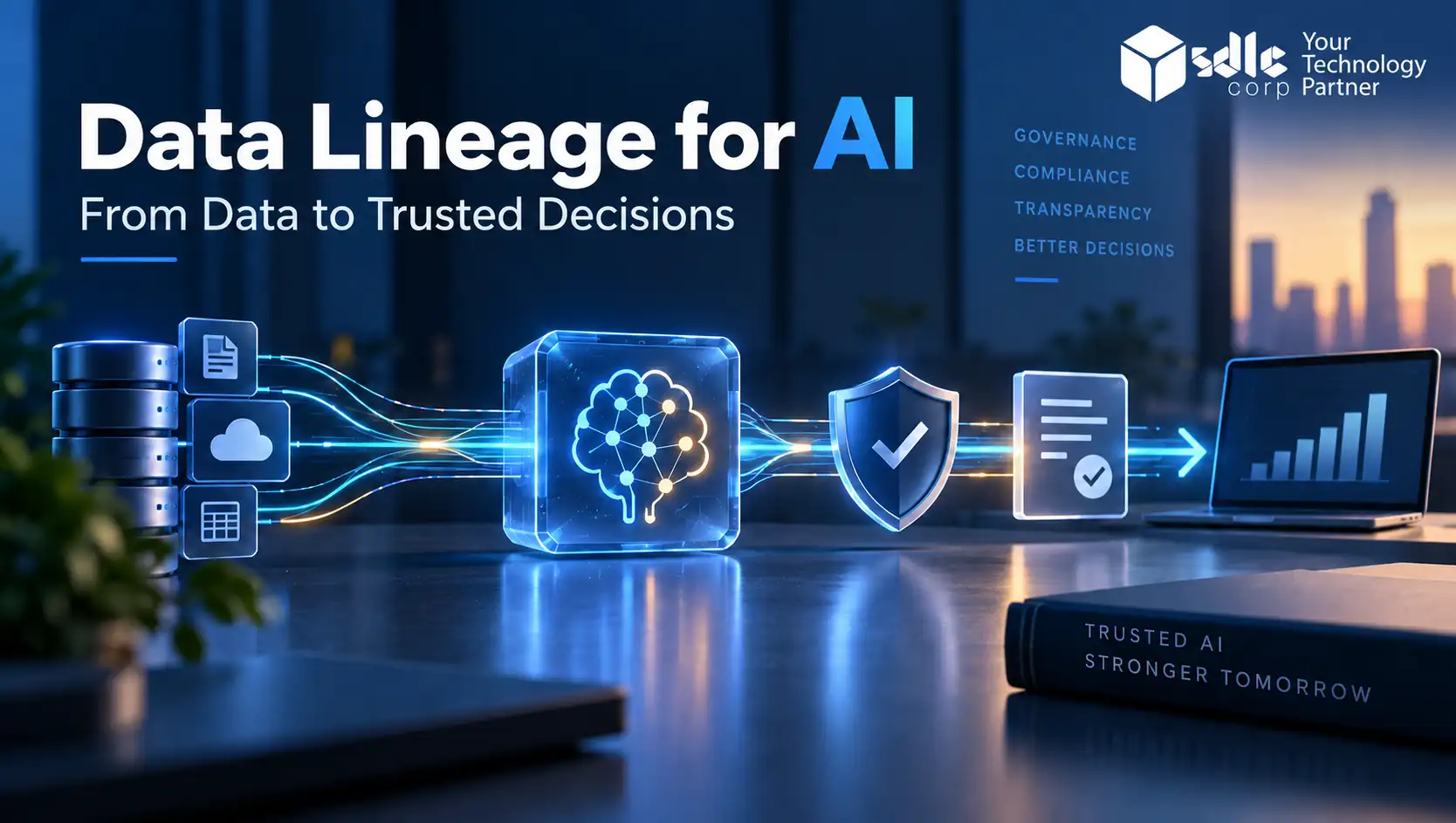
LineageData Lineage for AI Governance
How source-to-decision traceability supports investigations, impact analysis and governance evidence.
Read the data lineage guide
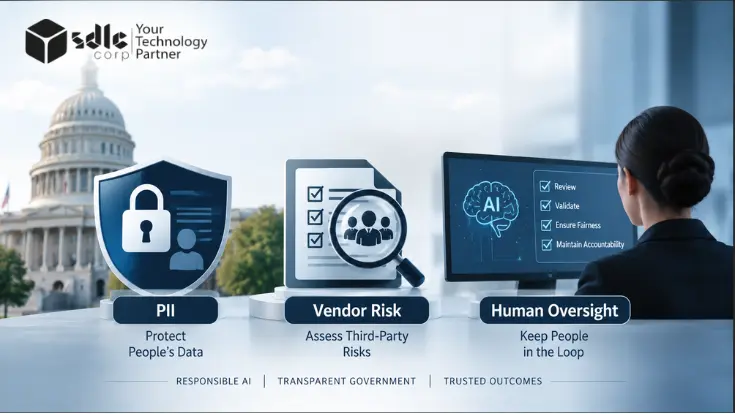
Public SectorGovernment AI Governance Framework
Accountability, vendor controls, monitoring and operating requirements for public-sector AI.
Read the government guide
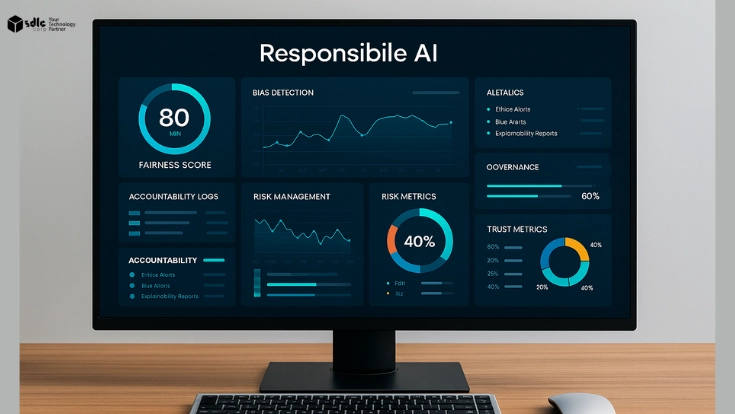
PrinciplesResponsible AI Development
How fairness, safety, transparency, privacy and accountability connect with practical AI engineering.
Read the responsible AI guideBuild Practical
AI Governance
Create an AI governance system your business, technology and risk teams can actually operate.
From inventory and risk classification to decision rights, policies, lifecycle controls, evidence standards and production monitoring, we help turn governance requirements into repeatable organizational processes.
Contact Us
Share a few details about your project, and we’ll get back to you soon.
Let's Talk About Your Project
- Free Consultation
- 24/7 Experts Support
- On-Time Delivery
- sales@sdlccorp.com
- +1(510-630-6507)