Case Study

Odoo Magento 2 Connector for Real-Time Ecommerce and ERP Integration

Trusted for building production-ready integrations and scalable backend systems.

SDLC Corp implemented the Odoo Magento 2 Connector to replace manual data entry with real-time ecommerce and ERP synchronization. As a result, teams gained cleaner records, faster order processing, and better operational control.


Real-Time Synchronization Across Platforms
Simplified Order & Inventory Management
Reliable, Monitored Data Flow
Product Hunt listed badge
Product Hunt Listed
Trusted software partner badge
Trusted Software Partner
Multiple products listed badge
Multiple Products Listed
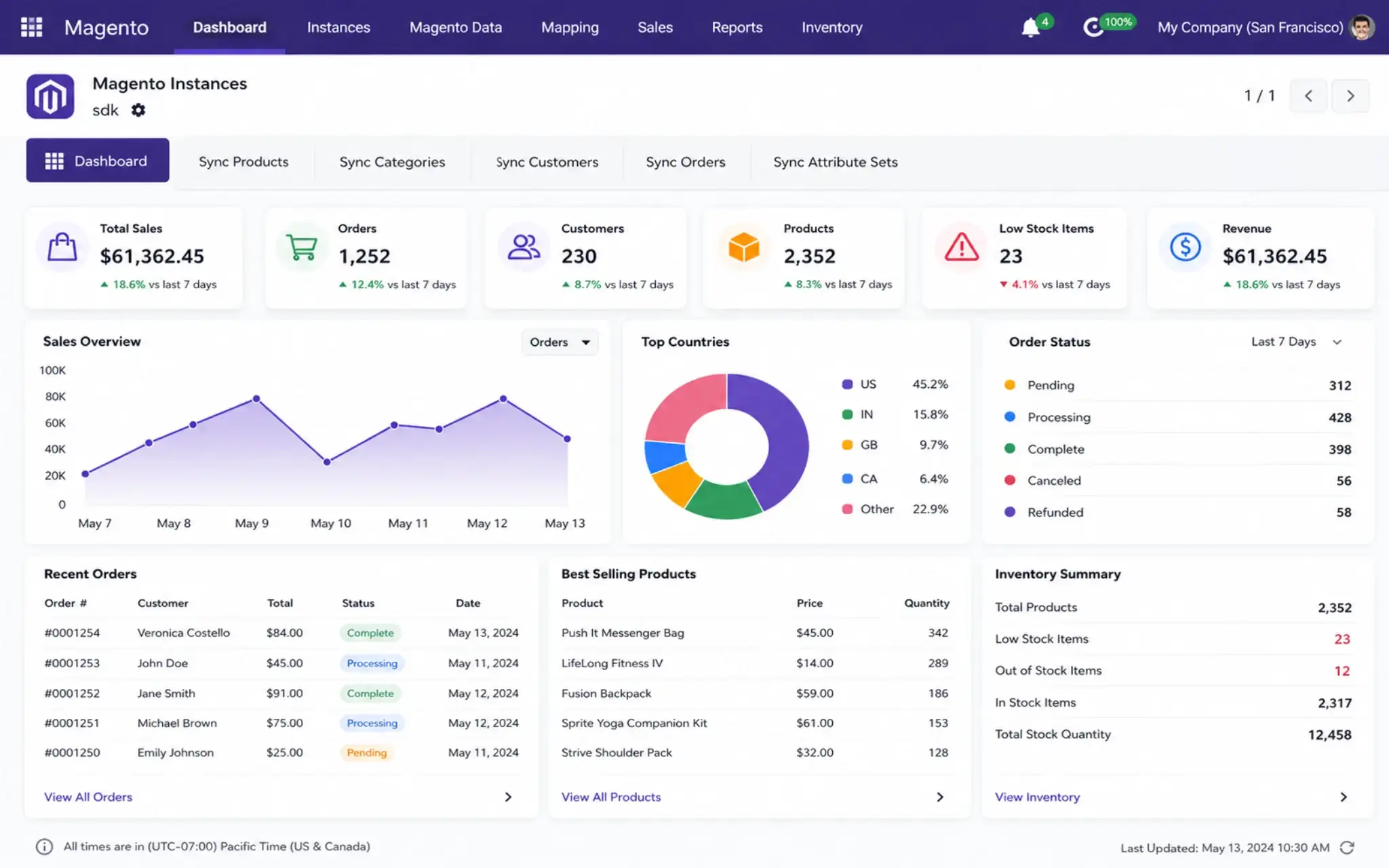
Magento 2 and Odoo connector dashboard for real-time ecommerce and ERP integration
120+

Projects
Delivered

8+

Years of
Experience

97%

Client
Retention

24/7

Support
Available

Project Snapshot

Magento 2 Odoo Integration Overview for Real-Time ERP Sync

The Magento 2 and Odoo integration connects ecommerce and ERP workflows to keep products, orders, customers, inventory, invoices, and shipment data aligned with less manual work.

Business Type

Magento 2 Ecommerce Store

Magento 2 Ecommerce Store Online store managing product, order, customer, and inventory data through Magento 2.

ERP System

Odoo ERP

Backend ERP used for operations, order management, inventory control, and reporting.

Main Challenge

Manual Data Synchronization

Manual updates caused delays, data errors, repeated checks, and extra operational work.

Solution Delivered

Magento 2 and Odoo Connector

Custom connector built to automate ecommerce and ERP data movement.

Synchronization Type

Bidirectional Real-Time Synchronization

Data flows both ways between Magento 2 and Odoo for faster operational updates.

Workflows Connected

Products, Orders & Inventory

Connected products, orders, customers, inventory, invoices, and shipment data.

Client Overview

Business Setup

The client was a US-based ecommerce retailer managing a growing product catalog and daily order flow. As sales activity increased, manual updates between the storefront and ERP system created delays, repeated checks, and data mismatch risks.

To solve this, SDLC Corp implemented a Magento 2 and Odoo integration using APIs, Odoo modules, defined sync rules, scheduled jobs, and monitoring. As a result, product, order, customer, and inventory data moved more consistently across both systems.

System Setup

Magento 2 Ecommerce + Odoo ERP

Storefront operations were connected with ERP inventory, invoicing, and backend workflows.

Primary Goal

Reduce Manual Work and Improve Real-Time Synchronization

The goal was to reduce repeated data entry and keep ecommerce and ERP records updated across both systems.
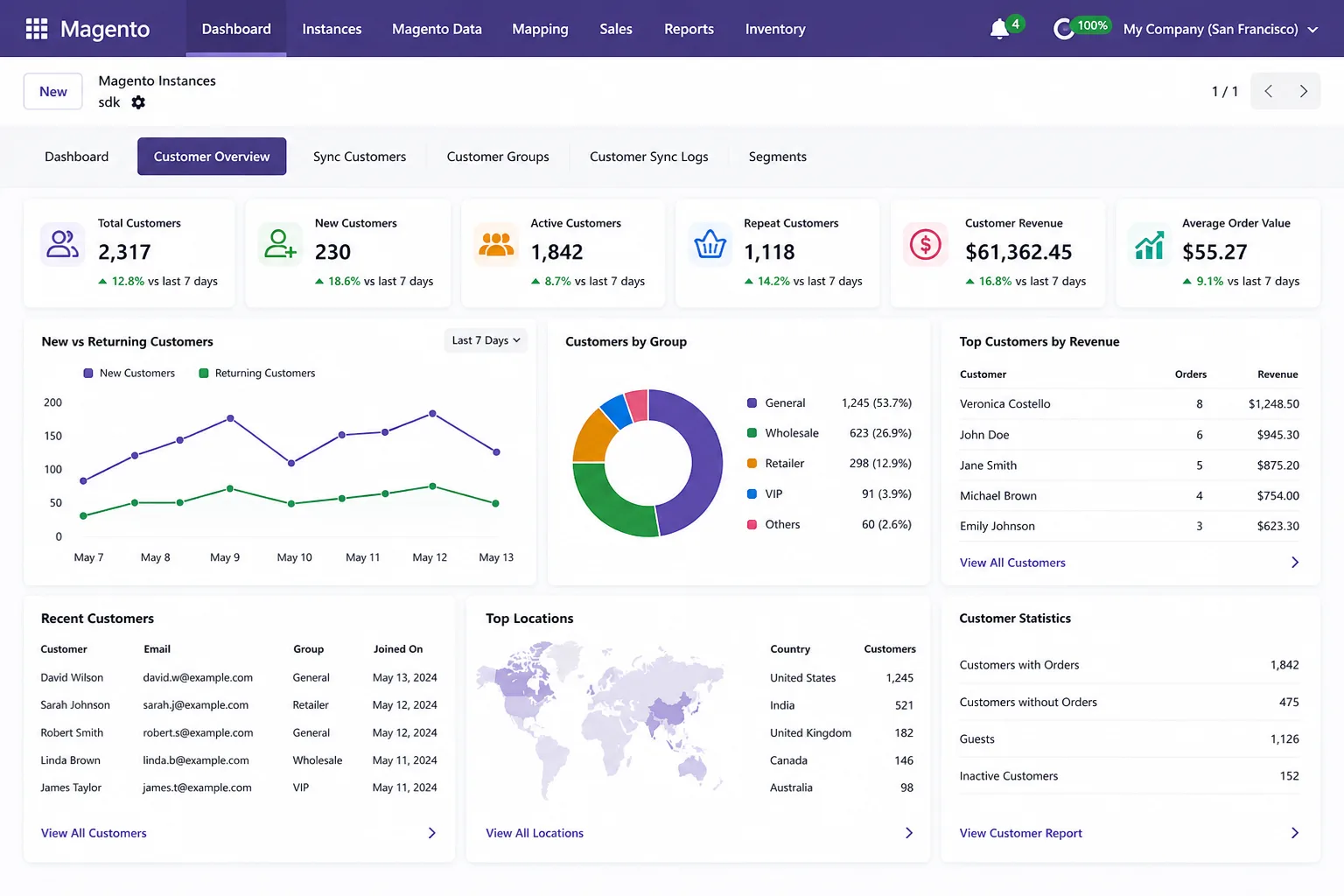
Magento 2 and Odoo business setup dashboard

The Business Challenge

Operational Pain Points in Odoo Magento 2 Integration

Disconnected workflows were increasing manual work, slowing operations, and making stock and order visibility harder to manage.

Manual Data Handling

Routine updates were taking too much manual effort. As a result, teams were repeating tasks that should have moved through one connected workflow.

Inventory and Order Visibility Gaps

Without stronger synchronization, stock movement and order progress were harder to track. Consequently, teams struggled to maintain clear visibility across Magento 2 and Odoo workflows.

Scaling Daily Operations

As business activity increased, managing Magento 2 and Odoo through separate workflows became difficult. Therefore, handling daily operations consistently required more time and effort.

These gaps delayed order processing, caused frequent stock mismatches, and reduced visibility across Magento 2 and Odoo, making daily operations harder to manage and scale.

The Solution

The Solution Implemented by SDLC Corp

SDLC Corp implemented the Magento 2 Connector to automate data flow and improve day-to-day consistency between Magento 2 and Odoo. As a result, both systems worked through a more connected process.

🔗

One Connected Workflow

Magento 2 and Odoo were connected through one clear workflow. This helped storefront activity and ERP actions stay aligned.

🔄

Two-Way Data Sync

Critical business data could move between both systems through defined sync rules. Instead of repeated manual updates, teams could manage data with better accuracy.

⚙️

Better Operational Control

The setup supported mapped fields, sync visibility, inventory alignment, and smoother order processing inside Odoo. In addition, teams gained better control over daily ecommerce operations.

What Was Integrated

What the Odoo Magento 2 Connector Integrates

The implementation covered the core workflows needed to keep Magento 2 storefront activity and Odoo ERP operations better aligned.

  • Product Sync - Products could move between Odoo and Magento 2. As a result, teams kept catalog data more consistent.
  • Customer Sync - Customer records, addresses, and contact details stayed synchronized. This helped reduce repeated customer data updates.
  • Category Sync -Magento 2 category structures aligned with Odoo. Therefore, catalog organization became easier to manage.
  • Order Flow -Orders moved from Magento 2 into Odoo. As a result, back-office processing became faster and clearer.
  • Invoice & Shipment - Invoices, shipments, credit memos, and delivery tracking covered
  • Inventory Sync - Stock levels stayed aligned across storefront and ERP operations. As a result, teams reduced stock mismatch issues.
Technology Stack

Inside the Magento 2 and Odoo Integration Setup

These technologies support stable data sync, smooth API communication, and reliable Magento 2 to Odoo workflow execution. As a result, orders, inventory, invoices, and customer data move with better control.

Frontend

JavaScript & XML

JavaScript and XML handle Magento 2 structure, connector views, and selected storefront data flow. In addition, they support cleaner user-side interaction.

JavaScript XML
Backend

Python & Odoo ORM

Python and Odoo ORM run Odoo logic for orders, products, customers, invoices, and inventory workflows. Meanwhile, backend rules keep each sync action structured.

Python Odoo ORM
Integration Layer

REST APIs & Webhooks

REST APIs and webhooks move data between Magento 2 and Odoo in both directions. As a result, both systems stay updated with controlled processing.

REST APIs Webhooks JSON
Database

PostgreSQL

PostgreSQL stores ERP records, synced transactions, inventory updates, and operational data. Therefore, teams can review connected data from one reliable source.

PostgreSQL
Sync Engine

Cron Jobs & Queue Workers

Cron jobs and queue workers run scheduled sync jobs, retries, and background processing for reliable data flow. This helps reduce missed updates.

Cron Jobs Queue Workers
Security Layer

OAuth & API Authentication

OAuth and API authentication control secure access between Magento 2 and Odoo. In addition, they protect connected workflows during data exchange.

OAuth API Auth
Implementation Process

How SDLC Corp Delivered the Odoo Magento 2 Connector

SDLC Corp followed a structured rollout covering API setup, field mapping, sync rules, testing, logs, and post-launch monitoring.

  • Step 1

    Requirement Review

    Reviewed Magento 2 store setup, Odoo workflows, product catalog, order flow, stock rules, invoices, and shipment handling.

  • Step 2

    Connector Setup

    Configured the Magento 2 Odoo Connector with instance settings, API access, and connection rules.

  • Step 3

    Data Mapping

    Mapped products, customers, categories, taxes, stock fields, orders, invoices, and shipment data between both systems.

  • Step 4

    Sync Rule Setup

    Defined bidirectional sync rules for product updates, order movement, inventory changes, and ERP workflow actions.

  • Step 5

    Testing and Validation

    Tested catalog sync, order import, stock updates, invoice creation, shipment flow, logs, and error handling.

  • Step 6

    Go-Live Monitoring

    Launched the integration with sync monitoring, log checks, retry support, and team handover.

As a result, the client reduced sync issues, improved data flow, and managed Magento 2 and Odoo operations with better control.

Key Features Used

Key Features of the Odoo Magento 2 Integration

The project used features that supported smoother synchronization between Magento 2 storefront activity and Odoo ERP operations.

  • Product and variant synchronization
  • Customer data synchronization
  • Category mapping and alignment
  • Bidirectional Data Sync
  • Invoice synchronization
  • Shipment and delivery tracking
  • Credit memo handling
  • Inventory synchronization
  • Field mapping and flexible configuration
  • Monitoring, logging, and retries
  • Dashboard visibility and reporting
  • Handover and post-launch support
Final Results

Integration Results and Operational Improvements

The integration improved data flow, reduced manual effort, and made daily operations faster. As a result, teams could manage ecommerce and ERP workflows with better control, accuracy, and visibility.

Reduced Manual Work

Manual data entry reduced by 40–60% across product, order, and inventory updates. As a result, teams spent less time on repeated tasks.

Better Inventory Accuracy

Stock mismatches reduced with real-time sync and controlled updates. In turn, inventory tracking became more reliable.

Faster Order Processing

Order flow from Magento 2 to Odoo improved by 2–3x. This helped reduce processing delays and allowed teams to handle orders faster.

Improved Invoice & Shipment Flow

Invoices, shipments, and tracking moved through a more structured process. As a result, coordination between teams improved.

Overall, the integration helped the client reduce delays, prevent stock gaps, and manage ecommerce and ERP workflows with better accuracy.

BUILD WITH SDLC Corp

Need Magento 2 and Odoo Connector for Your Business?

SDLC Corp can help you connect Magento 2 with Odoo for smoother product sync, faster order processing, better inventory control, and reliable ERP workflows.

Real-Time Sync Cron Backup Support Logs & Monitoring

Let’s Talk About Your Product

Discuss your Magento 2 and Odoo integration needs, sync challenges, and ERP workflow goals with our team.

What happens next?