
KG Electronic Marketplace Integration Suite
SDLC Corp built a custom Node.js middleware suite for KG Electronic, connecting Neto with 20+ online marketplaces across Australia and New Zealand. The suite automates product listings, stock updates, order imports, tracking updates, and marketplace-specific sync rules through one controlled integration layer.
Delivered in phases from January 2021 to December 2024.
- 20+ marketplaces connected through one middleware layer.
- Automated sync for products, stock, orders, and tracking.
- Node.js architecture built for scalable marketplace operations.
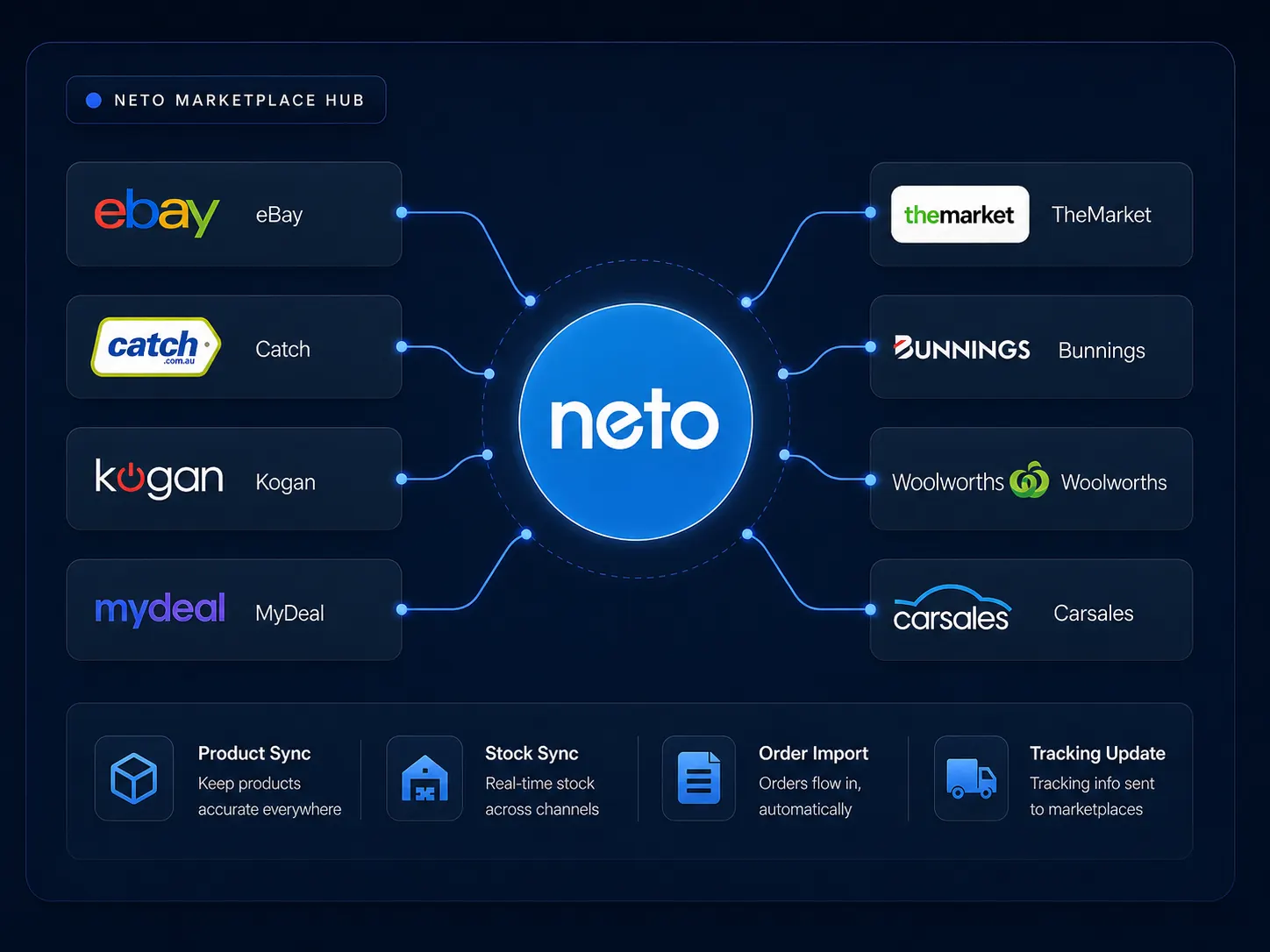
Neto ERP Sync Layer
Neto as the Marketplace Operations Hub
Custom Neto marketplace integration built with Node.js middleware to automate product, stock, order, and tracking sync across multiple ecommerce channels.
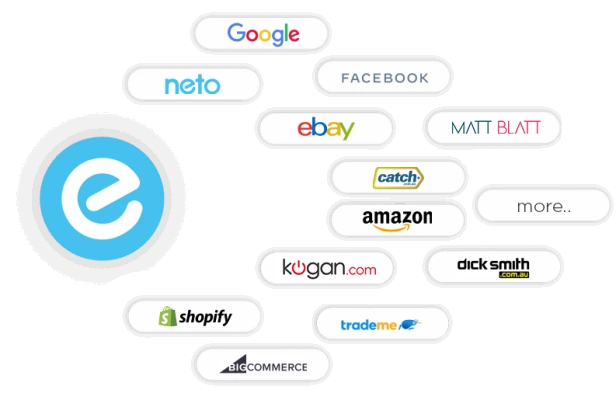
A custom integration layer between Neto and marketplace APIs
The solution is a collection of Node.js and Express middleware applications. Each connector sits between Neto and marketplaces such as Catch, Bunnings, Carsales, Woolworths, eBay, Kogan, TheMarket, and MyDeal.
- Neto stays central for catalogue, stock, orders, and dispatch information.
- Node.js middleware handles API communication, data transformation, and scheduled jobs.
- MongoDB sync history stores offers, orders, snapshots, and duplicate-prevention data.
- Automated workflows reduce manual listing, stock updating, order importing, and tracking work.
Neto Marketplace Integration Challenges for Multichannel Ecommerce
Selling across 20+ marketplaces created daily operational pressure, with repeated listing, stock, order, tracking, and pricing tasks becoming slow, error-prone, and hard to control at catalogue scale.
Manual product listings
Thousands of SKUs had to be formatted for different marketplace category, image, variant, title, and description requirements.
Stock mismatch risk
Inventory changes needed to move from Neto to every active marketplace quickly enough to reduce overselling risk.
Repetitive order entry
Marketplace orders needed to be imported into Neto for fulfilment instead of being copied manually from separate seller portals.
Tracking update delays
After dispatch, tracking numbers and carrier details had to be returned to the correct marketplace order.
Marketplace pricing rules
Different marketplaces required different offer, discount, quantity, and margin rules before products could be published.
Sync error visibility
Failures needed to be visible through stored logs, transaction records, and email alerts instead of being discovered late.
Neto marketplace integration powered by custom middleware
SDLC Corp developed a Node.js integration layer that connects Neto ERP with external marketplace APIs, helping KG Electronic automate multichannel ecommerce operations from one central system.
Build a Similar Marketplace IntegrationA dedicated connector layer for marketplace operations
The solution replaces disconnected manual portal work with reusable middleware connectors. Each connector is built for a specific marketplace while following a consistent development pattern for data handling, API communication, scheduling, and error tracking.
- API-ready Node.js services Express applications manage marketplace requests, responses, authentication, and custom business rules.
- Automated sync scheduling Recurring jobs keep catalogue, inventory, order, and fulfilment updates moving without manual intervention.
- Reliable transaction storage MongoDB keeps references, snapshots, offer records, and order history available for tracking and duplicate prevention.
- Operational alerting Logs and email notifications make failed updates easier to identify, review, and resolve.
Automated marketplace sync workflow
The middleware connects Neto with marketplace APIs through four focused sync flows: product listing, inventory update, order import, and tracking update.
Automate Your Marketplace WorkflowProduct Sync
Neto MarketplaceProduct data is prepared for each marketplace format and published through API connections.
Catalogue listing updatesStock Sync
Neto MarketplaceScheduled jobs push accurate inventory and offer updates to active marketplace channels.
Inventory and pricing updatesOrder Import
Marketplace NetoMarketplace orders are imported into Neto with transaction checks to prevent duplicates.
Sales order creationTracking Update
Neto MarketplaceDispatch details are matched with marketplace records and sent back after fulfilment.
Carrier and tracking syncTech stack used for Neto marketplace integration automation
The integration suite was built with Node.js middleware, MongoDB storage, scheduled jobs, API communication tools, and marketplace connectors that keep Neto aligned with ecommerce sales channels.
Controls Behind the Marketplace Integration
Channel-specific mapping
Each marketplace connector handles its required catalogue fields, listing rules, pricing structure and order format while Neto retains the central product and order records.
Stored transaction references
MongoDB holds sync history, order references and snapshots so teams can trace data movement and check repeated transactions.
Scheduled jobs and alerts
Scheduled processing moves product, stock, order and dispatch updates. Logs and email notifications expose failed updates for investigation.
Neto marketplace integration for multiple ecommerce sales channels
Marketplace connections were delivered in phases between January 2021 and December 2024. Named channels include those below; each connector handles channel-specific catalogue, stock, order and fulfilment requirements.
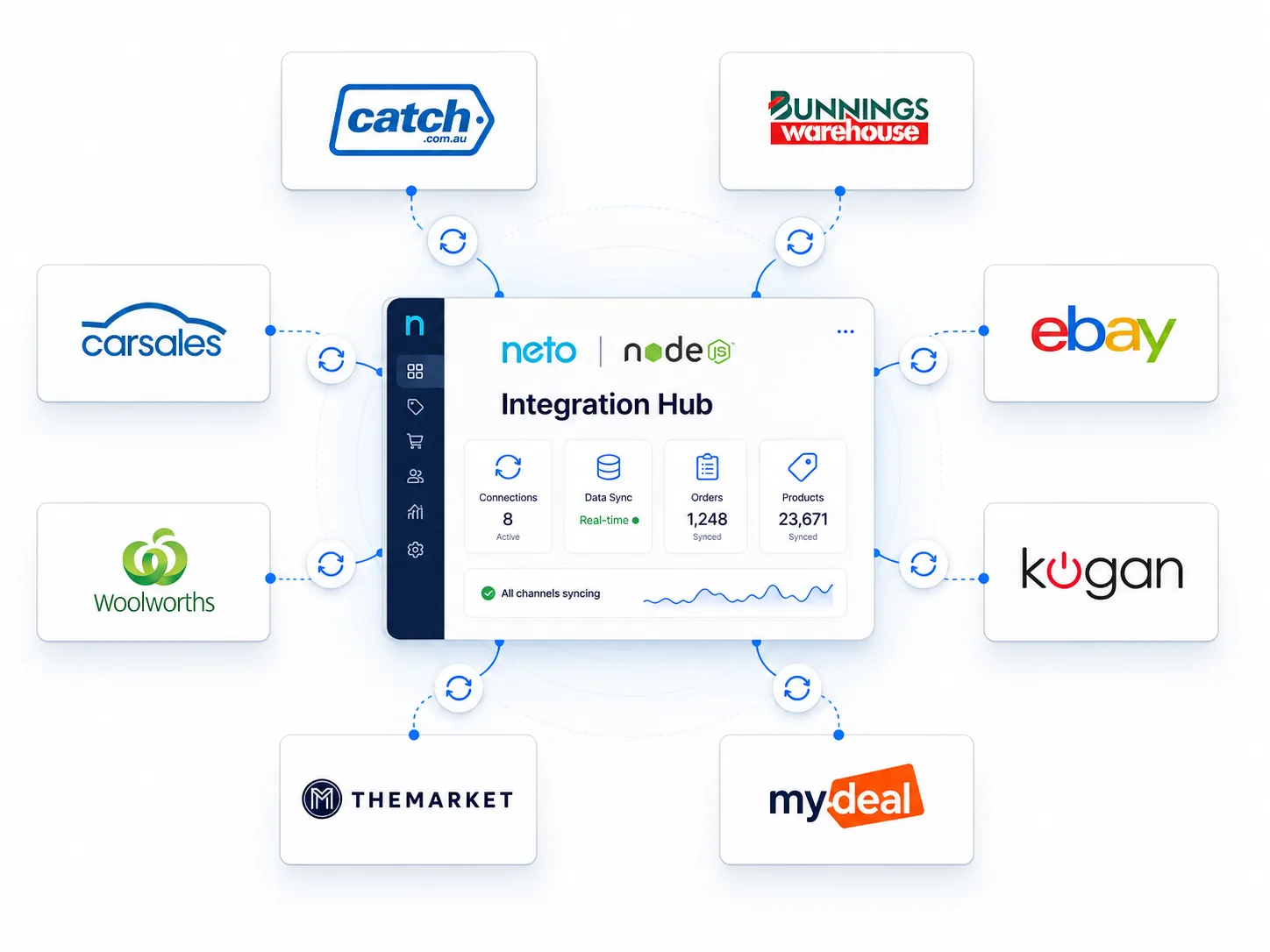
Neto middleware connected with marketplace APIs Client-Reported Operational Outcomes
Outcomes reported by the client for KG Electronic following phased marketplace integration. Supporting sources identified by the project team include Google Analytics, ERP dashboards and sales reports.
Before: July–December 2020. After: January–June 2025. These six-month periods precede the January 2021 phased kickoff and follow the December 2024 final rollout.
The suite helps KG Electronic manage marketplace growth without relying on separate manual workflows for every channel. It keeps product and fulfilment data moving through a repeatable integration pattern while still allowing marketplace-specific rules where required.
- Product data can be prepared and sent through structured marketplace sync flows.
- Marketplace orders can be imported into Neto with duplicate checks.
- Tracking numbers can be returned to marketplace channels after dispatch.
- New marketplace connectors can follow the same reusable middleware pattern.
80 staff-hours/month
Manual operational work saved through digitisation and automation.
400% order-volume growth
Order volume increased to five times the baseline.
2-second average stock update
Average time from a stock change in Neto to the marketplace reflecting it.
70% fewer combined errors
Combined reduction in duplicate orders, stock mismatches, listing failures and manual-entry errors.
KG Electronic Integration Questions
Which system owns the commerce records?
Neto remains central for catalogue, stock, sales orders and dispatch information. Node.js and Express connectors transform and exchange those records with marketplace APIs.
Which marketplaces are documented here?
The suite covers 20+ marketplaces. Named examples include Amazon Australia, eBay Australia, Kogan, Temu, AliExpress and Trade Me, alongside the other channels shown on this page. Connections were delivered in phases from January 2021 to December 2024.
What should a retailer prepare for a similar integration?
Provide the current commerce platform, marketplace list, available API documentation and representative catalogue and order records. Agree record ownership, mapping rules and acceptance checks before estimating connector work.
Need a custom marketplace integration?
Let’s map your ERP, marketplace, product, stock, order, and tracking workflow into a scalable integration plan.
- Contact Us
Let’s Talk About Your Product
What happens next?
- We review your requirements
- Strategy call with experts
- Clear roadmap & estimate
- NDA Protected
- Enterprise Grade Delivery
- Global Clients