
Amazon Odoo Connector for Real Time ERP Automation
An Amazon seller connected Amazon Seller Central with Odoo to manage orders, inventory, invoices, shipments, FBA, FBM, and multi-marketplace operations from one ERP system. The Amazon Odoo Connector automated daily workflows, reduced manual updates, improved data accuracy, and gave the team better control over marketplace operations.
 Product Hunt Listed
 Trusted Software Partner
 Multiple Products Listed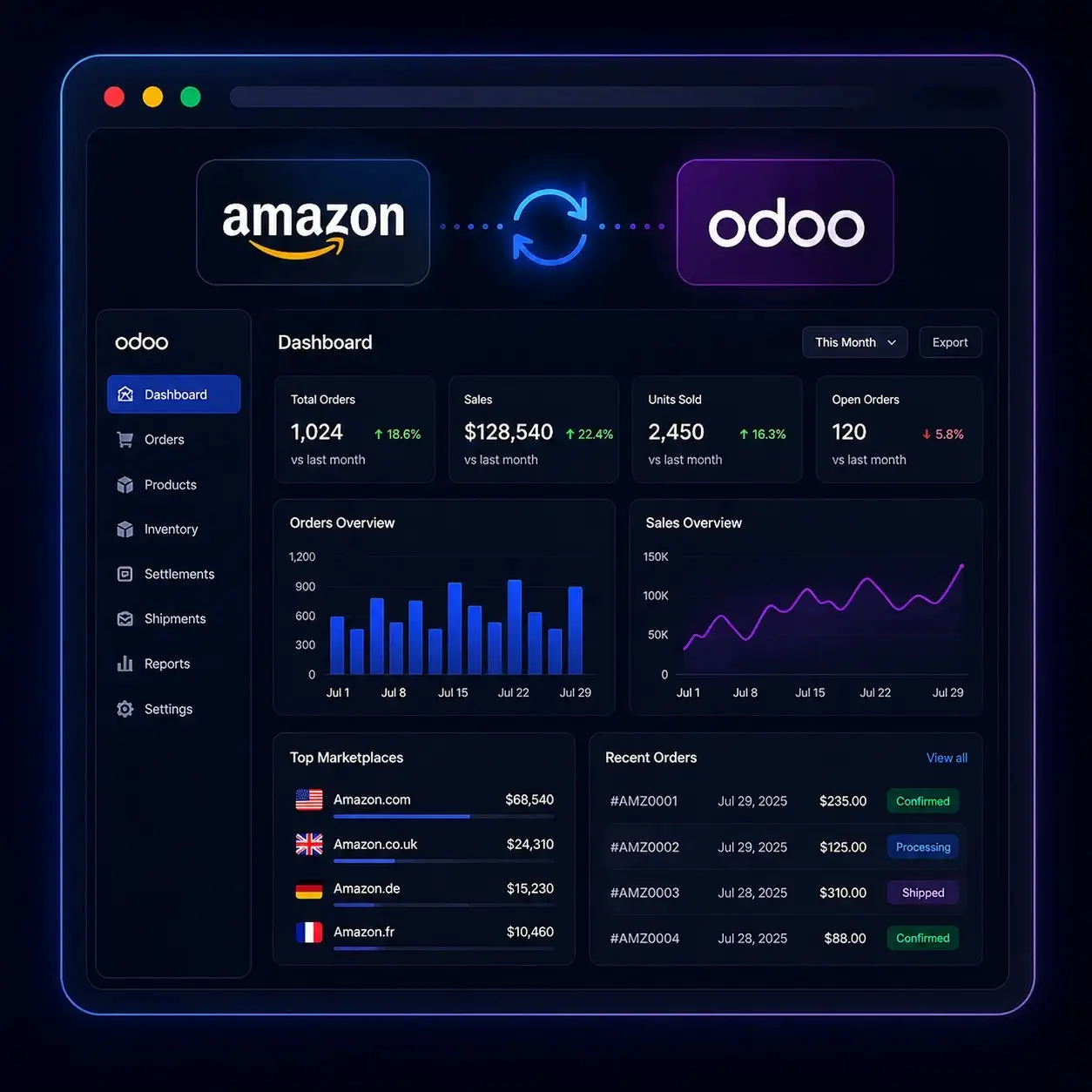
Orders, products, inventory, invoices, shipments, and payments synced.
Amazon Seller Central and Odoo stay connected with aligned records.
Scheduled sync keeps operations updated without manual checks.
Logs and reports give real-time visibility into sync activity.
Project Snapshot for Amazon Odoo Integration
A quick look at the business model, connector scope, and operational focus of this Amazon Odoo integration project.
Business Type
eCommerce Seller
Operating across multiple Amazon marketplaces with both FBA and FBM fulfillment models.
Source Platform
Amazon Seller Central
Used for managing product listings, orders, inventory, and marketplace operations.
ERP Platform
Odoo ERP
Used for inventory, accounting, order handling, backend operations, and business reporting.
Integration Type
Bidirectional Sync
Data moved both ways between Amazon and Odoo to keep seller and ERP records aligned.
Business Goal
Streamline Amazon Seller Workflows
Connect Amazon Seller Central with Odoo to automate orders, inventory, invoices, shipments, and backend updates.
Main Data Synced
6 Operational Data Areas
Orders, products, inventory, shipments, invoices, and payment records synced between systems.
Amazon Seller Managing Multi-Marketplace Operations
The client sells on multiple Amazon marketplaces with a growing product catalog. The team manages both FBA and FBM orders.
Before integration, the team relied on Seller Central and manual tracking for orders, stock, invoices, shipments, and payments. As a result, operations slowed and inventory data became harder to trust.
Growth Stage
Multi-Marketplace Seller
Main Challenge
Disconnected Amazon & Odoo
Manual Amazon Workflows Created Data Gaps and Operational Delays
As order volume increased across Amazon marketplaces, manual updates slowed order processing, weakened stock accuracy, and made reconciliation harder. Therefore, the seller needed a connected workflow between Amazon and Odoo.
Manual Order Entry Slowed Processing
Each Amazon order had to be manually created in Odoo. As a result, processing time increased, and the risk of missed or incorrect entries became higher.
Inventory Was Not Synced Across Systems
Stock levels in Amazon and Odoo were updated separately. Because of this, inventory mismatches made it difficult to maintain accurate product availability.
FBA and FBM Workflows Were Disconnected
The client handled FBA and FBM orders through different processes. Consequently, fulfillment tracking lacked consistency and required extra effort.
Shipment Tracking Needed Manual Updates
After dispatch, shipment details had to be updated manually in Amazon. This consumed time and increased the chance of delayed or incorrect tracking details.
Financial Data Lacked Alignment
Invoices, payments, and settlement data were not consistently matched between Amazon and Odoo, so financial reporting needed manual verification.
As a result, the team spent more time fixing data gaps than processing orders, reconciling payments, and scaling marketplace sales.
Connecting Amazon Seller Central with Odoo ERP
The Amazon Odoo Connector connected Amazon Seller Central with Odoo to automate order, product, inventory, shipment, invoice, and payment workflows from one ERP system.
Amazon SP-API Based Integration
Connected Amazon Seller Central with Odoo through Amazon SP-API for secure order, product, inventory, and shipment data transfer.
Automatic Order Import
Imported Amazon orders into Odoo with customer details, pricing, taxes, and fulfillment data to reduce manual order entry.
Product and Inventory Synchronization
Synced products, SKUs, stock levels, and inventory updates between Amazon and Odoo to improve stock accuracy.
Shipment and Tracking Updates
Updated shipment and tracking details between Amazon and Odoo so teams could monitor order movement faster.
Invoice and Payment Data Alignment
Aligned invoice and payment records in Odoo to support cleaner accounting and easier reconciliation.
Centralized Amazon Operation Dashboard
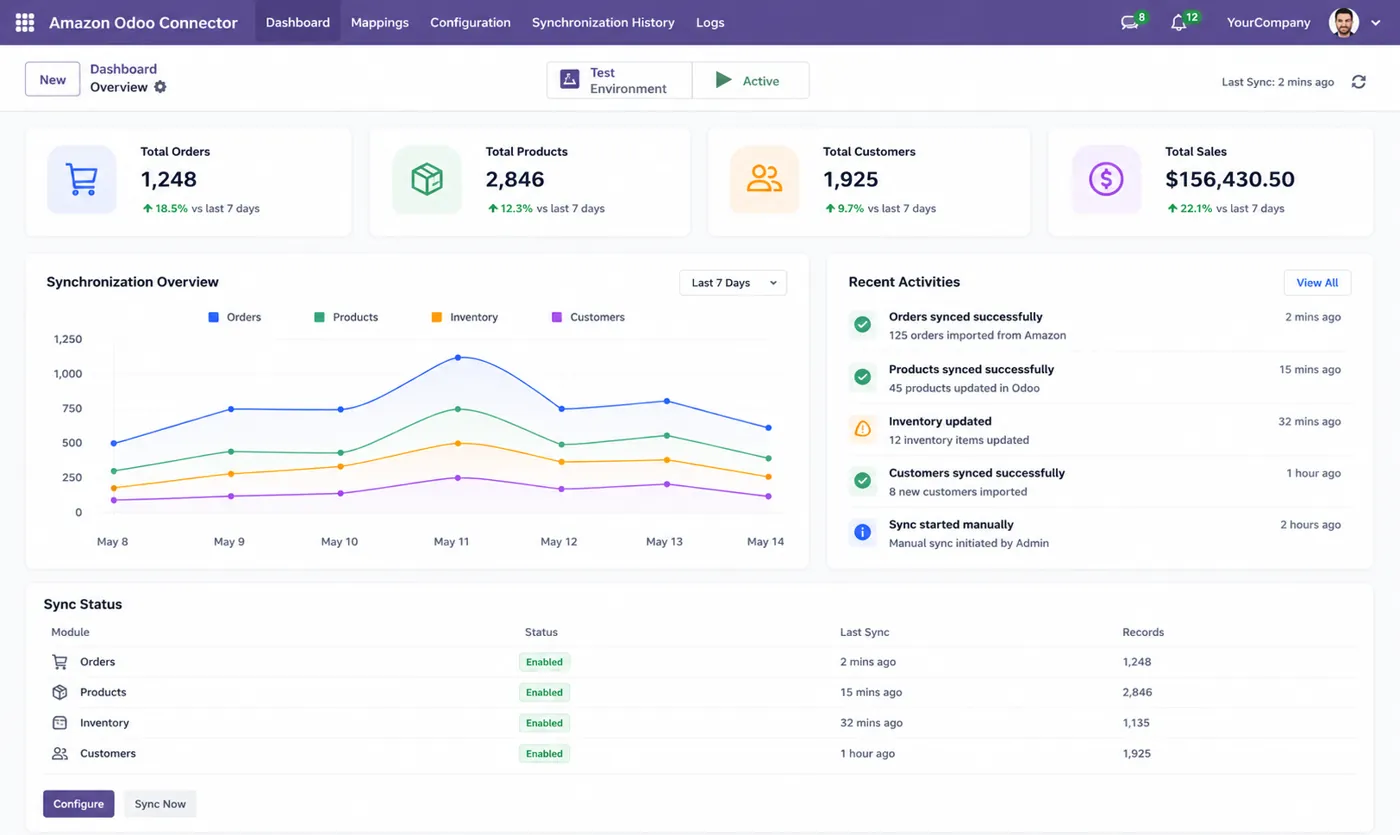
Gave the team one Odoo dashboard to review orders, products, inventory, invoices, shipments, and sync status.
This setup reduced repeated manual work, improved data accuracy, and gave the team better control over Amazon marketplace operations inside Odoo.
Process Followed for Amazon Odoo Connector
A structured implementation process helped connect Amazon Seller Central with Odoo through workflow review, connector setup, data mapping, sync configuration, staging testing, and live deployment.
Business Workflow Analysis
Reviewed Amazon order flow, FBA/FBM workflows, product listings, inventory updates, invoices, shipments, and payment records.
Connector Installation
Installed the Amazon Odoo Connector and configured Amazon SP-API access, API credentials, seller permissions, and Odoo connection settings.
Data Mapping Setup
Mapped Amazon orders, products, SKUs, customers, inventory, invoices, shipment fields, and payment records with Odoo fields.
Sync Rule Configuration
Configured sync rules for order import, stock updates, product sync, invoice handling, shipment tracking, and payment data flow.
Testing in Staging
Tested order import, inventory accuracy, invoice creation, shipment updates, payment sync, and error handling in a staging setup.
Live Deployment
Deployed the connector in production and monitored sync logs, failed jobs, and data accuracy after go-live.
Features Built for Real Amazon Seller Workflows
The Amazon Odoo Connector was configured to support daily seller operations, including product updates, order import, inventory control, fulfillment tracking, invoicing, and multi-marketplace management from one Odoo ERP system.
Product and Listing Management
Product names, SKUs, variants, prices, and availability were managed from Odoo and synced with Amazon listings. This helped the team keep product data consistent without updating the same information twice.FBA and FBM Order Handling
Both Fulfilled by Amazon and Fulfilled by Merchant orders were handled inside Odoo. This gave the team one workflow for different fulfillment models instead of managing them separately.Automated Order Import
Amazon orders were imported into Odoo with customer details, ordered products, pricing, taxes, and order references. This reduced manual entry and helped the team process orders faster.Inventory Synchronization
Stock updates from Odoo were synced with Amazon based on defined rules. This improved inventory visibility and helped reduce the risk of stock mismatches across marketplace listings.Shipment and Tracking Updates
After dispatch, shipment details and tracking numbers were sent from Odoo to Amazon. This kept order status updated and reduced repeated manual tracking updates.Invoice and Payment Alignment
Invoices and payment-related records were aligned with Amazon order data inside Odoo. This made financial review easier and reduced extra reconciliation work.
Technology Stack Behind the Amazon Odoo Integration
Built with Odoo frontend views, backend ORM logic, Amazon SP-API, PostgreSQL, scheduled jobs, and secure API authentication to manage Amazon marketplace operations from Odoo.
JavaScript
Handles Odoo dashboard views, sync status panels, and user actions. It improves visibility for order imports, inventory sync, shipment updates, and failed sync alerts.
Python ORM
Manages business logic, field mapping, order processing, product handling, invoice creation, inventory updates, and sync validation inside Odoo.
Amazon SP-API & REST APIs
Connects Amazon Seller Central with Odoo for secure order, product, inventory, shipment, invoice, and payment data exchange.
PostgreSQL
Stores synced Amazon orders, products, customers, invoices, inventory records, logs, and operational data inside Odoo.
Scheduled Jobs
Runs automated sync jobs for order import, stock updates, product sync, invoice creation, shipment updates, and failed job retries.
OAuth & API Authentication
Controls secure Amazon SP-API access, seller permissions, API tokens, and protected data exchange between Amazon and Odoo.
Operational Improvements After Amazon Odoo Integration Implementation
The Amazon Odoo Connector helped the seller replace manual marketplace handling with automated workflows for orders, inventory, fulfillment, invoicing, payments, and daily operational control.
Reduced Manual Marketplace Work
Order entry, stock updates, invoice matching, shipment tracking, and payment reconciliation moved into automated Amazon Odoo workflows.
Faster Order Processing
Amazon orders were created in Odoo with customer, product, price, tax, and fulfillment details, helping the team process orders faster.
Better Inventory Visibility
Stock updates synced between Amazon and Odoo, making available inventory easier to track across listings and fulfillment workflows.
Centralized Amazon Operations
Orders, products, inventory, invoices, shipments, FBA, FBM, and payment records were managed from one Odoo system.
The seller reduced repeated manual tasks, improved order flow, tracked inventory more clearly, and gained better control over Amazon marketplace operations.
Need Amazon Odoo Connector for Your Business?
SDLC Corp helps you connect Amazon Seller Central with Odoo so your team can manage products, orders, inventory, shipments, invoices, and reports from one reliable ERP workflow.
- Get Started
Let’s Connect Your Amazon Store with Odoo
Get expert guidance on Amazon Odoo integration, order sync, inventory automation, FBA, FBM, and shipment workflows so your marketplace operations run from one ERP system.
What happens after you submit?
- Start Your Amazon Odoo Integration Plan
- Automate Amazon Operations with Odoo
- Connect Amazon Seller Central to Odoo ERP
- Secure Integration
- Odoo-Ready
- Global Clients


