How Shopify and Odoo Integration Improved Operations
A growing eCommerce business needed a more reliable way to manage Shopify and Odoo together. SDLC Corp implemented the Shopify Odoo Connector to reduce manual work, improve data accuracy, and create a smoother daily operations workflow.

PROJECT SNAPSHOT
Shopify Odoo Integration at a Glance
A quick overview of the Shopify–Odoo integration project, including the business context, sync scope and operational outcome.
Project Type
2 Connected Platforms
Shopify storefront + Odoo ERP system
Business Model
Growing eCommerce Business
Built for increasing online operations
Integration Scope
4 Core Workflow Areas
Orders, customers, inventory, and sync activity
Key Outcome
Better Operational Control
Less manual work and stronger visibility
BUSINESS CONTEXT
Client Overview
Understanding the eCommerce business and their operational needs
The client was a growing eCommerce business using Shopify for online sales and Odoo for ERP operations. As order volume increased, the team needed a better way to connect both systems. Their goal was to reduce manual work, improve inventory accuracy, and create a smoother daily workflow.
Storefront Platform
Shopify
ERP Platform
Odoo
Business Type
Growing eCommerce Business
Primary Need
Order, Inventory & Back-Office Sync

Challenges
Challenges Before Integration
Manual processes, stock mismatches and limited sync visibility made daily operations harder to manage as the business scaled.
Manual work across two systems
The team was spending significant time handling orders, customer records, stock updates and payment checks across Shopify and Odoo. This slowed down daily operations and increased process friction.
Inventory mismatch risk
Because Shopify and Odoo were not tightly connected, stock inconsistencies became difficult to manage. This increased the risk of overselling and made inventory reconciliation harder.
Limited visibility into sync activity
The team lacked a clear way to track what had synced, what failed and what needed review. This made troubleshooting slower and more reactive.
Growth made manual processes harder to sustain
As the business scaled, manual coordination became a larger operational bottleneck. More orders and more products increased pressure on the team.
Solution
Shopify Odoo Integration Delivered
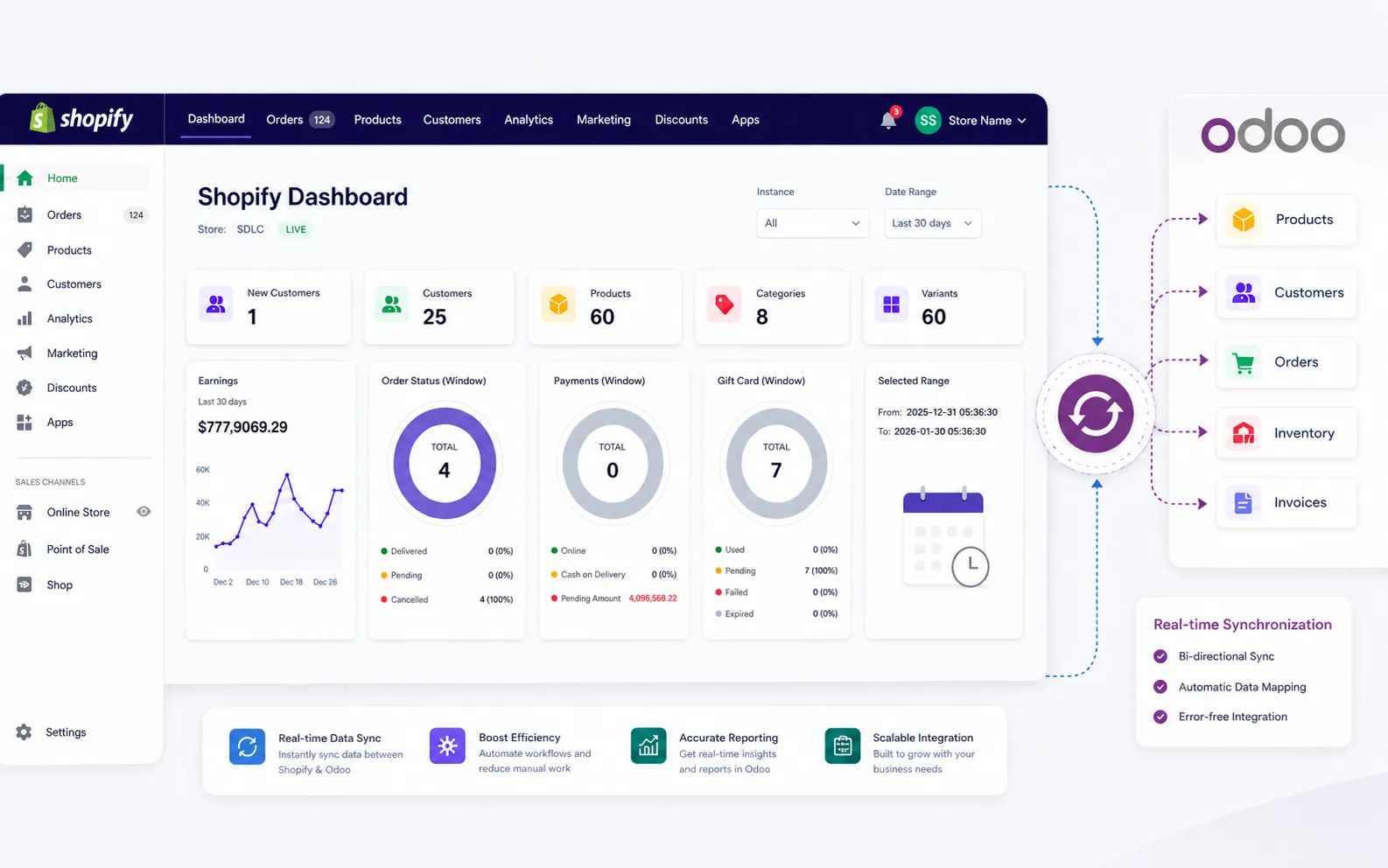
SDLC Corp implemented the Shopify Odoo Connector to create a real-time, structured sync workflow between Shopify and Odoo.
Real-Time Data Sync
The connector enabled live data sync between Shopify and Odoo, helping both systems stay updated with less delay.
Order and Customer Management
It synchronized orders, customers, payments, taxes and shipping details into one connected workflow.
Inventory and Product Accuracy
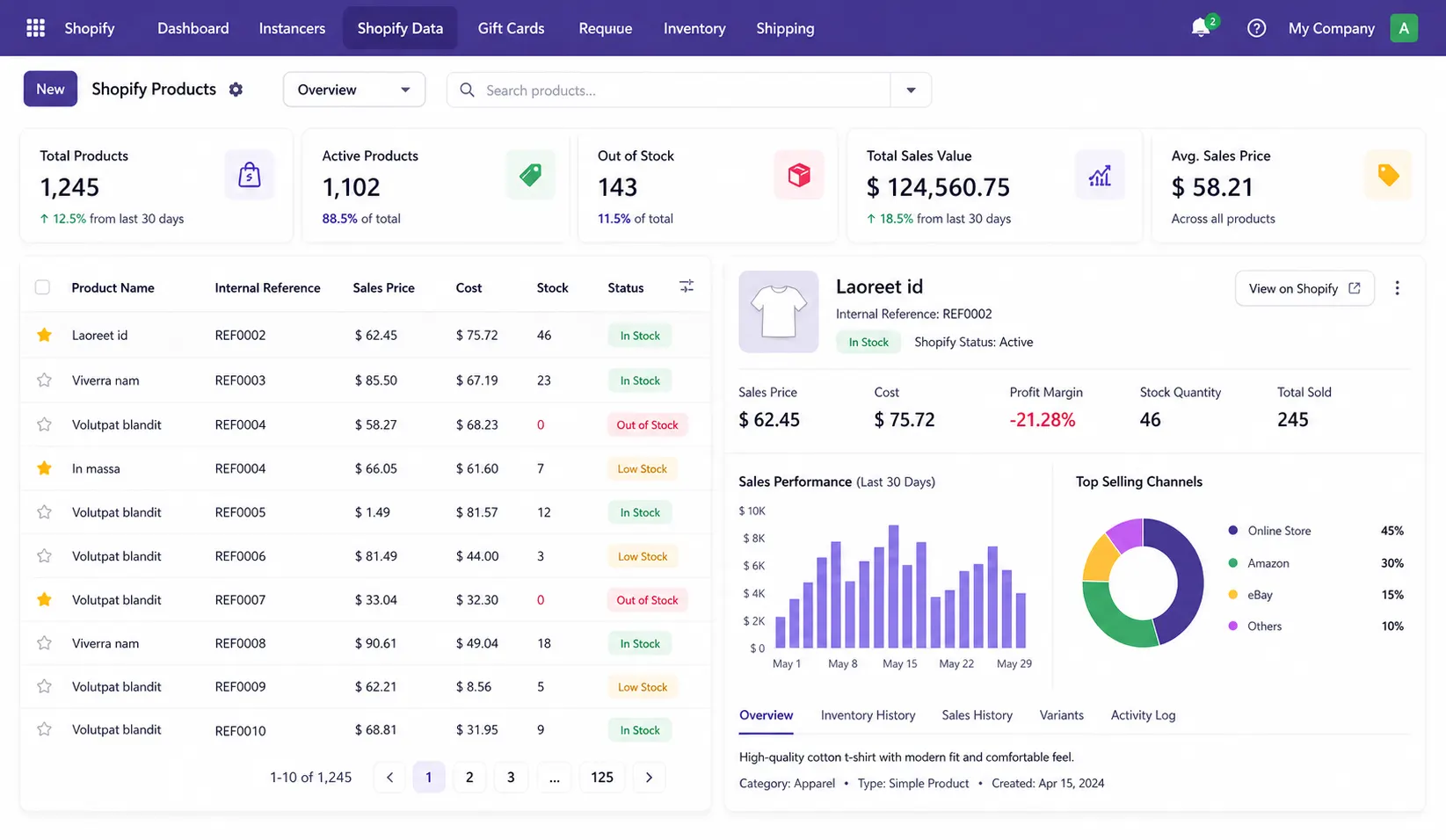
Products, variants and inventory stayed better aligned across both platforms, reducing mismatch issues.
Logs and Sync Visibility
Logs, error tracking, and reporting inside Odoo made the sync process easier to monitor and manage.
Process
How the Integration Was Implemented
The delivery covered secure connection setup, sync configuration, live workflow enablement and monitoring inside Odoo.
Store connection and setup
The Shopify store was securely connected with Odoo and the integration setup was configured based on the business workflow.
Field mapping and sync configuration
The team mapped Shopify data with Odoo fields and configured sync rules for products, customers, orders and inventory.
Real-time sync activation
Webhook-based sync was enabled so key updates could move between Shopify and Odoo with minimal delay. Cron-based backup sync was also configured.
Monitoring and go-live
After testing and validation, the connector was moved into live use. The team then monitored logs, reports and sync activity within Odoo.
Features
Core Features Delivered
The connector included the key sync, automation, and tracking capabilities needed for smoother ecommerce and ERP operations.
- Real-time Shopify to Odoo sync
- Product and variant synchronization
- Customer data synchronization
- Order import into Odoo
- Inventory synchronization
- Payment and shipping data flow
- Flexible field mapping
- Sync logs and operational visibility
- Cron auto-sync fallback
- Reporting support inside Odoo
Inside the Shopify Odoo Integration Setup
This section highlights the sync structure, workflow coverage, and connector capabilities that supported smoother operations between Shopify and Odoo.
Results
Operational Improvements Achieved
The integration reduced manual work, improved inventory accuracy, and created a more reliable workflow for daily operations.
Reduced manual effort
The business reduced dependence on repeated manual coordination between Shopify and Odoo. This helped the team save time and manage daily operations in a more structured way.
Better inventory control
A stronger sync process improved stock visibility between systems and reduced the risk of inventory mismatches.
Faster operational flow
Orders, customer data, and related updates moved more smoothly between the storefront and ERP workflow.
Better visibility and reliability
With logs, retry handling and sync monitoring inside Odoo, the team gained stronger control over the integration process.