ERP for Logistics and Supply Chain Management
Connect transportation, warehousing, inventory, fleet, billing, and supplier operations with ERP for logistics and supply chain management. SDLC Corp delivers consulting, implementation, integration, migration, and support.
- Transportation and fleet management
- Warehouse and inventory control
- Procurement and supplier workflows
- Billing, finance, and reporting
Trusted by Businesses for ERP and Operational Transformation

Trusted Across Leading Review Platforms
Why Logistics Businesses Need ERP
ERP for logistics connects operational and financial data to reduce manual work, improve accuracy, and give teams a consistent view of daily activity.
Disconnected Business Systems
Separate platforms create conflicting operational and financial records.
Repeated Manual Entry
Re-entering information slows processing and increases errors.
Inventory Mismatches
Unconnected stock movements produce unreliable inventory balances.
Limited Shipment Visibility
Teams struggle to follow dispatch, delivery, charges, and status.
Complex Billing and Costing
Freight, storage, fuel, and carrier costs are difficult to allocate.
Delayed Management Reporting
Spreadsheet reporting delays insight into costs and operations.
Our Logistics ERP Services
From assessment and system integration to implementation, custom development, migration, and optimization, SDLC Corp supports the complete logistics ERP lifecycle.
ERP Consulting and Integration
We assess workflows, evaluate platforms, define an ERP roadmap, and connect the selected system with TMS, WMS, EDI, telematics, carriers, CRM, accounting, ecommerce, and analytics.
Plan and connectERP Implementation
We configure modules, roles, approval rules, data, testing, training, phased rollout, and go-live around your operating model.
Configure and deployCustom ERP Development
We build tailored modules, portals, dashboards, reports, approval rules, and operational workflows when standard ERP capabilities do not meet logistics requirements.
Build tailored capabilitiesERP Workflow Configuration
We configure rates, surcharges, settlements, billing rules, calculations, dashboards, forms, and approvals.
Adapt workflowsERP Migration
We clean, map, test, reconcile, and transfer data from spreadsheets, legacy systems, and fragmented databases.
Move business dataERP Support and Optimization
We maintain integrations, reports, security, performance, upgrades, and business rules as operations grow.
Improve continuouslyBusinesses and Operating Models We Support
We configure ERP workflows around the transportation, warehousing, inventory, documentation, billing, and reporting needs of different logistics operations.
3PL and Warehouse Operations
Support client-owned inventory, storage, fulfillment, warehouse movement, service charges, returns, and customer reporting.
- Receiving and putaway
- Picking and packing
- Client inventory
- Storage billing
Freight Forwarding and Shipping
Coordinate quotations, bookings, multimodal shipments, documents, landed costs, duties, carrier records, and settlements.
- Freight bookings
- Carrier coordination
- Import and export
- Landed cost control
Transportation and Trucking
Connect dispatch, route planning, fleet expenses, driver records, maintenance, proof of delivery, billing, and reporting.
- Dispatch planning
- Fleet maintenance
- Driver records
- Delivery billing
Courier and Last-Mile Delivery
Manage delivery orders, route assignments, driver updates, proof of delivery, customer notifications, collections, and billing.
- Route assignments
- Driver updates
- Proof of delivery
- Payment collection
International integrations can support customs structures such as the WCO Data Model . For standalone fleet, warehouse, delivery, or tracking systems, explore our logistics software development services .
Logistics ERP Modules and Capabilities
A logistics ERP system connects orders, inventory, shipments, costs, documents, customer activity, and financial records. The final module structure is configured around your operating model, scale, and existing technology environment.

Transportation & Freight
Manage freight quotations, shipment bookings, carrier assignments, dispatch records, shipping documents, delivery milestones, proof of delivery, transport charges, and carrier expenses.
Fleet & Asset Management
Track vehicles, drivers, equipment, registrations, insurance, fuel, mileage, maintenance, repairs, inspections, document expiry dates, and asset-related costs.
Warehouse & Inventory
Control receiving, putaway, bin locations, reservations, picking, packing, transfers, cycle counts, lots, serial numbers, returns, barcode scanning, and RFID workflows.
Order & Fulfillment
Process quotations and sales orders through approval, allocation, reservation, backorders, split shipments, dispatch, delivery, returns, refunds, and settlement.
Procurement & Supplier
Manage purchase requests, supplier quotations, purchase orders, approvals, contracts, delivery schedules, goods receipts, invoice matching, evaluations, and replenishment.
Finance, Billing & Cost
Connect customer invoices, supplier bills, carrier settlements, receivables, payables, taxes, currencies, landed costs, and profitability by route, customer, contract, or service.
CRM & Customer Portal
Maintain customer profiles, quotations, contract rates, communication history, documents, claims, and service requests, with portal access to orders, deliveries, invoices, and records.
Reporting & Analytics
Review order status, warehouse activity, stock movement, delivery performance, fleet expenses, carrier reliability, supplier performance, payments, and profitability through role-based dashboards.
Connecting Planning Across the Supply Chain
Connect demand, inventory, purchasing, suppliers, warehouses, transportation, and financial data to support better planning and faster operational decisions.
Demand and Replenishment
Use demand, stock, lead times, and open purchases to guide replenishment and warehouse transfers.
Inventory Positioning
Review available, reserved, incoming, aging, and in-transit stock across locations.
Supplier and Capacity Planning
Compare supplier commitments, lead times, warehouse capacity, and transportation availability.
Exception Monitoring
Identify low stock, delayed purchases, supplier shortages, and delivery disruptions earlier.
Logistics ERP Integrations
Connect ERP with transportation, warehouse, carrier, ecommerce, telematics, accounting, and reporting platforms to maintain consistent logistics data.
Systems Connected with ERP
Keep operational and financial records synchronized.
TMS and WMS
Orders, inventory, shipments, and warehouse activity.
GPS and Telematics
Vehicle, driver, trip, fuel, and maintenance data.
Carrier Platforms
Rates, bookings, labels, tracking, and charges.
Ecommerce and CRM
Customers, orders, inventory, and fulfillment.
Accounting and BI
Invoices, payments, costs, taxes, and reports.
EDI Integration
Exchange standardized documents with suppliers, carriers, warehouses, customers, and trading partners.
| Document | Purpose |
|---|---|
| Purchase orders | Send order requirements. |
| Order acknowledgements | Confirm order details. |
| Shipping notices | Share shipment information. |
| Transport instructions | Provide routing details. |
| Inventory updates | Share stock changes. |
| Receiving advice | Confirm received quantities. |
| Delivery confirmation | Record completed deliveries. |
| Freight invoices | Exchange transport charges. |
ERP vs TMS, WMS, and SCM
ERP, TMS, WMS, and SCM systems support different logistics and supply chain functions. Businesses often connect them to maintain coordinated operations and consistent data.
| System | Main Purpose | Primary Workflows |
|---|---|---|
| Enterprise-wide management | Finance, procurement, orders, inventory, customer and supplier records, assets, billing, and reporting. | |
| Transportation execution | Loads, routes, carriers, dispatch, tracking, tendering, delivery confirmation, and freight costs. | |
| Warehouse execution | Receiving, putaway, storage, picking, packing, warehouse labor, stock movement, and dispatch preparation. | |
| Supply chain planning | Forecasting, sourcing, supply planning, supplier collaboration, network planning, and risk management. |
Technology Stack and Platforms We Use
We use application, database, integration, cloud, DevOps, and analytics technologies to support transportation, warehouse, inventory, fleet, finance, and reporting workflows.

Our ERP Delivery Process
Our structured implementation approach aligns workflows, data, integrations, users, and rollout priorities before the ERP system is deployed across logistics operations.
Discovery and Requirements
We assess your business model, locations, users, systems, reports, data sources, partner connections, and priorities.
Workflow and Process Mapping
We map orders, procurement, inventory, warehousing, transportation, billing, approvals, and exceptions.
Platform and Architecture Planning
We evaluate platforms, modules, infrastructure, integrations, migration, security, reporting, and rollout.
Configuration and Integration
Modules, roles, dashboards, approval rules, extensions, and third-party connections are configured.
Data Migration and Testing
Data is cleaned, migrated, and reconciled before workflow, integration, security, and user testing.
Deployment and Ongoing Support
The ERP system is released in controlled phases, followed by adoption, performance, and data-quality reviews.
Project Cost and Timeline
Logistics ERP implementation costs depend on business size, project scope, platform, modules, users, data condition, integrations, configuration, customization, deployment model, training, and post-go-live support.
| Business Size | Typical Project Scope | Estimated Timeline | Estimated Cost |
|---|---|---|---|
| Small Business | Focused modules, limited integrations, standard configuration, essential data migration, testing, and user training | 16–20 weeks | US$15,000–US$30,000 |
| Mid-Size Business | Multiple modules, moderate integrations, data migration, workflow configuration, reporting, testing, and user enablement | 20–28 weeks | US$35,000–US$45,000 |
| Large Enterprise | Enterprise-wide implementation, complex integrations, advanced data migration, multiple locations, governance, and tailored workflows | 28–40+ weeks | US$50,000+ |
These are estimated ERP implementation ranges based on the SDLC Corp ERP Cost Guide . Final pricing depends on the confirmed project scope and implementation requirements. Software licensing, hosting, infrastructure, hardware, transaction fees, third-party applications, and ongoing support may be priced separately.
Why Choose SDLC Corp for Logistics ERP?
A logistics-focused delivery team that aligns ERP systems with operational workflows, integrations, deployment priorities, and long-term business requirements.
Logistics Workflow Expertise
Orders, inventory, warehousing, transportation, delivery, and billing.
Process-First Planning
Workflows, roles, exceptions, integrations, and reporting are mapped first.
Platform-Neutral Guidance
Platforms are evaluated by fit, scalability, integrations, and cost.

Integration Architecture
Shipments, carriers, customers, inventory, invoices, and reporting systems.
Phased Deployment
Priority functions launch before expansion across modules and locations.
Ongoing Optimization
Support for reporting, integrations, upgrades, security, and future modules.
Logistics and Supply Chain Insights and Guides
Explore logistics ERP, transportation management, and document automation projects covering fleet, warehouse, routes, shipments, operational data, and back-office workflows.
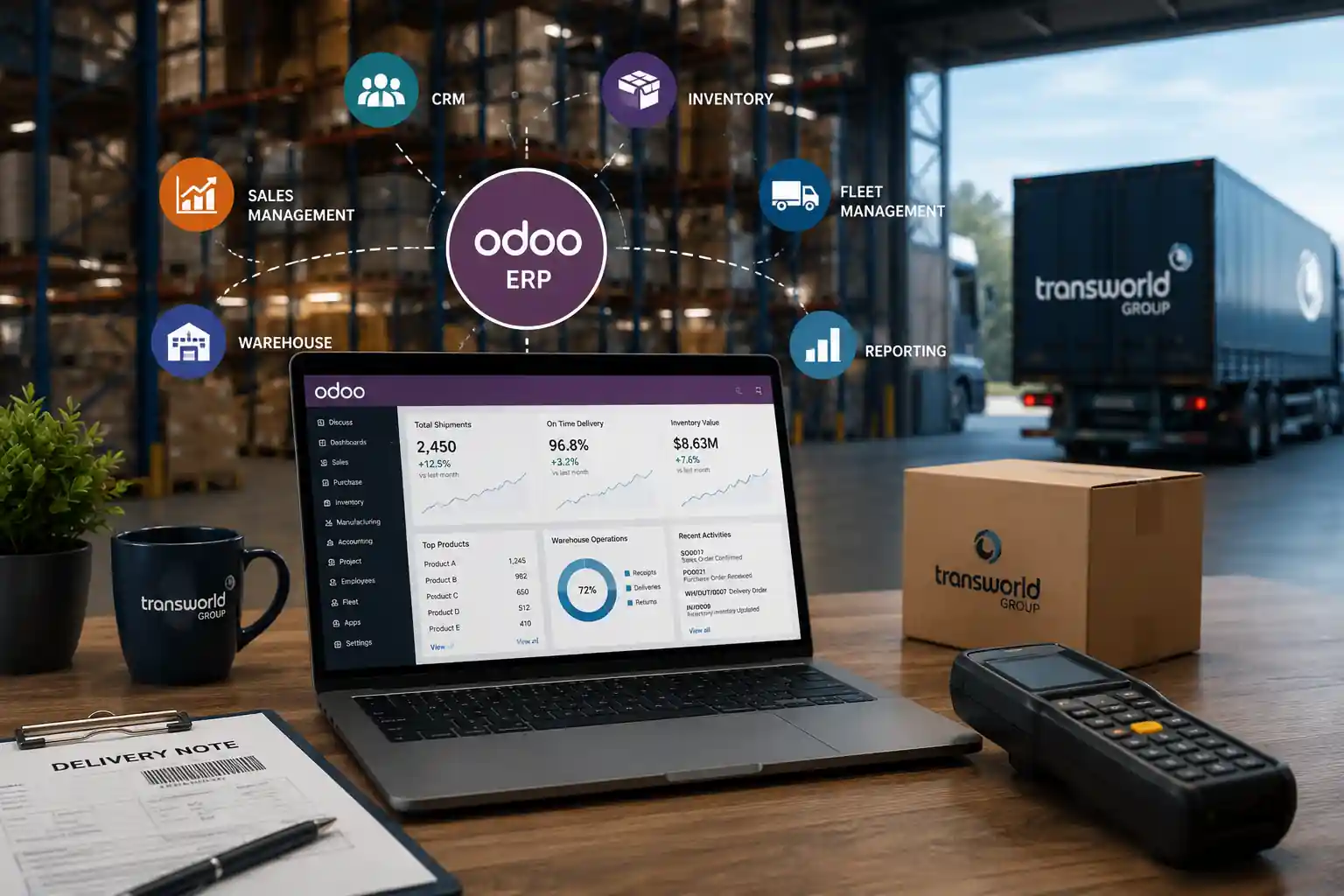
Unified Fleet, Warehouse, Orders and Shipment Operations
SDLC Corp implemented Odoo 17 Enterprise for Transworld Logistics, connecting fleet, warehouse, order, CRM, document, and shipment-tracking workflows.
- Fleet and telematics data connected with ERP records
- Barcode and RFID workflows added across the warehouse
- Orders connected from quotation through dispatch
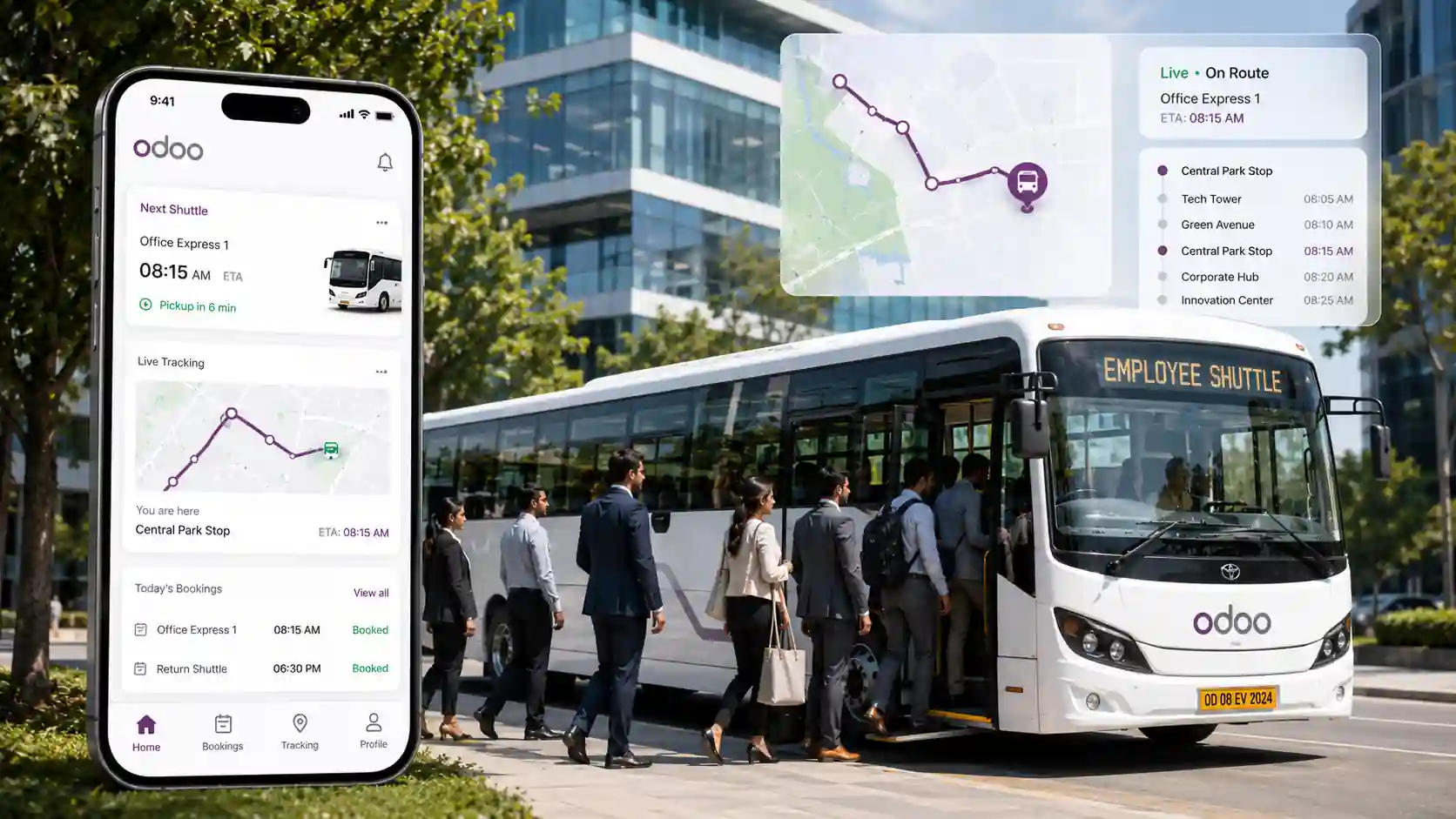
Shuttle Booking, Route Scheduling and Live Vehicle Tracking
SDLC Corp developed a custom Odoo 16 shuttle management module connecting trip reservations, recurring schedules, vehicle tracking, rider information, and reporting.
- Employees can reserve or release shuttle seats
- Admins manage routes, capacity, timing, and recurrence
- Live map tracking and rider reports support operations
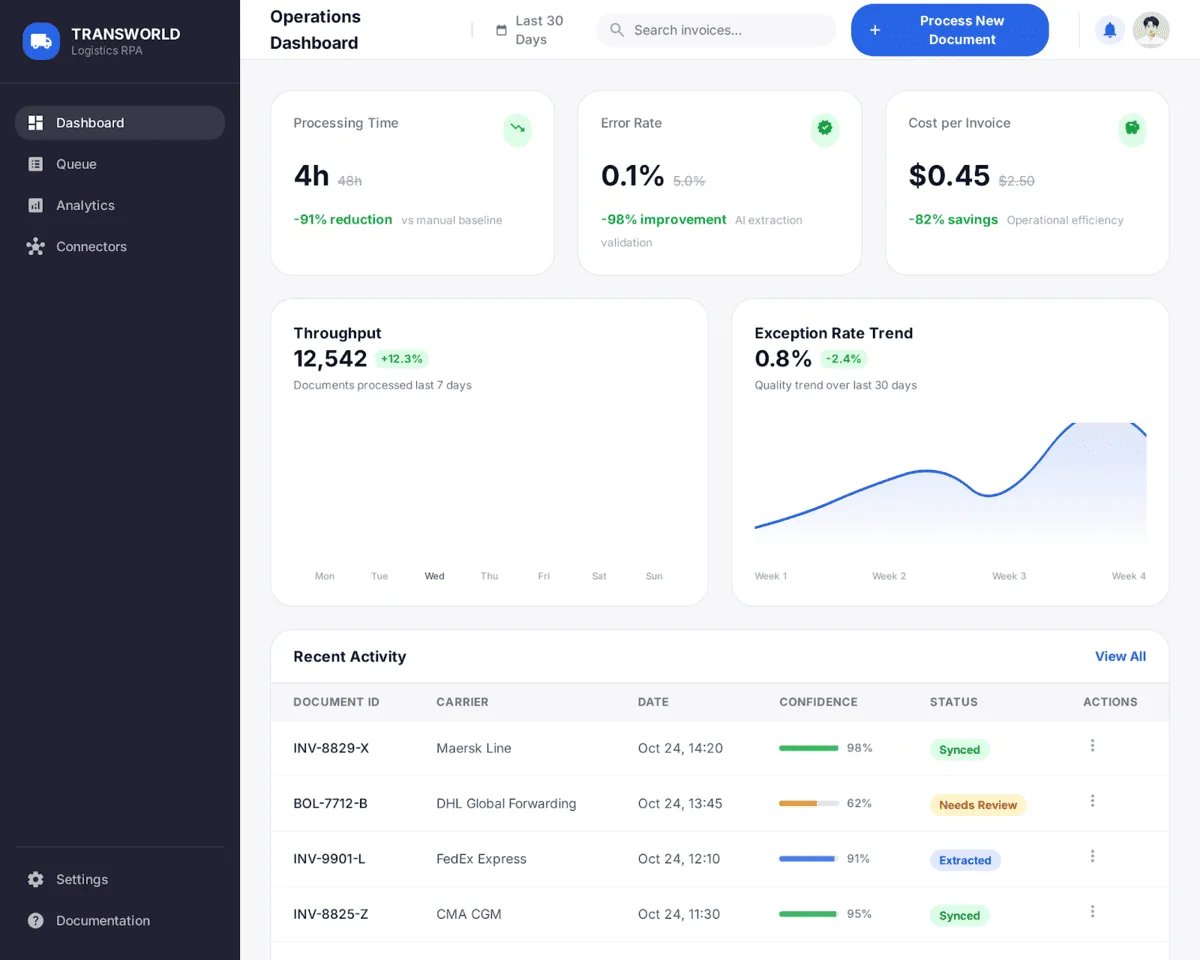
AI Document Processing and ERP Integration for Logistics
SDLC Corp built an AI-driven platform for Transworld Logistics to extract invoice data, validate uncertain fields, manage exceptions, and send approved records to ERP.
- Automated extraction from changing invoice formats
- Confidence-based review for low-certainty fields
- Validated data synchronized with ERP and accounting
Explore more SDLC Corp case studies covering logistics ERP, transportation management, automation, integration, and enterprise software delivery.
Logistics ERP Guides and Insights
Explore practical resources covering ERP fundamentals, implementation planning, system integration, inventory control, order processing, and connected logistics operations.
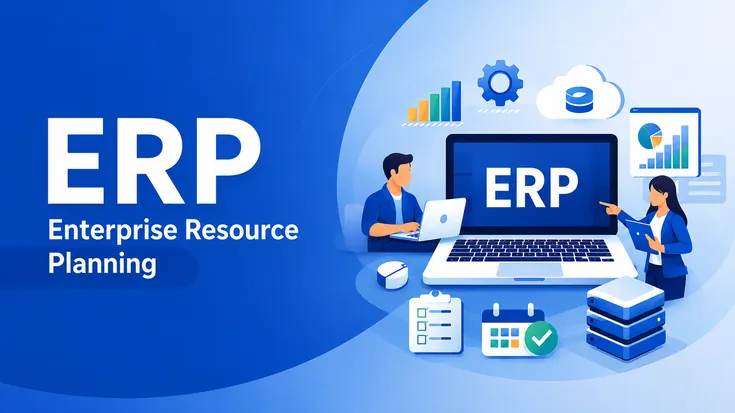
What Is ERP? A Complete Guide
Learn how ERP connects procurement, inventory, orders, finance, reporting, and other business operations through one system.
Read the GuideThe ERP Implementation Process, Step by Step
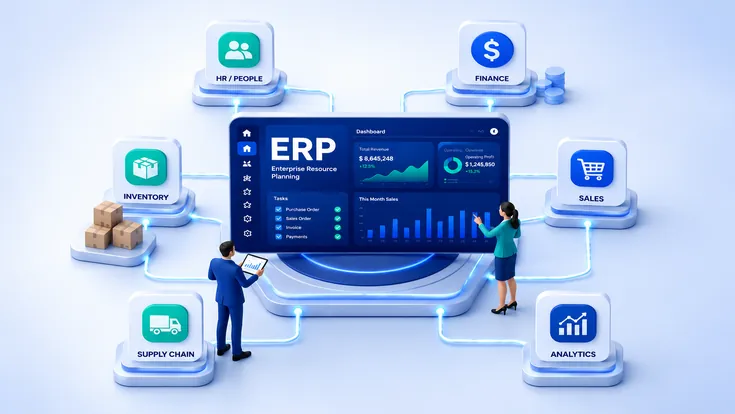
Review the stages involved in process discovery, system configuration, data migration, integration, testing, training, and deployment.
Read the GuideERP and CRM Integration: Benefits, Features, Cost and Use Cases
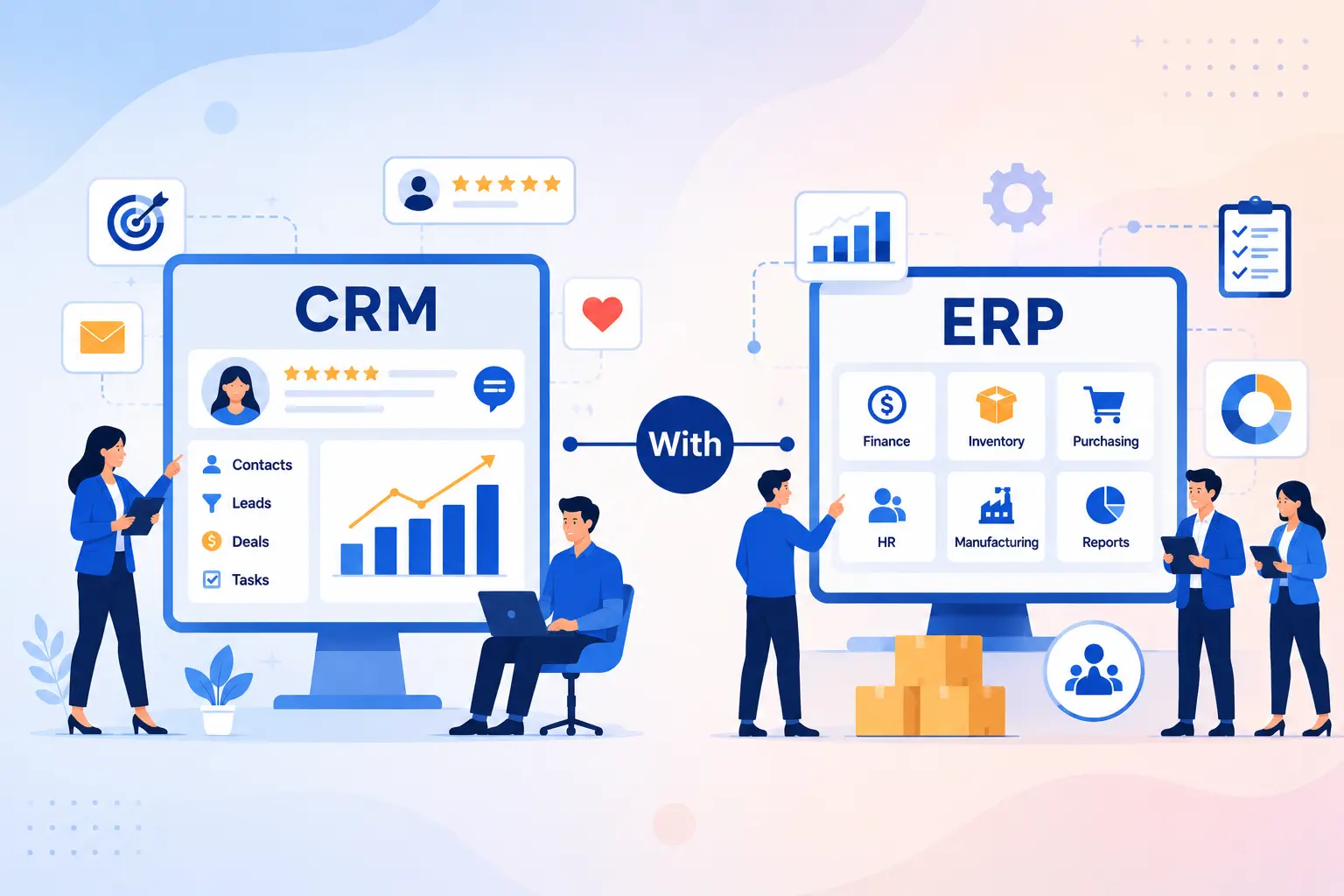
Understand how ERP and CRM integration connects customer, quotation, order, billing, and service information across operational teams.
Read the GuideClient Reviews and Project Feedback

See how clients describe SDLC Corp’s communication, technical delivery, and project support, including feedback from a supply chain optimization engagement.
Their deep understanding of AI in real-world logistics and their ability to translate complex data models into practical, usable solutions.
Frequently Asked Questions
Common questions about scope, modules, integration, cost, and timelines for a logistics ERP project.
01What is ERP for logistics?
ERP for logistics is a business system that brings transportation, warehousing, inventory, orders, procurement, fleet, customers, suppliers, finance, billing, and reporting into one coordinated environment.
It gives operational and finance teams a consistent view of orders, stock movement, shipments, costs, invoices, and delivery activity.
02How does ERP support supply chain management?
ERP supports supply chain management by combining purchasing, supplier, inventory, warehouse, customer-demand, transportation, invoicing, and financial data.
This helps teams understand how purchasing, stock, fulfillment, and cost decisions affect the wider supply chain.
03What modules are included in logistics ERP software?
Common modules include transportation, fleet, warehouse, inventory, order management, procurement, supplier management, CRM, finance, billing, maintenance, and reporting.
The final selection depends on your operating model, scale, locations, and existing systems.
04What is the difference between ERP and TMS?
ERP manages enterprise-wide processes such as finance, purchasing, inventory, orders, suppliers, customers, assets, and reporting.
A TMS provides deeper functionality for transportation planning, carrier management, route execution, dispatch, tracking, tendering, and freight expenses.
05Can ERP integrate with an existing TMS or WMS?
Yes. ERP can exchange orders, inventory balances, warehouse status, shipment details, freight expenses, and delivery confirmation with existing TMS and WMS platforms.
The integration should clearly define which application creates, owns, updates, and validates each record.
06How much does logistics ERP cost?
A focused implementation may cost between $15,000 and $50,000. Multi-module and enterprise projects may range from $50,000 to $250,000 or more.
The final amount depends on platform licensing, modules, users, locations, migration, integrations, configuration, reporting, training, and support.
07How long does logistics ERP implementation take?
A focused project may take 16–20 weeks. Multi-module implementations may require 20–28 weeks, while enterprise rollouts may take 28–40 weeks or longer.
A phased approach can make priority functions available before the complete rollout is finished.
08Which ERP is suitable for logistics companies?
The right platform depends on company size, operating model, locations, transaction volume, current applications, reporting needs, budget, integration requirements, and internal technical resources.
SAP, Microsoft Dynamics 365, Oracle NetSuite, Odoo, ERPNext, and other platforms suit different logistics environments. Selection should follow process assessment and fit-gap analysis rather than brand preference.
- Contact Us
Let's Talk About Your Product
What happens next?
- We review your requirements
- Strategy call with experts
- Clear roadmap & estimate
- NDA Protected
- Enterprise Grade Delivery
- Global Clients