HELPING MANUFACTURERS MODERNIZE

ERP for Manufacturing Industry

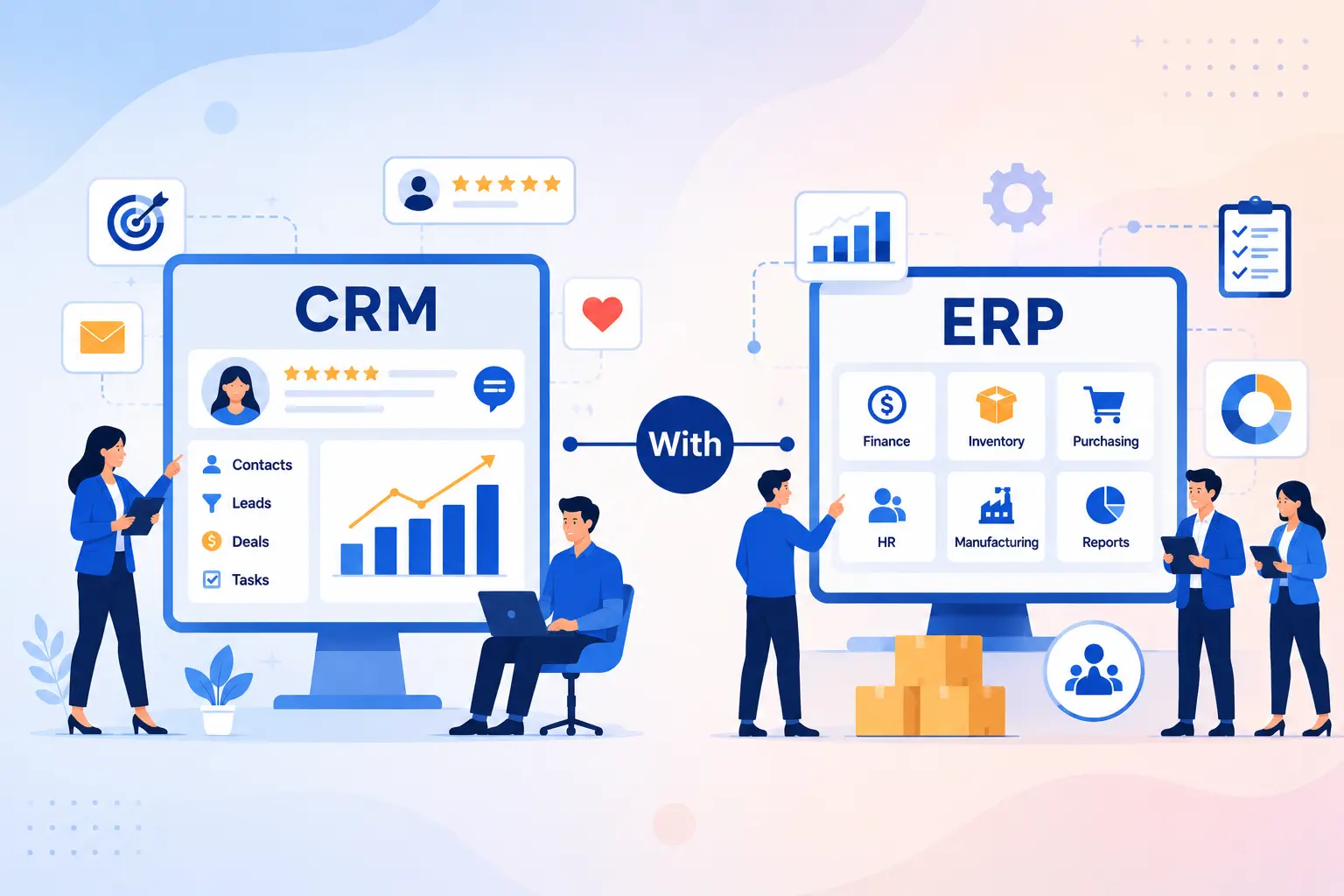
SDLC Corp provides ERP for manufacturing software that connects production planning, inventory, procurement, quality control, shop-floor operations, finance, and reporting in one real-time system.


Production planning and scheduling
Inventory and warehouse control
Quality and batch traceability
Shop-floor and finance visibility
GoodFirms rating badge for SDLC Corp
AppFutura rating badge for SDLC Corp
Clutch rating badge for SDLC Corp
Request a Proposal

Brands Partnering With SDLC Corp for ERP Solutions

  • KISS USA logo
  • Zilch logo
  • MAIR logo
  • CETU logo
  • Arbor Financial Group logo
Our Services

ERP Services Built for Modern Manufacturing Operations

SDLC Corp provides ERP development, integration, implementation, migration, support, and optimization services for manufacturing businesses, helping teams connect factory workflows, business operations, and smart manufacturing systems.

Custom ERP Development

Built around your production workflows, approval processes, inventory rules, reporting needs, and operational structure.

ERP Customization & Modernization

Already have an ERP system? We customize modules and modernize legacy platforms without disrupting active manufacturing operations.

ERP Integration

Connect ERP with MES, PLM, WMS, CRM, SCM, IoT devices, accounting tools, and BI dashboards through structured integrations.

ERP Implementation & Migration

Move from spreadsheets, disconnected tools, or legacy systems through a structured ERP implementation process that supports cleaner data, controlled migration, and better operational management.

ERP Consulting & Requirement Planning

Define ERP modules, user roles, workflows, integrations, reporting needs, and an implementation roadmap before development starts.

ERP Support & Optimization

Post-launch performance improvements, new ERP modules, security enhancements, workflow refinements, and ongoing technical support.

Built for Your Process

Manufacturing ERP for Different Production Models

ERP software for manufacturing should align with your production model, product flow, quality requirements, and reporting structure, so your team can work within processes that match real plant operations.

Production ModelWhat the ERP Needs to Handle
Discrete ManufacturingBOMs, routing, work orders, assembly stages, serial tracking, and production scheduling.
Process ManufacturingFormulas, batches, yield tracking, expiry dates, compliance records, and quality checks.
Batch ManufacturingBatch records, lot control, QA checkpoints, traceability, and recall readiness.
Make-to-OrderCustom quotes, order-specific production, material planning, delivery timelines, and job costing.
Make-to-StockDemand forecasting, replenishment planning, safety stock, warehouse visibility, and inventory control.
Engineer-to-OrderEngineering changes, custom BOMs, project costing, approvals, and documentation control.
Mixed-Mode and Multi-PlantMultiple production styles, plant-level controls, centralized reporting, and cross-location visibility.

Note: The ERP structure can be customized for single-site, multi-site, batch-based, order-based, or hybrid manufacturing operations, including workflows aligned with enterprise-control system integration standards.

Core Capabilities

ERP Modules for Manufacturing Operations

Every ERP module is designed around real plant workflows, production rules, inventory movement, quality checkpoints, and reporting needs instead of a generic feature list.
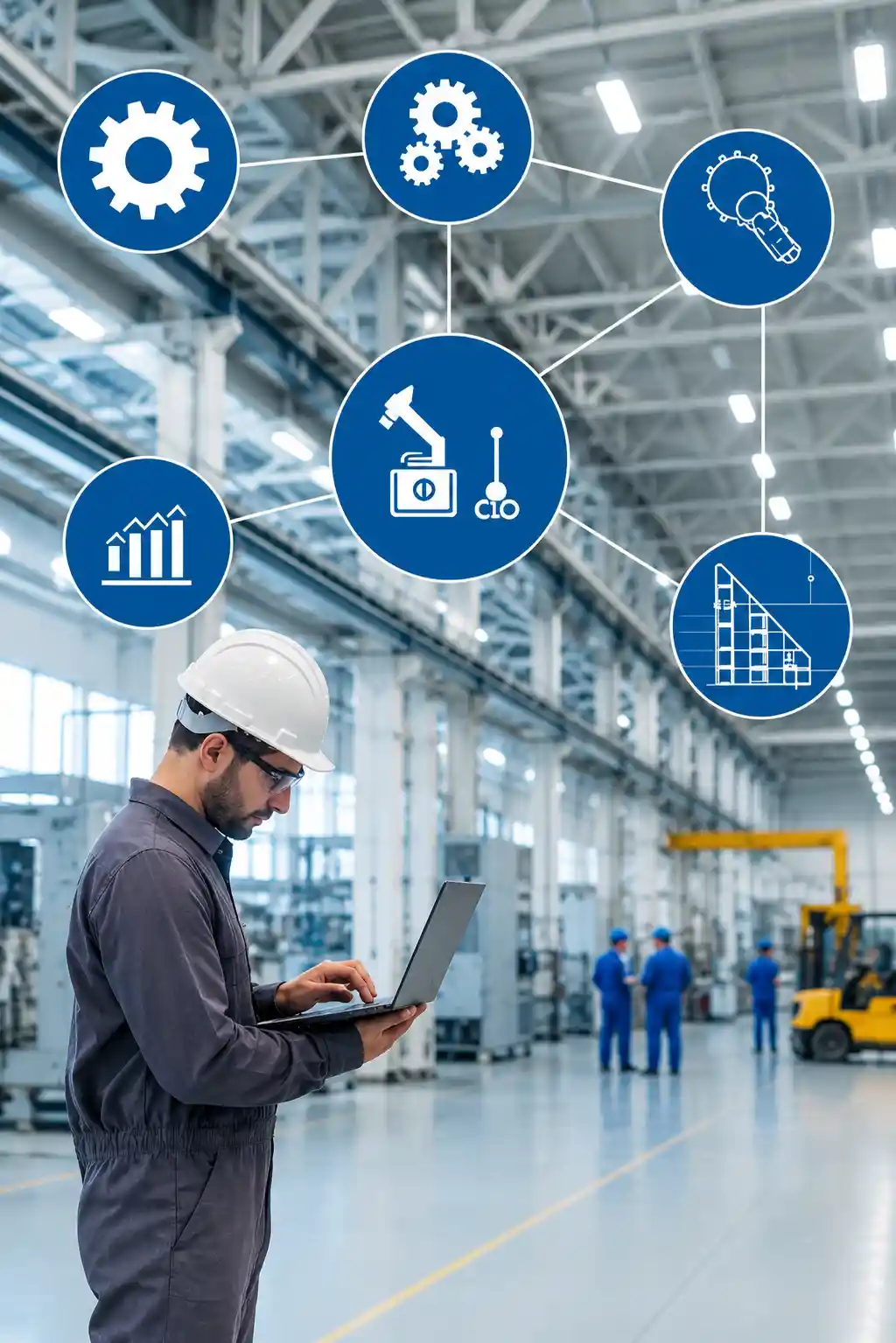
Manufacturing ERP modules for production planning, inventory, quality, and shop-floor operations

Production Planning and Scheduling

Production

Plan work orders, shifts, capacity, and production calendars with clear visibility into factory schedules.

  • Work order planning, shift scheduling, and machine capacity allocation
  • Production calendars with live schedule visibility

MRP and BOM Management

Material Planning

Manage materials, routing, component visibility, and multi-level BOMs across manufacturing workflows.

  • Multi-level BOMs, routing, component tracking, and engineering changes
  • Material planning connected with production demand

Inventory and Warehouse

Stock Control

Track raw materials, WIP, finished goods, stock movement, and warehouse control from one ERP layer.

  • Barcode or RFID tracking, cycle counts, and inventory movement
  • Warehouse visibility for raw materials, WIP, and finished goods

Procurement and Suppliers

Suppliers

Control purchase requests, vendor quotes, approvals, supplier performance, and material availability.

  • PO tracking, approvals, supplier records, and vendor quote workflows
  • Material availability planning linked to production demand

Shop-Floor and Quality Management

Operations

Connect operators, machines, inspections, defects, approvals, and quality documentation.

  • Operator dashboards, downtime logs, job status, and live production tracking
  • Inspections, CAPA workflows, approval trails, and quality records

Traceability, Maintenance, Finance and Costing

Control Layer

Build traceability, maintenance planning, costing, profitability, and reporting into the ERP workflow.

  • Batch records, serial tracking, recall readiness, and product genealogy aligned with the GS1 Global Traceability Standard
  • Preventive maintenance, job costing, variance analysis, and financial reporting
Why SDLC Corp

Why Manufacturers Choose SDLC Corp for ERP Solutions

SDLC Corp aligns ERP software for manufacturing with your plant workflows, operational needs, and ERP consulting approach before development begins.

ERP Built for Real Manufacturing Workflows

We connect production, inventory, quality, reporting, and integrations into one ERP structure that supports factory teams, plant managers, and leadership.

Workflow Design Custom
System Architecture API-Ready
Deployment Scope Scalable
Workflow Fit

Built Around Your Workflow

We design ERP modules around production planning, shop-floor tasks, material movement, approval flow, and inventory control.

Integration

Integration-Ready Architecture

ERP systems can connect with MES, PLM, WMS, IoT devices, and factory systems through APIs aligned with ISA-95 enterprise-control system integration.

Compliance

Compliance Workflow Support

We build audit trails, access controls, quality checks, batch tracking, and document workflows for manufacturing compliance needs.

Scalability

Scalable for Multi-Site Growth

From single-factory operations to multi-plant networks, the ERP scales with centralized dashboards, reporting, and role-based control.

Our Tech Stack

The Technology Stack Behind Our Builds

Our team combines modern frontend, backend, database, cloud, ERP, and integration technologies to build reliable ERP systems for manufacturers, supporting production planning, inventory control, procurement, quality management, shop-floor tracking, reporting, and connected factory operations.

React.js
Angular
Vue.js
Next.js
TypeScript
JavaScript
Tailwind CSS
Bootstrap
Node.js
NestJS
Express.js
Python
Django
Java
Laravel
Spring Boot
MRP
BOM Management
Production Planning
Inventory Management
Warehouse Management
Procurement
Quality Control
Shop Floor Tracking
MySQL
PostgreSQL
MongoDB
Redis
Elasticsearch
Oracle DB
MS SQL Server
MariaDB
Amazon AWS
Microsoft Azure
Google Cloud
Docker
Kubernetes
DigitalOcean
Cloudflare
Nginx
REST APIs
GraphQL
Webhooks
EDI
Barcode & RFID
IoT Sensors
BI Dashboards
Accounting APIs

Case Studies

Real Projects, Real Outcomes

Explore ERP projects where SDLC Corp helped manufacturers centralize operations, improve inventory visibility, automate production workflows, and connect business teams through one reliable ERP system.

Industrial ERP Implementation

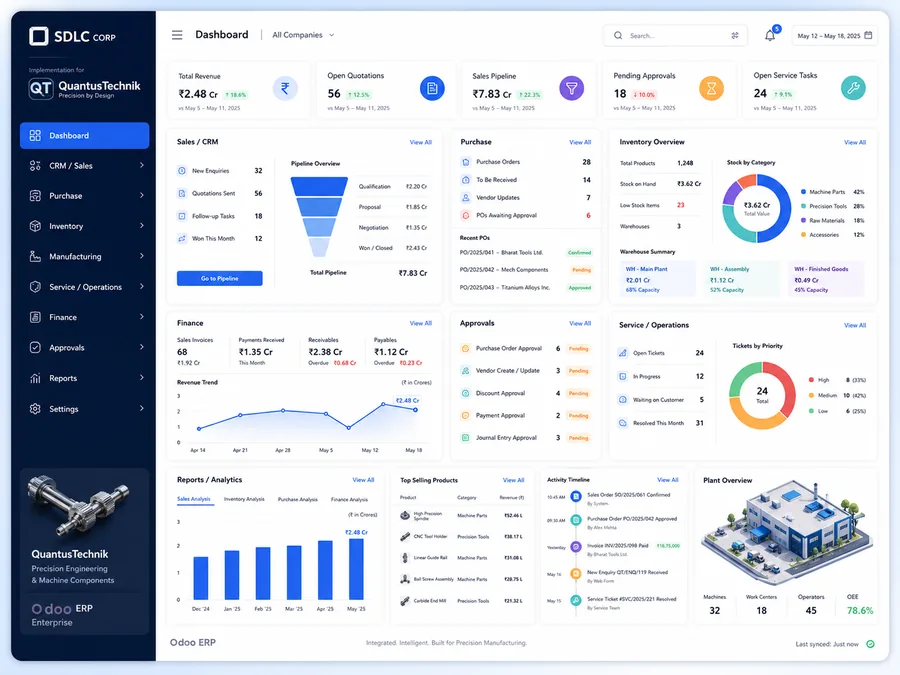
How SDLC Corp Helped QuantusTechnik Digitize End-to-End Operations

QuantusTechnik used separate tools for enquiries, quotations, purchases, inventory, finance, approvals, and service work. SDLC Corp moved these workflows into one connected ERP workspace.

  • CRM, sales, purchase, inventory, accounting, approvals, service, and reporting connected
  • Manual follow-ups replaced with clearer ERP workflow visibility
  • Shared dashboards created for daily tracking, reporting, approvals, and service updates
60%
Reduced manual tracking
70%
Faster reporting
8
Connected ERP modules
View Case Study
QuantusTechnik ERP operations dashboard case study by SDLC Corp
Footwear Manufacturing and Retail ERP

Apex Shoes ERP for Footwear Manufacturing and Retail Operations

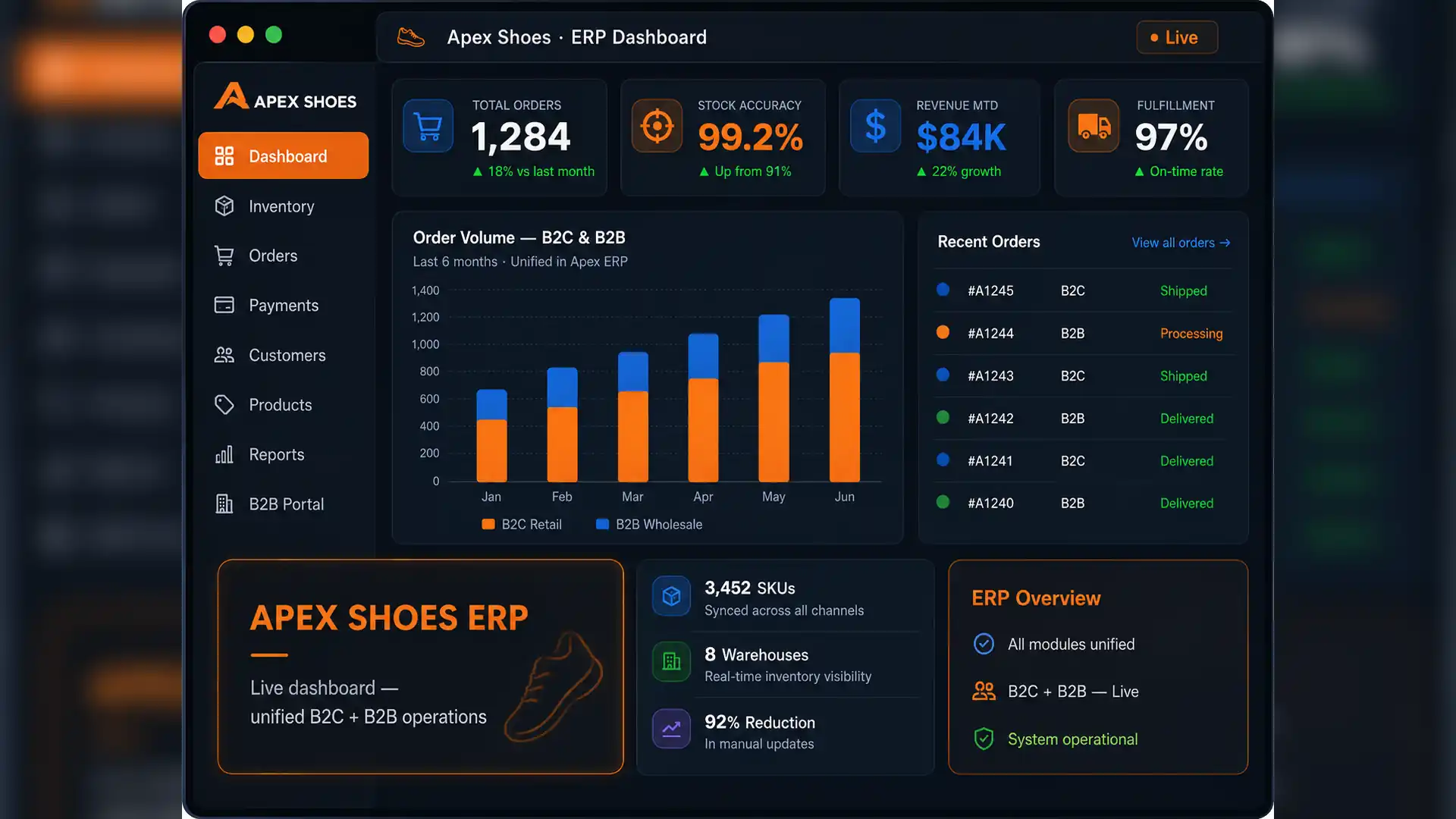
Apex Shoes needed one ERP system for B2B wholesale, direct-to-consumer orders, catalogue management, stock control, payment reconciliation, fulfilment, and customer records.

  • B2B wholesale and B2C ecommerce operations aligned inside ERP
  • Catalogue, stock, orders, payments, and customer records unified in one system
  • Multi-location stock visibility improved for retail, wholesale, and operations teams
2
Sales channels
4
Core ERP modules
99.2%
Stock accuracy
View Case Study
Apex Shoes ERP case study showing footwear inventory and order management dashboard by SDLC Corp
Industrial ERP Maintenance Workflow

QR-Based Maintenance Tracking ERP for Industrial Operations

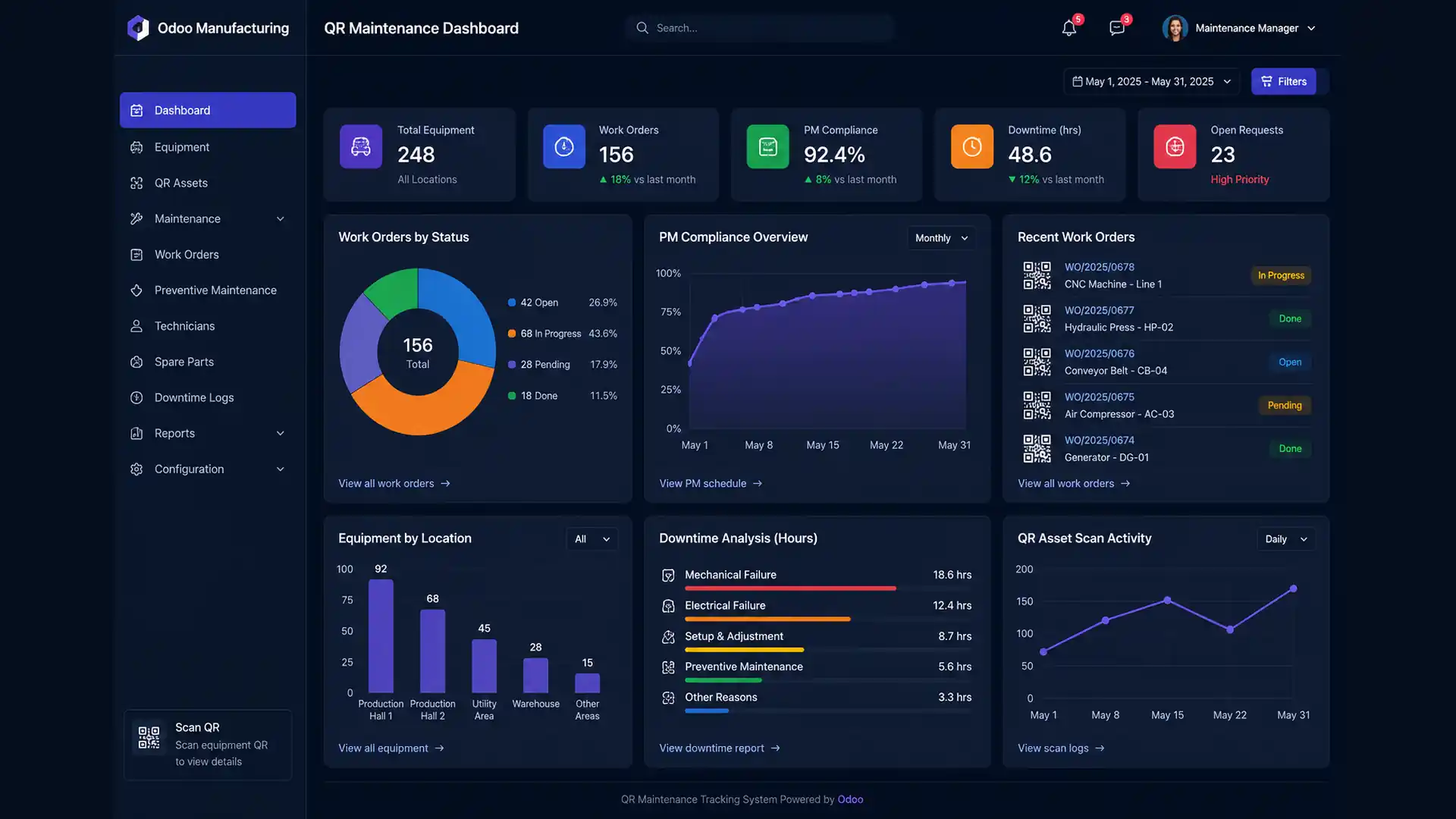
SDLC Corp built a QR-based maintenance workflow for industrial operations, helping teams manage equipment access, technician updates, preventive service work, and centralized reporting inside one ERP system.

  • QR-based equipment access improved asset identification across facilities
  • Mobile maintenance updates helped technicians record work faster on-site
  • Centralized service history improved preventive maintenance visibility
70%
Faster equipment lookup
QR
Asset tracking
ERP
Maintenance visibility
View Case Study
ERP-based QR maintenance tracking dashboard for industrial operations by SDLC Corp
Security & Compliance

ERP Compliance and Security for Manufacturing Operations

SDLC Corp builds ERP workflows with audit trails, access control, batch tracking, quality checks, documentation, and reporting features aligned with an ISO 9001 quality management system to support the compliance standards manufacturers operate under.

FSMA / HACCP Food and beverage manufacturing compliance workflow support
AS9100 / CMMC Aerospace, defense, supplier control, and documentation support
21 CFR Part 11 Pharma, chemical, validation, audit trail, and record control support
IATF 16949 Automotive quality, traceability, process control, and reporting support

Our Process

Our Manufacturing ERP Implementation Process

Our team follows a structured process to plan, design, develop, integrate, test, and launch ERP systems for manufacturing businesses.

01
Weeks 1–2

Discovery

We review workflows, systems, users, and ERP goals.

02
Weeks 2–3

ERP Planning

We define modules, roles, dashboards, and process flows.

03
Weeks 3–4

UI/UX and Architecture

We design screens, permissions, database flow, and system logic.

04
Weeks 4–12

ERP Development

We build production, inventory, quality, finance, and reports.

05
Parallel

Integration and Migration

We connect tools, automate workflows, and migrate legacy data.

06
Final Sprint

Testing and Launch

We complete QA, UAT, deployment, support, and optimization.

Cost & Timeline

ERP Software for Manufacturing Cost and Timeline

The cost of ERP software for manufacturing depends on users, modules, production workflows, integrations, data migration, reporting needs, deployment model, and customization requirements.

Single-Plant Manufacturer

For small factories and focused ERP rollouts

$25K–$150K
2–6 months
  • Core production, inventory, and reporting modules
  • Single-site ERP deployment with limited integrations
  • Basic dashboards, user roles, and approval workflows
  • Good fit for first ERP rollout or ERP modernization
Estimate My ERP Scope

Multi-Plant Operation

For enterprise and multi-location manufacturers

$500K+
6–24 months
  • Advanced customization, analytics, approvals, and automation
  • Multi-site ERP setup with centralized dashboards and access control
  • Complex integrations with MES, WMS, IoT, CRM, SCM, and finance systems
  • Best fit for enterprise manufacturing transformation
Talk to an Architect

Note: These ranges are planning estimates. A final quote should be prepared after reviewing ERP modules, workflows, data migration scope, integrations, user roles, deployment needs, and support requirements.

Build a Manufacturing ERP System That Connects Every Operation

Connect production planning, inventory, procurement, quality control, finance, reporting, and multi-plant operations through one scalable ERP platform.
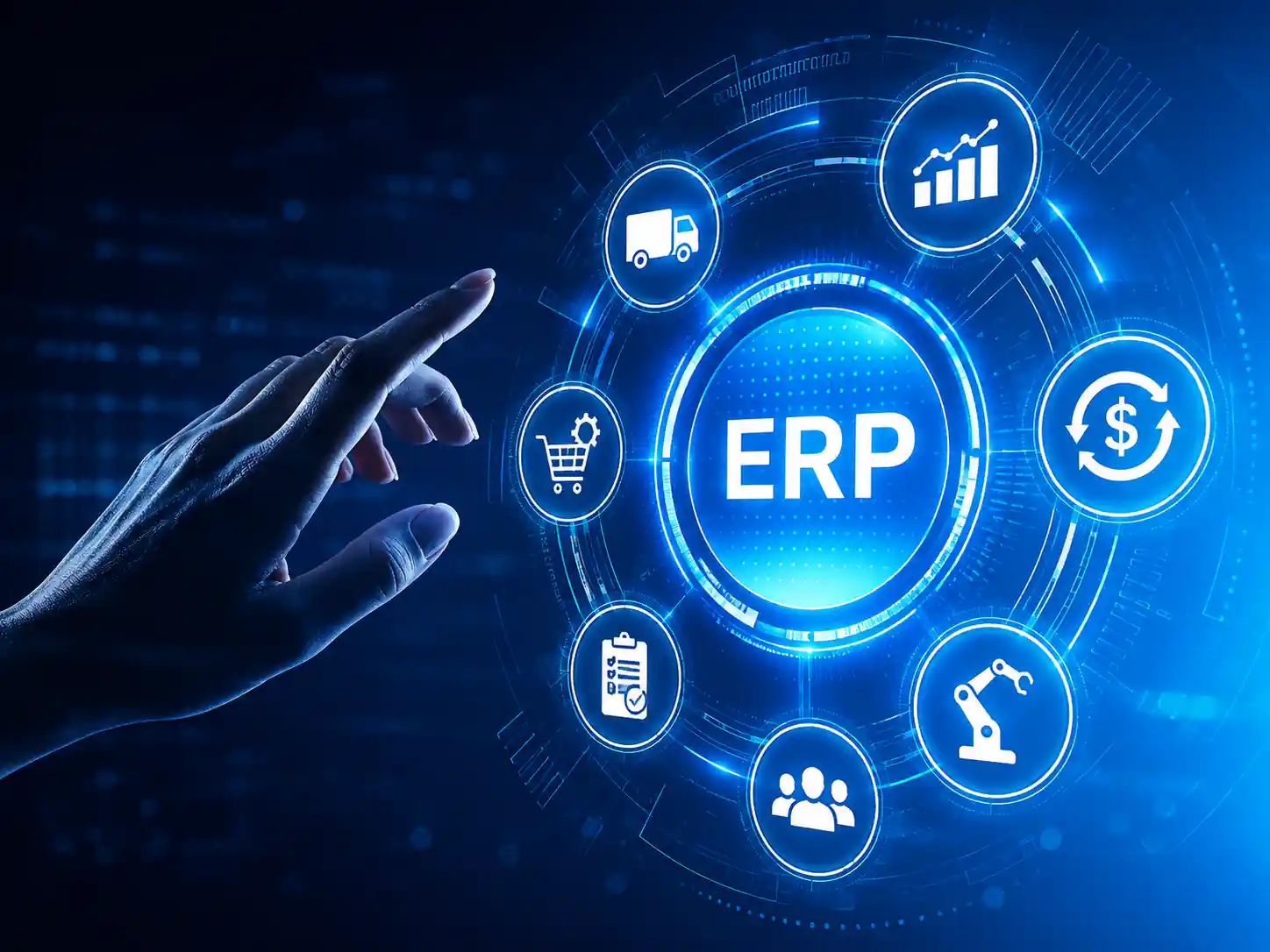
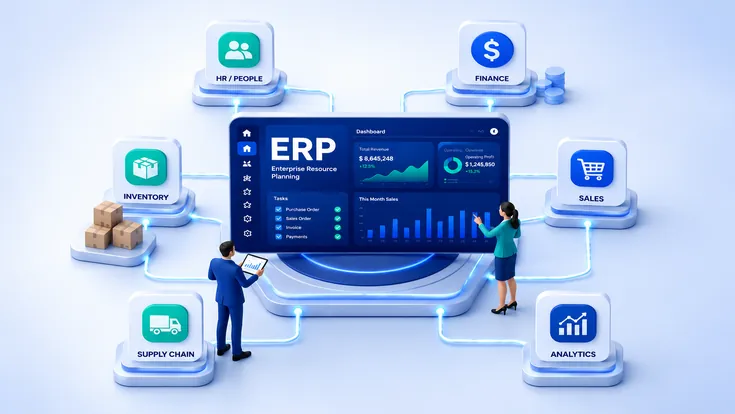
Manufacturing ERP system connecting production, inventory, logistics, finance, quality, and plant operations
Manufacturing Resources

Guides & Insights

Explore practical ERP guides for manufacturing teams, including ERP basics, implementation planning, production workflows, inventory visibility, shop-floor operations, integrations, and connected back-office management.
Client Feedback

What Our Clients Say

See how clients describe SDLC Corp’s work across ERP implementation, Odoo setup, workflow automation, operations digitization, and manufacturing process improvement.

“Overall, we were very satisfied with the engagement.”

Rajesh U Gaikwad Founder, Quantus-Technik

“SDLC CORP managed our full Odoo Implementation from analysis to post-launch support with exceptional professionalism.”

Edi Abramov Odoo Implementation for CheckCheck

“Their deep discovery process meant they understood our business needs better than we did.”

Tim Launiere President, DieBotics
FAQ

Frequently Asked Questions

Answers to common questions about ERP software for manufacturing, including modules, cost, timeline, integrations, customization, and deployment options.

What does ERP software for manufacturing include?

ERP software for manufacturing usually includes production planning, MRP, BOM management, inventory control, procurement, warehouse management, shop-floor tracking, quality management, finance, costing, reporting, and role-based dashboards.

Why do manufacturers need an ERP system?

Manufacturers need an ERP system to connect production, inventory, procurement, quality, finance, warehouse operations, and reporting in one place. It helps reduce manual work, improve visibility, and support faster operational decisions.

Can ERP connect with MES, PLM, WMS, and IoT systems?

Yes. A custom ERP system can connect with MES, PLM, WMS, CRM, SCM, finance tools, BI dashboards, IoT devices, barcode systems, RFID systems, and other factory or business applications. For shop-floor, machine, sensor, and PLC connectivity, manufacturers can use standards such as OPC UA industrial interoperability.

How is ERP different from MRP and MES?

MRP mainly focuses on material planning and availability. MES manages real-time shop-floor execution. ERP connects production with inventory, procurement, quality, finance, costing, reporting, and business-wide control.

How much does ERP software for manufacturing cost?

ERP software for manufacturing can cost $25K–$150K for a small single-plant manufacturer, $100K–$400K for a growing mid-market manufacturer, and $500K+ for complex multi-plant ERP systems. Final pricing depends on users, modules, integrations, data migration, deployment model, reporting needs, and customization scope.

How long does ERP implementation take for manufacturers?

A single-plant ERP project usually takes 2–6 months. A mid-market ERP rollout usually takes 4–12 months. A complex multi-plant implementation can take 6–24 months depending on modules, integrations, data migration, approvals, testing, and rollout scope.

Can SDLC Corp customize an existing ERP system?

Yes. SDLC Corp can customize existing ERP systems by improving workflows, adding modules, modernizing dashboards, integrating third-party tools, automating approvals, and improving reporting.

Can ERP support batch, lot, and serial traceability?

Yes. ERP can support batch records, lot movement, serial tracking, product genealogy, quality checks, audit trails, recall readiness, and compliance documentation for manufacturing operations.

Can ERP support multiple manufacturing plants?

Yes. A multi-plant ERP system can support location-wise inventory, production tracking, procurement, quality control, finance, centralized reporting, role-based access, and performance dashboards across multiple facilities.

Should manufacturers choose cloud, on-premise, or hybrid ERP?

The right deployment model depends on security needs, IT infrastructure, plant connectivity, access requirements, and budget. Cloud ERP supports scalability, on-premise ERP offers more infrastructure control, and hybrid ERP works when manufacturers need both flexibility and plant-level control.

Let’s Talk About Your Product

Get expert guidance on scope, architecture, timelines, and delivery approach so you can move forward with confidence.

What happens next?