
MLOps
Services
Build repeatable machine-learning delivery pipelines for training, testing, deployment, monitoring, rollback and model lifecycle management.
We engineer ML CI/CD, model registries, feature stores, release paths and production monitoring — on the cloud and ML platforms you already run.
Delivery at Scale
Trusted by Fortune Global 500 leaders, governments & top universities across 30+ countries

























Powered by leading cloud & AI platforms
 AWS
AWS Google Cloud
 Microsoft Azure
 NVIDIA
 OpenAI
 Anthropic
 Gemini
 Grok
Grok Perplexity
 Google AIAWSGoogle CloudMicrosoft AzureNVIDIAOpenAIAnthropicGeminiGrokPerplexityGoogle AI



Awards & industry recognition



MLOps
Services We Deliver
Engineering the path a model takes from experiment to production, and the controls that keep it reliable once it is there.
Delivery
ML CI/CD Pipelines
Training pipelines, automated tests for data and models, and promotion gates that decide whether a candidate is fit to release.
Release
Model Deployment
Batch and online serving with shadow, canary and blue-green release paths, and a rollback that restores the previous model rather than the previous commit.
Lifecycle
Model Registry & Versioning
Registered versions with lineage, lifecycle state, approval history and a record of where each version is serving.
Traceability
Experiment Tracking
Parameters, metrics, dataset versions and artifacts logged automatically, so every candidate can be compared and reproduced.
Features
Feature Store Engineering
Shared feature definitions with offline history for training and online values for inference, computed the same way on both sides.
Operations
Model Monitoring & Observability
Drift, quality and threshold alerts for models, alongside the telemetry that explains what the surrounding system was doing.
Production ML
Lifecycle
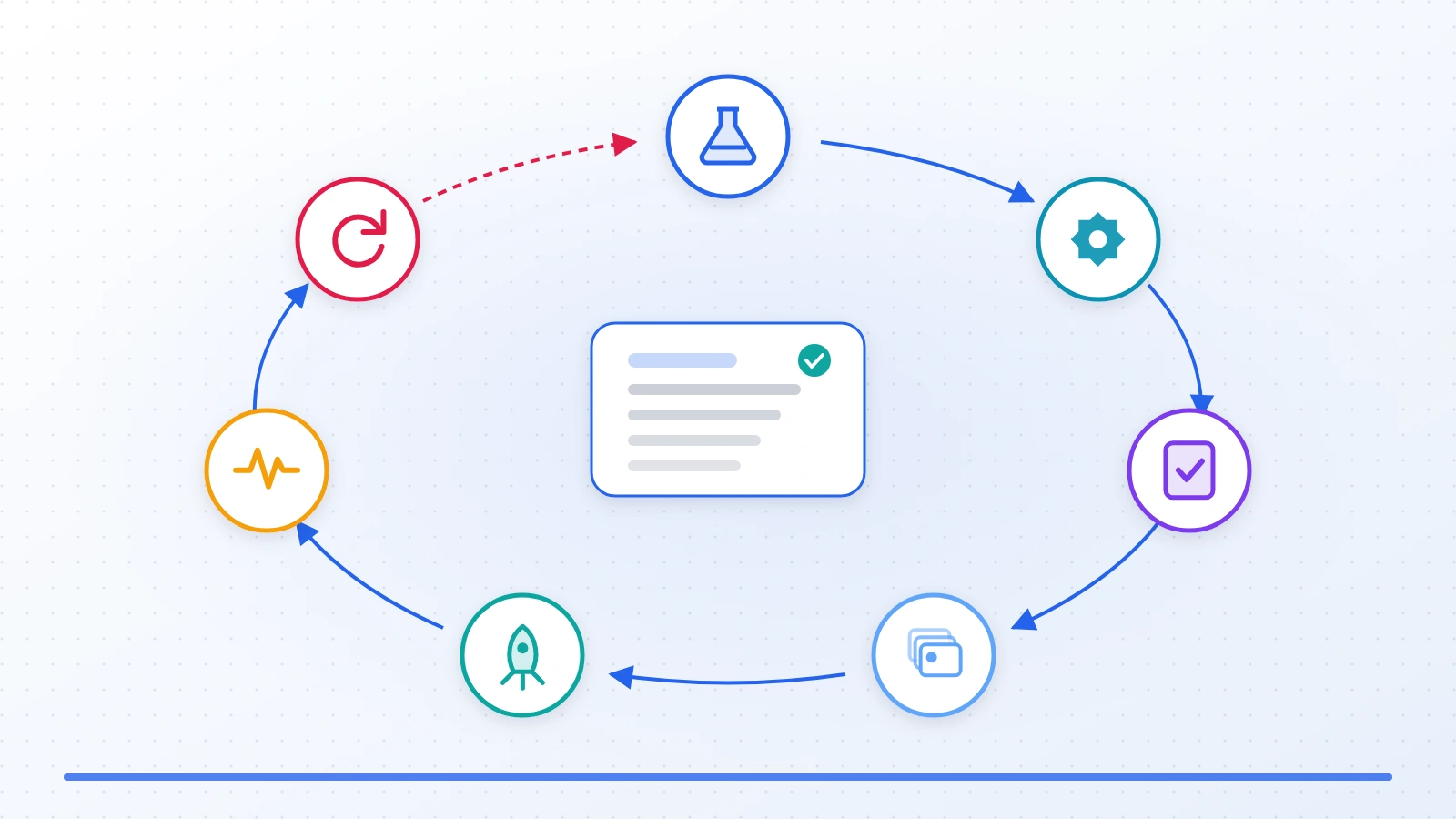
Seven stages that repeat for as long as a model is in service. Each one leaves a record the next can rely on.
Experiment · Train
Tracked From the First Run
Experiments and training runs log parameters, metrics and data versions, and training is a pipeline that can be rerun rather than a notebook session.
Validate · Register
Gated Before It Is Kept
Candidates are compared with the production model on holdout data and important segments, and only those that pass are registered for review.
Deploy · Monitor · Retrain
Operated After Release
Releases expose a model gradually, monitoring watches quality and drift, and retraining is triggered by evidence rather than habit.
ML CI/CD
Pipelines
Software pipelines test code. ML pipelines also have to test data and model behaviour, because either can change while the code stays the same.
Testing
Automated Tests
Unit tests for feature logic, schema and volume checks on training data, and fixture tests for edge cases such as unseen categories.
Training
Training Pipeline Validation
The training pipeline is the thing that is shipped. It is versioned, tested and able to produce an equivalent model on demand.
Gates
Promotion Gates
Holdout performance, comparison with the current model, segment metrics and serving constraints such as latency and payload size.
Automation
Deployment Automation
One immutable model package promoted through every environment, instead of a model rebuilt separately for each one.
Reproducibility
Reproducible Builds
Code commit, data snapshot, feature versions, environment and seed recorded for every build, so any version can be rebuilt and explained.
Recovery
Rollback
The previous model, its features and its schema kept servable, so reverting a release is a routine operation rather than an emergency.
The gates, release strategies and rollback design are set out in detail in our guide to ML CI/CD and model deployment pipelines.
Model Registry and
Experiment Tracking
Experiment tracking records how every candidate was produced. The registry records which candidates are trusted, where they run and who approved them.
Registry
Model Versions
Immutable versions under a registered model, each linked to the run, code and data that produced it.
Registry
Metadata and Lineage
Signatures, evaluation reports, feature definitions and model cards on every version, with upstream and downstream lineage.
Registry
Promotion and Approval
Lifecycle state from candidate to approved to production to archived, with the approver, date and evidence recorded on the version.
Registry
Production Association
Which version serves in which environment and region, since when, and which version it replaced, so rollback is a lookup.
Tracking
Parameters and Metrics
Hyperparameters, seeds and split settings logged with training, validation and segment metrics for every run, including failed ones.
Tracking
Datasets and Artifacts
Immutable dataset references, preprocessing objects, evaluation reports and model files stored with hashes against the run.
Tracking
Candidate Comparison
Runs compared across months on the same question, so a new candidate is judged against a real baseline rather than memory.
Lifecycle states, approval workflow and registry governance are covered in model registry and experiment tracking for production ML.
Feature Store
Engineering
Models are trained on features and scored on features. A feature store keeps those two moments consistent.
Definitions
Shared Feature Definitions
Each feature defined once, with owner, entity and time semantics, and reused across teams instead of rebuilt with slightly different logic.
Offline
Offline Feature Store
Full timestamped history for training sets, backfills and batch scoring.
Online
Online Feature Serving
Latest values per entity, retrieved in a single low-latency lookup on the prediction path.
Correctness
Point-in-Time Correctness
Training rows built only from values available at each prediction time, so models do not learn from information they will never see live.
Consistency
Training-Serving Consistency
One definition feeding both paths, with parity checks that catch skew before it reaches live decisions.
Fit
Right-Sized Adoption
Batch-only or single-team models may not need a feature store. We recommend one when features are shared or served online.
Offline and online stores, skew and point-in-time joins are explained in feature stores for production ML.
Model
Deployment
Serving patterns and release strategies chosen per model, according to latency needs and the cost of a wrong decision.
Batch
Batch Inference
Scheduled scoring for forecasts, segments and reports, written to the tables and systems that consume them.
Online
Online Inference
Low-latency endpoints behind APIs, sized for peak traffic and measured against an end-to-end latency budget.
Shadow
Shadow Deployment
A candidate scores live traffic without affecting decisions, exposing defects that only exist in production inputs.
Canary
Canary Releases
A small share of traffic with guardrails on latency and business metrics before exposure widens.
Blue-Green
Blue-Green Switches
Two environments with an instant switch between them, and the previous model kept warm as the rollback target.
Rollback
Tested Rollback
Rollback rehearsed before it is needed, including the features and schema the previous model depends on.
Model
Monitoring
Monitoring answers one question: is the model still making good decisions on the data it sees today?
Inputs
Input Drift
Changes in the distribution of live inputs compared with training data, tracked per feature and per important segment.
Outputs
Prediction Drift
Shifts in score and decision distributions that often appear before labelled outcomes are available.
Quality
Performance Degradation
Accuracy and business metrics measured once outcomes arrive, compared with the baseline the model was approved on.
Thresholds
Thresholds and Alerts
Thresholds set per model and severity, with alerts routed to a named owner and a runbook for each response.
Signals
Retraining Signals
Monitoring outcomes that feed retraining, rollback or human review, with the decision recorded against the model version.
Drift methods, thresholds and alert design are covered in AI model monitoring in production.
AI
Observability
Monitoring tells you a model's quality has changed. Observability tells you what the system around it was doing when it happened.
Signals
Logs, Metrics and Traces
Requests traced across gateway, feature retrieval, model server and downstream calls with one correlation ID.
Dependencies
Dependency Health
Feature stores, model servers, data feeds and external providers mapped and measured as dependencies of each model.
Latency
Latency and Capacity
Latency per stage against the end-to-end budget, so a slow lookup is not mistaken for a slow model.
Incidents
Incident Diagnosis
Versions of models, features and configuration recorded on every trace, so an incident can be tied to the change that caused it.
The telemetry, tracing and dependency practice behind this layer is described in AI observability for enterprise systems.
Continuous
Training
Retraining on a pipeline, with the same gates as the first release. Not every model needs it, and not every model should retrain automatically.
Triggers
Retraining Triggers
Measured degradation, drift, new labelled data or a known change in the business, each with a defined response.
Scheduled
Scheduled Retraining
A fixed cadence for models such as forecasts, where fresh data arrives on a predictable rhythm.
Event-Driven
Event-Driven Retraining
Retraining started by monitoring signals, after the training data itself has been validated so a broken feed does not retrain the model on the defect.
Gates
Validation Before Promotion
Retrained candidates face the same offline gates, comparison and release path as any new model.
Oversight
Human Approval
A named approver for high-impact models, with automated promotion reserved for models whose releases are low risk and fast to reverse.
MLOps
Architecture
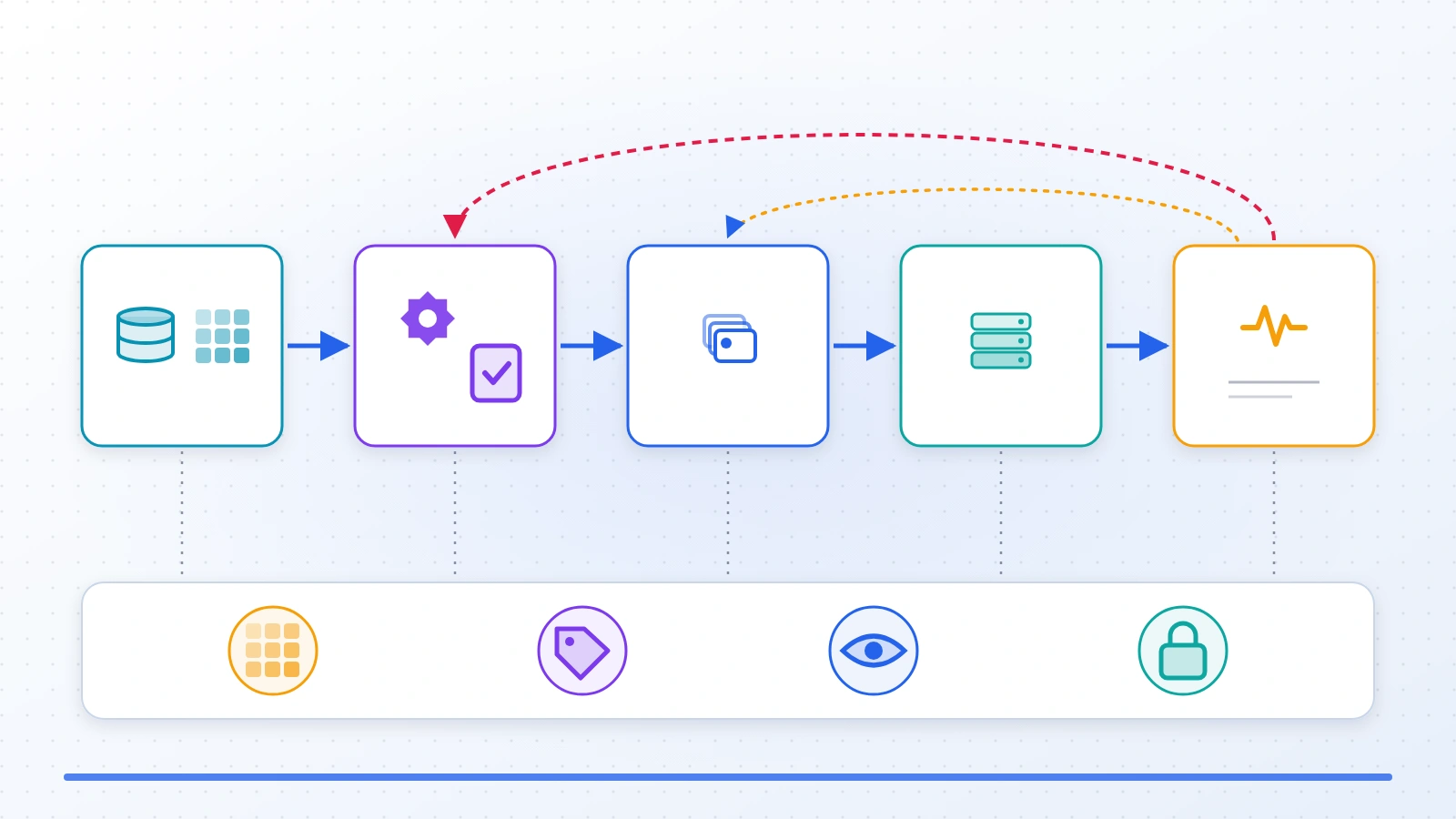
A reference flow for production ML. The supporting layers are what make each stage traceable and safe to change.
Layer
Feature Store
Consistent features for training and serving.
Layer
Metadata
Runs, versions, lineage and approvals in one record.
Layer
Observability
Telemetry across every stage and dependency.
Layer
Access Controls
Who can train, approve, deploy and read data.
MLOps, LLMOps and
Production Readiness
Where MLOps stops, what LLM systems add, and how MLOps turns a pilot into a service that can be operated.
MLOps
Model and Data Lifecycle
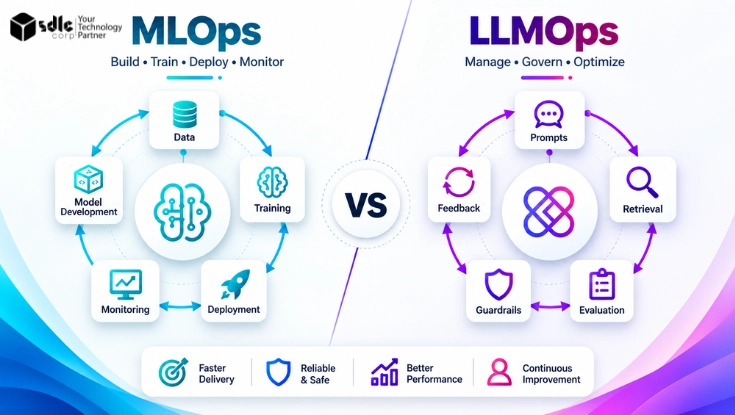
MLOps manages trained models and the data behind them: pipelines, registries, features, deployment, monitoring and retraining.
LLMOps
What LLM Systems Add
Prompts, retrieval indexes, model routing, open-ended evaluation and external provider dependencies become release artifacts too.
Readiness
From Pilot to Production
Reproducibility, representative evaluation and release controls, so a pilot's results can be repeated on live data.
Ownership
Operated, Not Just Delivered
Monitoring, rollback and named owners in place before scale, not added after the first incident.
For the differences in more depth, see MLOps vs LLMOps. For the readiness gates between a pilot and a production service, see how to move AI pilots into production.
MLOps
Technology Stack
Established open-source and cloud-native tools, chosen for the platform a client already operates.
Tracking runs and managing model versions.
Training and workflow orchestration.
Feature definitions, storage and serving.
Batch and online inference.
Telemetry and model quality signals.
Packaging and cloud platforms.
MLOps by
Use Case
What the lifecycle has to emphasise depends on the kind of model being operated.
Fraud & Risk
Fraud and Risk Models
Frequent monitoring, controlled rollout and version traceability for decisions that may need to be explained later.
Recommendation
Recommendation Systems
Feature consistency, online serving and experimentation on live traffic.
Forecasting
Forecasting Models
Scheduled retraining and validation against recent periods before each release.
Churn
Churn Models
Repeatable feature generation and monitoring as customer behaviour shifts.
Maintenance
Predictive Maintenance
Lifecycle management around sensor and operational data that changes as equipment and processes change.
Platforms
Enterprise ML Platforms
Shared pipelines, registries and deployment controls used by many teams.
MLOps
in Practice
Lifecycle practices from published SDLC Corp engagements, described as delivered.
iGaming · Streaming Inference
Real-Time Fraud Detection
Graph models served on a live event stream from an on-premise Kubernetes GPU cluster, released through a shadow-mode phase before full deployment, with an offline retraining pipeline that refreshes and redeploys the model from disputes and recent play data.
Read the case studyManufacturing · Edge Deployment
Edge Defect Detection
A vision model compiled for edge inference beside the paint line, with a weekly on-site retraining cycle on newly flagged frames to absorb lighting and colour drift, run by plant technicians trained in the procedure.
Read the case studyLogistics · Human in the Loop
Freight Operations Intelligence
An AI workflow with human approval on exceptions, where approved corrections and confirmed mappings are retained and reused, so the system improves from validated outcomes rather than unreviewed output.
Read the case studyEngineering
at Scale.
The delivery capacity behind our engineering work.
Our MLOps
Process
Seven stages from an honest view of current practice to lifecycle controls that keep improving.
Assess
Review how models are trained, released and monitored today, and where lineage, gates or rollback are missing.
Standardize
Agree lifecycle states, evidence requirements and ownership per model risk tier.
Automate
Build training pipelines, tracking, registry integration and packaging on your platform.
Validate
Add data checks, model gates and segment comparisons that a candidate must pass before release.
Deploy
Introduce shadow, canary or blue-green release paths with rollback rehearsed.
Monitor
Instrument drift, quality and system telemetry, with alerts routed to named owners.
Improve
Use incidents and monitoring outcomes to tighten gates, retraining triggers and runbooks.
Why Choose SDLC Corp
for MLOps
One team for the engineering behind production ML, from data integration to the practice of running models over time.
Engineering
ML Engineering
Engineers who build training pipelines, packaging and serving, not only models.
Production
Production Deployment
Release strategies, rollback and verification designed before the first deployment.
Integration
Data Integration
Experience connecting models to the ERP, CRM and operational systems that supply their data and consume their decisions.
Automation
Lifecycle Automation
Tracking, registration, promotion and retraining automated where it reduces risk, with approval kept where it matters.
Operations
Monitoring Built In
Model quality and system telemetry instrumented from the start, not added after an incident.
Flexibility
Cloud and Platform Flexibility
Delivery on AWS, Azure, Google Cloud, Databricks or Kubernetes, using the platform you already run.
Security, Privacy and Responsible AI
Applicability depends on geography, industry, the data processed, the deployment model, the use case and your own legal and regulatory obligations.
Services Related to
MLOps
Practices that sit either side of MLOps.
ML
Machine Learning Development
Predictive, forecasting, recommendation and anomaly detection models.
Explore Machine Learning DevelopmentData
Data Engineering Services
Pipelines, orchestration and data quality for the data models depend on.
Explore Data Engineering ServicesIntegration
AI Integration & Implementation
Putting AI capabilities into ERP, CRM, applications and workflows.
Explore AI Integration & ImplementationManaged
AI as a Service
Managed AI endpoints, hosted inference and private AI environments.
Explore AI as a ServiceEnterprise
Enterprise AI Development
Enterprise AI systems designed around governance, security and scale.
Explore Enterprise AI DevelopmentMLOps
Resources
Engineering guides on the pipelines, registries, features and monitoring behind production ML.
 Comparison
MLOps vs LLMOps: What Enterprises Need
What stays the same, what LLM systems add, and when an organisation needs both.
Read Article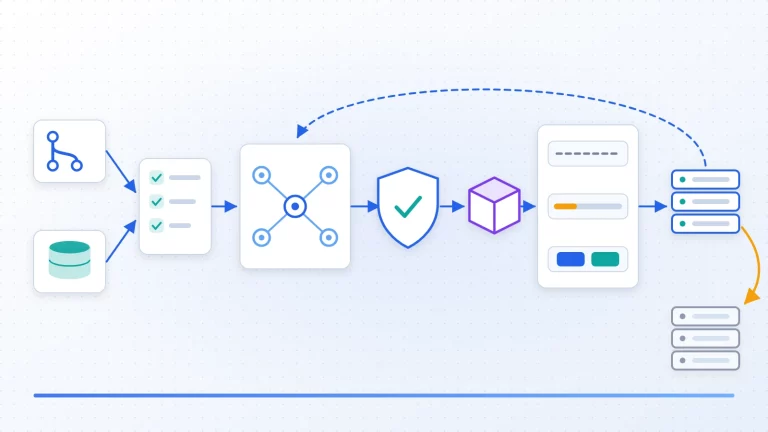 Deployment
ML CI/CD and Model Deployment Pipelines
Training pipelines, validation gates, shadow and canary releases, and rollback that works.
Read Article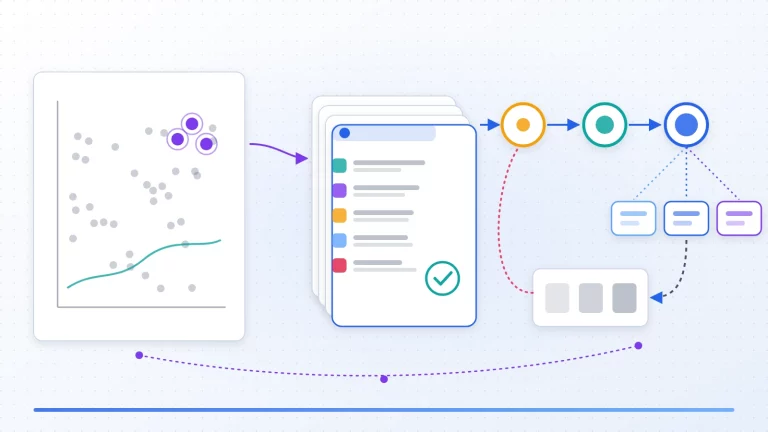 Lifecycle
Model Registry and Experiment Tracking for Production ML
Runs, versions, lineage, approval and the lifecycle from experiment to archive.
Read Article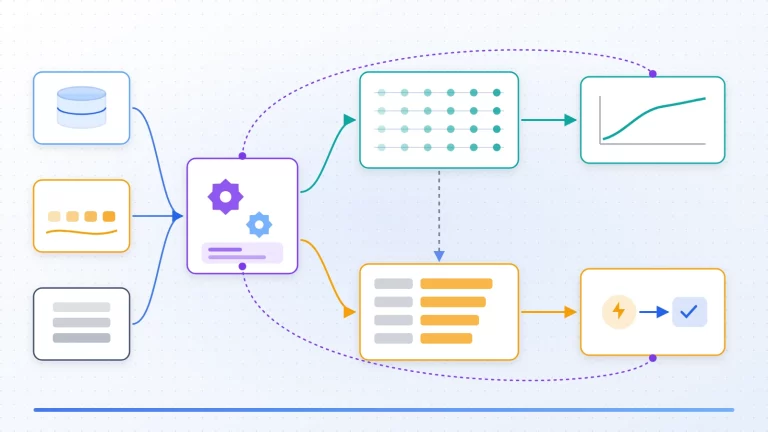 Features
Feature Stores for Production ML
Offline and online stores, training-serving skew and point-in-time correctness.
Read Article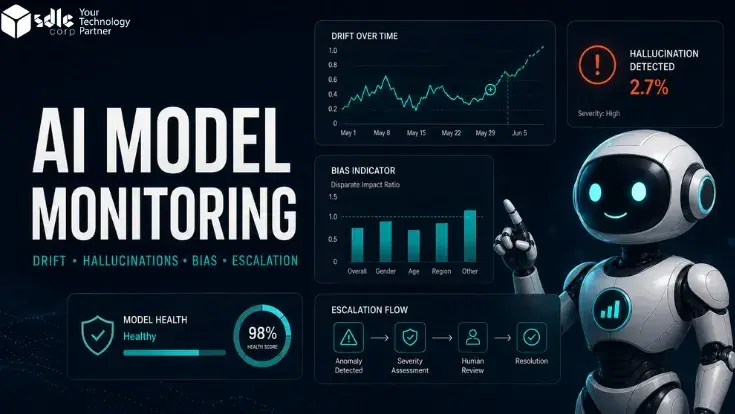 Monitoring
AI Model Monitoring in Production: Drift, Bias & Alerts
Drift, quality signals, thresholds and what should happen after an alert.
Read ArticleOperationalize
Machine Learning
Build repeatable pipelines for training, deployment, monitoring and model lifecycle management.
Tell us which models you run, where they are deployed and how they are released today, and we will come back with an assessment and a delivery plan.
Contact Us
Share a few details about your project, and we’ll get back to you soon.
Let's Talk About Your Project
- Free Consultation
- 24/7 Experts Support
- On-Time Delivery
- sales@sdlccorp.com
- +1(510-630-6507)