ERP for Wholesale Distribution

ERP Software for Wholesale Distribution

SDLC Corp provides ERP for wholesale distribution that connects inventory, warehouses, purchasing, orders, customer pricing, finance, and fulfillment in one system. Our distribution ERP solutions improve stock visibility, accelerate order processing, and provide better control over margins.

Multi-warehouse inventory
WMS and EDI integration
Landed cost and margin tracking
B2B ordering workflows
Request a Proposal

Trusted by Businesses Building Wholesale Distribution ERP Systems


KISS USA brand logo
Zilch brand logo
MAIR brand logo
CETU brand logo
Arbor Financial Group brand logo
Distribution ERP Modules

Core Modules for Wholesale Distribution

A distribution ERP should support the workflows that affect stock availability, order accuracy, customer service, and profitability.

Inventory Management for Distributors

Track available, reserved, allocated, and in-transit inventory. Manage lots, serial numbers, expiry dates, transfers, and stock counts using GS1 standards.

Multi-Warehouse Inventory Management

View stock across warehouses and manage transfers, replenishment, consigned inventory, and order routing.

Warehouse Management

Manage receiving, putaway, barcode scanning, picking, packing, cycle counts, and dispatch through connected workflows.

Sales Order Management

Handle quotations, orders, allocations, backorders, returns, credit checks, and delivery commitments in one workflow.

Purchasing and Supplier Management

Manage purchase orders, approvals, receipts, supplier prices, lead times, and delivery performance.

Demand Planning and Replenishment

Plan purchasing using sales history, reorder points, safety stock, seasonality, and supplier lead times.

Pricing and Rebate Management

Apply contract pricing, quantity discounts, promotions, customer price lists, rebates, and chargebacks.

Landed Cost Management

Allocate freight, duties, insurance, taxes, and handling costs using recognized Incoterms rules for clearer margin reporting.

Flexible Fulfillment Workflows

Support drop shipping, backorders, split shipments, cross-docking, partial fulfillment, and product kitting.

Financial Management and Reporting

Connect receivables, payables, tax, inventory valuation, and reporting with orders and warehouse transactions.

Distribution ERP Services

ERP Services for Distribution Businesses

SDLC Corp supports distributors adopting a first ERP, replacing legacy software, expanding an existing system, or improving an implementation that no longer meets operational needs.

ERP Consulting and Integration

Assess workflows, define requirements, compare platforms, and plan implementation through ERP consulting services, while connecting ERP with WMS, EDI, ecommerce, CRM, accounting, shipping, and BI systems.

ERP Implementation

Configure modules, roles, pricing, workflows, reports, and approvals during ERP implementation . We also manage testing, training, deployment, and launch support.

ERP Migration

Move customers, suppliers, products, pricing, inventory, orders, and financial records from legacy systems through structured mapping, validation, reconciliation, and testing.

Custom ERP Development

Develop custom ERP modules, workflows, dashboards, portals, reports, approval rules, and integrations when standard functionality does not fully support your distribution operations.

ERP Support and Optimization

Improve system performance, reporting, integrations, automation, workflows, and user adoption through structured post-deployment support and ongoing ERP optimization.

ERP Platform Selection

Platforms We Assess and Implement

We compare ERP platforms based on your warehouse structure, order volume, integrations, reporting needs, budget, and growth plans.

Tailored

Tailored ERP Solutions

A tailored ERP may suit distributors with complex pricing, kitting, fulfillment, or reporting workflows that standard platforms cannot support.

Enterprise

SAP

Designed for large distributors managing multiple entities, currencies, supply chains, and complex financial or regulatory requirements.

Microsoft

Microsoft Dynamics 365 Business Central

A strong option for distributors using Microsoft 365, Azure, Power Platform, and Power BI across finance and operations.

Cloud ERP

Oracle NetSuite

A cloud ERP for mid-market distributors that need financial management, demand planning, landed costs, and multi-entity consolidation.

Open Source

ERPNext

An open-source ERP for smaller distributors that need inventory, purchasing, sales, accounting, and flexible development options.

Business Suite

Zoho

A connected suite for smaller distributors with straightforward inventory, order management, accounting, and CRM requirements.

Connected Business Systems

Connect Your ERP With Business Systems

Connect warehouse, sales, finance, ecommerce, and logistics systems with one distribution ERP platform.

WMS and Warehouse Systems

Synchronize receiving, inventory, picking, packing, cycle counts, and dispatch.

Ecommerce Platforms

Connect Shopify, WooCommerce, Magento, marketplaces, and B2B portals.

CRM Systems

Synchronize customer records, quotations, contract pricing, orders, and sales activity.

Accounting and Payments

Connect accounting, payment, banking, and tax systems to reduce duplicate work.

Shipping, TMS, and 3PL

Connect carriers and logistics providers for rates, labels, tracking, and delivery updates.

Business Intelligence Tools

Analyze sales, inventory, purchasing, warehouse performance, and margins.

Technology Stack

Technology Stack for ERP Delivery

We use technologies that support distribution ERP workflows, including inventory, warehouses, purchasing, sales orders, ecommerce channels, payments, finance, reporting, integrations, and cloud deployment.

ERP Cost Planning

ERP Cost for Wholesale Distribution

Review estimated ERP implementation costs based on business size, operational requirements, integrations, data migration, customization, and overall project complexity.

Business SizeEstimated CostTypical Project Scope
Small Distribution Business
$15,000 to $30,000 Core inventory, purchasing, sales, finance, reporting, basic migration, and limited integrations.
Mid-Size Distribution Business
$35,000 to $45,000 Multiple workflows, broader data migration, operational reporting, user roles, and third-party integrations.
Large Distribution Enterprise
$50,000+ Multi-warehouse or multi-entity operations, advanced integrations, custom workflows, complex migration, automation, and enterprise reporting.

These figures are planning estimates based on our ERP cost guide rather than fixed quotations. Final pricing depends on the selected platform, modules, users, integrations, data condition, customization, deployment model, training, and post-launch support.

From Discovery to Deployment

Our Wholesale Distribution ERP Implementation Process

We follow a structured process to assess operations, define the ERP scope, configure workflows, migrate data, test the system, and prepare distribution teams for launch.

2 to 4 Weeks

Discovery and Assessment

Review systems, warehouses, inventory, orders, pricing, purchasing, finance, users, and business goals.

2 to 3 Weeks

Solution Planning

Define modules, workflows, integrations, permissions, reports, delivery phases, and success criteria.

4 to 12 Weeks

ERP Configuration

Configure inventory, purchasing, sales, pricing, approvals, fulfillment, finance, and reporting workflows.

3 to 8 Weeks

Integration and Migration

Connect external systems and migrate validated product, customer, supplier, pricing, inventory, and financial data.

3 to 6 Weeks

Testing and Training

Test workflows, reports, permissions, integrations, exception cases, and train users for daily operations.

2 Weeks + Support

Deployment and Support

Launch the ERP, monitor performance, resolve issues, support users, and optimize workflows after deployment.

ERP Selection Guide

How to Choose the Right ERP System

Evaluate each ERP against your warehouse structure, inventory controls, pricing rules, integrations, growth plans, and implementation requirements.

Consideration 01

Business and Warehouse Complexity

Review warehouses, products, users, order volume, sales channels, fulfillment methods, and operating entities.

Consideration 02

Inventory Requirements

Confirm support for lots, batches, serial numbers, expiry dates, stock transfers, consignment, and real-time availability.

Consideration 03

Pricing and Order Workflows

Verify contract pricing, volume breaks, promotions, approvals, order exceptions, and pricing precedence.

Consideration 04

Integration Requirements

Confirm connections with WMS, EDI, ecommerce, CRM, accounting, payments, shipping, 3PL, and reporting platforms.

Consideration 05

Scalability and Deployment

Ensure the system can support more warehouses, companies, users, currencies, products, channels, and transaction volume.

Consideration 06

Implementation and Support

Review migration planning, testing, user training, rollout management, distribution experience, and post-launch support.

Select an ERP that supports current operations without restricting future warehouse, channel, and business growth.

Why Choose SDLC Corp

Why Distributors Choose SDLC Corp

We combine ERP consulting, implementation, integration, automation, cloud delivery, and ongoing support through one experienced team.

Wholesale distribution ERP and warehouse management solution
ERP delivery aligned with real wholesale and warehouse workflows
Distribution-Focused Delivery

ERP Planning Based on How Your Distribution Business Operates

We review inventory movement, warehouse processes, customer pricing, purchasing, fulfillment, finance, and integrations before defining the platform, modules, and implementation plan.

Workflow assessment
Platform evaluation
Integration planning
Structured implementation
Discuss Your ERP Requirements

Distribution Workflow Expertise

ERP planning aligned with inventory, purchasing, pricing, order processing, fulfillment, and finance.

Vendor-Neutral Guidance

Platform recommendations based on operational fit, budget, technical requirements, and growth plans.

End-to-End ERP Services

Consulting, implementation, migration, integration, configuration, training, and support through one delivery team.

Structured Delivery

Defined stages for discovery, planning, migration, testing, training, deployment, and stabilization.

ERP Platform Expertise

Implementation and development support for configurable, integrated, and tailored distribution ERP workflows.

Proven Business Delivery

10+ years of experience, 500+ completed projects, and 96% client retention across the broader delivery portfolio.

Ongoing ERP Support

Continued maintenance, integrations, reporting, updates, issue resolution, and workflow improvements after launch.

Distribution ERP Case Studies

Distribution ERP Projects and Results

Explore projects where SDLC Corp connected inventory, wholesale orders, customers, sales channels, payments, and back-office operations through ERP and system integrations.

Footwear Distribution ERP

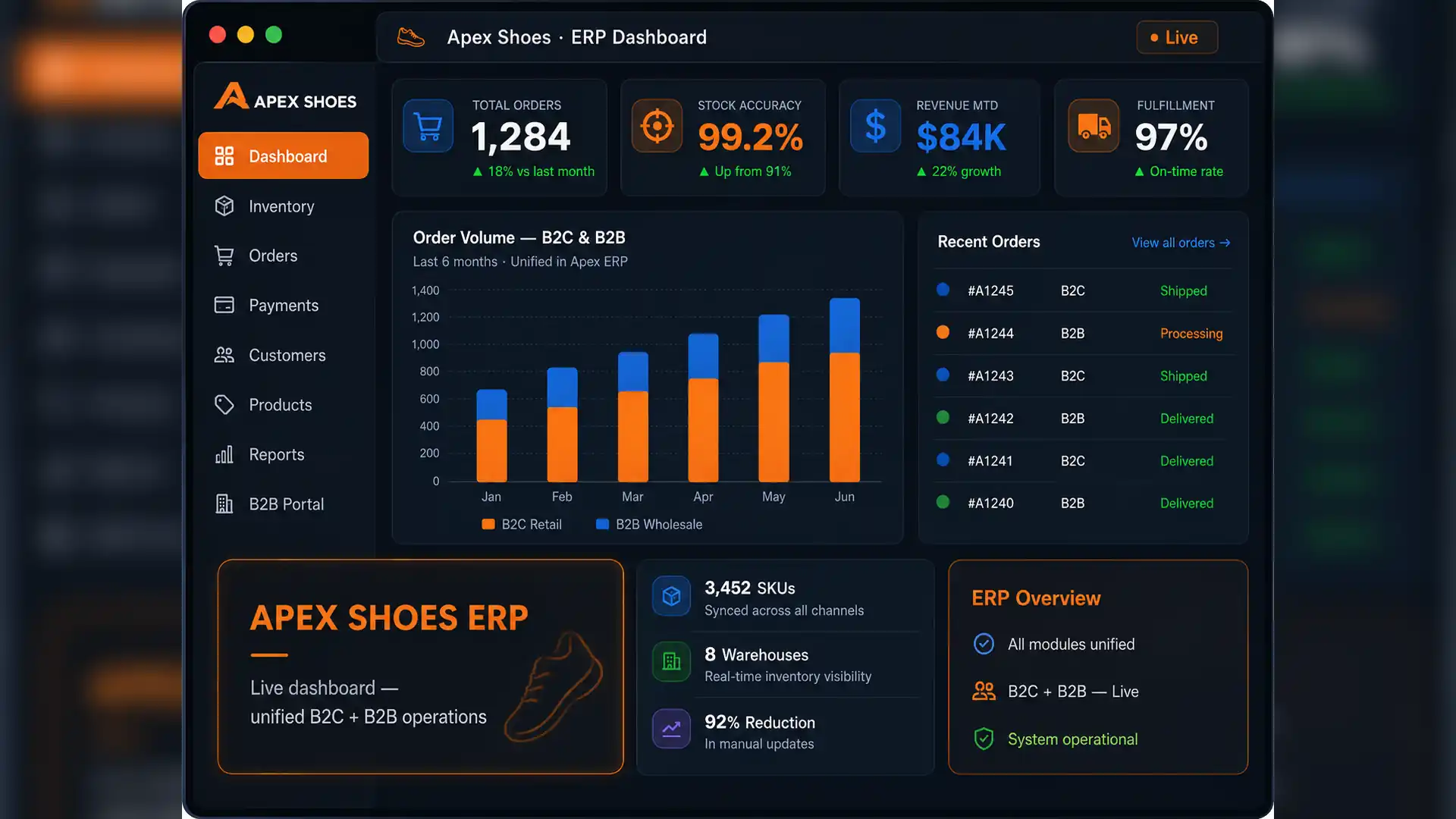
Apex Shoes Unified Wholesale and Retail Operations With ERP

SDLC Corp helped Apex Shoes centralize catalogue, inventory, orders, payments, and customer records across wholesale and retail operations.

  • Wholesale and retail sales workflows connected
  • Inventory, orders, payments, and customer data unified
  • ERP configured around footwear distribution operations
2 Sales channels
4 Core modules
1 Unified ERP
Read Case Study
Apex Shoes distribution ERP dashboard showing wholesale, retail, inventory, and order operations
Distribution Channel Integration

Shopify ERP Connector for Inventory and Wholesale Order Sync

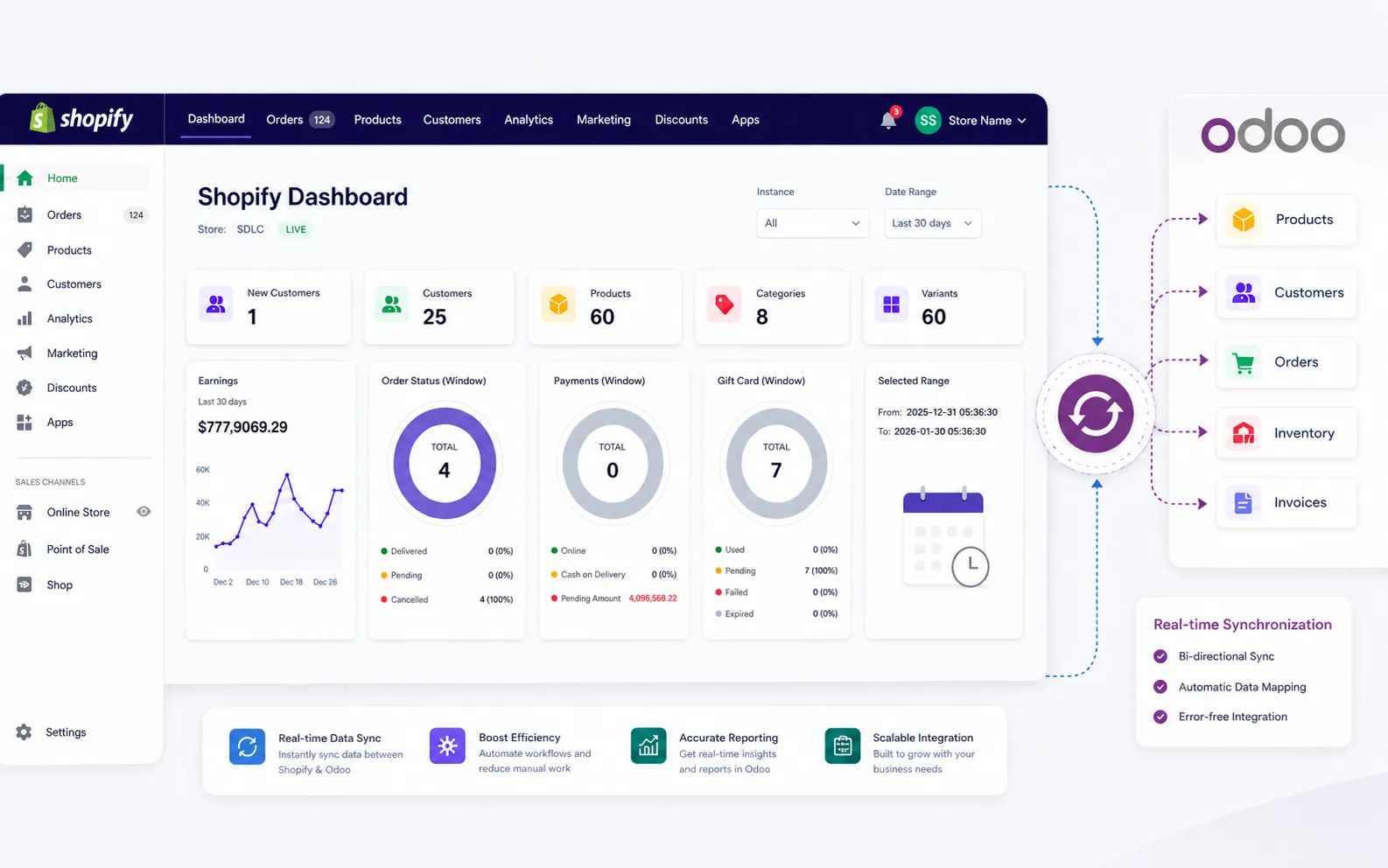
SDLC Corp connected Shopify with the ERP system to synchronize products, customers, orders, inventory, invoices, and operational records.

  • Shopify orders transferred into ERP workflows
  • Products, customers, and stock records synchronized
  • Integration logs added for transaction monitoring
Shopify Order channel
ERP Business platform
4 Core sync areas
Read Case Study
Shopify ERP integration dashboard showing wholesale orders, customers, and inventory synchronization
Ecommerce Distribution Integration

Magento 2 Connector for Distribution ERP Synchronization

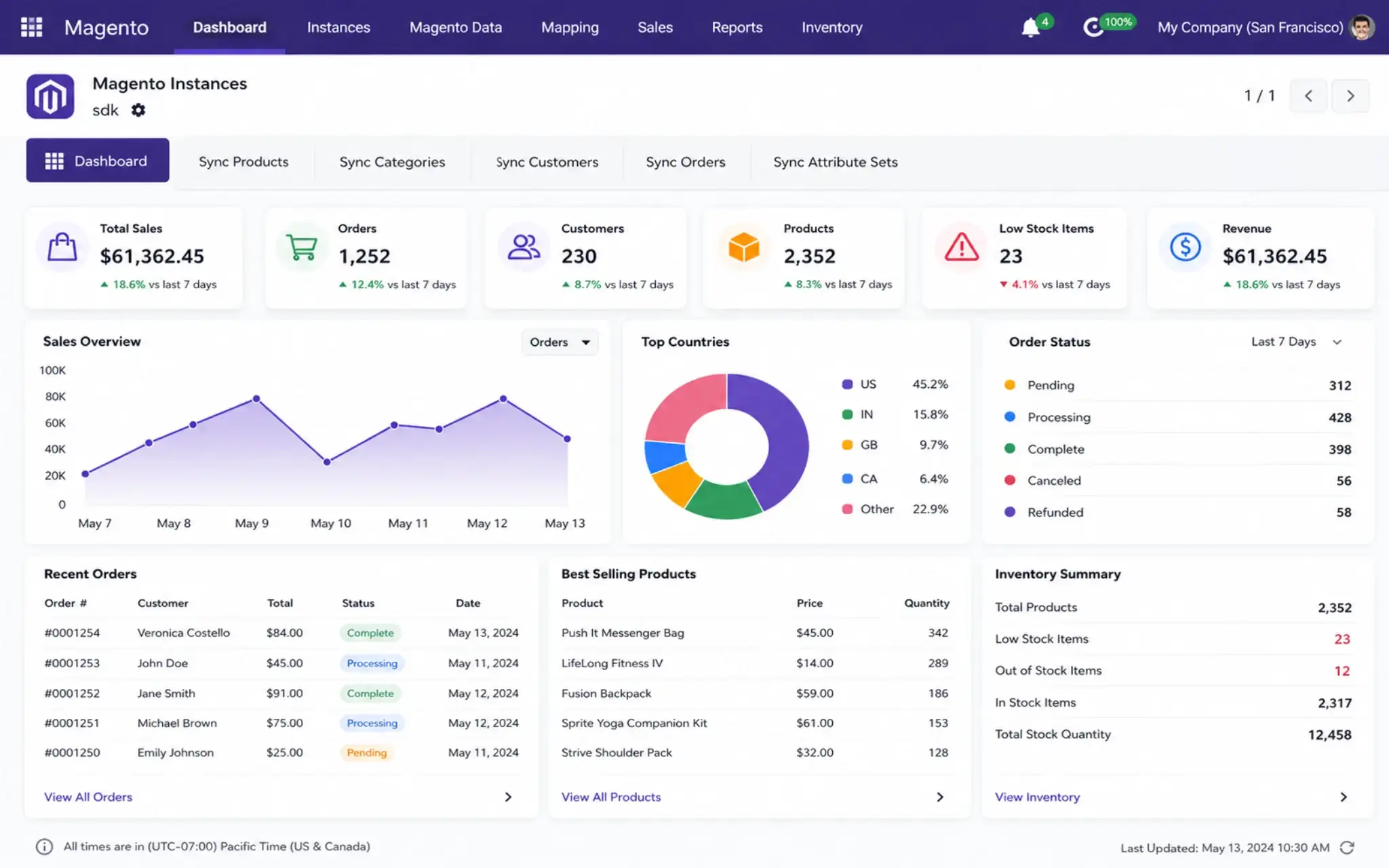
SDLC Corp connected Magento 2 with the ERP system to synchronize products, orders, customers, invoices, shipments, and inventory data.

  • Magento 2 connected with the central ERP system
  • Orders, customers, invoices, and stock records mapped
  • Two-way synchronization rules configured
Magento 2 Sales channel
ERP Business platform
2-Way Data synchronization
Read Case Study
Magento 2 distribution ERP connector dashboard showing orders, inventory, invoices, and shipments
Guides & Insights

Practical ERP Guides and Insights

Explore practical ERP resources for wholesale distributors covering ERP fundamentals, implementation planning, CRM integration, inventory control, order workflows, and connected business operations.
Client Stories

What Our Clients Say

Retail and ecommerce businesses need systems that reduce manual work, connect operations, and give teams better control over inventory, orders, finance, and reporting.

Client Story
Eric Leist CEO, Edgerton Strategies
Client Story
Doug Schmidt CEO, Roofaid USA
Client Story
Reyzal Razmi All Star Influencers
Verified ERP Review on Clutch

Overall, we were very satisfied with the engagement.

View all customer stories
Distribution ERP Development

Build a Connected Distribution Operation

Start with a workflow review. We will tell you whether you need a platform build or a fully custom one. And roughly what it costs, before you commit to anything.

Discuss Your ERP Project

Warehouse operations connected through distribution ERP software
Connected Distribution Operations Inventory, warehouses, orders, and fulfillment
Distribution ERP FAQs

Frequently Asked Questions

What is distribution ERP software?

Distribution ERP software connects inventory, warehouses, purchasing, sales orders, suppliers, customer pricing, finance, and fulfillment through one system. It gives teams access to consistent operational and financial information.

What is the difference between ERP and WMS?

A WMS manages warehouse activities such as receiving, putaway, picking, packing, cycle counting, and dispatch. ERP manages broader operations, including purchasing, orders, pricing, inventory, suppliers, finance, and reporting.

How much does distribution ERP cost?

A focused implementation may cost $15,000 to $50,000. Mid-market projects may range from $50,000 to $150,000, while complex multi-warehouse or multi-entity programs may exceed $250,000. Final cost depends on modules, users, integrations, migration, and workflow complexity.

How long does distribution ERP implementation take?

Most distribution ERP projects take approximately 16 to 40 weeks. A focused implementation may require 16 to 20 weeks, while a multi-warehouse rollout with several integrations may require 28 to 40 weeks or longer.

Which ERP is best for wholesale distribution?

The right ERP depends on warehouse count, order volume, pricing complexity, required modules, integrations, user needs, deployment preferences, scalability, and budget. Platform selection should follow a structured operational assessment.

Can distribution ERP manage multiple warehouses?

Yes. Distribution ERP can track available, reserved, in-transit, and consigned inventory by location. It can also support stock transfers, replenishment, warehouse-level availability, and order routing.

Does distribution ERP support customer-specific pricing?

Yes. It can apply contract pricing, customer price lists, quantity discounts, promotional rates, rebates, and account-level pricing rules automatically during order entry.

Can distribution ERP integrate with EDI systems?

Yes. ERP can exchange purchase orders, acknowledgements, advance shipping notices, invoices, and inventory updates with customers, suppliers, retailers, and other trading partners.

Can legacy ERP data be migrated?

Yes. Products, customers, suppliers, pricing, inventory, open orders, and financial records can be migrated from legacy ERP platforms, accounting systems, and spreadsheets through structured mapping, validation, and reconciliation.

Can distribution ERP integrate with ecommerce, warehouse, and shipping systems?

Yes. Distribution ERP can connect with ecommerce platforms, B2B portals, WMS, TMS, carriers, marketplaces, and 3PL providers to synchronize products, orders, inventory, pricing, fulfillment, labels, tracking, and delivery updates.

Let's Talk About Your Product

Get expert guidance on architecture, scope, timelines, and delivery approach so you can move forward with confidence.

What happens next?