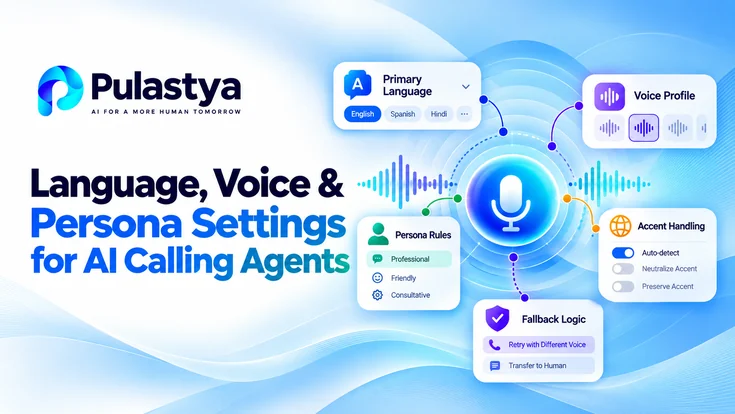
Configure language, voice, and persona settings to deliver predictable, compliant conversations when deploying a multilingual AI calling agent.
Prioritize primary campaign language, operational fallback, and a clarity-first voice persona so speech recognition and text-to-speech align with your CX objectives, regulatory constraints, and measurable success metrics.
- Align language to campaign goals Select primary and secondary languages based on customer data, compliance zones, and measurable outcomes such as ASR accuracy or conversion rate.
- Prioritize clarity over character Choose a voice and persona that optimize intelligibility and consent clarity while avoiding demographic or identity claims.
- Operationalize localization and fallbacks Define accent handling, prompt variants, and deterministic fallback sequences to maintain continuity and reduce failed-contact rates.
Begin with a campaign-level language strategy that maps customer segments to operational controls: primary language, acceptable secondary languages, and explicit fallback routing. Define measurable success criteria, such as understanding rate, intent detection accuracy, and escalation triggers, so configuration choices are tied to performance and risk metrics.
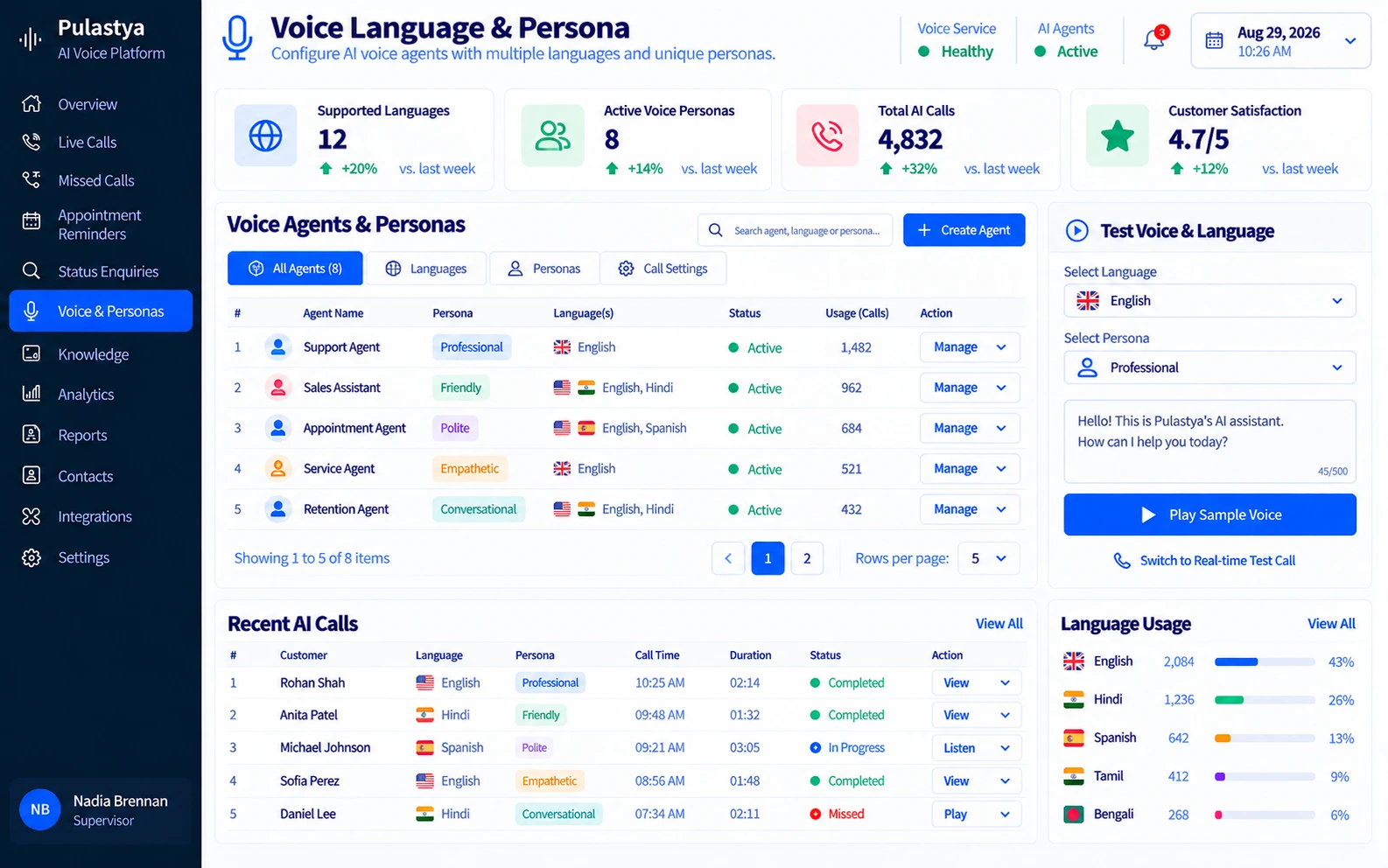
Treat voice and persona as conversation tooling, not brand personification. Select tones and speaking styles that reduce misrecognition and lower friction. Document allowed persona behaviors and prohibited identity claims to maintain legal compliance and consistent stakeholder review.
Choosing Language for the Caller and Campaign
Define campaign scope first: region, regulatory constraints, and the transactional intent of calls. Map those inputs to a primary language choice and a list of allowed secondary languages. Keep selections explicit in campaign metadata so runtime routing remains deterministic.
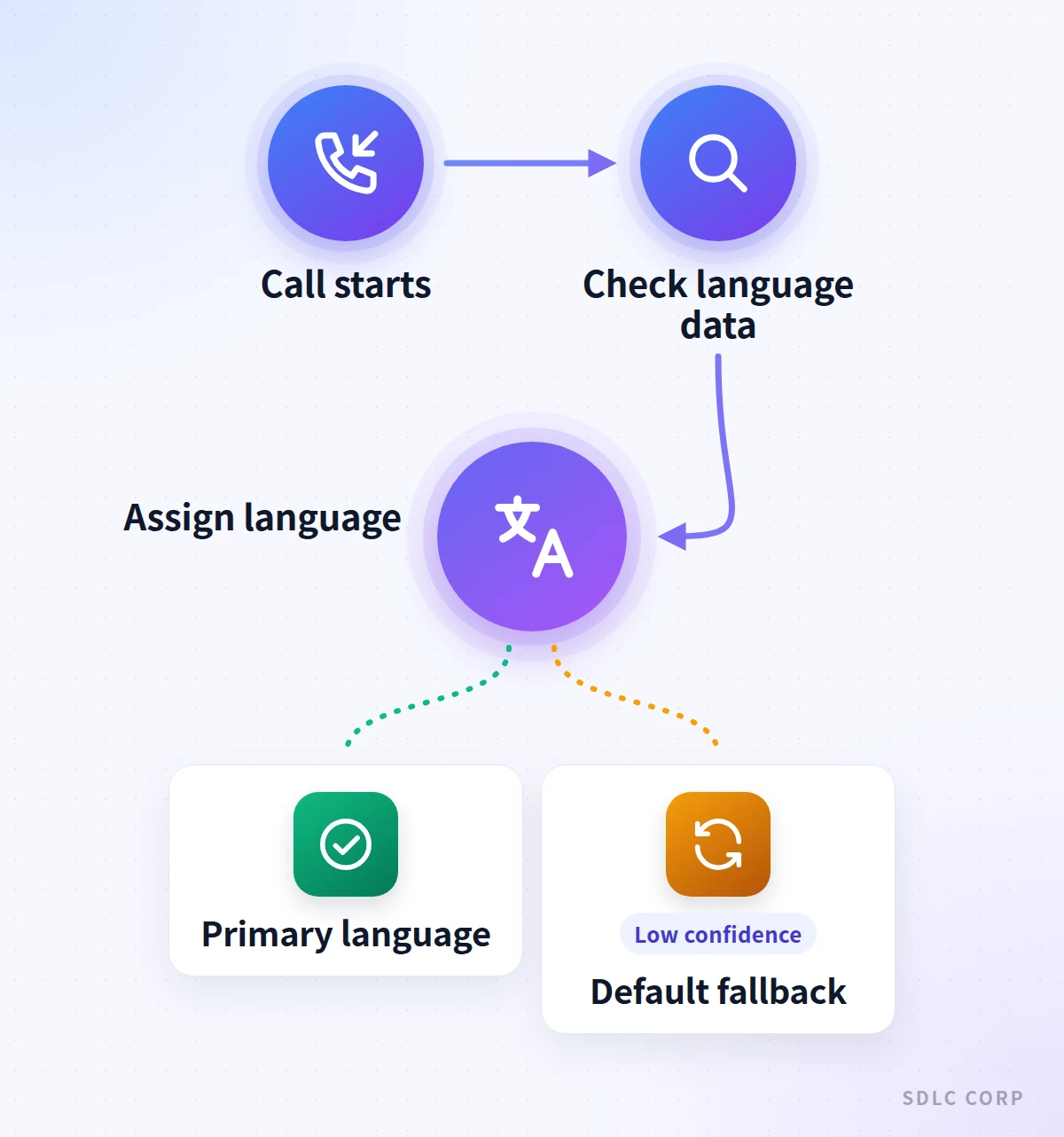
Use customer data to validate language coverage. Prefer verified consent language and recent interaction logs over inferred preferences. When data lacks clarity, route to a conservative default language and include a language-selection prompt early in the call flow.
Set measurable thresholds tied to language choice: minimum speech recognition confidence, permitted retry limits, and escalation criteria. These thresholds should be part of the campaign runbook and integrated into monitoring dashboards for rapid iteration.
Language assignment checklist. Work through these steps in order when configuring a campaign: 1) Confirm regulatory language obligations; 2) Validate consent records; 3) Check ASR/TTS support for chosen language and locale; 4) Define explicit fallbacks; 5) Record performance thresholds.
- Map language to regulatory zones and required disclosures before launch.
- Prefer explicit consent language entries rather than inferred preferences.
- Include language detection confidence thresholds in monitoring.
- Store language decisions as immutable campaign metadata for audits.
Make language a first-class campaign control with audit-ready metadata and performance thresholds.
Voice and Persona Choices That Support Clear Conversations
Select TTS voice profiles that maximize phonetic clarity for the campaign language and target accents. Favor neutral, slower speaking rates where accuracy matters. Document the voice model, rate, and punctuation settings used for every prompt family to standardize behavior.
Design persona behavior as a bounded script: opening, verification, primary messaging, and escalation. Each behavior must map to an expected range of responses and next actions. Avoid open-ended character traits that encourage unscripted language or identity attribution.
When choosing persona attributes, focus on conversation engineering goals: reduce question ambiguity, shorten resolution time, and minimize repeated prompts. Use short, plain-language sentences and clear confirmations to improve ASR performance and reduce misinterpretation.
Compare voice trade-offs. Higher naturalness can increase user engagement but may reduce ASR alignment in noisy channels. A more neutral voice can improve recognition accuracy and regulatory clarity; balance trade-offs against campaign KPIs and channel characteristics.
- Use neutral voice models for compliance and clarity-sensitive calls.
- Version persona scripts and treat voice changes as controlled releases.
- Standardize SSML and pronunciation dictionaries for critical terms.
- Limit persona scope to scripted behaviors and defined escalation paths.
Design persona as constrained conversation tooling, not a character extension of the brand.
Configuration guide
Language, Voice and Persona Settings for an AI Calling Agent
| Setting | What to configure | Why it matters |
|---|---|---|
| Primary language | Set from consent records, regulatory needs and recent interaction history | Keeps routing deterministic and required disclosures in the right language |
| Unclear language data | Conservative default plus an early language-selection prompt | Avoids misrouting when records are missing or conflict |
| Voice profile | Clear TTS voice, slower rate, pronunciation dictionary for critical terms | Clarity cuts repeated prompts and misheard confirmations |
| Persona | Speaking rate, vocabulary level, confirmation style, allowed empathy phrases | Defines behavior without demographic or identity claims |
| Low recognition confidence | Simplify the prompt, confirm language, offer a human, then close clearly | A fixed, logged sequence keeps calls short and reviewable |
| Disclosure | State the call is automated and offer a person on request | Once a person is requested, the transfer is not left to chance |
Each setting is defined as observable behavior with a logged fallback, which is what makes language and persona choices testable and auditable.
Localization, Accent and Fallback Considerations
Localize prompts beyond translation: adapt colloquialisms, time/date formats, numeric formatting, and regulatory phrasing. Real localization improves comprehension and reduces ASR errors. Track localization variants in prompt libraries so updates propagate consistently.
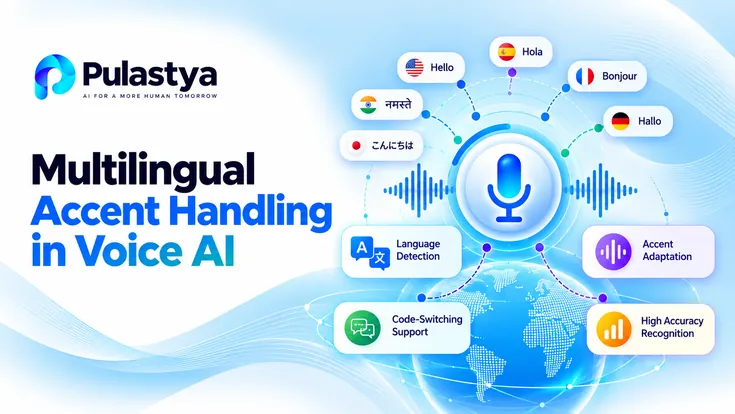
Plan accent handling explicitly. If target recipients use a range of accents within a language, evaluate ASR models with representative audio and select models or configurations that maximize overall recognition across accents.
Define deterministic fallback sequences when recognition confidence falls below thresholds. Typical sequences: repeat prompt with simplified wording, ask for language confirmation, offer transfer to a human agent, or terminate with a clear next-step message. Keep fallbacks minimal to reduce call time.
Practical scenario: An enterprise runs appointment reminders across a multilingual region. Configure primary language per contact record, use a conservative ASR confidence threshold, and a fallback that repeats the reminder in a simplified phrasing then offers to schedule a callback. Log each fallback for performance review.
- Localize formats and regulatory phrasing, not just literal translations.
- Validate ASR models with representative accent samples before selection.
- Fallback sequence should be deterministic and logged per call.
- Use concise vs extended prompt variants based on ASR confidence.
Make fallbacks deterministic and instrumented so every deviation is logged and reviewable.
Assigning Language Behavior Without Making Identity Claims
Avoid persona descriptions that assert demographic identity or biological attributes. Instead, describe persona behavior in operational terms: speaking rate, vocabulary level, explicit confirmation style, and permitted empathetic phrases. These parameters guide engineering without identity claims.
Specify allowed and prohibited persona actions in a configuration policy. Allowed items: simplified explanations, read-backs of critical information, and polite confirmations. Prohibited items: statements claiming age, ethnicity, gender, or any unverifiable personal attributes.
Design disclosure language to clarify the call is automated and to provide a direct option to speak with a human. Use neutral phrasing and make the transfer to a human agent deterministic once requested or when escalation criteria are met.
Include an audit checklist for persona compliance. Checklist items: persona policy reviewed by legal, persona scripts scanned for identity language, voice metadata recorded, and user opt-out paths verified. Log audit outcomes alongside campaign metrics.
- Describe persona using behavior and constraints, not demographic terms.
- Require legal review for disclosure and escalation language.
- Label voice profiles by behavior to avoid implicit identity claims.
- Audit persona scripts regularly for prohibited identity language.
Treat persona configuration as a compliance artifact: behavior definitions, audit trails, and deterministic escalation rules.
Greeting, knowledge, routing and transfer settings that sit alongside language and persona are covered in safe agent configuration.
For how voice AI copes with mixed languages and strong accents during live calls, see the guide to multilingual and accent handling.
Conclusion
Choosing the right language, voice and persona settings helps AI calling agents deliver clear, consistent conversations across customer segments. Configure primary languages and supported locales using reliable customer preferences, then test voice clarity and persona behavior with realistic call scenarios.
Effective multilingual deployment also depends on localized prompts, accent-aware speech recognition, clear automated-call disclosures and predictable fallback or human-transfer options. Regularly review call outcomes and versioned settings so teams can improve performance while meeting applicable compliance requirements.
Frequently Asked Questions
Base the primary language on documented customer consent, regulatory requirements, and recent interaction history. When records are unclear, default to the region's legally required language or present a short language-selection prompt early in the call to minimize misrouting.
Use a deterministic sequence: 1) repeat the prompt with simplified wording; 2) offer a yes/no confirmation or language selection; 3) present an option to connect with a human; 4) log the failure and end with a clear next-step message. Keep steps limited to avoid call fatigue.
Naturalness can help engagement but may reduce alignment with ASR models in noisy conditions. Validate candidate voices with representative channel tests and measure end-to-end metrics before wide deployment. Favor clarity and controlled pronunciation for compliance-critical messages.
Specify persona attributes as measurable behaviors, such as speaking rate, vocabulary level and confirmation style, rather than demographic descriptors. Prohibit scripts that claim age, ethnicity, or gender, and require legal review for any language that could be interpreted as identity attribution.
Include immutable fields for primary language code, locale, voice model and version, SSML settings, localization variant ID, fallback sequence ID, and the thresholds used for ASR confidence. Persist these fields in call logs for auditing and performance analysis.