Software Integration Services

Software Integration Services for Connected Business Systems

Our software integration services connect CRM, ERP, SaaS, data, ecommerce, ITSM, finance, and operational systems through APIs, middleware, event flows, and managed integration patterns. We plan each connection around data ownership, security, monitoring, error handling, and the operating requirements of the systems involved.

  • Scoped Commercial Model
  • Timeline Based on Systems & Dependencies
  • Security & Compliance Requirements Mapped by Scope

Discuss Your Integration Requirements
SDLC Corp listed on GoodFirms top software integration companies SDLC Corp ranked on AppFutura top development companies SDLC Corp verified reviews on Clutch
Request a Proposal
Integration credibility

Trusted Across Connected Business Environments

Integration programs depend on platform knowledge, interface access, workflow understanding, and reliable delivery across connected systems. Our broader software experience spans enterprise, education, transport, finance, retail, and technology environments.


Selected organizations from our broader software delivery portfolio
Platforms commonly involved in integration programs
Salesforce
SAP
Microsoft Dynamics 365
ServiceNow
Odoo ERP
NetSuite
Shopify
HubSpot
Independent review platforms
Software integration services data flow from Salesforce CRM through mapping engine to NetSuite ERP QuickBooks and BI Dashboard
Overview

Software Integration Services Built to Connect Your Entire Stack

Our software integration services link your CRM, ERP, and SaaS tools into one synchronized system that shares data and triggers workflows in real time. We cover API integration, middleware, iPaaS configuration, and managed operational support across cloud and on premises environments.

Automated Data Sync Replace manual entry and duplicate records with automated data sync across every connected platform.
Unified Teams Break down silos between finance, sales, operations, and support so every team works from the same numbers.
Scalable Architecture Scale new connections through API led architecture, with monitoring and exception handling included from day one.
Business impact of software integration services showing measurable outcomes from connected enterprise systems and automated workflows
Business Impact

Measurable Outcomes From Connected Systems

Integration outcomes depend on source-system readiness, workflow design, data quality, exception handling, and adoption. We define measurable targets during discovery instead of applying the same percentage claims to every environment.

01

Automation

Reduced manual data handling

Automated data movement and workflow triggers can reduce repeated copy-paste work, duplicate entry, and reconciliation effort across disconnected systems.

02

Reuse

Faster delivery where patterns repeat

Reusable connectors, API patterns, mapping templates, and proven middleware approaches can reduce implementation effort where the target platforms and workflows are well understood.

03

Single Source

Unified reporting

Finance, sales, and operations read the same numbers without weekly reconciliation.

04

Coverage

Broad platform and API support

We integrate common CRM, ERP, ITSM, ecommerce, finance, data, and SaaS platforms, plus custom APIs and internal systems where interface access is available.

Service Coverage

Integration Services Built for Modern Business Stacks

From API integration and EAI to cloud, legacy modernization, and B2B connectivity, here are the six services we deploy across your stack.

01

API Integration

Connect CRM, ERP and SaaS applications through custom REST or GraphQL APIs. We build the endpoints, third party connectors and webhooks needed to exchange data and trigger business workflows.

See our API integration work
02

Enterprise Application Integration

Links ERP, CRM, and HRM platforms into unified workflows so departments operate on the same business records.

Explore our EAI capabilities
03

Data Integration

Consolidates information across databases, warehouses, and analytics tools to support reporting and decision making.

Explore data engineering and integration services
04

Cloud Integration

Bridges cloud applications with on premises systems, suited to hybrid environments and phased migration plans.

See our cloud integration work
05

Legacy System Integration

Modernizes older platforms through APIs and adapters, extending their useful life through phased modernization.

How we modernize legacy systems
06

B2B and EDI Integration

Connects your systems with partners, suppliers, and customers for automated orders, invoices, and inventory updates.

See B2B and ecommerce integrations
Pricing

Software Integration Engagement Models

Integration cost and timeline depend on the number of systems, interface readiness, data models, workflow complexity, security requirements, error handling, testing, and operational support. We scope these dependencies before proposing the commercial model.

01

Custom Project

Commercial Model

Scoped after discovery

Delivery Timeline

Based on systems and dependencies

Best For

Complex enterprise programs
Discuss Custom Integration
03

Self Service iPaaS

Commercial Model

Platform licensing plus internal delivery effort

Delivery Timeline

Depends on platform setup and workflow scope

Best For

Teams with internal engineers
Discuss iPaaS Options

Need more depth? For a full breakdown by project size and timeline, read our software development cost guide.

Our Approach

Our Software Integration Process

A five-stage integration process covering discovery, architecture, build, deployment, and ongoing support. The goal is to make dependencies, interface contracts, testing, rollback, monitoring, and ownership visible before each connection goes live.

01

Discovery and Audit

We map your current stack, data flows, and integration priorities into a written audit and prioritized backlog.

02

Architecture and Roadmap

Choose APIs, middleware, iPaaS or event driven integration for each workflow. Define endpoint contracts, API gateway routing, OAuth 2.0 or JWT authentication, access permissions and rate limits before development.

03

Build and Test

Build and test every data path. Run API contract, functional, integration, load and security tests in CI/CD, including webhook retries and error handling.

04

Deploy and Monitor

Release in stages with rollback plans and monitoring dashboards. Hand over OpenAPI documentation, Swagger or Redoc references and Postman collections so your team can test and maintain the connections.

05

Operate and Optimize

Monitor errors, latency and throughput after launch. Manage API versions, deprecation plans and vendor changes, then resolve exceptions and scale connections as your stack grows.

Partner Checklist

How to Choose a Software Integration Partner

Eight signals that separate a reliable software integration company from a risky one. Use this checklist when evaluating any vendor, including us.

Vertical Experience

Proven delivery in your specific vertical such as healthcare, fintech, or manufacturing.

Quantified Results

Named case studies with quantified outcomes, including BPM Institute, KISS USA, and Transworld Logistics.

Platform Coverage

Native support for the platforms you actually run in production.

Pricing Model

A commercial model that matches the scope, uncertainty, and ongoing support requirements.

Software integration partner evaluation framework for selecting an experienced API and middleware integration company Evaluation Framework
Timeline Clarity

A delivery plan that identifies source-system dependencies, access prerequisites, testing requirements, and realistic milestones.

Included Support

A defined post-launch support model covering monitoring, incident handling, version changes, and ownership responsibilities.

Compliance Certifications

Security and compliance requirements mapped to applicable organizational, workload, data, and regional obligations.

Reference Customer

Relevant case studies, independent reviews, or reference evidence that supports the vendor's claimed delivery experience.

For broader guidance on selecting any custom software partner, read our guide to evaluating a software development partner.

Case Studies

Software Integration Case Studies

See how SDLC Corp delivers software integration services with real outcomes. Each case study shows the problem, what we built, the tech stack, and measurable results.

Case Study

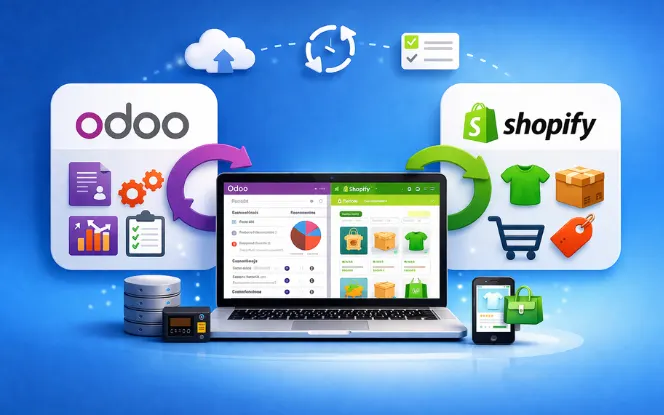
Shopify and Odoo Integration for a Growing Ecommerce Business

A US based Shopify retailer needed reliable order, inventory, and customer sync with Odoo. SDLC Corp built a Shopify Odoo Connector that reduced manual work and brought stronger control to daily operations.

  • Real time Shopify to Odoo sync across orders, products, customers, and inventory
  • Webhook based updates with cron auto sync fallback for reliability
  • Sync logs, retry handling, and monitoring inside Odoo

4

core workflows synced

Real Time

storefront to ERP sync

100%

automated data flow
View Case Study
Shopify Odoo integration dashboard showing synced orders inventory customers and operations data
Case Study

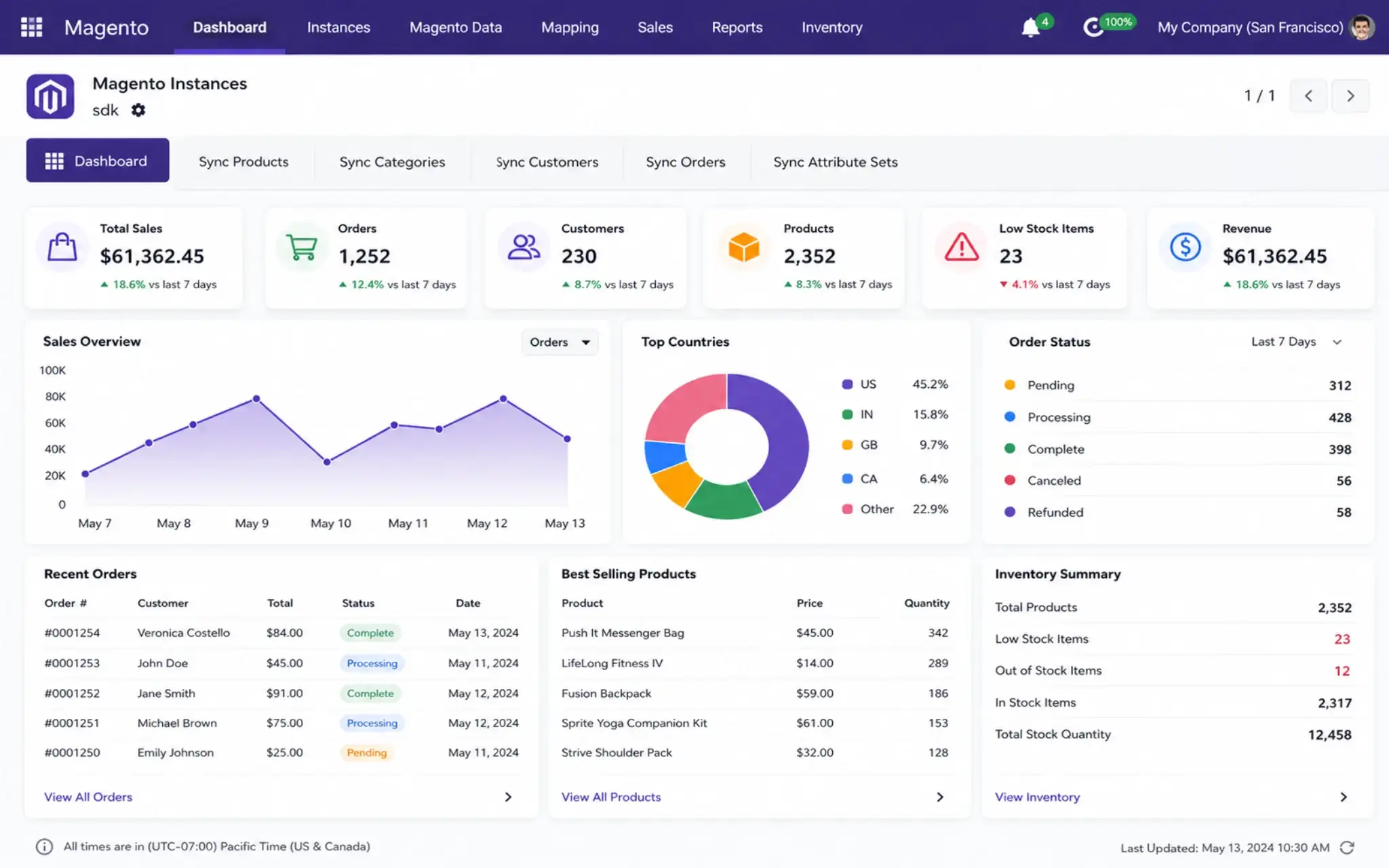
Magento 2 and Odoo Connector for Real Time Ecommerce ERP Sync

A US based Magento 2 retailer needed bidirectional sync with Odoo ERP. SDLC Corp built a custom connector that automates product, order, customer, inventory, invoice, and shipment data flow between both systems.

  • Bidirectional sync across products, orders, customers, inventory, invoices, and shipments
  • OAuth secured REST APIs and webhooks for controlled data exchange
  • Cron jobs and queue workers for reliable scheduled processing

6

workflows connected

Bidirectional

ecommerce to ERP sync

OAuth + Webhooks

controlled data exchange
View Case Study
Magento 2 and Odoo connector dashboard for real time ecommerce and ERP integration
Platform Coverage

Platforms We Integrate Across Your Stack

REST, SOAP, GraphQL, and event-driven integration across CRM, ERP, ITSM, accounting, ecommerce, and marketing platforms. Built on MuleSoft, Workato, Boomi, Kafka, and RabbitMQ where the workflow demands it.

CRM 04
Salesforce HubSpot Microsoft Dynamics Zoho
Tech REST GraphQL OAuth 2.0 Webhooks
Connected customer-data workflows designed to reduce duplicate entry and reconciliation across sales and service systems.
ERP 05
SAP Odoo NetSuite Oracle Sage
Tech SOAP REST Kafka ESB
Inventory, finance, order, and operational data flows designed around the latency and consistency requirements of the connected systems.
ITSM 03
ServiceNow Jira Zendesk
Tech REST Webhooks RabbitMQ Event-Driven
Faster ticket resolution with synced incidents across IT and support tools.
Accounting 02
QuickBooks Xero
Tech REST OAuth 2.0 Workato Zapier
Automated invoice and reconciliation workflows that can reduce manual finance processing and exception handling.
Ecommerce 03
Shopify BigCommerce Magento
Tech GraphQL Webhooks Boomi Event-Driven
Live stock and order sync between storefronts, ERP, and fulfilment.
Marketing 02
Marketo Mailchimp
Tech REST Webhooks MuleSoft Message Broker
Lead-to-revenue attribution from campaign sources through to closed deals.
Resources

Further Reading for Software Integration Buyers

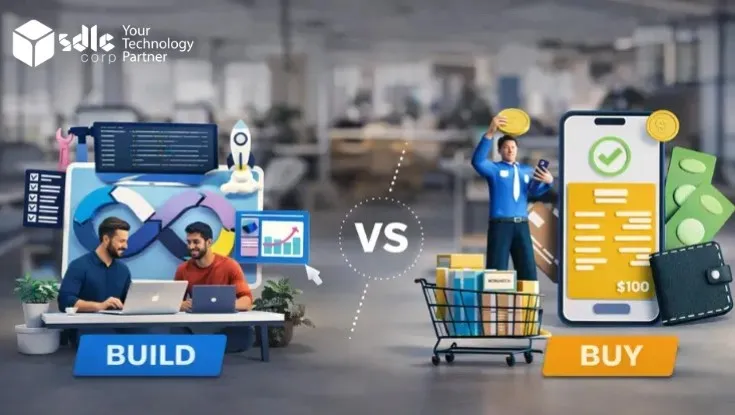
Decision-stage guides covering vendor evaluation, build versus buy tradeoffs, and Salesforce automation practices for buyers planning their next software project.

Browse All Resources

Software Integration Services, Fully Managed

Connect Your Stack Without the Wait

Our software integration team plans and delivers API, middleware, event-driven, and managed connections around your systems, data flows, security requirements, monitoring needs, and operational ownership.

Discuss Your Integration Roadmap
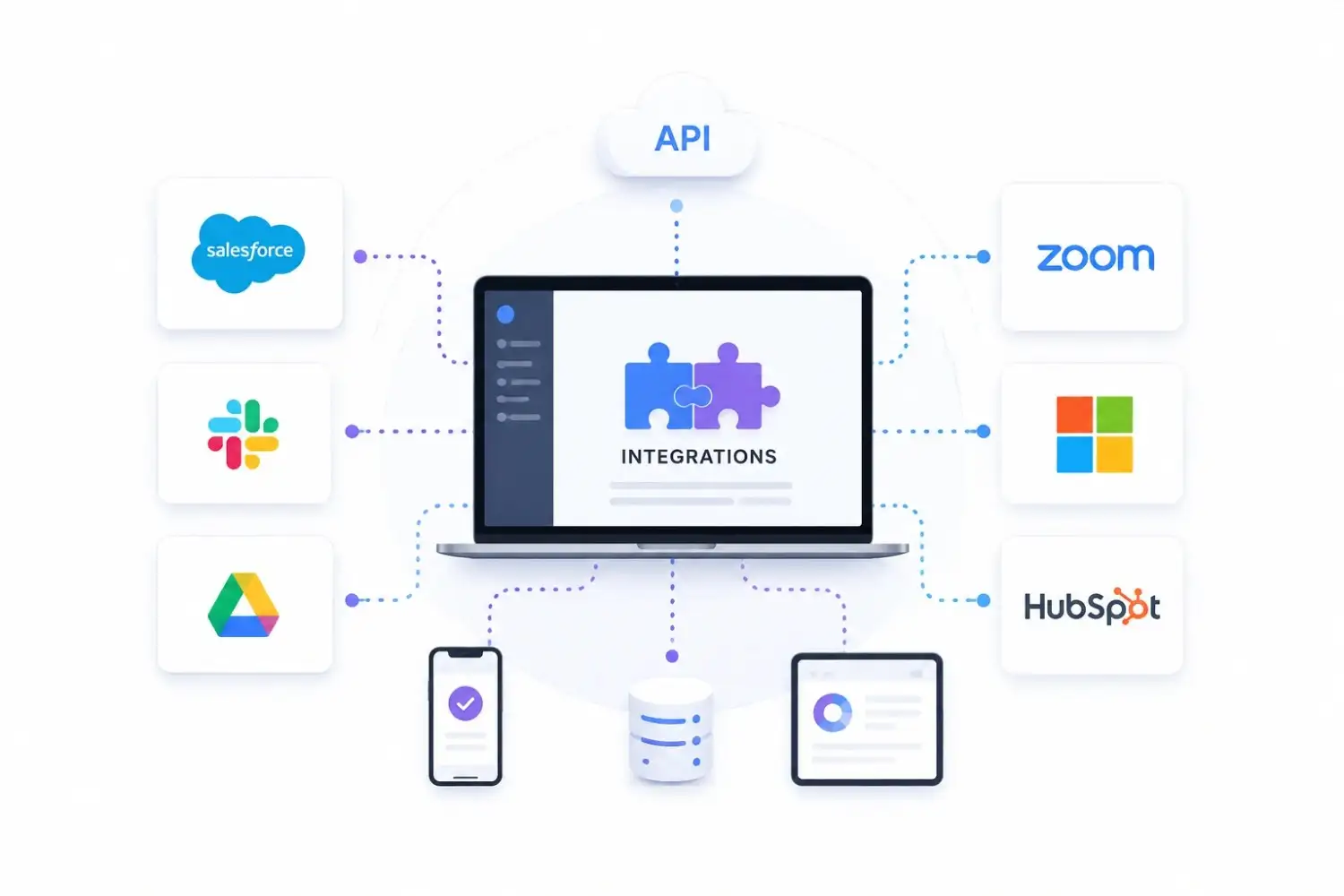
Software integration services connecting database systems network hub and API endpoints in one unified stack
FAQ

FAQs About Our Integration Services

Answers to the questions most teams ask before starting an integration project. Each topic covers scope, cost, timelines, and compliance considerations in plain language.

01

What are software integration services?

Software integration services connect business applications so they exchange data and trigger workflows automatically. The work involves designing the architecture, building connections through APIs or middleware, and maintaining them after launch. The outcome is one connected stack instead of disconnected tools and weekly manual reconciliation.

02

How much does software integration cost?

Cost depends on the systems involved, interface readiness, workflow complexity, data mapping, throughput, security requirements, testing, monitoring, and post-launch support. We provide a scoped commercial model after these dependencies are understood.

03

How long does a software integration project take?

Timeline depends on source-system access, API readiness, data mapping, authentication, testing, vendor dependencies, and the number of workflows in scope. We define milestones after discovery rather than applying one timeline to every integration.

04

What is the difference between software integration and system integration?

Software integration focuses on connecting business applications at the data and workflow level, such as syncing a CRM with an ERP. System integration is broader and includes hardware, networks, and infrastructure alongside software. For most enterprise buyers today, the work you need is software integration even if your RFP uses the wider term.

05

Do you support legacy system integration?

Yes. We connect older platforms to modern systems through APIs, custom adapters, and middleware. This extends the useful life of existing investments and avoids a costly full replacement. It is often the first step in a phased modernization roadmap.

06

What platforms and APIs do you integrate with?

Common projects include Salesforce, NetSuite, SAP, ServiceNow, HubSpot, Microsoft Dynamics, Odoo, Oracle, Workday, QuickBooks, Shopify, and custom internal systems. We also build custom API connections to industry specific platforms and internal proprietary systems on request.

07

Can you integrate cloud and on premises systems?

Hybrid environments are a frequent use case. Our team designs integrations that move information across cloud applications and on premises systems. We use secure middleware, VPN tunnels, or hybrid iPaaS configurations. Encryption and access control apply at every layer.

08

How do you address HIPAA, SOC 2 Type II, and GDPR requirements?

We build to the compliance scope your industry requires. Healthcare projects follow HIPAA. Enterprise client systems often require SOC 2. EU and global data flows follow GDPR. Compliance design happens during the architecture phase rather than as an afterthought.

09

What ongoing maintenance is included after go live?

Under a managed model, maintenance covers vendor API change handling, exception monitoring, error recovery, and documentation updates. Custom project engagements typically include three to six months of warranty support, with extended service plans available afterward.

10

Do you offer fixed pricing or time and materials?

Both options are available. Fixed pricing applies to well scoped integrations with clear inputs and outputs. Time and materials suits discovery phases or evolving requirements. Most clients choose fixed pricing for production rollouts and time and materials only for initial assessment work.

Let’s Talk About Your Integration Product

Get expert guidance on scope, architecture, timelines, and delivery approach so you can move forward with confidence.

What happens next?