
Predict. Understand. Decide.
Machine Learning & Intelligent Systems
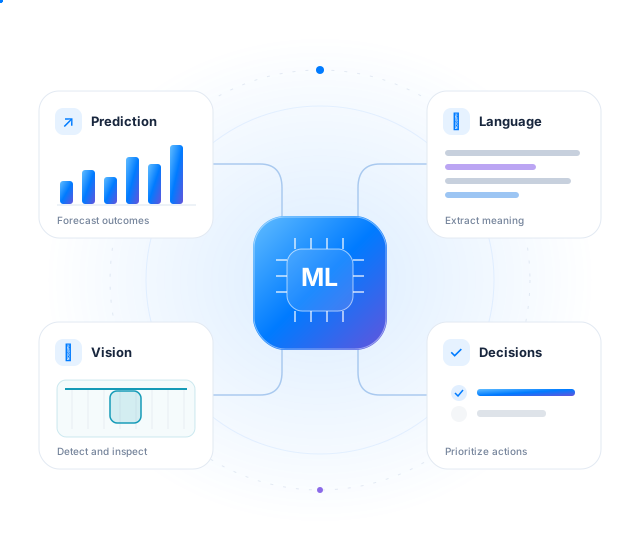
Machine learning and intelligent systems use data, text, and images to predict outcomes, understand information, and recommend actions. Our machine learning development services take them from first data review to monitored production use.
- 125+
- AI Models Trained or Deployed
- 120+
- Enterprise AI Integrations Delivered
- 125+
- LLM Fine-Tuning Implementations Across Clients
Company-wide delivery experience across client engagements; implementations and models represent different measures of work.
Trusted by Fortune Global 500 leaders, governments & top universities across 30+ countries
Powered by leading cloud & AI platforms
Recognized by leading industry reviewers
Awards & industry recognition
Capabilities
Which Intelligent System Fits a Business Problem?
The right intelligent system depends on the output the problem needs. Machine learning predicts outcomes, NLP understands language, computer vision interprets images and video, and decision intelligence recommends actions.
Natural Language Processing
Extract and analyze information from text, documents, and customer messages. For instance, classify support requests by topic so teams can route them to the right queue.
Computer Vision Development
Analyze images and video to detect objects, identify defects, and support inspection. For example, flag surface defects for operators to review during manufacturing.
AI Decision Intelligence
Combine predictions, business rules, and operational constraints to recommend actions. For instance, prioritize cases using urgency, risk, and available team capacity.
Connected Systems
How Intelligent Systems Work Together
One workflow can need several capabilities. Consider document review and routing: the system must interpret the document, extract its details, and decide what needs attention.
Read the document.
Visual processing based on convolutional neural networks and optical character recognition identify page layouts and convert scanned text into usable information.
Extract the details.
NLP identifies relevant fields, classifies the document, and prepares information for validation. Vision-language models can read layout and text together when pages are complex.
Route for review.
Business rules check required fields and confidence thresholds, a core part of AI decision intelligence. If information is missing or uncertain, the system sends the document to a reviewer.
Choose one capability for a focused task. Alternatively, combine them, as multimodal AI does, when the workflow needs several types of analysis and controlled actions.
Capabilities
What Each System Can Do for You
Prediction, language understanding, visual analysis, and decision support each solve a different kind of problem. Compare what every capability produces and the situations where it works best.
| Capability | Output | Best when |
|---|---|---|
| Machine Learning Development | Predictions and forecasts, such as demand, risk scores or likely outcomes | You have historical records and need to predict a number or an outcome. |
| Natural Language Processing | Extracted fields, categories, summaries and answers from text, documents and messages | The input is language, such as support requests, contracts or emails. |
| Computer Vision Development | Detections, classifications and measurements from images and video | The input is images or video, such as inspection, counting or scanned pages. |
| AI Decision Intelligence | Ranked actions that combine predictions with business rules and constraints | A decision depends on several signals and needs a clear, reviewable next step. |
Case Studies
Machine Learning Case Studies With Measured Results
Explore published SDLC Corp projects showing how intelligent systems address specific operational problems.
View All Case Studies ↗Visual Inspection for Automotive Manufacturing
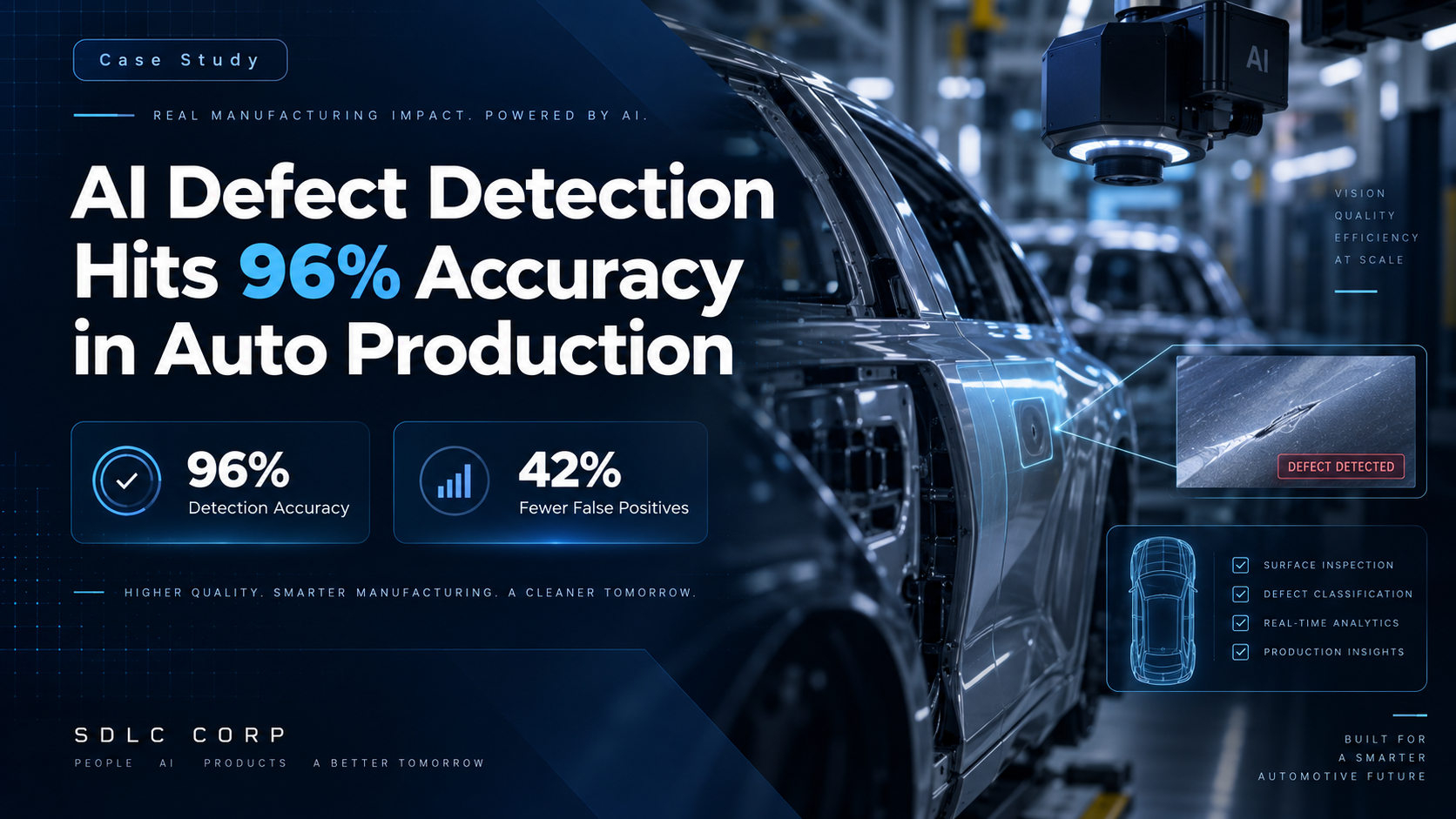
Manual inspection struggled to identify small surface defects consistently. SDLC Corp deployed an edge vision system connected to production controls. The published case study reports detection accuracy rising from 81% to 96% and false positives falling 42%, from 5.2% to 3.0%.
Read the Case Study
Fraud Detection for Online Gaming
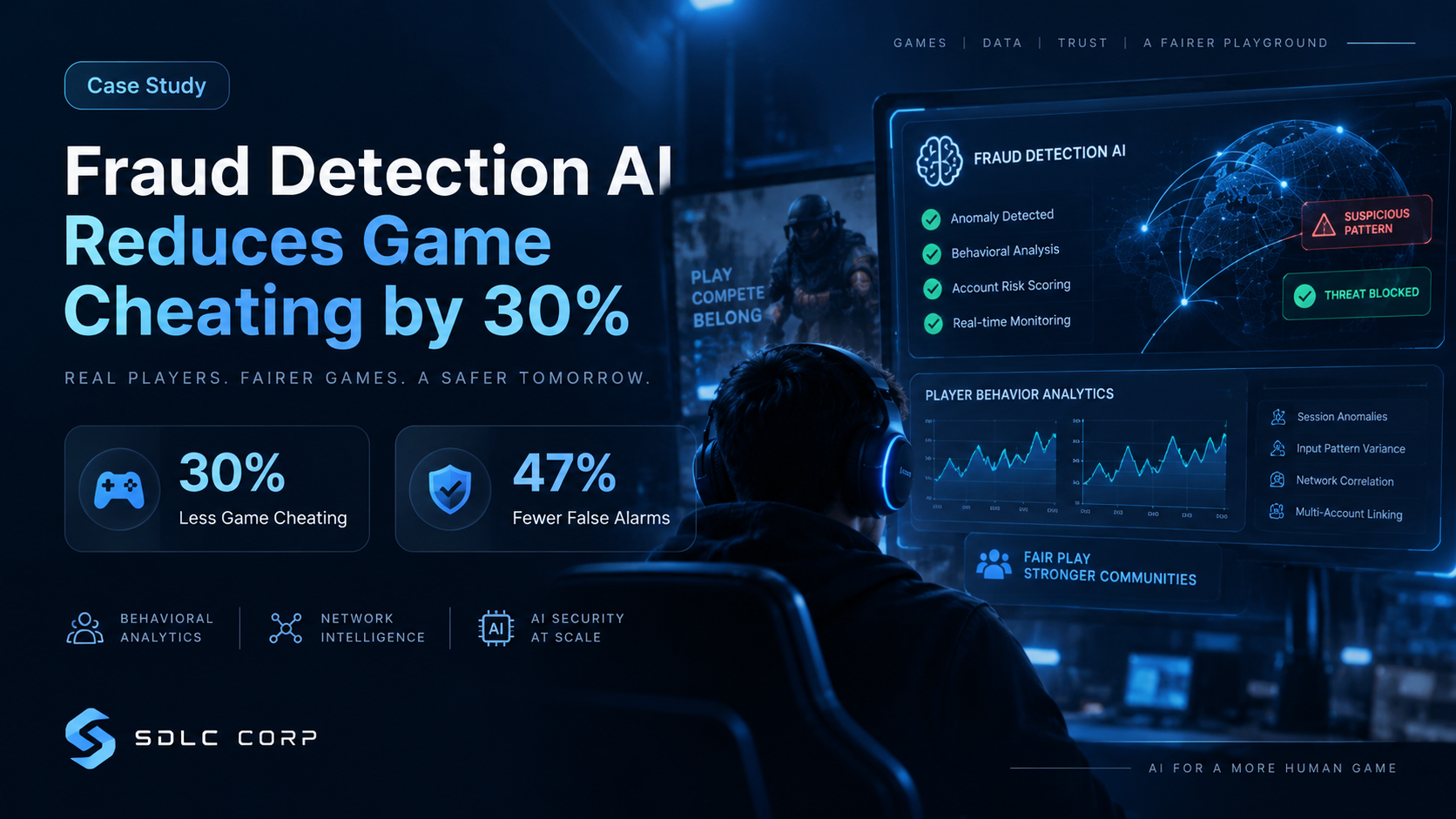
A gaming operator needed to identify collusion and other suspicious activity. SDLC Corp developed a graph-based AI system to support fraud detection. The published case study reports collusion detection rising from 74% to 92%.
Read the Case Study
Decision Intelligence for Margin Trading
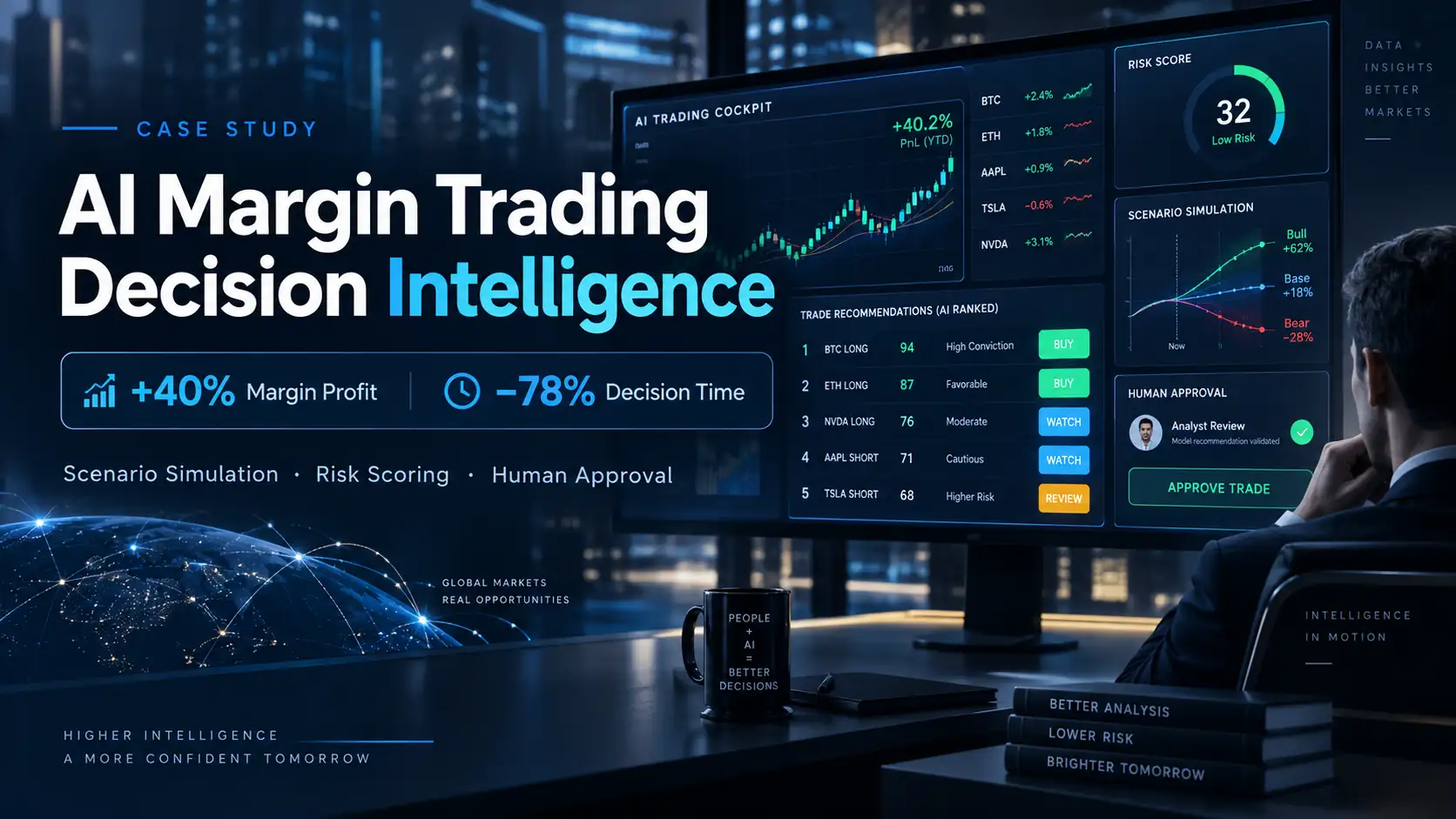
A U.S. brokerage needed analysts to act on margin-trading opportunities faster. SDLC Corp built a decision intelligence workflow that scores risk, ranks actions, and keeps analyst approval in place. The published case study reports decision time falling from 2.2 minutes to 0.5 minutes.
Read the Case StudyTechnology
Technology Behind Machine Learning Systems
We choose proven models, frameworks, and cloud platforms around your data, accuracy targets, and response times, then connect the finished system to your existing tools.
From custom AI applications to enterprise platforms and integrations, we select technologies that fit your business goals, data, security needs, and budget.
Delivery Process
Turning Business Goals into Live Systems
We define success before development begins. Then, we assess the data, test the system, and prepare it for daily use.
- 01
Define
Agree on the workflow, users, and business goal. Next, set measurable targets, such as forecast error, review time, or missed defects.
- 02
Assess
Check data quality, coverage, labels, and access permissions. Before building, identify gaps that could affect performance.
- 03
Develop
Build the model and application around the task. Where useful, compare model approaches against a simple baseline.
- 04
Evaluate
Test on representative data kept separate from training. Also, examine errors, uncommon cases, and situations that need human review.
- 05
Deploy
Connect the system to its working environment. Before release, confirm access controls, response times, fallback behavior, and support ownership.
- 06
Monitor
Track model quality, changing data, and operational performance. As conditions change, review alerts and evaluate updates before release.
Explore MLOps Services ↗
Machine Learning Delivery,Measured in Results
Production machine learning work from 1,200+ engineers serving clients in 30+ countries.
Why SDLC Corp
Why Choose SDLC Corp for Machine Learning Development
A practical approach to intelligent systems that are measured, tested, and ready for daily use.
Business Goal First
We start with the decision or workflow you want to improve, then choose the model that fits it.
Published Results
Our automotive inspection case study reports detection accuracy rising from 81% to 96% with 42% fewer false positives.
Connected Capabilities
Machine learning, NLP, computer vision, and decision intelligence work together in a single workflow.
Tools Matched to the Task
We choose frameworks and platforms around your data, accuracy targets, response times, and deployment needs.
Built for Daily Use
Systems are tested on representative data and released with access controls, fallback behavior, and monitoring.
Global Experience
Trusted by Fortune Global 500 leaders, governments, and top universities across 30+ countries.
Get Started
Let’s Define Your Intelligent System
Share your goal, your data, and your current stage. We will help you find the right starting point.
Discuss Your Project- Your Business Problem
- Your Data
- Your Stage
Blogs & Insights
Machine Learning & Intelligent Systems Insights
Practical guides to machine learning, computer vision, and decision intelligence, from data foundations to everyday use.
Explore all articles →
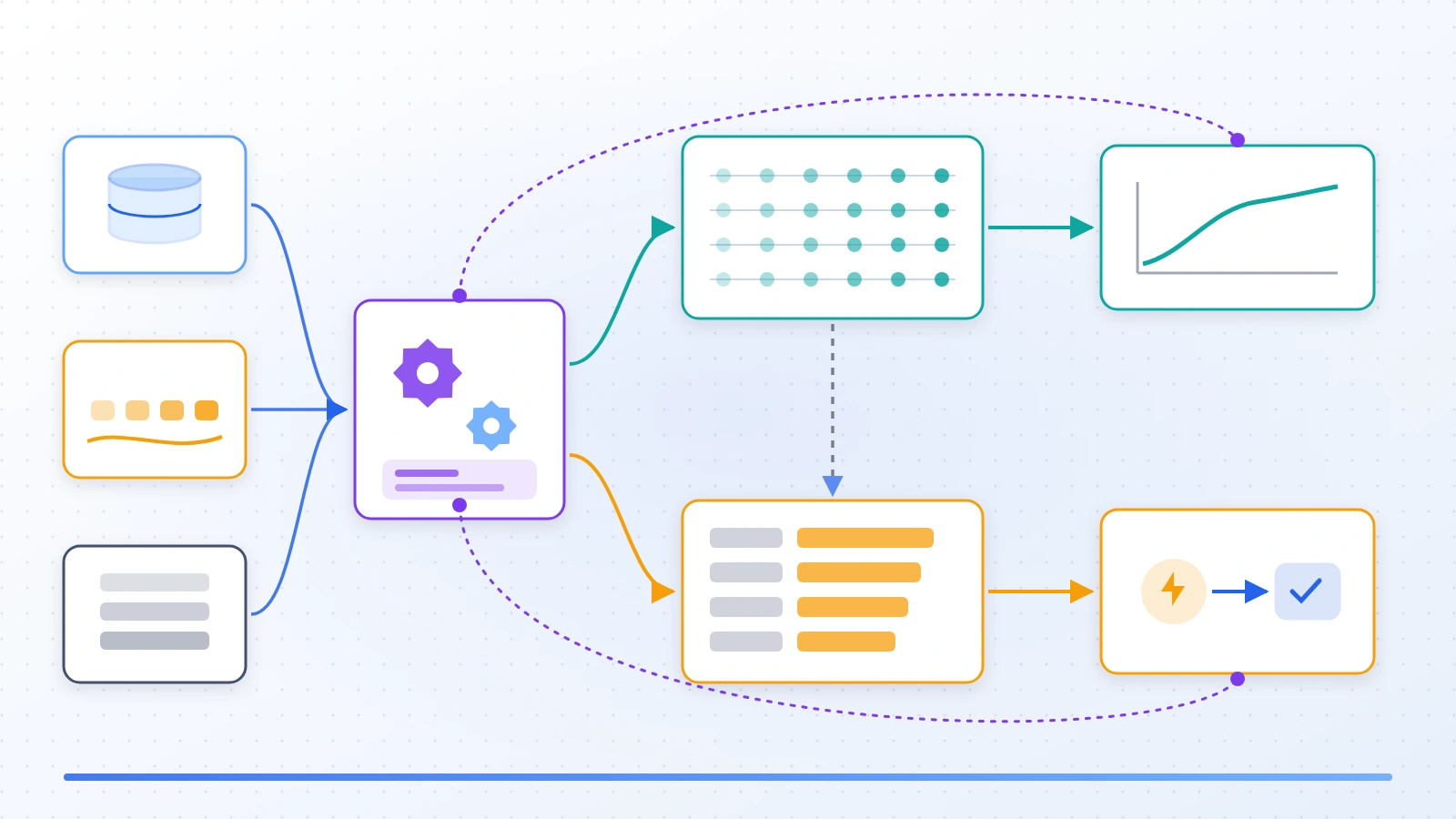
Feature Stores for Production ML
Learn how shared feature definitions keep model training and live predictions consistent.
Read Article →
Vision-Language Models (VLMs)
Explore how models connect images with text so systems can answer questions about what they see.
Read Article →
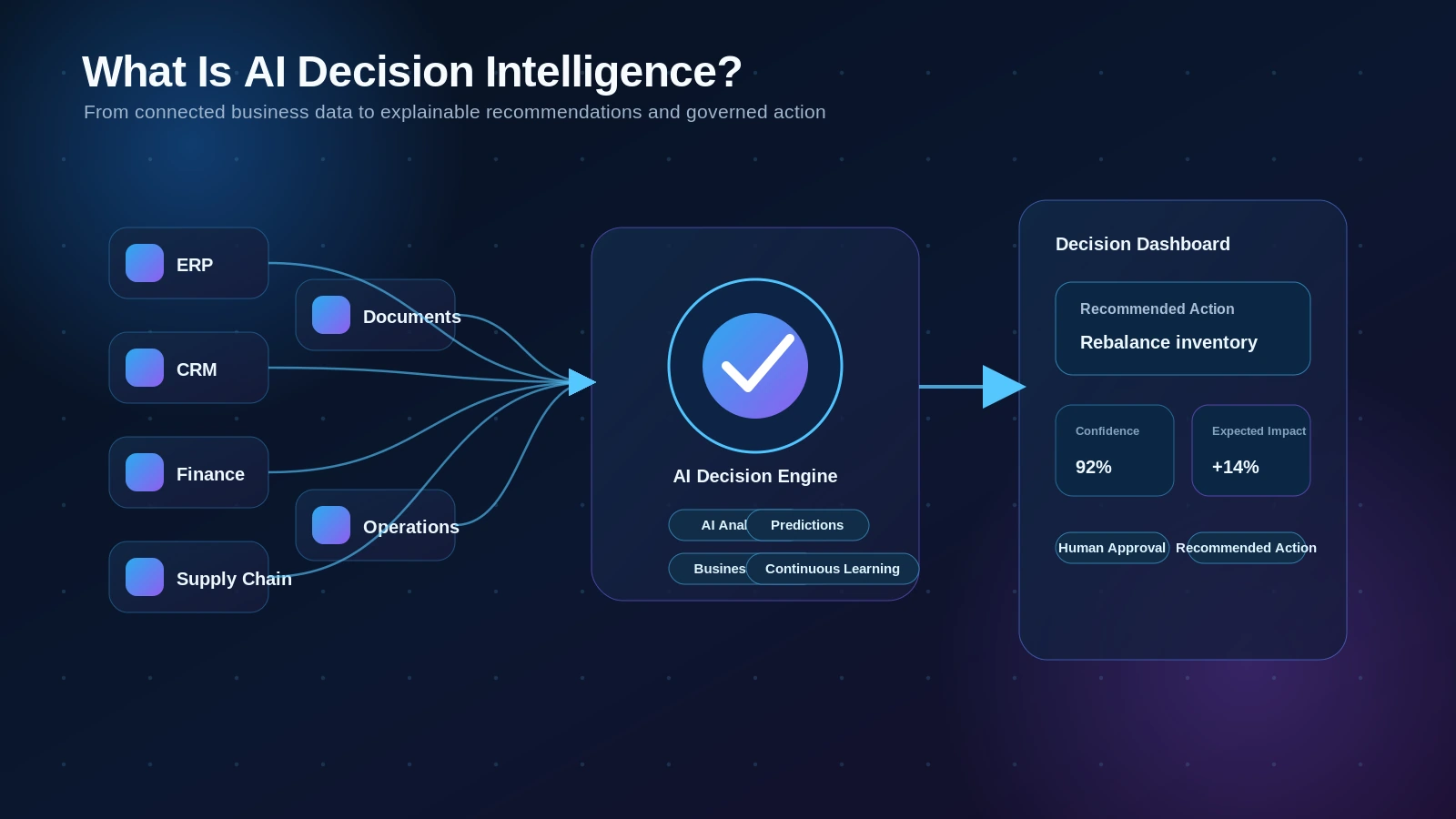
What Is AI Decision Intelligence?
Learn how data, predictions, business rules, and human oversight work together to support decisions.
Read Article →What Our Machine Learning Clients Say
Client feedback on machine learning models, predictive analytics and AI-powered automation.
Eric Leist
CEO, Edgerton Strategies

Doug Schmidt
CEO, RoofAid USA

Reyzal Razmi
All Star Influencers
Their product had high accuracy rate of 90% due to which my customers were very happy.
Discuss your machine learning project
Talk to our machine learning team about your use case, data and deployment target. We will scope the model, pipeline and rollout with you.
Request a Free Consultation- Contact Us
Let's Plan Your Machine Learning Project
What happens next?
- We review your requirements
- Strategy call with experts
- Clear roadmap & estimate
- NDA Protected
- Enterprise Grade Delivery
- Global Clients
FAQs
Frequently Asked Questions
Find answers about choosing the right intelligent system, preparing your data, combining capabilities, and measuring performance.
Which Intelligent System Fits a Business Problem?
+
The right intelligent system depends on the output a business problem needs. Machine learning supports predictions, NLP analyzes language, and computer vision interprets images and video. Decision intelligence connects predictions with rules and constraints to guide actions. Some workflows benefit from a combination.
What Data Is Needed to Start a Machine Learning Project?
+
A machine learning project needs data that matches the task. Forecasting needs relevant historical records, while visual inspection needs representative images. First, we assess coverage, quality, permissions, and available labels. Then, we identify any preparation needed before development.
How Can You Combine NLP, Computer Vision, and Decision Intelligence?
+
These capabilities combine by passing results from one stage to the next. For example, computer vision and OCR read a scanned document, NLP extracts and classifies its fields, and decision rules route uncertain items to a reviewer. We define each capability’s role and test the complete workflow, with human review for consequential actions.
How Do You Measure and Monitor Machine Learning Performance?
+
Machine learning performance is measured with metrics that match the task, such as forecast error, precision, recall, or extraction quality. We also track response times, failures, and business outcomes. After deployment, monitoring helps identify data changes and quality drops that require investigation or a model update.
What Do Machine Learning Development Services Include?
+
Machine learning development services cover the work from defining the business goal to running the model in production. That includes data assessment, model development, evaluation on separate data, deployment, and ongoing monitoring. Explore our machine learning development services for details.