ERP Implementation Services for Successful Rollouts
Implement ERP systems with an experienced partner that manages complex rollouts and reduces implementation risks. As a result, organizations can move to a stable, modern enterprise platform with less disruption.
- Proven enterprise ERP implementation experience
- Risk-controlled delivery with clear governance
- Flexible engagement models for different rollout needs



Trusted by Industry Leaders










Why Organizations Choose SDLC Corp
Successful ERP implementations depend on clear ownership and disciplined delivery. SDLC Corp brings cross-industry expertise, transparent governance, and dedicated teams to every engagement.
ERP Implementation Services We Provide
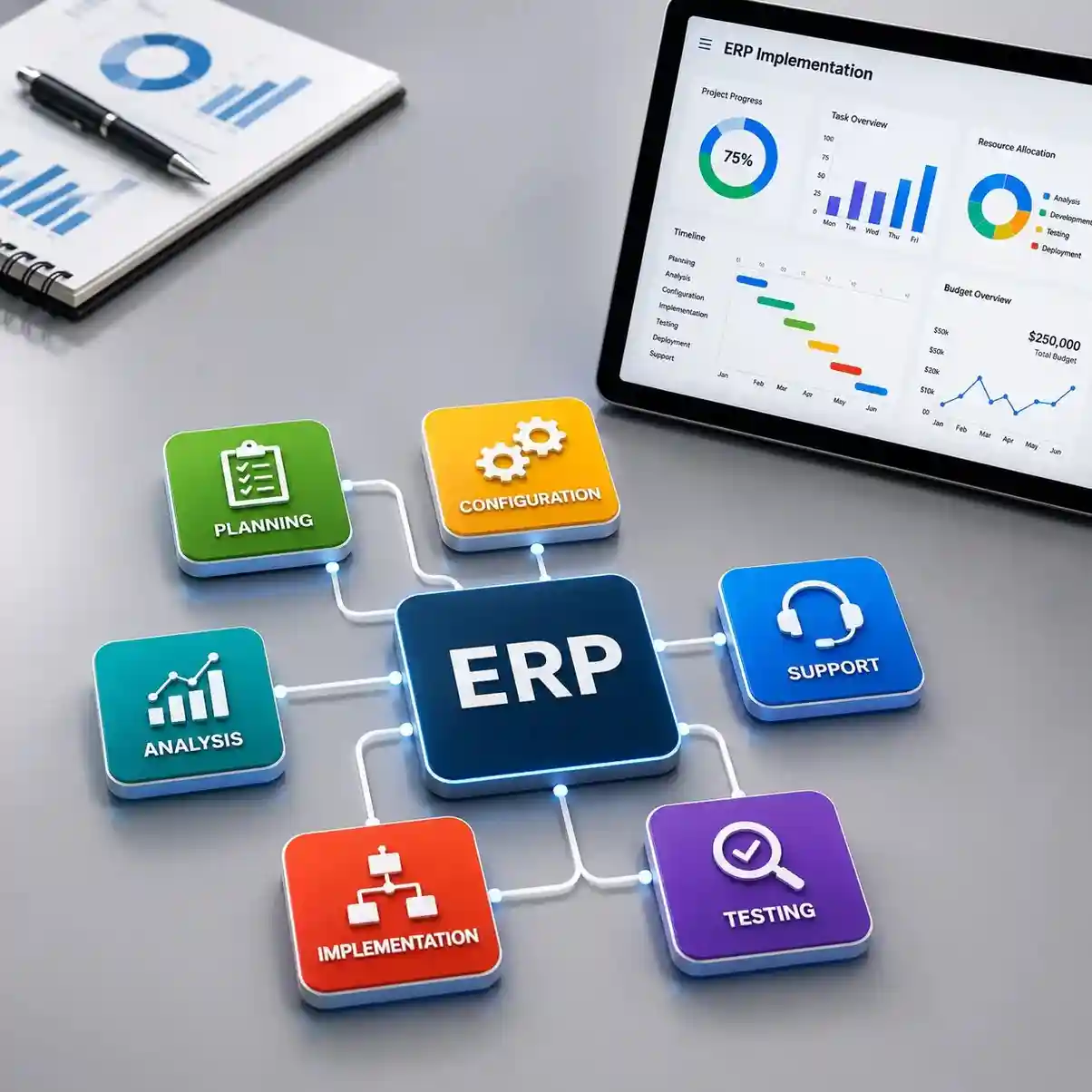
Every ERP implementation requires careful planning, technical expertise, and coordinated execution. In addition, our services cover every stage of deployment to support a smooth and successful implementation.
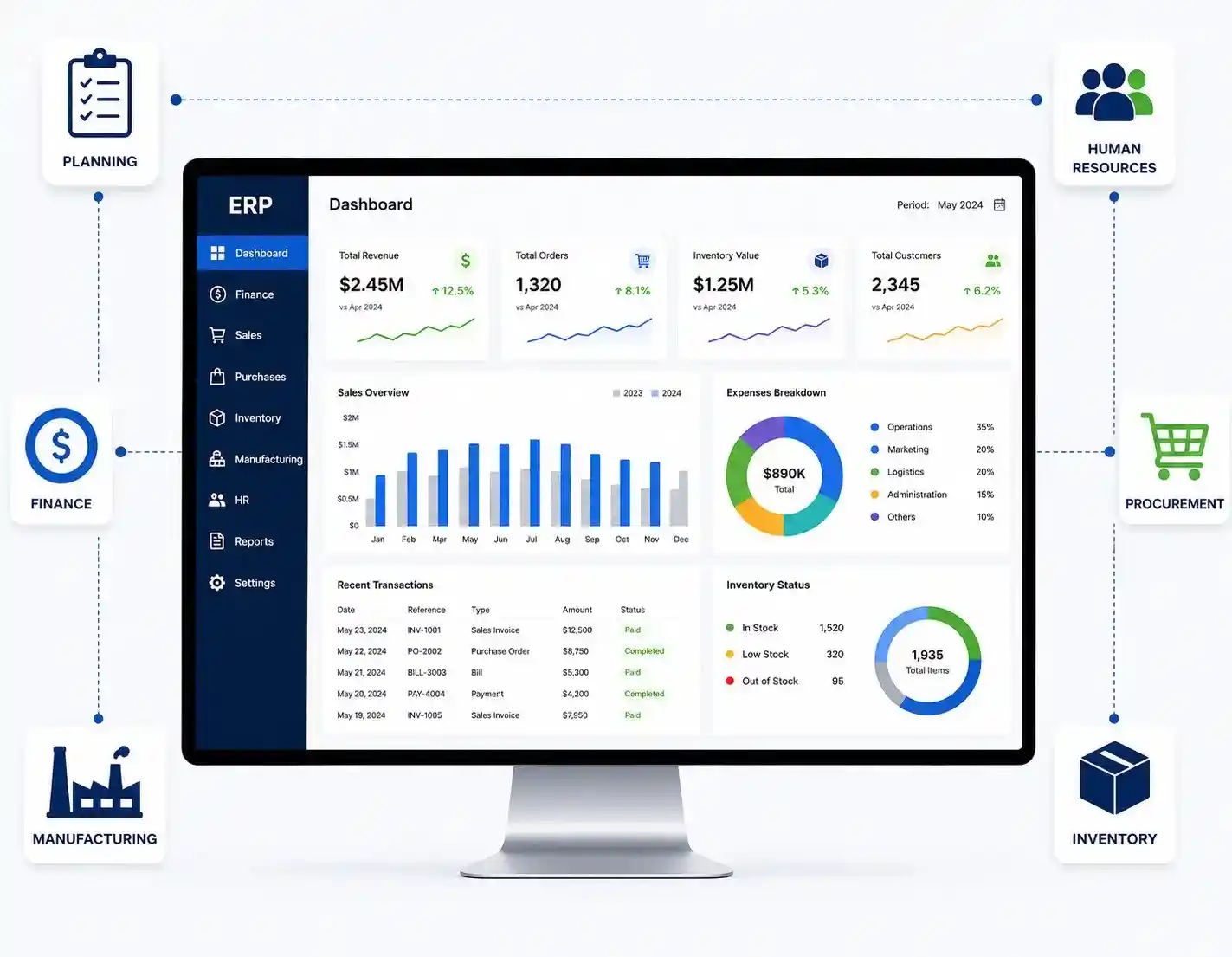
ERP Implementation Planning
Define implementation scope, objectives, priorities, and timelines to establish a strong foundation for successful project delivery. Organizations evaluating implementation approaches can also benefit from our ERP consulting services.
ERP Solution Configuration
Configure ERP modules, workflows, and system settings to match your organization's processes and operational requirements.
ERP Customization & Extensions
Extend ERP functionality with tailored workflows, dashboards, reports, and custom features designed around your business needs.
Enterprise System Integration
Connect ERP with business-critical applications to enable secure, reliable, and consistent data exchange across systems.
ERP Data Migration
Migrate historical and operational data accurately while preserving integrity and minimizing disruption during deployment.
ERP Quality Assurance
Validate workflows, security, integrations, and system performance to ensure production readiness before go-live.
User Enablement
Equip teams with practical training, documentation, and knowledge transfer to encourage confident ERP adoption.
Go-Live & Post-Implementation Support
Monitor system stability, resolve early issues, and provide hypercare to support a smooth transition after go-live.

ERP Implementation Challenges We Solve
Every ERP implementation presents unique challenges. Therefore, we identify potential risks early and apply proven delivery practices to keep implementations on track.
Poor Planning
Unclear objectives and changing priorities can delay implementation. To prevent this, we define project scope, governance, and delivery milestones early to keep the rollout focused.
Data Migration Complexity
Poor-quality legacy data can affect reporting after go-live. Before migration, we validate and reconcile data to improve accuracy and reduce deployment risks.
Low User Adoption
Resistance to change can slow ERP adoption. As a result, we prepare users with role-based training and practical guidance to encourage a smoother transition.
Integration Challenges
Disconnected systems often create duplicate data and workflow gaps. In response, we establish reliable integrations that keep information consistent across business-critical applications.
Scope Creep
Expanding requirements can affect timelines and budgets. However, our controlled change process evaluates new requests while keeping delivery on schedule.
Deployment Risks
Unexpected issues during go-live can disrupt daily operations. For this reason, we perform readiness checks and phased deployment to support a stable rollout.
Industries We Serve
Every industry has unique workflows and operational requirements. Therefore, we deliver ERP solutions tailored to industry-specific processes and business needs.

Manufacturing
Coordinate production, inventory, procurement, and shop floor operations through a connected ERP environment.

Retail & E-Commerce
Centralize inventory, orders, and fulfillment to maintain accurate stock across online and retail channels.

Wholesale & Distribution
Improve warehouse visibility and order fulfillment with connected inventory and distribution workflows.

Logistics & Supply Chain
Manage shipments, fleet operations, and warehouse activities with real-time supply chain visibility.

Healthcare & Life Sciences
Standardize processes, manage records securely, and support regulatory compliance across healthcare operations.

Construction
Track projects, budgets, procurement, and resources through a centralized ERP system.
A Connected NGO ERP View
Causeway connects finance, grants, donors and programmes in one unified ERP environment for nonprofit and NGO operations.
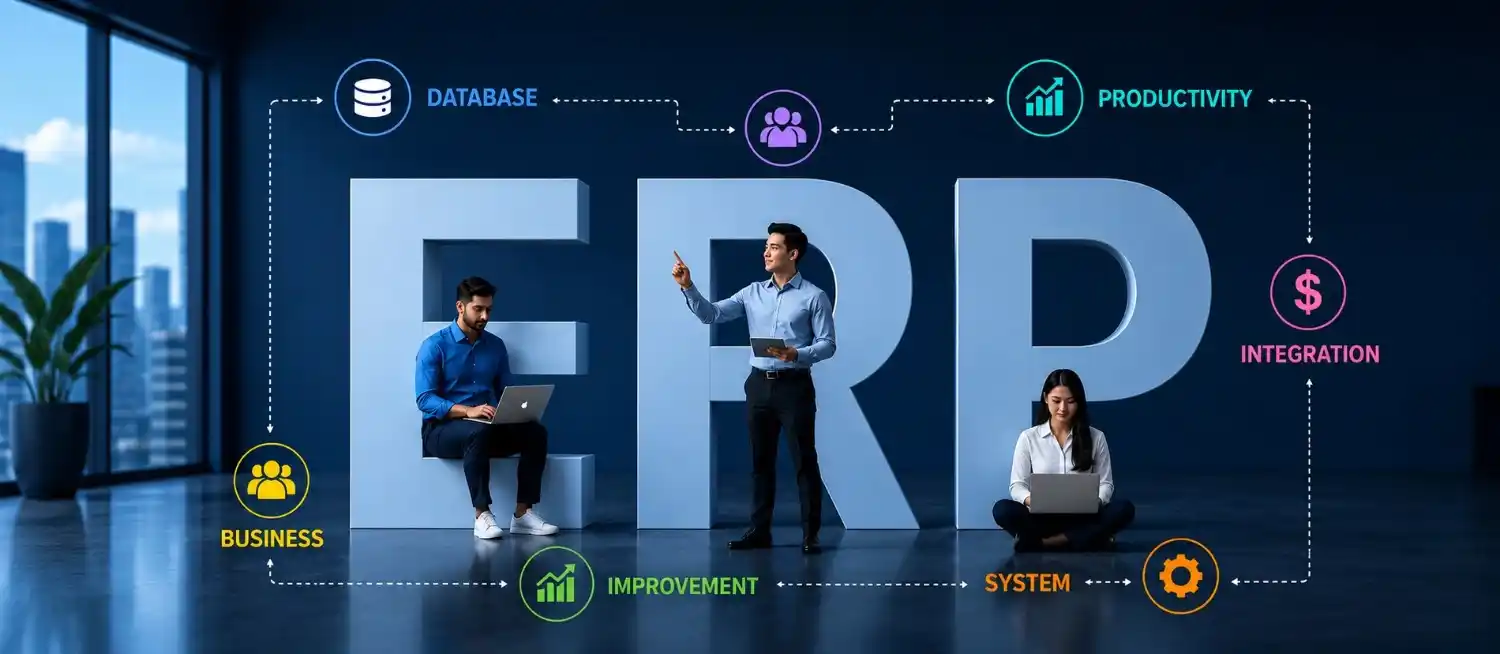
Ready to Start Your ERP Implementation Project?
A successful implementation starts with the right partner. Work with experienced ERP implementation consultants who reduce risk from planning to go-live.
ERP Implementation Success Stories
See how our ERP implementation projects connect systems, automate workflows, and centralize critical business information. As a result, organizations gain better visibility and more reliable day-to-day operations.
Shopify and Business Central Integration
The Yeti Life connected its Shopify store with Microsoft Dynamics 365 Business Central to centralize order, customer, inventory, and financial information. As a result, data now moves between commerce and ERP workflows without relying on repetitive manual updates.
- Connected Shopify and ERP workflows
- Centralized order and inventory information

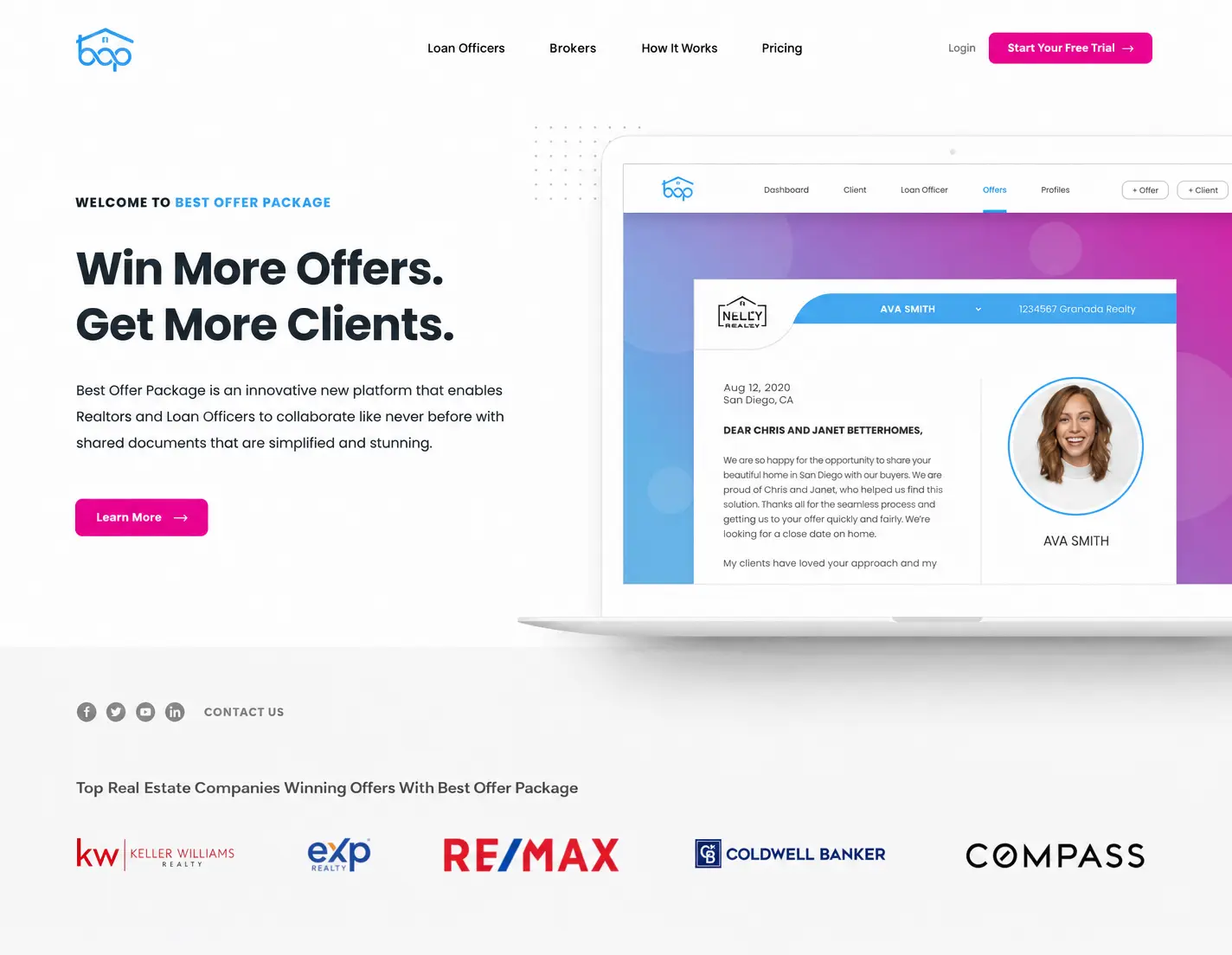
Real Estate Offer and Workflow Platform
Best Offer Package implemented a centralized real estate platform to manage property offers, buyer information, documents, approvals, and transaction workflows. In turn, agents gained a more structured process for coordinating offers and tracking activity from one environment.
- Centralized offer and document management
- Structured property transaction workflows
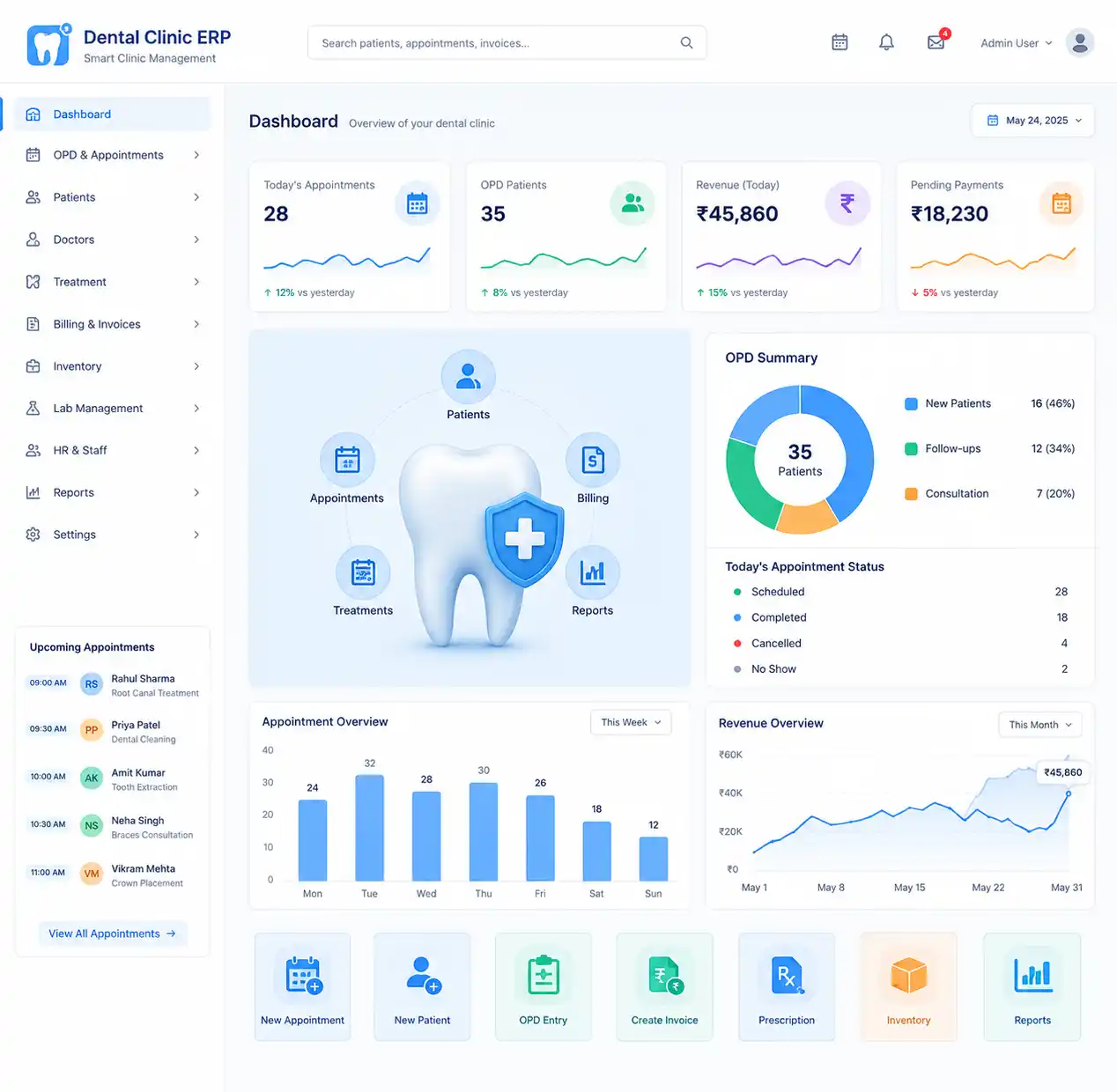
Dental Care Center ERP Implementation
A multi-specialty dental care center implemented a connected ERP platform for patient records, scheduling, billing, inventory, payments, and clinic administration. In addition, teams gained consistent information across front-desk, clinical, and back-office workflows.
- Unified patient, billing, and scheduling workflows
- Centralized clinic and inventory information
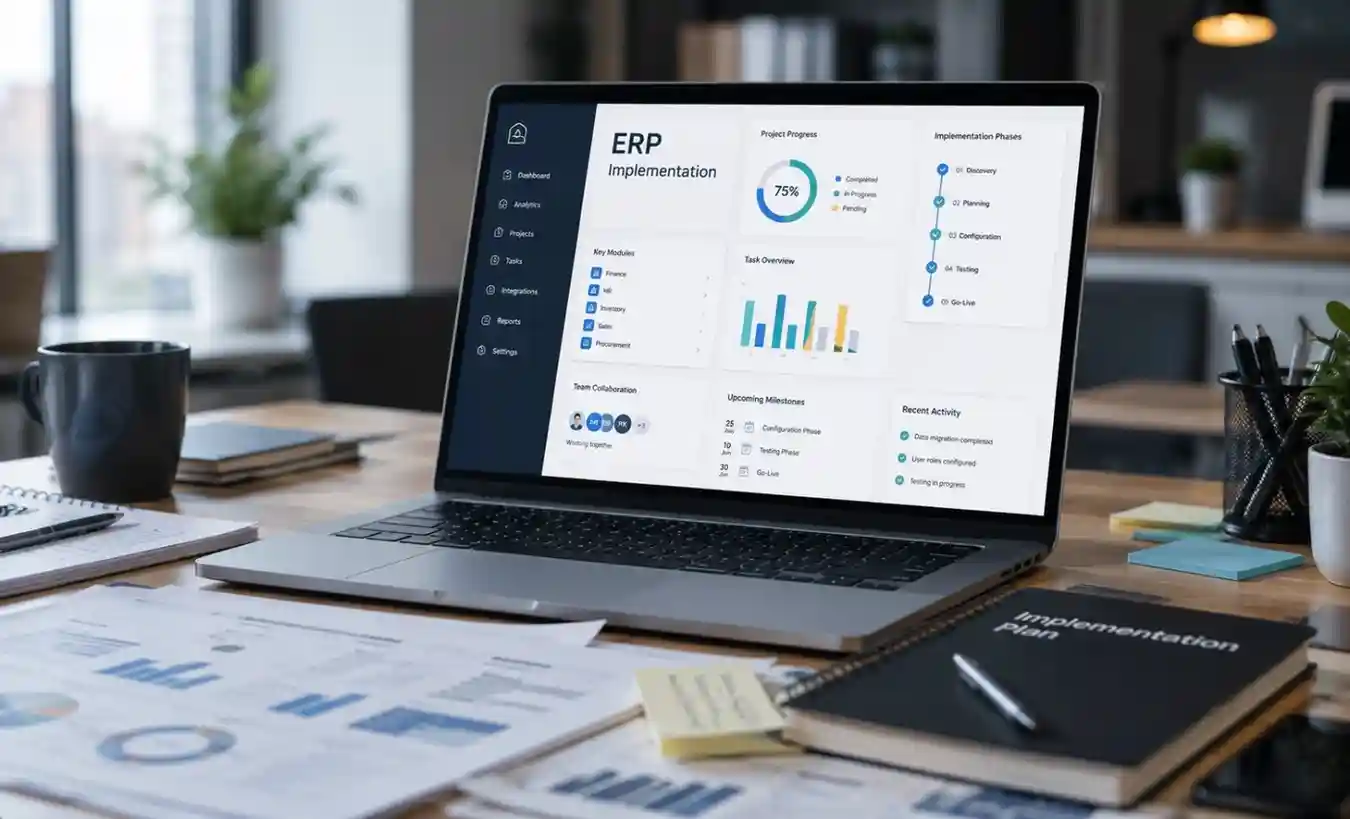
Our ERP Implementation Process
A successful implementation process follows a structured approach with clearly defined stages and deliverables. As a result, teams can reduce project uncertainty, improve coordination, and support a controlled rollout from planning to production.
Business Discovery
First, assess business goals, workflows, and requirements to define a clear implementation scope.
Solution Design & Project Planning
Next, develop the implementation roadmap, delivery milestones, and project governance before execution begins.
ERP Environment Build
Then, configure the ERP environment and prepare required functionality for validation and testing.
System Validation
Before deployment, verify workflows, security, integrations, and data accuracy.
Production Deployment
Once approved, deploy the solution through a controlled rollout with minimal disruption to daily operations.
Hypercare & Stabilization
Finally, monitor system performance, resolve early issues, and stabilize the ERP environment after go-live.
ERP Platforms & Technology Expertise
We implement leading ERP systems and use proven integration technologies to connect applications and exchange business data. In addition, our expertise supports reliable enterprise deployments across cloud and on-premises environments.
 SAP
SAP Dynamics 365
 NetSuite
 ERPNext
 Odoo
Odoo REST APIs
 SOAP
SOAP GraphQL
 Webhooks
 MuleSoft
 Boomi
Boomi Azure
Azure AWS
AWS Google Cloud
 Oracle Cloud
 SQL Server
 PostgreSQL
 MySQL
MySQL Oracle DB
ERP Insights & Buying Guides
Explore practical resources to help you plan your ERP journey and understand implementation best practices. In addition, these guides support informed technology decisions.