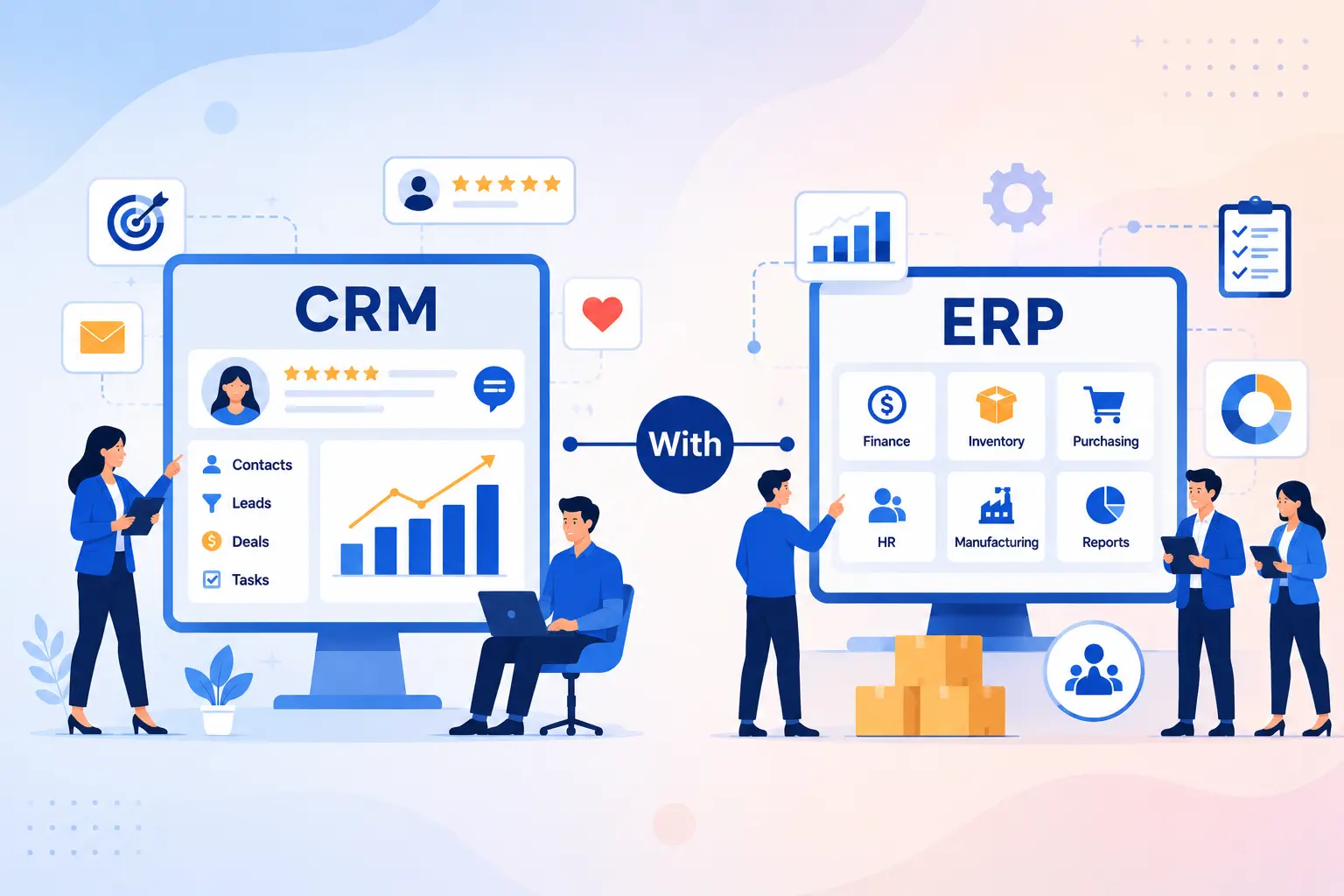
Retail & Ecommerce ERP

ERP Software for Retail and Ecommerce

SDLC Corp builds ERP for Retail and Ecommerce businesses to centralize inventory, orders, POS, and warehouses. Connect online stores, marketplaces, finance, CRM, and reporting in one real-time ERP system. Manage retail operations faster with scalable software built around your business workflows.

Real-time inventory sync
POS and warehouse control
Marketplace and e-commerce sync
Finance and reporting visibility
Request a Proposal

Trusted by Businesses Building Retail and Ecommerce ERP Systems


KISS USA company logo
Zilch company logo
MAIR company logo
CETU company logo
Arbor Financial Group company logo
Custom ERP Solutions

How Retail and Ecommerce ERP Connects Operations

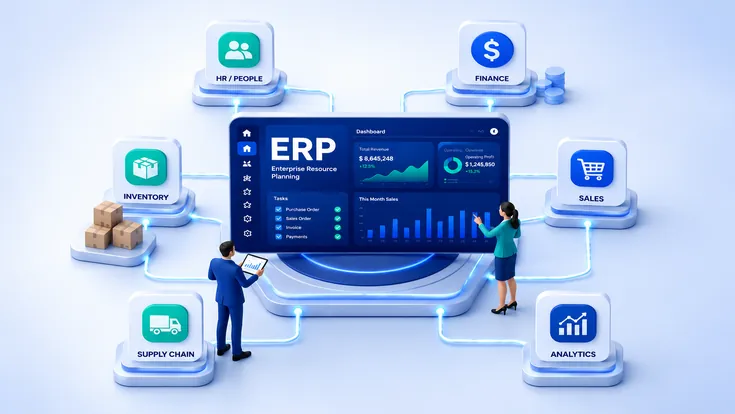
SDLC Corp builds retail and e-commerce ERP systems that connect sales channels, inventory, orders, POS, warehouse workflows, customer data, finance, and reporting into one structured operating platform.

Connected ERP Layer
E-commerce Products, carts, orders
POS Store sales and billing
Inventory Stock and availability
Warehouse Fulfillment and returns
Finance Invoices, tax, payments
Reports Real-time business insights
Custom Build

Custom ERP Development

Build ERP modules, admin panels, portals, reports, and automation.

Integrations

ERP and API Integrations

Connect ecommerce, POS, payments, shipping, accounting, and CRM tools.

E-commerce Sync

Inventory and Order Synchronization

Keep stock, orders, returns, customers, and finance data aligned.

Our Services

Retail and Ecommerce ERP Services

SDLC Corp helps retail businesses plan, build, integrate, migrate, modernize, and support ERP systems for online and offline operations.

Consulting & Integration

ERP Consulting and Integration

Assess retail workflows, define ERP scope, and connect ecommerce, POS, marketplaces, payments, shipping, accounting, and internal APIs.

Development

Custom ERP Development

Build ERP modules for orders, POS, inventory, customers, vendors, warehouse, finance, dashboards, and admin roles.

Implementation

ERP Implementation

Configure, deploy, test, and roll out ERP modules across stores, ecommerce channels, warehouses, finance, and reporting.

Migration

ERP Data Migration

Move products, customers, vendors, sales history, inventory, and financial data from spreadsheets or legacy systems.

Modernization

ERP Modernization

Upgrade outdated retail systems with improved UI, automation, reporting, integrations, and scalable modules.

Support

ERP Support and Optimization

Improve performance, resolve issues, support users, enhance workflows, and optimize ERP after launch.

Core ERP Modules

Core Modules for Connected Retail Management

We design ERP modules around real retail workflows, channel operations, inventory movement, fulfillment, customer data, and business reporting.
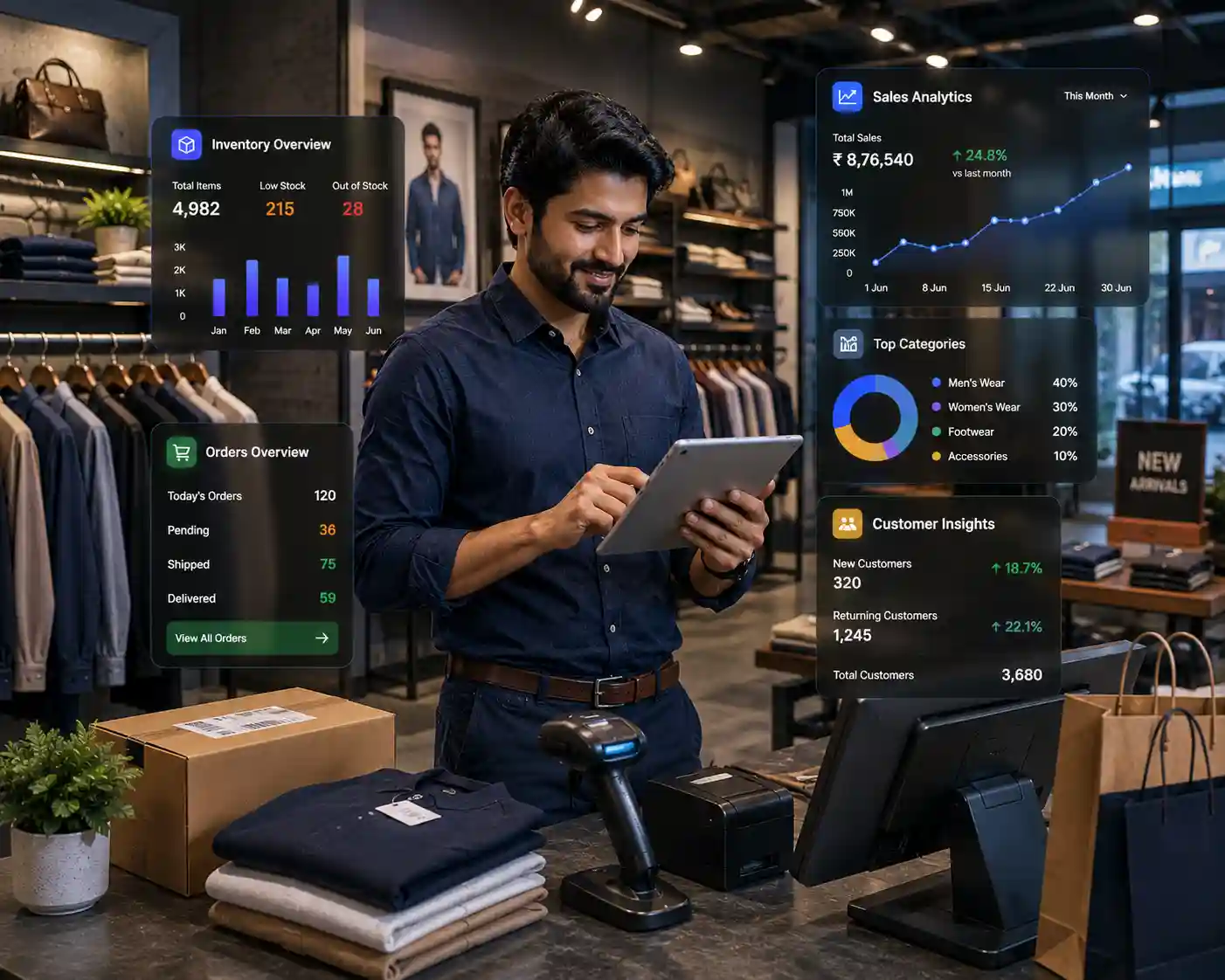
Retail and ecommerce ERP dashboard for inventory orders POS warehouse finance and reporting
Retail ERP Dashboard One view for orders, inventory, POS, warehouse, finance, customers, and reports.

Inventory and Product Management

Inventory

Manage SKUs, variants, bundles, stock levels, reorder rules, transfers, and product availability.

  • Centralized stock view across stores, ecommerce, and warehouses
  • Low-stock alerts, inventory movement, and product catalogue control

Order and Channel Management

Orders

Bring ecommerce, marketplace, mobile, B2B, and POS orders into one connected ERP workflow.

  • Unified order queue for online, offline, and marketplace sales
  • Order status, payment status, returns, and fulfillment tracking

POS and Store Operations

POS

Connect store billing, exchanges, branch sales, discounts, staff roles, and stock deduction.

  • POS transactions synced with ERP inventory and finance
  • Store-wise sales, user permissions, and retail counter workflows

Warehouse and Fulfillment

Warehouse

Manage warehouse operations, picking, packing, dispatch, returns, and barcode workflows based on GS1 barcode standards .

  • Warehouse status, transfer movement, and fulfillment visibility
  • Returns, dispatch, packing, and stock adjustment workflows

Finance, Payments and Accounting

Finance

Connect invoices, payments, refunds, taxes, vendor bills, expenses, and channel revenue.

  • Sales, payment, tax, refund, and invoice reconciliation
  • Finance reports connected with orders, stock, and channel performance

CRM, Loyalty and Reporting

Insights

Unify customer profiles, purchase history, loyalty workflows, segmentation, and reporting.

  • Customer records, repeat purchase insights, and loyalty data
  • Dashboards for sales, inventory, finance, warehouse, and customer performance
ERP Integrations

Platform and Business System Integrations

Connect ecommerce platforms, marketplaces, POS systems, payments, shipping, accounting, CRM, and custom APIs with one ERP workflow.

Storefronts

E-commerce Platforms

Sync products, inventory, customers, orders, payments, returns, and fulfillment.

Marketplaces

Marketplaces and POS

Connect marketplace orders, store sales, returns, inventory updates, and settlements.

Payments

Payments and Shipping

Sync payments, refunds, shipping, and delivery updates while following PCI DSS requirements .

01 Products and SKUs sync from ERP
02 Orders return to one ERP queue
03 Inventory updates across channels
04 Finance and reports stay connected
Custom vs Ready-Made

Custom ERP vs Ready-Made Platforms

Ready-made ERP platforms such as NetSuite, Acumatica, Dynamics 365, and Odoo work well when your retail operations follow standard workflows. A custom ERP fits better when your inventory rules, sales channels, returns, pricing, or reporting needs are unique.

Comparison between custom-built ERP and ready-made ERP for retail and ecommerce businesses.
DimensionCustom-Built ERPReady-Made ERP
Workflow FitBuilt around your exact inventory, POS, returns, pricing, warehouse, and finance workflows.Your team adapts to the vendor’s standard process, with gaps handled through configuration or add-ons.
Time to LaunchUsually longer because modules, integrations, and workflows are designed in phases.Faster to start when the core features already match your operating model.
Upfront CostHigher initial investment because the system is planned, designed, developed, tested, and integrated for your business.Lower starting cost, especially for small teams using standard modules and limited customization.
Ongoing CostNo vendor per-user license dependency when you own the code and infrastructure.Subscription, user-based, module-based, or usage-based fees can increase as the team and order volume grow.
Customization LimitFlexible for custom modules, approval flows, reports, integrations, and automation rules.Limited by vendor configuration options, extension marketplace, and product roadmap.
Ownership and ControlYou control the roadmap, data model, integrations, security rules, and future enhancements.The vendor controls product updates, pricing changes, feature availability, and long-term roadmap.
Best ForRetailers with complex inventory, multi-channel operations, custom pricing, marketplace integrations, or unique reporting needs.Retail businesses with standard operations that need a proven ERP core and faster implementation.

Choose custom ERP for complex workflows and integrations. Choose ready-made ERP for standard operations and faster setup. Learn more about Build vs Buy Software and Types of ERP Systems .

Cost Planning

Retail ERP Pricing and Project Scope

ERP cost depends on project scope, modules, users, integrations, data condition, customization, deployment, training, and post-launch support requirements.

Small Business Retail ERP

For small retail stores and focused ecommerce operations

$15K–$30K
Focused Implementation
  • Focused modules for essential retail operations
  • Limited ecommerce, POS, or accounting integrations
  • Standard workflows and ERP configuration
  • Essential user setup and training
Estimate My ERP Scope

Enterprise Retail ERP

For large, multi-location, and omnichannel retailers

$50K+
Enterprise-Wide Implementation
  • Enterprise-wide retail and ecommerce workflows
  • Complex integrations across stores, warehouses, and channels
  • Advanced data migration, governance, and customization
  • Multi-location controls, training, testing, and rollout planning
Discuss Enterprise ERP

Planning estimate: Final pricing varies by platform, modules, users, integrations, data quality, customization, deployment model, and support needs. Review the ERP Cost Guide for detailed budget planning.

Technology Stack

Technologies Behind Modern Retail ERP Systems

We use technologies that support retail ERP workflows, including inventory, orders, POS, warehouses, ecommerce platforms, payments, finance, reporting, and cloud deployment.

Our Process

Our Implementation Process

We follow a clear process to plan, design, build, integrate, test, and launch ERP systems for inventory, orders, POS, warehouse, finance, customer data, and reporting workflows.

01
Weeks 1–2

Discovery

We review sales channels, current systems, users, workflows, and ERP goals.

02
Weeks 2–3

ERP Planning

We define modules, roles, dashboards, approvals, integrations, and rollout scope.

03
Weeks 3–4

UI/UX and Architecture

We design ERP screens, access, data flows, and reports with WCAG accessibility guidance .

04
Weeks 4–12

ERP Development

We build inventory, order, POS, warehouse, finance, CRM, and reporting modules.

05
Parallel

Integration and Migration

We connect ecommerce, POS, payments, shipping, accounting, and migrate data.

06
Final Sprint

Testing and Launch

We complete QA, UAT, deployment, user training, support, and optimization.

ERP Case Studies

Retail ERP and Ecommerce Case Studies

Explore ERP and ecommerce integration projects where SDLC Corp connected storefronts, inventory, orders, and back-office operations.

Footwear Retail ERP

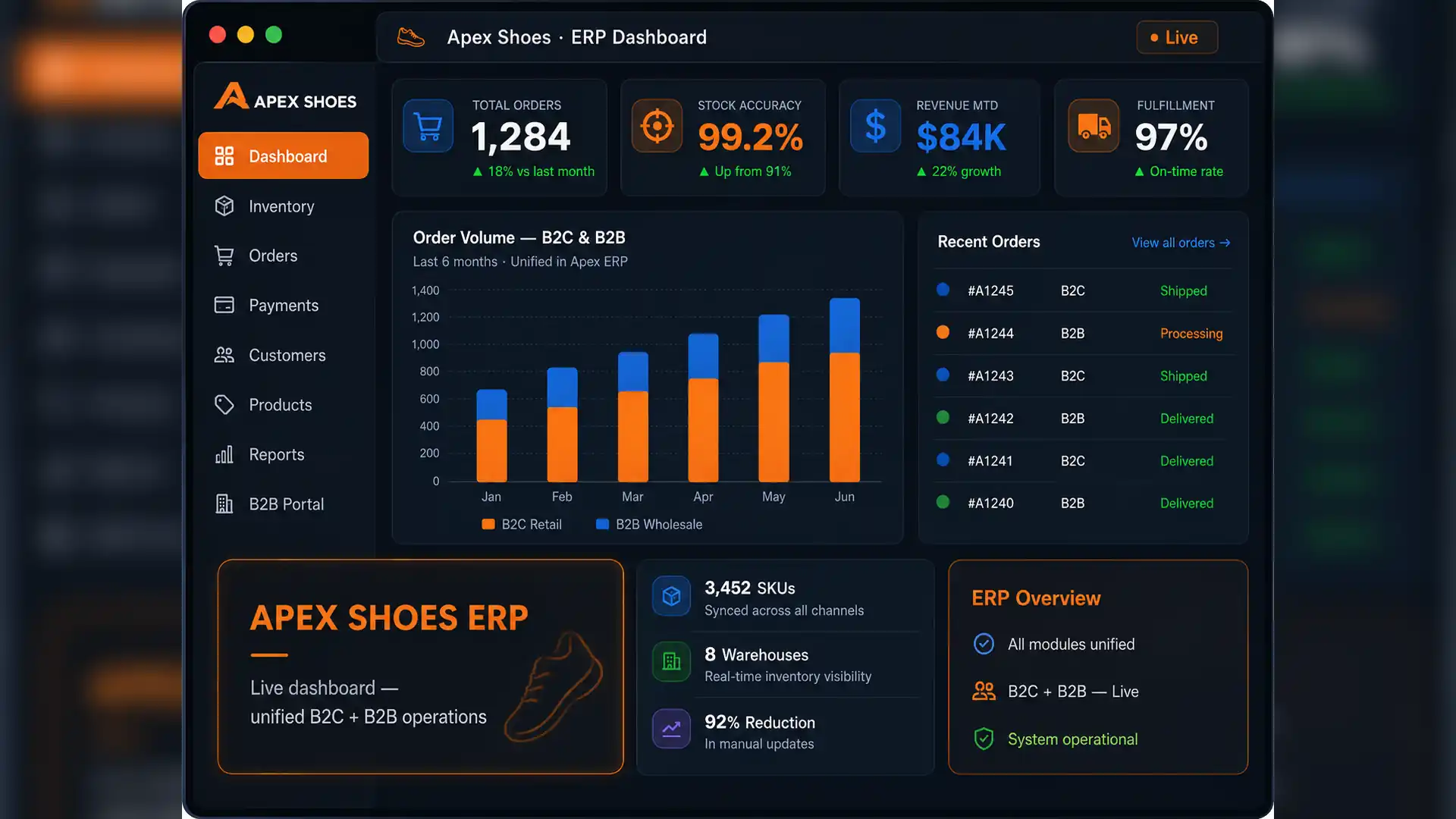
Apex Shoes Unified Wholesale and Retail Operations with Odoo ERP

SDLC Corp helped Apex Shoes bring catalogue, inventory, orders, payments, and customer records into one Odoo ERP workflow.

  • B2B and B2C workflows connected
  • Stock, orders, payments, and customers unified
  • Odoo configured for footwear retail operations
2
Sales channels
4
Core modules
1
Unified platform
Read Case Study
Apex Shoes Odoo ERP dashboard showing wholesale and retail operations
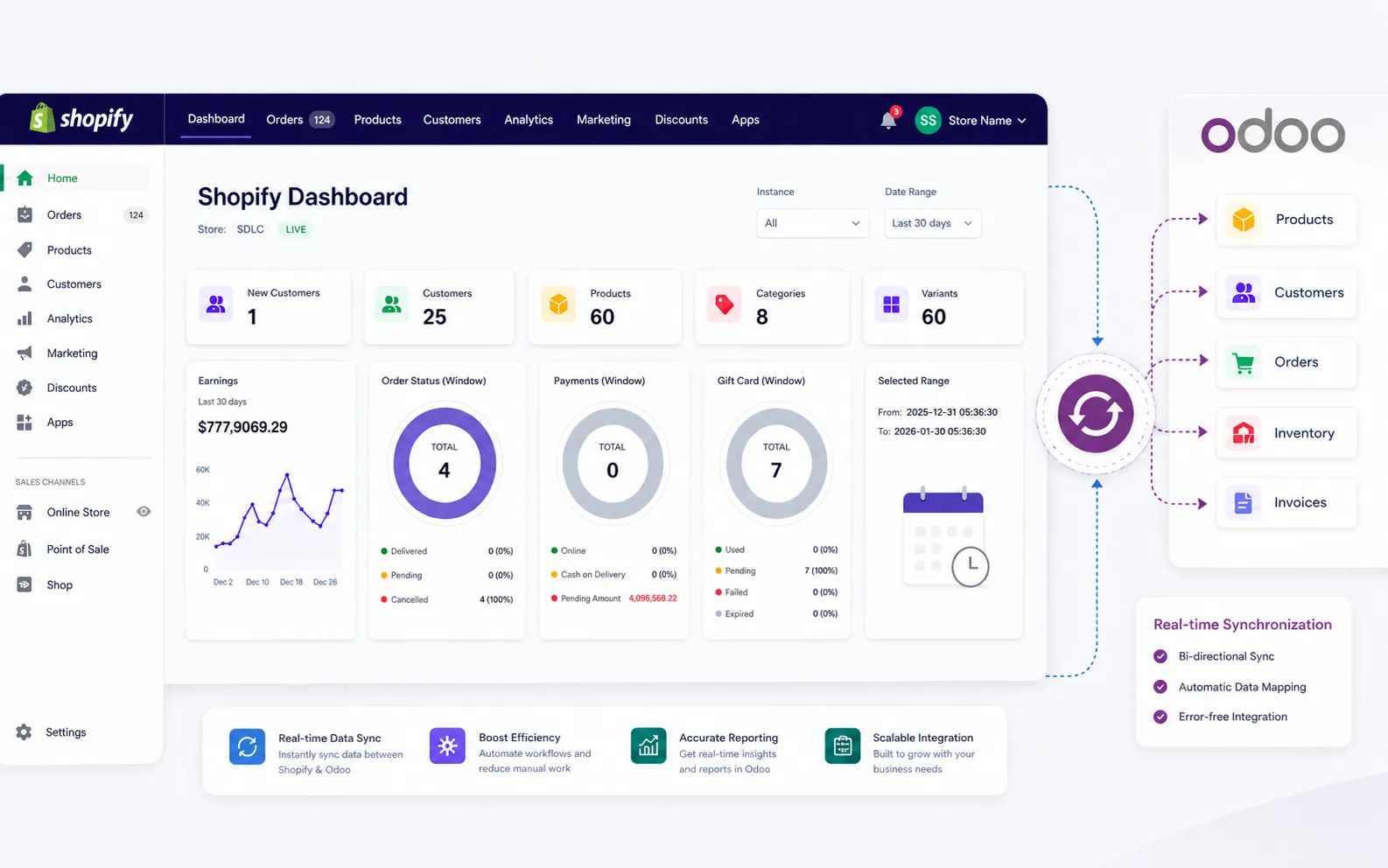
Shopify Odoo Integration

Shopify Odoo Connector for Real-Time Inventory and Order Sync

SDLC Corp connected Shopify with Odoo to sync orders, products, customers, inventory, invoices, and daily ecommerce records.

  • Shopify orders synced into Odoo
  • Products, customers, and stock aligned
  • Sync logs added for better operational control
Shopify
Storefront
Odoo
ERP system
4
Core sync areas
Read Case Study
Shopify Odoo integration dashboard showing synced orders inventory customers and operations data
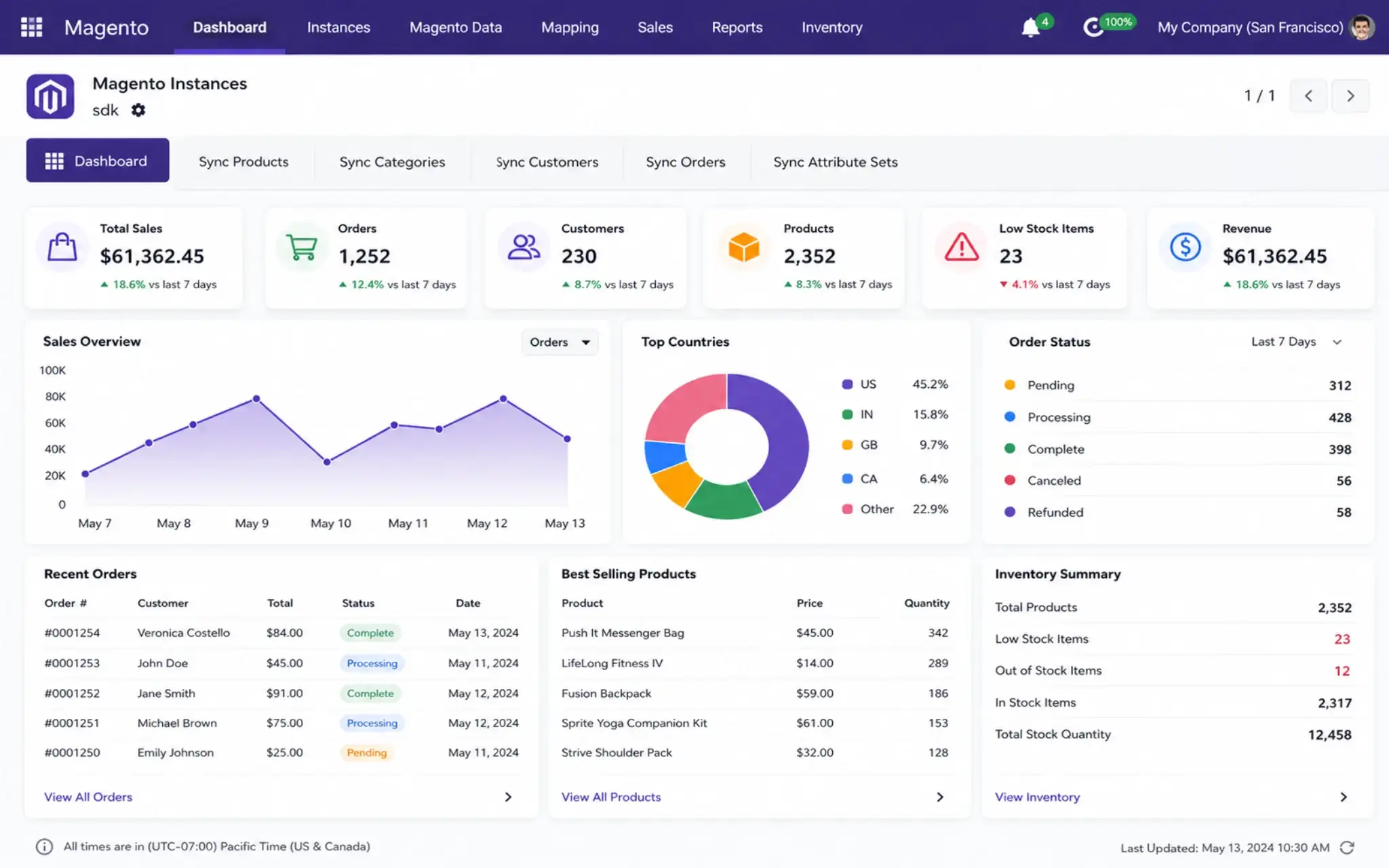
Magento 2 Odoo Integration

Magento 2 Odoo Connector for Ecommerce ERP Synchronization

SDLC Corp connected Magento 2 with Odoo to sync products, orders, customers, invoices, shipments, and inventory data.

  • Magento 2 connected with Odoo ERP
  • Orders, customers, invoices, and stock mapped
  • Two-way data sync rules configured
Magento 2
Storefront
Odoo
ERP system
2-Way
Data sync
Read Case Study
Magento 2 Odoo connector dashboard showing ecommerce ERP synchronization
Guides & Insights

ERP Guides and Insights

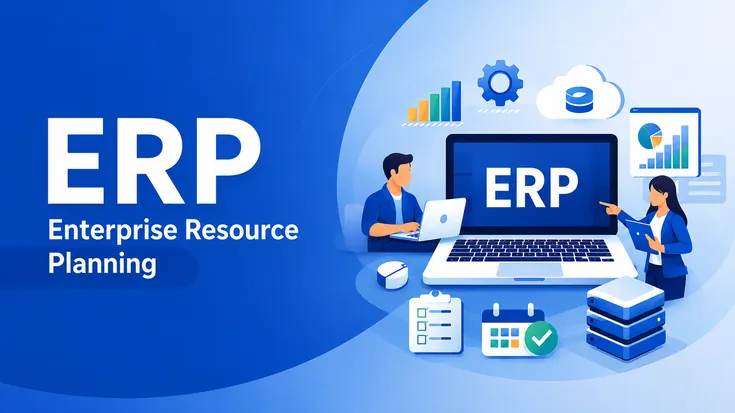
Explore practical ERP guides for retail and ecommerce teams, including ERP basics, implementation planning, CRM integration, inventory visibility, order workflows, and connected back-office operations.
Let’s Talk ERP

Build a System Around Your Operations

Talk to an ERP implementation consultant about connecting inventory, sales channels, POS, warehouse, finance, customers, and reporting into one scalable platform.

Client Stories

Client Reviews and Project Feedback

Retail and ecommerce businesses need systems that reduce manual work, connect operations, and give teams better control over inventory, orders, finance, and reporting.

Client Story
Eric Leist CEO, Edgerton Strategies
Client Story
Doug Schmidt CEO, Roofaid USA
Client Story
Reyzal Razmi All Star Influencers
Verified ERP Review on Clutch

Overall, we were very satisfied with the engagement. SDLC Corp helped centralize key workflows into one ERP system, reduced manual tracking, and made business decisions faster.

View all customer stories
FAQs

Retail and Ecommerce ERP FAQs

Common questions about retail ERP software, ecommerce integrations, migration, ROI, implementation, and omnichannel operations.

What is ERP for retail and ecommerce?

ERP for retail and ecommerce is a centralized system that connects inventory, orders, POS, warehouse, finance, customers, vendors, and reporting across online stores, marketplaces, and physical locations.

Why do retail and ecommerce businesses need ERP?

Retail and ecommerce businesses need ERP when disconnected tools create stock mismatches, manual order entry, delayed fulfillment, poor reporting, and slow finance reconciliation. ERP brings these workflows into one system.

Do you build custom ERP for retail and ecommerce businesses?

Yes. SDLC Corp builds custom ERP systems for retail and ecommerce businesses based on their workflows, integrations, user roles, reporting needs, and operational scale.

Can ERP integrate with Shopify, WooCommerce, Magento, Amazon, and POS?

Yes. A retail ERP can integrate with ecommerce platforms, marketplaces, POS systems, payment gateways, shipping providers, accounting tools, CRM systems, and custom APIs to keep business data synchronized.

What is the difference between custom ERP and ready-made ERP for retail?

Custom ERP is built around your exact retail workflows, integrations, user roles, and reporting needs. Ready-made ERP is faster to start, but your team usually has to adapt to the platform’s standard processes.

How much does retail and ecommerce ERP development cost?

Cost depends on modules, integrations, data migration, customization, dashboards, user roles, and support requirements. SDLC Corp first reviews your workflows and then provides a scoped estimate.

How long does retail ERP development take?

The timeline depends on project scope. A focused ERP module or integration can be delivered faster, while a full ERP rollout takes longer because it includes planning, development, migration, testing, training, and launch.

Can ERP manage both online and offline retail operations?

Yes. ERP can connect ecommerce stores, marketplaces, physical stores, POS, warehouses, finance, returns, and customer data so online and offline operations remain aligned.

What are the main risks during retail ERP migration?

Common risks include incomplete data, duplicate product records, incorrect opening inventory, integration failures, and disruption to POS or order processing. Data validation, backups, phased migration, testing, and a rollback plan help reduce these risks.

How can retailers measure ERP ROI?

Retailers can measure ERP ROI through lower inventory carrying costs, fewer stock discrepancies, faster order processing, reduced manual work, improved inventory turnover, and quicker financial reconciliation. Results should be compared with operational benchmarks recorded before implementation.

How does ERP handle multi-location retail edge cases?

A retail ERP can support location-specific inventory, pricing, taxes, currencies, promotions, permissions, replenishment rules, transfers, returns, and fulfillment routing. These rules can be configured separately while maintaining centralized reporting.

Let's Talk About Your Product

Get expert guidance on architecture, scope, timelines, and delivery approach so you can move forward with confidence.

What happens next?