
PHP development for web apps, APIs and upgrades
SDLC Corp is a PHP development company that builds, integrates and modernizes business applications on Laravel, Symfony, WordPress and Magento. We take on new products, customer portals and API layers, and move older PHP 5 and 7 codebases to supported PHP 8 releases without stopping the business.
- Laravel
- Symfony
- CodeIgniter
- WordPress
- WooCommerce
- Magento
- 3,400+Projects delivered across 12 industries
- 1,200+Engineers across 6 continents
- 30+Countries served
- 10+Years of software delivery
What we build
with PHP.
One team covers the full PHP stack, from new builds to keeping a ten-year-old application secure and fast.
- Product and platform
Custom PHP web applications
Customer portals, SaaS products, booking systems and internal tools built around your workflows and data model.
- Framework
Laravel development
Queues, Eloquent, Livewire or Inertia front ends, and Horizon for background jobs. A strong default for new products and SaaS.
- Framework
Symfony development
Long-lived enterprise applications that need strict architecture, reusable components and API Platform.
- Integration
PHP API development and integration
REST and GraphQL APIs, payment gateways, ERP and CRM connectors, webhooks and SSO for systems that have to talk to each other.
- Commerce
PHP ecommerce
Magento storefronts, WooCommerce builds and custom Laravel commerce with ERP sync for catalog, orders and stock.
- CMS
WordPress and Drupal development
Custom themes, Gutenberg blocks, plugins and multisite networks for content-heavy websites.
- Legacy systems
PHP upgrade and modernization
PHP 5 and 7 to PHP 8.3+, framework version upgrades, refactoring and test coverage for code that has to keep running.
- Run
Maintenance and support
Security patches, dependency updates, performance tuning, monitoring and bug fixing for live PHP applications.
How a PHP request
runs in production.
Fast PHP applications are tuned at every hop, not just in the code. This is the path we design, profile and harden on every project.
Client
Browsers, mobile apps and partner systems send requests over HTTPS.
Edge and web server
A CDN and Nginx handle TLS, caching and static files before PHP runs.
PHP 8 runtime
PHP-FPM with OPcache and preloading keeps request bootstrap fast.
Application
Laravel, Symfony or WordPress code, with slow work pushed to queues.
Data and services
MySQL or PostgreSQL, Redis, search, payments and ERP or CRM APIs.
Where PHP fits,
and where it does not.
PHP runs on 69.4% of websites whose server-side language is known (W3Techs, October 2026). It is a strong default for many business applications, but not all of them. Here is how we advise clients.
A strong fit
- Content-heavy websites and portalsWordPress and Drupal cover editorial workflows out of the box.
- Ecommerce stores and marketplacesMagento, WooCommerce and Laravel bring mature payment, catalog and tax tooling.
- Data-driven business applicationsCRUD-heavy admin, approval and reporting tools ship quickly on Laravel or Symfony.
- An existing PHP estateUpgrading and extending usually costs less than rewriting, and carries less risk.
Consider another stack
- Machine learning and data science workloadsPython has the libraries. PHP can call those services through an API.
- Very high-concurrency real-time systemsLarge chat or streaming backends are often simpler in Node.js or Go, though Laravel Reverb handles moderate WebSocket loads.
- Native mobile appsUse Swift, Kotlin or Flutter. PHP can still power the API behind them.
Still on PHP 7 or 8.1?
Plan the upgrade now.
About a third of PHP websites still run PHP 7 or older (W3Techs). Those versions get no security fixes, and PHP 8.2 support ends on 31 December 2026 (php.net). We upgrade in measured steps, so the application keeps running throughout.
| Version | Security fixes until |
|---|---|
| PHP 7.4 | Ended 28 Nov 2022 |
| PHP 8.0 | Ended 26 Nov 2023 |
| PHP 8.1 | Ended 31 Dec 2025 |
| PHP 8.2 | Ends 31 Dec 2026 |
| PHP 8.3 | 31 Dec 2027 |
| PHP 8.4 | 31 Dec 2028 |
| PHP 8.5 | 31 Dec 2029 |
Audit the codebase
Run PHPCompatibility and PHPStan scans, list deprecated functions and extensions, and check each Composer dependency for a PHP 8 release.
Add a safety net
Write characterization tests around critical flows such as checkout, billing and login before any code changes.
Refactor with tooling
Use Rector for repeatable fixes, then upgrade the framework one major version at a time.
Release in stages
Run old and new runtimes side by side in staging, compare logs and performance, then cut over with a rollback plan.
PHP platform work,
documented.
Six case studies across WordPress, WooCommerce, Magento, PrestaShop and Moodle. Each card links to the full write-up.
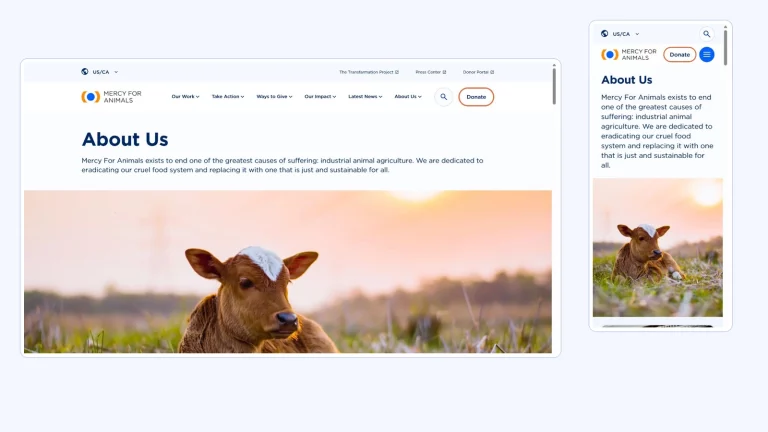
Mercy For Animals: multi-region WordPress
Regional sites for the US, Latin America, Brazil, India, Malaysia and the global network on one WordPress multisite, with custom Gutenberg blocks and content migration.
- WordPress multisite
- Gutenberg
- ACF Pro

ReSanskrit: online store for Sanskrit-inspired products
A Sanskrit-quotes Instagram page became an online store for posters, frames, notebooks and apparel, with collections, search, filters, wishlist and cart.
- WooCommerce
- Product catalog
- Search and filters
WooCommerce and Odoo: store and ERP in sync
Products, orders, customers, inventory, pricing, categories and coupons now sync between WooCommerce and Odoo through webhooks. Setup and validation took 4-6 weeks.
- WooCommerce
- Webhooks
- Odoo ERP
Magento 2 and Odoo: real-time ERP sync
A US retailer stopped keying data by hand. Products, orders, customers, inventory, invoices and shipments now move both ways, with scheduled jobs and monitoring.
- Magento 2
- REST APIs
- Odoo ERP
PrestaShop and Odoo: orders and stock without re-keying
Two-way sync of orders, products, inventory and customer records between a PrestaShop store and Odoo, run by scheduled cron jobs with a live log dashboard.
- PrestaShop
- Cron sync
- Odoo ERP

Moodle-connected event platform for 6 campuses
One platform for 1,900+ events a year across six campuses. Session recordings publish to the right Moodle course through LTI 1.3, with access limited to enrolled students.
- Moodle LTI 1.3
- SSO
- SIS sync
The PHP stack
we work in.
We choose tools for maintainability first: typed code, static analysis and automated tests are standard on every build.
Frameworks
- Laravel
- Symfony
- CodeIgniter
- CakePHP
- Slim
CMS and commerce
- WordPress
- WooCommerce
- Magento / Adobe Commerce
- PrestaShop
- Drupal
Data and caching
- MySQL
- MariaDB
- PostgreSQL
- Redis
- Elasticsearch
APIs and integrations
- REST
- GraphQL
- SOAP
- Stripe
- PayPal
- OAuth 2.0 / SSO
Quality and delivery
- Composer
- PHPUnit
- Pest
- PHPStan
- Rector
- Docker
- GitHub Actions
From first call
to production.
Discovery and code review
Map users, workflows, data and integrations. For an existing system, review the codebase, PHP version and hosting before scoping.
Architecture and estimate
Choose the framework, data model and hosting, then agree milestones and a fixed or time-based estimate.
Build in sprints
Two-week sprints with demos on a staging environment, code review on every merge and CI running tests and static analysis.
Test and secure
Functional, regression and performance testing, plus checks against the OWASP Top 10 and composer audit for vulnerable packages.
Launch and support
Deployment with a rollback plan, monitoring and an agreed support plan for patches, updates and new features.
Fixed-scope project
A defined feature set, timeline and price. Suits new builds and upgrades with clear requirements.
Dedicated PHP team
Developers, QA and a delivery lead working as an extension of your team, billed monthly.
Support retainer
A monthly block of hours for patches, dependency updates, monitoring and small enhancements.
PHP development
questions, answered.
What does a PHP development company do?
A PHP development company designs, builds, integrates and maintains software written in PHP. That includes web applications, APIs, ecommerce stores and CMS websites. SDLC Corp also upgrades older PHP applications to supported PHP 8 releases and provides ongoing support.
Is PHP still a good choice in 2026?
Yes, for web applications, ecommerce and content platforms. PHP runs on 69.4% of websites whose server-side language is known, according to W3Techs. Modern PHP 8 has a JIT compiler, typed properties, enums and readonly classes, and frameworks such as Laravel and Symfony are actively maintained.
Should we use Laravel or Symfony?
Laravel is usually faster for new products, SaaS and admin-heavy applications because so much comes built in. Symfony suits large, long-lived enterprise systems that need strict component boundaries. We recommend one after reviewing your team, timeline and integration needs.
Can you take over an existing PHP application?
Yes. We start with a code and infrastructure review covering PHP version, framework, dependencies, tests, hosting and known issues. You get a written assessment of risks and priorities before any changes are made.
How long does a PHP 7 to PHP 8 upgrade take?
It depends on codebase size, test coverage, framework version and how many dependencies need replacing. A code audit gives a scoped estimate. Upgrades run in stages with rollback options, so the application stays live.
How do you keep PHP applications secure?
We use parameterized queries, output escaping, CSRF protection and framework authentication, and test against the OWASP Top 10. Composer dependencies are checked with composer audit, and the application runs on a PHP version that still receives security fixes.
Related services
- Contact Us
Let’s Talk About Your Product
What happens next?
- We review your requirements
- Strategy call with experts
- Clear roadmap & estimate
- NDA available on request
- Enterprise Grade Delivery
- Global Clients
- By submitting this form, you acknowledge that SDLC Corp may process your details to respond to your inquiry. See our Privacy Policy and Cookie Notice.