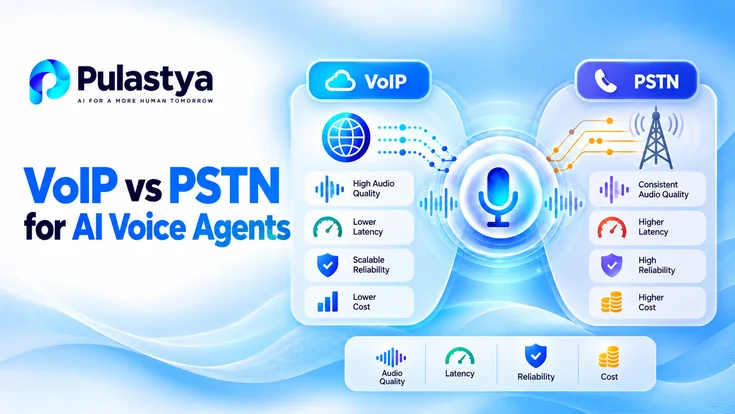
Two technologies can carry the same conversation between the same two people, and they behave nothing alike.
One reserves a dedicated circuit for the duration of the call. The other chops the voice into packets and sends them across a shared network that has other traffic to think about. For a voice agent the difference is not academic, because the agent is listening to the result.
- Reserved versus shared One approach holds a dedicated circuit for the whole conversation; the other competes for a shared link with everything else.
- Consistency beats raw fidelity An agent copes better with audio that is slightly limited and steady than with audio that is excellent and occasionally interrupted.
- The bill changes shape Commitments made in advance give way to usage that scales with traffic, which changes budgeting more than it changes totals.
The comparison is often framed as old versus new, which is unhelpful. The older approach is genuinely better at some things, and the newer one is not merely a cheaper substitute for it. They fail differently, cost differently and sound different.
What makes this worth a decision rather than a default is that software is a less forgiving listener than a person. A human on a poor line reconstructs missing words from context. Speech recognition works with what actually arrived.
Two Ways of Moving a Voice
The traditional approach reserves a path when the call begins and holds it until somebody hangs up. That path belongs to the conversation exclusively, whether anybody is talking or not, and nothing else can use the capacity in the meantime.
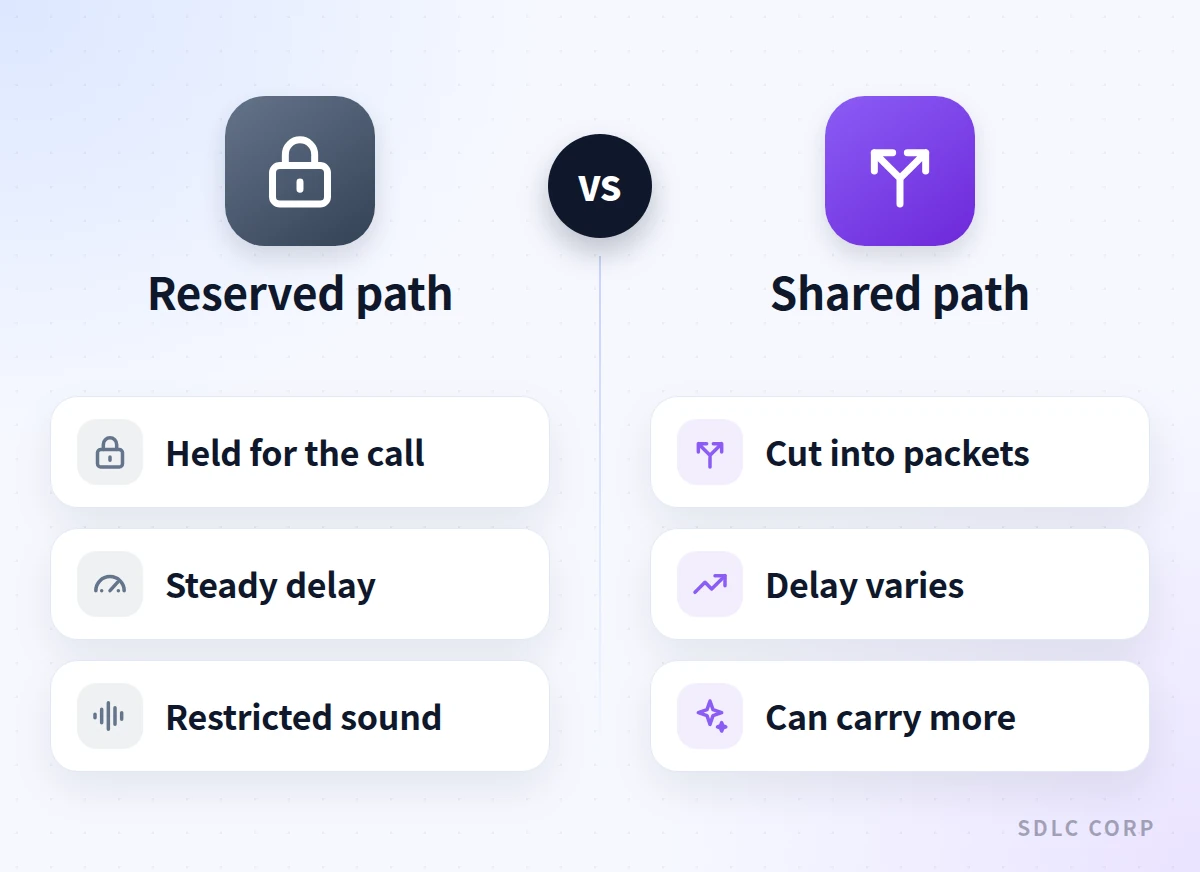
The packet approach reserves nothing. The voice is cut into small pieces, each labeled with where it is going, and each finds its own way across a shared network alongside email, video and everything else in flight at that moment.
Reserving capacity is wasteful and extremely predictable. Sharing it is efficient and only as predictable as the network underneath. Almost every practical difference between the two follows from that one trade.
Capacity is committed for the whole call. Delay barely varies, nothing else competes for the space, and unused capacity is simply unused.
Capacity is borrowed as needed. Efficient and flexible, but the experience depends on what else is traveling at the same moment.
Not the mechanism but its side effects: how consistent the arriving audio is, and whether small pieces of it go missing.
A caller cannot tell the two apart from a handset, and neither can most listeners on a good day. The difference shows up in the tails: the busy hour, the congested link, the call that crosses three networks to reach you.
What Each One Does to the Audio
Speech recognition is downstream of all of this. Whatever the transport removed or mangled is removed or mangled before any software has a chance to interpret it, and no amount of tuning further up recovers it.
The reserved approach is limited but extremely consistent. It delivers a restricted slice of the human voice, always the same slice, without gaps. Recognition engines have been trained on decades of exactly this kind of audio and handle it well.
The packet approach can carry a richer signal end to end, and when it does, the agent hears more of the caller. It can also drop pieces under congestion, and dropped pieces are the failure mode that hurts recognition most.
| Behavior | Where it comes from | Effect on recognition |
|---|---|---|
| Restricted but steady sound | A reserved path with a fixed encoding | Predictable, well understood, forgiving of accents less than richer audio |
| Fuller, more natural sound | A packet path where both ends carry a richer signal | Better separation of similar sounds, particularly letters and digits |
| Small pieces missing | Congestion on a shared link | Words truncated or invented, and confidence drops without warning |
| Pieces arriving unevenly | Variable delay across the shared path | Smoothed out by buffering, at the cost of adding delay |
| Robotic or metallic tone | Repeated conversion between encodings along the route | Noticeably worse accuracy on unusual words and proper names |
The buffering row is the quiet one. Uneven arrival is corrected by holding audio briefly before playing it, which works, and which pays for smoothness in delay that lands on every single turn of the conversation.
Where a transport problem is suspected, the symptom-to-layer mapping in the path a call takes before software answers is the faster place to start than a vendor ticket.
Delay Behaves Differently on Each
Both transports add delay. The distinction that matters for conversation is not how much but how reliably the same amount arrives on every turn.
A reserved path adds a delay set mostly by distance and by the equipment along the route, and it stays close to that figure for the life of the call. Whatever the number is, the conversation can adapt to it.
A shared path adds delay that moves. Quiet periods are quick, congested ones are slower, and the buffering used to hide the variation adds more on top. The result can be excellent and can change halfway through a call.
Variability is the thing that damages conversation. Turn taking depends on hearing a pause and judging it, and a pause stretched unpredictably by the network is indistinguishable from a caller who has finished speaking.
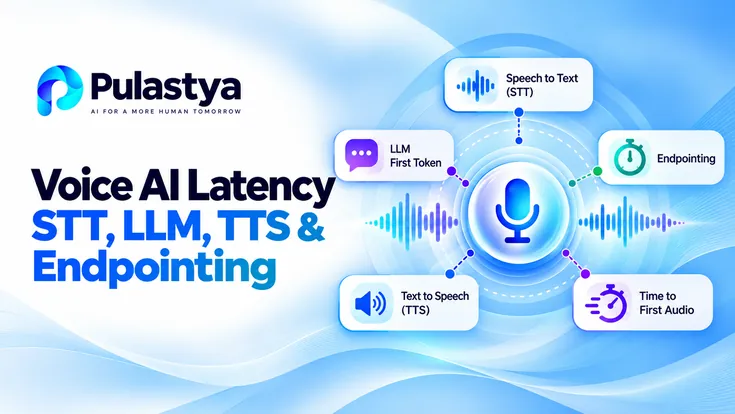
That is why transport belongs in any discussion of responsiveness. Network variation is added to every other delay before the caller hears a word, as set out in where the delay in a spoken turn comes from.
The Bill Changes Shape, Not Only Size
Cost comparisons here usually collapse into a claim that one is cheaper. The more useful observation is that the two produce different shapes of expenditure, and the shape is what a finance team plans around.
- Reserved capacity is committed ahead of demand, so the bill is stable and the ceiling is fixed until somebody renegotiates it.
- Shared capacity is consumed as it is used, so the bill follows traffic and rises with a busy month rather than a contract change.
- Adding capacity on a committed arrangement is a procurement exercise with a lead time attached.
- Adding capacity on a usage arrangement is fast, which is a benefit and also removes a natural brake on runaway consumption.
For an automated deployment the second half of that list matters most. A retry loop or an unusually successful campaign turns into consumption immediately, where a committed arrangement would simply have refused the extra calls.
Neither shape is safer on its own. What makes the usage model safe is a limit set deliberately and an alert when consumption departs from its normal pattern, rather than trusting the absence of a ceiling to be harmless.
How the same minutes are then packaged and charged by software vendors on top of transport is a separate question, covered in four ways vendors bill the same call minutes.
Resilience, and What Fails on Each
Reliability arguments about telephony tend to be nostalgic. The reserved network's reputation is deserved, and it was earned under conditions that included dedicated power, tightly controlled equipment and very slow change.
The packet approach depends on things that fail more often and recover faster: an internet connection, local networking equipment, mains power, and the health of every provider along the route.
| Failure | More likely on | Usual mitigation |
|---|---|---|
| Local power loss at a site | The packet path | Backup power, or routing calls away from the site entirely |
| Congested link degrading audio | The packet path | Prioritizing voice traffic, or a separate link for it |
| Physical line damage | Both, depending on what the last stretch is | A second route on different infrastructure |
| Slow restoration after a fault | The reserved path | Planned diversity rather than reliance on repair times |
| Provider-side outage | Both | A tested fallback destination that does not share the same provider |
The pattern across the table is that the packet approach fails more often and is far easier to route around, while the reserved approach fails rarely and is harder to reroute when it does. Diversity is the answer in both cases.
Whichever transport carries the calls, an agent needs a defined destination for the moments it cannot be reached, which is the subject of detecting failure and recovering safely.
Most Organizations Are Already Running Both
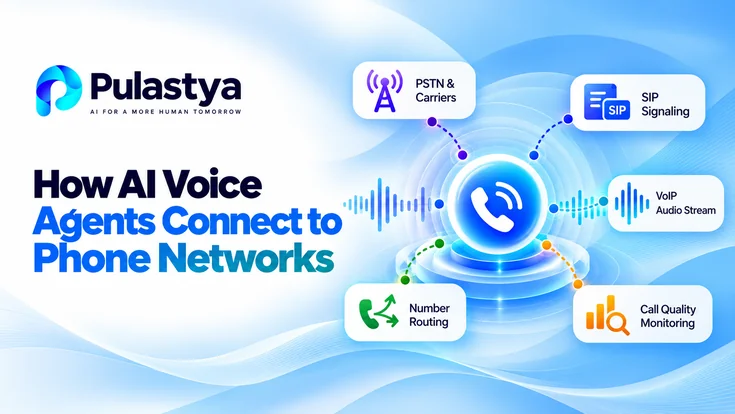
The comparison is rarely a choice made once for a whole business. A call from a mobile, a call from a home landline and a call from a customer using an internet phone service all reach the same number by different routes.
Inside the organization the picture is usually mixed as well. A head office runs everything over its data network while a remote site or a critical line stays on older infrastructure precisely because it has to work during a power cut.
That has a practical consequence for testing. An agent tested only from inside the office network is tested on the best route it will ever see, which is exactly the route that will not explain the complaints.
- Test from a mobile on a cellular connection rather than office wireless.
- Test from a residential line, which is how many customers will actually call.
- Test at the busiest hour, when any shared link is under the most pressure.
- Test the routes that matter most, including anywhere calls arrive from another country.
Building that variety into a test plan rather than into incident reviews is the point of testing a voice agent before and after launch.
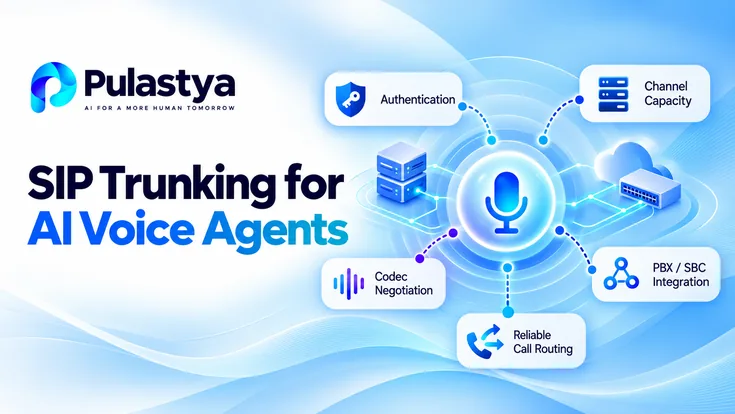
Where the organization already runs its own telephony, the agent usually joins it through a dedicated connection rather than a transport decision made from scratch, described in how a trunk connects an agent to existing telephony.
Conclusion
VoIP and traditional PSTN-based calling can both support AI voice agents, but they make different trade-offs. Circuit-switched segments can deliver predictable channel behavior, while VoIP enables flexible integration, capacity management and cloud-based routing when the network is properly designed.
For an AI voice agent, the most useful comparison is not simply old versus new or cheap versus expensive. It is whether the full call path consistently delivers intelligible audio with manageable delay, packet loss, uptime and recovery options. The real-world outcome depends on providers, codecs, network conditions, redundancy and the integration between telephony and the AI platform.
Before choosing an approach, test representative mobile and landline calls during busy periods, monitor audio quality and latency, and confirm that failed calls have an independent fallback route. The right solution may be VoIP, a traditional connection or a hybrid of both.
Frequently Asked Questions
In most deployments yes, and it is the normal arrangement. What matters is not the transport in principle but the state of the network carrying it. A well-provisioned packet path with voice traffic given priority is excellent; a congested shared link produces exactly the gaps in audio that speech recognition handles worst.
It sounds more consistent rather than richer. It delivers a restricted slice of the voice, always the same slice, without gaps. A packet path in good condition can carry more of the caller's voice than that, which helps recognition on letters and digits, but it is capable of a much worse day.
It varies with distance and route, and the more useful question is which gives steadier delay. A reserved path stays close to one figure for the whole call. A shared path moves with congestion, and the buffering used to smooth that variation adds delay of its own to every turn.
They differ in shape more than in level. Reserved capacity is committed ahead of demand and produces a stable bill with a fixed ceiling. Usage-based capacity follows traffic, which is cheaper when volumes are modest and removes the natural limit that stops a retry loop becoming an expensive one.
It is a reasonable form of diversity, particularly for a line that must work during a power or internet outage. The value is not the technology itself but the fact that it fails independently of the primary route. A backup sharing the same connection or the same provider is not really a backup.