One Family Of AI Capabilities

Generative & Agentic AI For Enterprise

Generation, language models, retrieval, agents and conversational interfaces solve different problems. We help you choose the right capability first, then engineer them into one governed system that works inside your business.
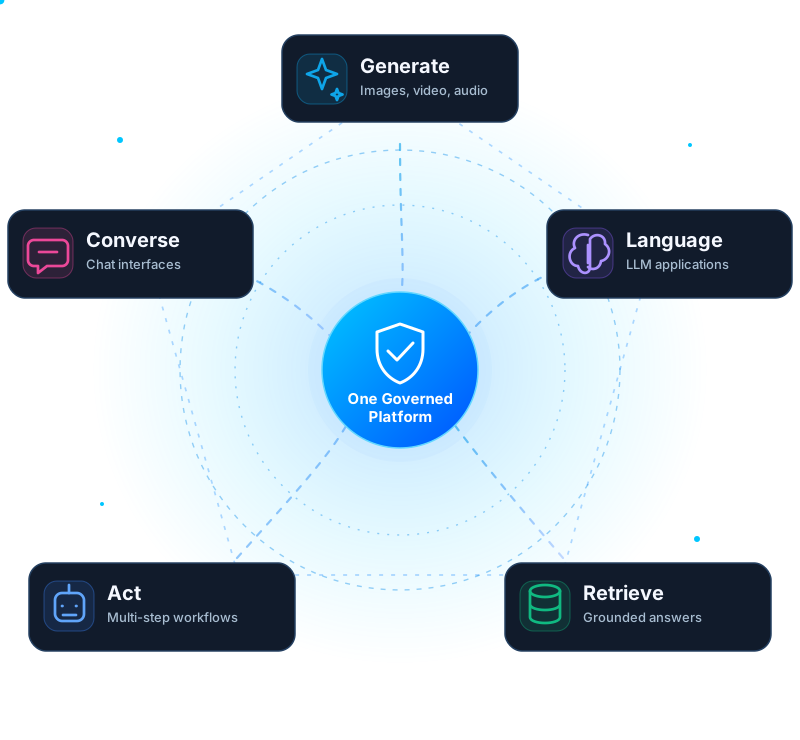
Generative and Agentic AI capabilities including generation, language models, retrieval, agents and conversations connected through one governed platform
  • 125+ AI Models Trained or Deployed
  • 120+ Enterprise AI Integrations
  • 3,400+ Company-wide Deliveries
  • 30+ Countries Served

Our 400+ AI specialists are part of SDLC Corp’s 1,200+ engineering team. Together, they have completed 300+ AI deployments and 125+ LLM fine-tuning implementations.

Trusted by Fortune Global 500 leaders, governments & top universities across 30+ countries

Powered by leading cloud & AI platforms

Recognized by leading industry reviewers

Awards & industry recognition

Capability Family

Five Capabilities One Connected Stack

Each capability has its own page and its own scope. Start with the one that matches your problem, or read on to see how they fit together.

Want engineers added to your own team rather than a delivery project? Hire Generative AI Developers
Choosing A Capability

Which Capability Fits Your Problem?

Match the problem you are trying to solve to the capability that owns it. Most programs start with one row and add the next as the workflow grows.

If You Need To Start With Usually Add Next
Produce images, video, audio or 3D assets at volume Generative AI Development Usually add next Agents to trigger and route generation runs
Add language understanding, drafting or structured extraction to existing software LLM Development Usually add next Retrieval when answers must come from your documents
Answer from your own, changing documents and show the sources RAG Development Usually add next A chatbot or agent that uses the retrieval layer
Let software plan and finish multi-step work across your systems Agentic AI Development Usually add next Retrieval for knowledge and human approval steps
Give customers or staff a conversational front door AI Chatbot Development Usually add next Retrieval for accuracy, agents for actions
Decide whether generative AI fits at all, and where first Generative AI Consulting Usually add next The build capability the roadmap points to

Generative AI

Produces new content from a prompt: text, images, audio, video, 3D or code.

Goal
Create something new
Output
Assets, drafts and structured data
Human Role
Review and approve what is produced

Agentic AI

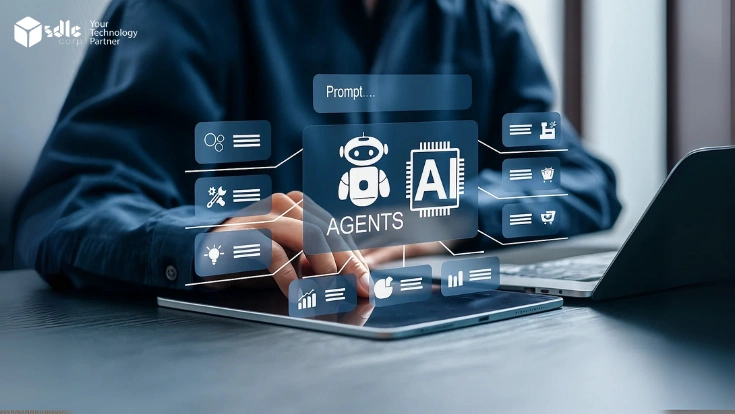
Pursues a goal by planning steps, using tools and checking its own results.

Goal
Complete a task end to end
Output
Actions taken in your systems
Human Role
Set limits and approve sensitive steps
Technology

Models and Platforms Not One Vendor

Model choice follows the workload, license terms, privacy needs and cost. Routing stays replaceable, so a better model becomes a configuration change rather than a rebuild.

OpenAI logo — generative AI models and APIs OpenAI
Anthropic Claude logo — large language model Claude
Google Gemini logo — multimodal AI models Gemini
Meta Llama logo — open-weight language models Llama
Mistral AI logo — language models Mistral
Hugging Face logo — AI model and dataset platform Hugging Face
xAI Grok logo — AI assistant and language model Grok
Perplexity AI logo — AI-powered search platform Perplexity
LangChain logo — LLM application orchestration framework LangChain
LlamaIndex logo — data and retrieval framework for LLMs LlamaIndex
LangGraph logo — framework for stateful AI agent workflows LangGraph
PyTorch logo — machine learning framework PyTorch
TensorFlow logo — machine learning framework TensorFlow
NVIDIA logo — GPU computing and AI infrastructure NVIDIA
Kubernetes logo — container orchestration platform Kubernetes
Amazon Web Services logo — cloud computing platform AWS
Microsoft Azure logo — cloud and AI platform Azure
Google Cloud logo — cloud and AI infrastructure Google Cloud
CategoryModels / Platforms
AI Models and Providers OpenAI, Claude (Anthropic), Gemini, Llama, Mistral, Hugging Face, Grok, Perplexity
AI Orchestration Frameworks LangChain, LlamaIndex, LangGraph
Machine Learning Frameworks PyTorch, TensorFlow
AI Infrastructure NVIDIA, Kubernetes
Cloud Platforms Amazon Web Services (AWS), Microsoft Azure, Google Cloud

For implementation guidance, refer to the official LangChain documentation for agent orchestration and the LlamaIndex documentation for retrieval and data-connected AI applications.

Proof Across the Family

Generative and Agentic AI Case Studies

Delivered projects that show each capability doing a defined job in a real environment. Each one links to the full story.

01 / 06
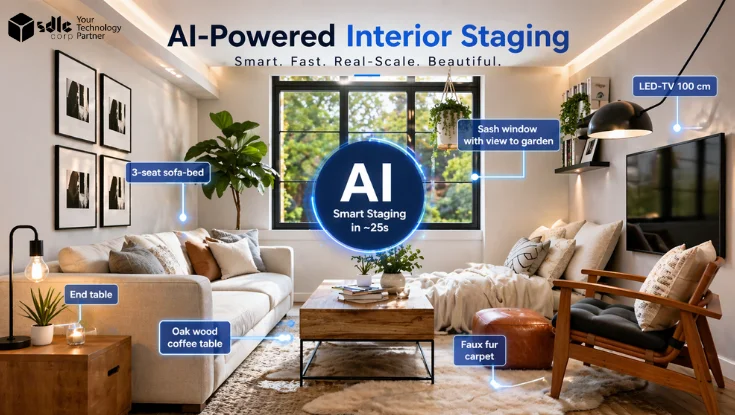
Generative AI

DYD Virtual Staging Platform

Turns photos of empty rooms into furnished, photo-real interiors, with a review step before anything is published.

  • ~25s Per Render
  • 4 to 12 hrs Manual 3D Build Replaced
  • 6 months Discovery to Launch
Read the Case Study
DYD AI interior design simulation platform
02 / 06
LLM Development

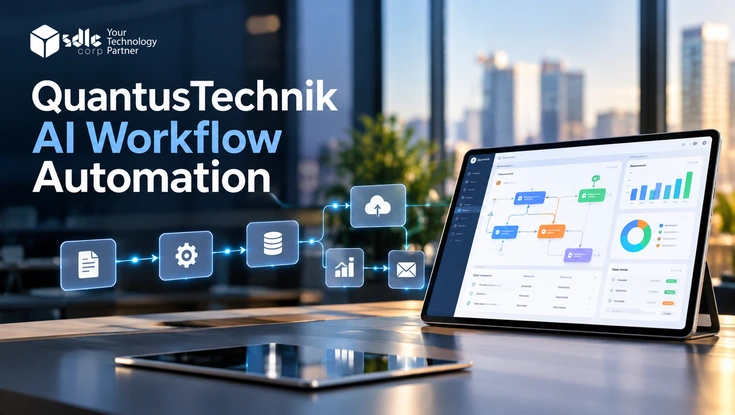
QuantusTechnik Workflow Automation

GPT-4o and LangChain interpret inquiries, prepare summaries and hand structured outputs to managers.

  • 20 to 5 min Lead Review Time
  • 60% to 95% Follow-Up Visibility
  • 4 hrs to 45 min Manager Report Prep
Read the Case Study
QuantusTechnik AI workflow automation dashboard
03 / 06
Enterprise AI Assistants

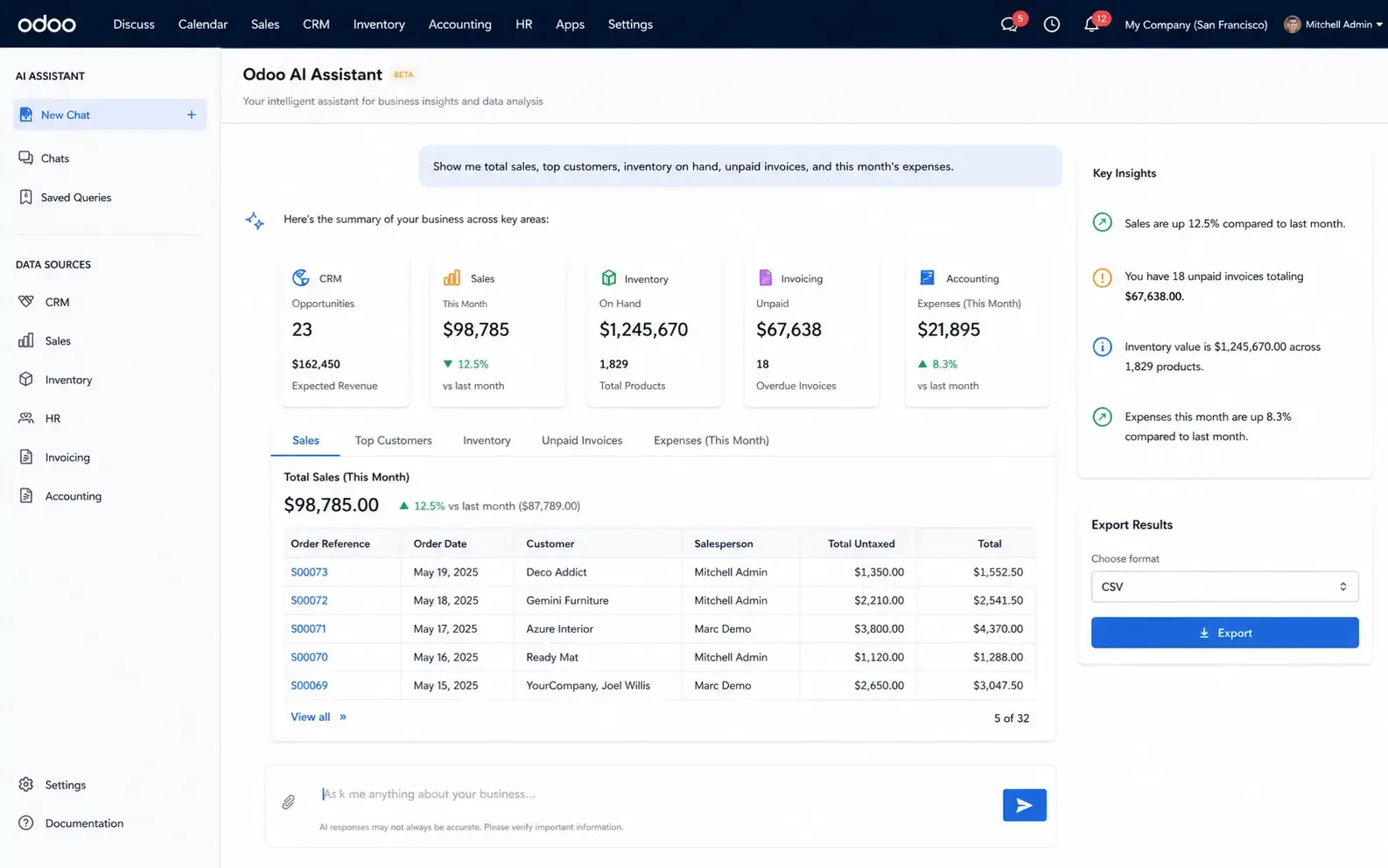
Odoo AI Assistant for ERP Data

An AI assistant that answers plain-English questions using approved Odoo CRM, sales, inventory, HR and accounting records, with role-based access controls.

  • 4x Faster Data Access
  • 65% Fewer Manual Report Requests
  • 18+ Connected Odoo Areas
Read the Case Study
Odoo AI Assistant dashboard providing conversational access to ERP data
04 / 06
RAG Development

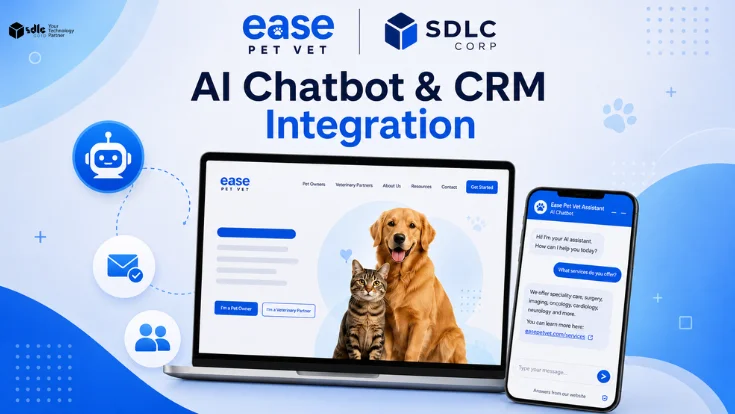
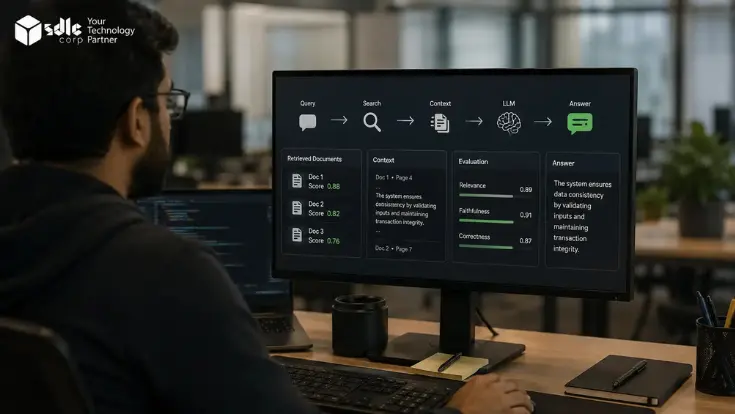
Ease Pet Vet Website Chatbot

A chatbot that answers from the client's own website content rather than from general model knowledge.

  • 100% Emails Verified Before CRM Entry
  • 10 to 12 wks Discovery to Live
Read the Case Study
Ease Pet Vet website AI chatbot
05 / 06
Voice AI Agents

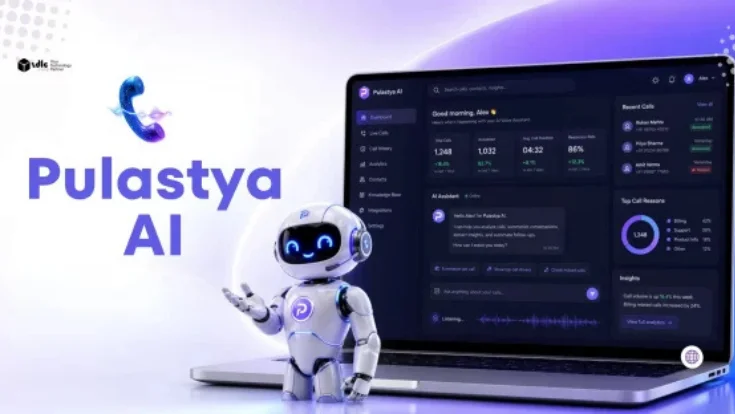
Pulastya AI Call Intake and Routing

An inbound voice agent identifies caller intent, retrieves approved information and routes requests with context for human follow-up when needed.

  • 6 Rollout Stages
  • Inbound AI Call Intake
Read the Case Study
Pulastya AI voice agent platform
06 / 06
AI Decision Intelligence and Workflow Automation

Freight Operations Intelligence

Reads freight invoices, matches and validates charges, and pushes approved lines into Oracle OTM with a human on every exception.

  • 6 Controlled Workflow Stages
  • 8 Steps From Invoice to OTM
Read the Case Study
Container ship at a seaport representing Transworld freight operations
Governance And Security

Security and Governance for Generative and Agentic AI Services

Generative and agentic systems talk to customers and act inside your software, so the controls are built in from the start, not reviewed at the end. These six safeguards apply to every capability in the family.

Six safeguards on every system Built in, not bolted on
  • Test

    Evaluation Before Launch

    Every system is tested on representative tasks before release, then re-tested whenever the model, prompt or data changes.

  • Permit

    Access And Data Controls

    Permissions, data boundaries and provider settings decide what a system can see, use and change inside approved limits.

  • Validate

    Guardrails And Validation

    Prohibited content, malformed outputs and out-of-scope requests are caught before they reach a user or any other system.

  • Approve

    Risk-Based Human Review

    Approval steps follow the risk, so people sign off on sensitive outputs and actions while routine work keeps moving.

  • Record

    Audit Trails And Provenance

    Records show what the system produced or did, on which inputs and under which version, ready for review or audit.

  • Deploy

    Private Deployment Options

    Where the workload allows, systems run in your own cloud, on premise or in isolated environments that you control.

See the evidence behind each safeguard, or talk to the team that sets them up.

Delivery Approach

Our Generative and Agentic AI Implementation Process

The same path applies whichever capability you start with. Each step ends with something you can judge, not a status update.

Start With A Discovery Call
  1. Define

    Frame The Problem

    Define the users, the workflow, the data involved and how success will be measured.

  2. Decide

    Choose The Approach

    Pick the capability, or the combination, that fits the problem instead of the trend.

  3. Validate

    Prove It On Real Data

    Test the approach on representative examples before committing to a full build.

  4. Deliver

    Build And Integrate

    Engineer the system and connect it to the software your teams already use.

  5. Operate

    Govern And Operate

    Add controls, monitor quality and cost, and improve the system in production.

Client Stories

What Clients Say About SDLC Corp

Clients on what it is like to build with our teams.

5.0 ★★★★★ Rated on Clutch and GoodFirms
Client Story

Eric Leist

CEO, Edgerton Strategies

Client Story

Doug Schmidt

CEO, Roofaid USA

Client Story

Reyzal Razmi

All Star Influencers

What Clients Say
01 / 03
They shipped in a week what my last team couldn't do in months.
Brandy Kuentzel
Co-Founder & CEO, Ease Pet Vet

Ready to Build Your Own Success Story?

Tell us the problem, the data and the systems involved. We will recommend the right mix of generative, retrieval and agentic capabilities and how to phase the build.

Talk to an AI Engineer
5.0 Clutch Rating
3,400+ Completed Projects
300+ AI Deployments
30+ Countries Served
10+ Years of Experience
4.9 DesignRush Rating

Resources

Generative and Agentic AI Resources

A curated set of guides that explain the ideas behind each capability. They are written to inform a decision, then point you to the right service page.

Load More
What is Generative AI? Explainer
April 4, 2025 8 min read

What is Generative AI?

Learn what Generative AI is, how it works, and its benefits for business automation, content creation, and AI-driven innovation.

Read More
FAQ

Generative and Agentic AI Services FAQs

Straight answers on choosing between capabilities, combining them and running them safely. For questions about one specific capability, use its own page.

Ask Us Something Else

What Is the Difference Between Generative AI and Agentic AI?

Generative AI produces new content such as text, images, audio or code from a prompt. Agentic AI pursues a goal: it plans steps, calls tools and systems, checks results and keeps going until the task is complete. Agents often use generative models as one of their tools, which is why most enterprise programs end up combining the two.

Do We Need All Five Capabilities?

No. Most programs start with one capability that matches a single, well-defined problem and add others as the workflow demands them. A grounded assistant may need only an LLM and retrieval. A creative pipeline may need only generation. Use the decision table on this page to select a starting point, or begin with generative AI consulting when the choice is not obvious.

How Do LLMs, RAG and Agents Fit Together?

An LLM provides language understanding and reasoning. RAG supplies approved facts from your own documents so answers can be checked against sources. An agent wraps both in a loop that decides what to do next and acts through your systems. Each can be built and shipped separately, then connected.

Should We Start With Consulting or Development?

Start with consulting when the use case, data readiness or business case is still unclear. Start with development when the problem is defined and you need a working system. Many clients take a short strategy engagement first, but either can stand alone.

When Is a Chatbot Enough and When Do We Need an Agent?

A chatbot is enough when the job is answering questions and guiding people through a conversation. You need an agent when the system must take actions across other software, such as updating records, triggering workflows or completing multi-step tasks with approvals.

How Do You Keep Generative and Agentic Systems Safe and Auditable?

Safety is designed in from the first release: evaluation on representative tasks before launch, guardrails and output validation, human review where the risk warrants it, access and data controls, and audit trails that record what the system did and why. Agents also get scoped permissions and approval points for sensitive actions.

Can These Systems Run in Our Own Environment?

Yes, where the model, license and workload allow it. Depending on your data and risk requirements, deployment can be in your cloud account, on premise, hybrid or in isolated environments. The capability pages describe the options for each type of system.

Can We Hire Engineers Instead of Commissioning a Project?

Yes. If you want to add capacity to your own team rather than scope a delivery project, you can hire generative AI developers. If you want a defined outcome, choose the relevant capability from this page.

How Is This Different From Your AI Development Services Page?

AI development services covers custom AI applications across the full range of AI, including machine learning. This page covers the generative and agentic family specifically and helps you choose between its capabilities.

How Does a Project Usually Start?

We begin by framing the problem: the users, the workflow, the data involved and how success will be measured. Then we choose the capability, or combination, that fits, and prove the approach on representative real data before committing to a full build.

Get Started

Tell Us What You Need To Build Or Decide

Share the problem, the data and the systems involved. We will tell you which capability fits, what it would take, and how to phase it.

Let's Build Your Generative and Agentic AI Solution

Get expert guidance on architecture, scope, timelines, and delivery approach so you can move forward with confidence.

What happens next?