ERP Software for Healthcare and Life Sciences
ERP for healthcare and life sciences connects finance, procurement, inventory, workforce, assets, research, quality, and regulated supply chain operations. SDLC Corp provides consulting, implementation, integration, migration, validation support, and long-term ERP services.
- Finance, procurement, and workforce
- Inventory, assets, and supply chain
- Quality, compliance, and traceability
- Clinical and laboratory integrations
Trusted by Industry Leaders

Recognized by Leading Industry Reviewers
ERP for Healthcare and Life Sciences Organizations
We configure ERP systems around the financial, operational, supply-chain, quality, research, and reporting needs of each organization.
Hospitals and Health Systems
Coordinate finance, procurement, medical inventory, assets, workforce, and reporting across facilities.
- Multi-Entity Finance
- Medical Inventory
- EHR Integration
Outpatient and Specialty Clinics
Manage location budgets, purchasing, staffing, equipment, vendors, and administrative reporting.
- Site Accounting
- Supply Control
- Billing Integration
Diagnostics and Clinical Laboratories
Track reagents, consumables, instruments, maintenance, purchasing, contracts, and laboratory costs.
- Reagent Inventory
- Asset Maintenance
- LIMS Integration
Pharmaceutical and Biotechnology
Support research spending, controlled inventory, quality, manufacturing, warehousing, and commercialization.
- Project Accounting
- Batch Traceability
- Quality Workflows
Medical Device Manufacturers
Connect materials, production records, serial numbers, quality events, finished devices, and shipments.
- BOM and Production
- Serial and UDI
- Supplier Quality
CDMOs, CMOs, and Testing Labs
Control client projects, materials, capacity, batch costs, resources, billing, and customer reporting.
- Client Projects
- Capacity Planning
- Batch Costing
Clinical-Trial Sponsors and CROs
Manage study budgets, project costs, vendors, investigator payments, milestones, and regional reporting.
- Study Budgets
- Vendor Payments
- CTMS Integration
Medical and Pharmaceutical Distributors
Manage regulated inventory, expiry dates, pricing, rebates, warehouses, orders, suppliers, and recalls.
- FEFO Inventory
- Contract Pricing
- EDI Integration
Senior Living and Post-Acute Care
Coordinate accounting, purchasing, staffing, payroll, equipment, vendors, and reporting across locations.
- Multi-Location Finance
- Workforce Integration
- Expense Control
Capabilities Across Finance, Supply Chain, and Operations
Support financial control, regulated inventory, product traceability, quality processes, research activity, assets, workforce operations, and reporting through one ERP environment.

ERP Capabilities Built Around Industry Operations
Connect business operations while keeping clinical, laboratory, quality, and research systems in place.
- Financial and operational control
- Regulated inventory and traceability
- Quality and reporting workflows
Financial and Multi-Entity Management
Manage accounting, budgets, cost centers, assets, cash flow, intercompany activity, and financial consolidation.
- Facility, subsidiary, research-unit, and entity reporting
- Budgeting, grant accounting, and financial consolidation
Provider Supply and Revenue Operations
Connect purchasing and supply information with case costs, departmental usage, charge data, and financial records.
- Par levels, supply consumption, and replenishment rules
- Case costing, charge information, and contract data
Regulated Inventory and Cold Chain
Control inventory by status, location, expiry, storage condition, quarantine state, and release status.
- FEFO, expiry management, quarantine, and release controls
- Cold-chain and recall-related inventory records
Batch, Lot, Serial, and UDI Traceability
Trace materials and products from purchasing through production, storage, distribution, returns, and recalls.
- Batch genealogy, serial tracking, and UDI records
- Quality status, shipment history, and recall support
Quality and Product Records
Connect approved quality status with procurement, manufacturing, inventory, release, and distribution.
- Inspections, deviations, CAPA, and change controls
- Product release and QMS or eQMS integration
Contracts, Rebates, and Chargebacks
Manage commercial terms that affect purchasing, pricing, reimbursement, revenue, and product margins.
- GPO contracts, pricing tiers, rebates, and chargebacks
- Effective dates, approvals, and financial reconciliation
Research, Grant, and Study Accounting
Track financial activity across programs, grants, studies, sponsors, milestones, and research projects.
- Study budgets, grant controls, and project costs
- Milestone billing and investigator-payment records
Asset, Equipment, and Maintenance
Manage medical equipment, laboratory instruments, production assets, service contracts, and maintenance.
- Asset records, warranties, maintenance, and depreciation
- Calibration references and service-contract tracking
Workforce and Payroll Operations
Connect employee, position, payroll, credential, training, and labor-cost information across teams and facilities.
- Position control, credentials, and training status
- Payroll integration and labor-cost allocation
Compliance, Security, and Data Governance
Configure access, approvals, records, traceability, and monitoring around the regulatory and operational requirements that apply to your organization.
Healthcare Data Controls
- HIPAA and HITECH safeguards
- Controlled access and secure data exchange
- 340B, GPO, and payment controls where applicable
Electronic Record Controls
- 21 CFR Part 11 records and signatures
- cGMP, GxP, and data-integrity processes
- Batch traceability and validation support
Quality and Traceability Controls
- FDA QMSR and ISO 13485 processes
- Lot, serial, UDI, and supplier traceability
- EU MDR and IVDR support where applicable
Core ERP Data Controls
Define access, approvals, traceability, retention, and monitoring requirements during solution design to reduce rework and validation effort.
Healthcare and Life Sciences ERP Integrations
Connect ERP with clinical, laboratory, quality, pharmacy, supply-chain, revenue, and workforce systems through secure and controlled data flows.

Keep clinical and scientific platforms focused on their defined responsibilities while ERP manages operational and financial workflows.
Clinical Operations
Exchange data with EHR, EMR, practice management, patient accounting, and charge systems.
Laboratory and Quality
Link LIMS, QMS, MES, PLM, batch, material, and quality records with ERP workflows.
Pharmacy and Supply
Synchronize pharmacy platforms, GPO feeds, WMS, EDI, inventory, and invoice data.
Revenue and Workforce
Coordinate revenue cycle, payroll, credentialing, staffing, and reconciliation data.
- Finance
- Procurement
- Inventory
- Assets
- Projects
- Reporting
- HL7 v2
- FHIR
- REST APIs
- EDI
- Middleware
- Secure Files
Plan every data flow: define ownership, direction, validation, security, frequency, and error handling before development.
Choosing the Right ERP Platform
We compare ERP platforms against your workflows, integrations, control requirements, scale, and long-term operating needs.
Odoo
Modular ERPGrowing clinics, laboratories, distributors, and manufacturers can configure flexible workflows around their operations.
- Modular
- Inventory
- Manufacturing
Oracle NetSuite
Cloud Business SuiteThis cloud suite supports biotech, pharmaceutical, diagnostics, and medical-device businesses with multi-entity operations.
- Cloud ERP
- Multi-Entity
- Projects
Dynamics 365 Business Central
Microsoft ERPOrganizations using Microsoft 365, Teams, Power BI, and related services can extend their existing technology ecosystem.
- Microsoft 365
- Finance
- Power BI
Acumatica
Mid-Market Cloud ERPMedical distributors and product businesses can manage finance, warehousing, distribution, and manufacturing operations.
- Distribution
- Warehouse
- Manufacturing
Sage Intacct
Financial ManagementProvider networks and research organizations can strengthen finance, grants, consolidation, and reporting.
- Financials
- Multi-Entity
- Grants
ERP Cost and Project Timeline
Use these planning ranges as an initial benchmark. Final ERP costs depend on licensing, configuration, integrations, data migration, training, support, and Total Cost of Ownership.
Small Organization ERP
Suitable for smaller healthcare organizations with a focused project scope
- Focused finance, purchasing, inventory, or asset modules
- Standard configuration, user roles, approvals, and reporting
- Limited integrations, essential data migration, and training
- Best for smaller teams with clearly defined requirements
Mid-Size Healthcare ERP
Designed for growing healthcare and life sciences organizations
- Multiple modules across finance, procurement, inventory, and assets
- Moderate EHR, pharmacy, payroll, laboratory, or warehouse integrations
- Data migration, workflow configuration, dashboards, and user enablement
- Best for growing multi-department operations
Large Enterprise ERP
Built for large healthcare groups and regulated life sciences operations
- Enterprise-wide finance, quality, laboratory, and operational workflows
- Complex EHR, LIMS, QMS, MES, PLM, and supply-chain integrations
- Advanced data migration, governance, customization, and validation support
- Best for multi-entity and highly regulated environments
Note: These ranges are based on general ERP cost benchmarks. Review the cost guide for more details. Healthcare and life sciences projects may require additional budget for compliance, validation, complex integrations, data migration, multiple locations, customization, licensing, and post-launch support.
ERP Services for Healthcare and Life Sciences
We plan, implement, integrate, migrate, and support ERP systems around your financial, operational, quality, research, and regulatory requirements.
ERP Consulting and Integration
Our ERP consulting services assess processes, systems, data, controls, and integration needs, then connect ERP with EHR, LIMS, QMS, MES, pharmacy, payroll, revenue, and workforce systems.
ERP Selection and Planning
Compare ERP platforms against workflows, integration requirements, scalability, ownership cost, and internal support capacity to define a practical solution roadmap.
ERP Implementation and Customization
Our ERP implementation services configure core modules and build approved workflows, dashboards, reports, portals, and upgrade-aware extensions where required.
ERP Legacy Migration
Clean, map, migrate, reconcile, and validate information from spreadsheets, accounting tools, and legacy ERP systems before controlled deployment.
ERP Validation and Assurance
Support requirement traceability, risk reviews, test evidence, change documentation, validation activities, and controlled deployment across regulated operations.
ERP Training and Managed Support
Provide role-based training, go-live assistance, issue resolution, integration monitoring, performance reviews, and version planning after launch.
Technology and Integration Stack
We use application technologies, healthcare interoperability standards, regulated operational systems, cloud platforms, and analytics tools to build and integrate healthcare and life sciences ERP solutions.

React

Next.js
Node.js
Python
PostgreSQL
MySQL
Power BIOur ERP Delivery Process
Our controlled implementation process aligns workflows, data, integrations, validation requirements, users, and rollout priorities before the ERP system goes live.
Discovery and Scope
We assess workflows, systems, data, controls, reports, locations, users, integrations, and implementation priorities.
Solution Design and Planning
Requirements are converted into future workflows, architecture, approval controls, integrations, migration, testing, and rollout plans.
Configuration, Integration, and Testing
We configure modules, build approved extensions, connect systems, migrate data, and complete workflow and validation testing.
Go-Live and Ongoing Support
We prepare users, complete acceptance, execute controlled cutover, stabilize operations, and establish ongoing support.
Healthcare and Life Sciences ERP Case Studies
Explore two live SDLC Corp projects covering dental care operations and inventory analytics, with clearer workflows, stronger visibility, and more structured planning.
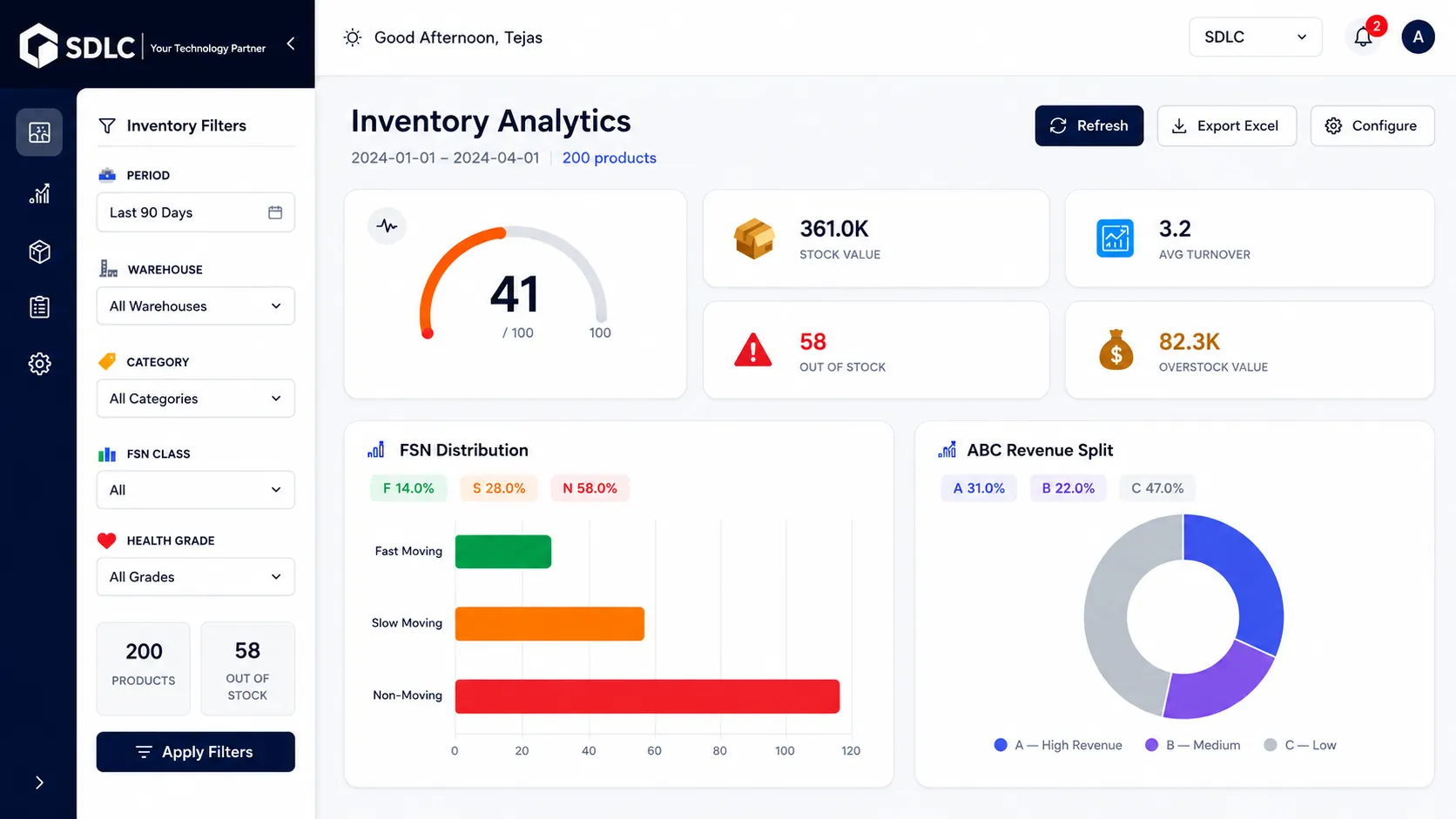
Inventory Analytics Pro for Smarter Inventory Planning
Inventory Analytics Pro gives managers one ERP analytics dashboard for reviewing stock health, slow-moving SKUs, aging inventory, stockout risks, vendor performance, and purchasing priorities.
- Stock health, aging, overstock, and movement reports combined in one dashboard
- Reorder suggestions, vendor insights, and RFQ planning supported faster purchasing decisions
- Automated reports reduced repeated spreadsheet checks and manual inventory review
Digital Operations Platform for a Dental Care Center
This dental care center project focused on organizing patient information, appointments, treatment coordination, billing activities, and administrative workflows through a clearer digital environment.
- Patient records and appointment information organized for easier daily access
- Treatment and clinic workflows connected across care and administrative teams
- Billing and operational activities managed through a more structured process

Explore more SDLC Corp case studies covering ERP implementation, healthcare software, workflow automation, integrations, and digital transformation.
Why Choose SDLC Corp
We combine ERP consulting, implementation, integration, migration, validation support, and long-term assistance in one structured delivery model.
Platform-Neutral Guidance
We evaluate platforms against process fit, integrations, scalability, ownership cost, controls, and long-term support requirements.
Functional and Technical Delivery
Process consulting, configuration, development, integration, migration, testing, and delivery management remain coordinated within one team.
Structured Integration and Migration
We define data ownership, interface rules, reconciliation, migration checks, cutover responsibilities, and exception handling before deployment.
Proven ERP Delivery Experience
Our ERP practice supports implementation, customization, integration, application development, and operational improvement across complex business environments.
Controlled Implementation Approach
Projects move through approved requirements, solution design, configuration, testing, training, deployment, and operational handover.
Long-Term ERP Support
After launch, we support issue resolution, monitoring, reporting improvements, integrations, version planning, and phased system expansion.
Discuss Your Healthcare or Life Sciences ERP Scope
Review your workflows, systems, integrations, data, implementation priorities, and support requirements with an ERP consultant.
ERP Insights and Resources
Explore practical resources covering ERP fundamentals, implementation planning, system integration, data workflows, project cost, and long-term operational improvement.
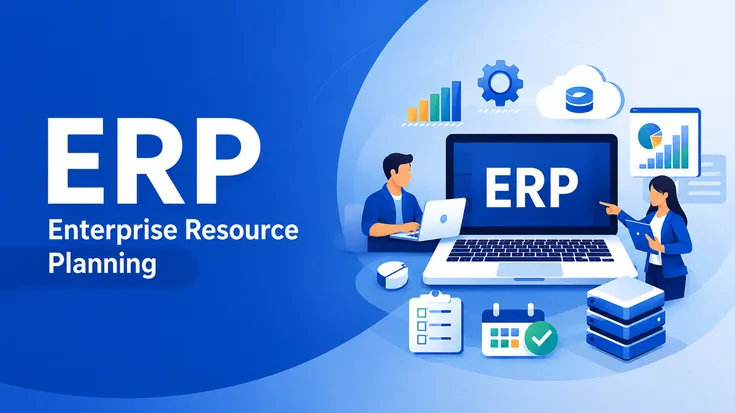
ERP Guide What Is ERP? A Complete Guide to Enterprise Resource Planning
Understand how ERP connects finance, procurement, inventory, workforce, projects, reporting, and other operational functions.
Read the guide
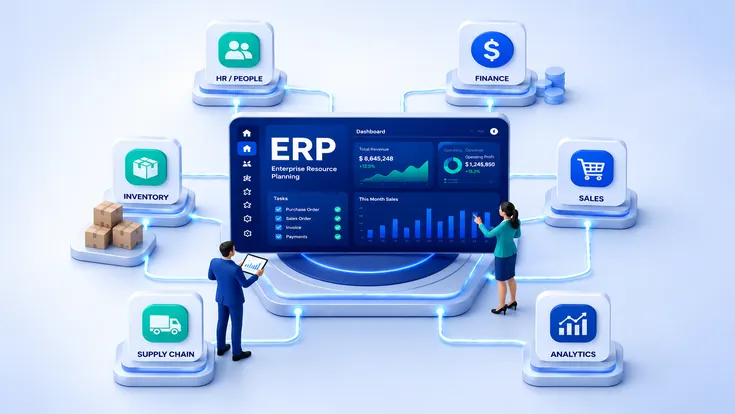
Planning Guide ERP Implementation Process: Steps, Timeline and Checklist
Review the main stages of an ERP rollout, from requirements and solution design through migration, testing, training, deployment, and support.
Read the guide
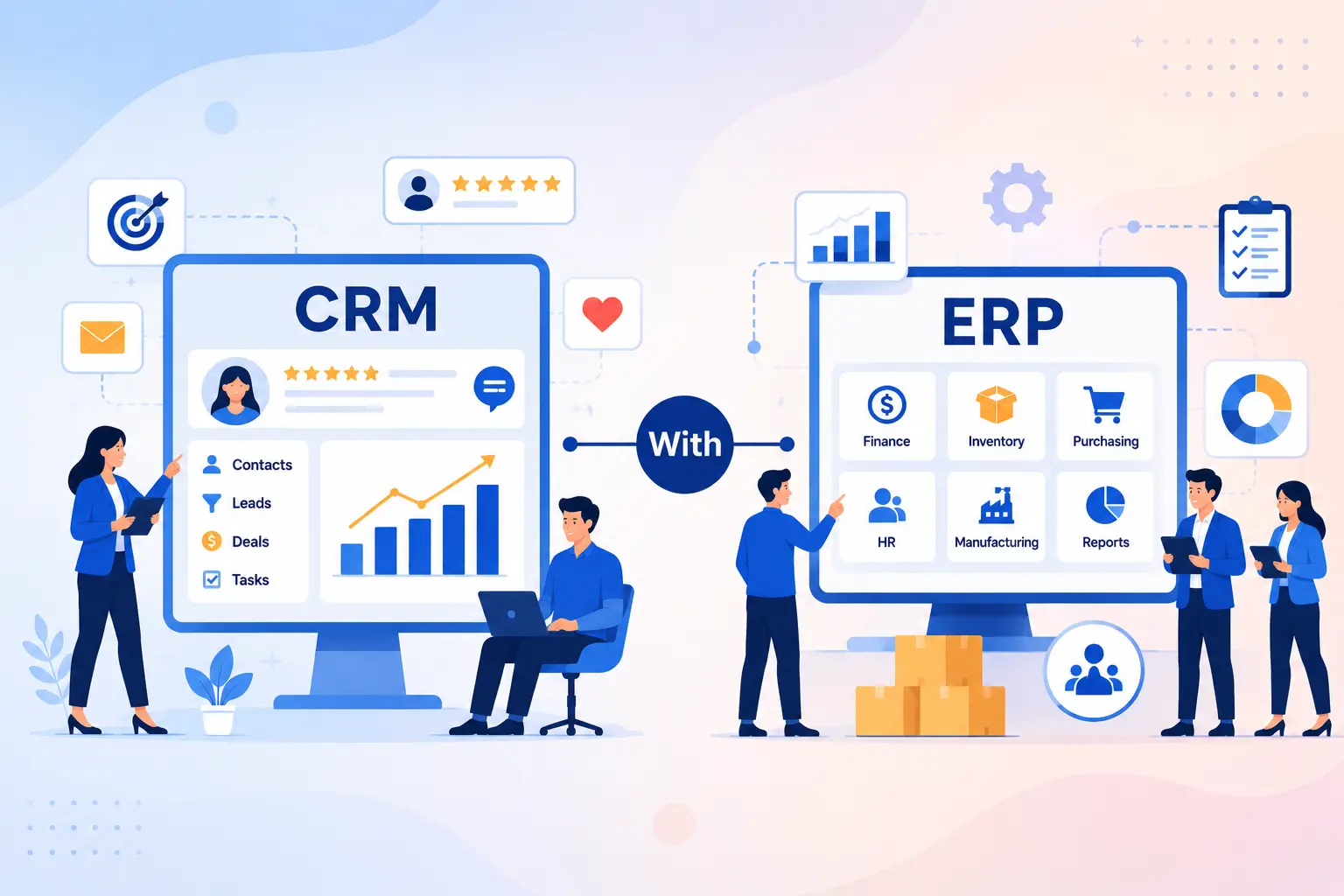
Integration Guide ERP Integration: Benefits, Features, Cost and Use Cases
Learn how connected systems exchange operational, financial, customer, and reporting information while maintaining defined data ownership.
Read the guideBuild a Connected Digital Operations Environment

Discuss your financial, procurement, inventory, quality, manufacturing, research, workforce, integration, data, and reporting requirements with an ERP consultant.
- ERP Consulting
- Implementation
- Integration
- Migration
- Managed Support
What Our Clients Say
Healthcare organizations need dependable systems that improve workflows, connect data, support users, and provide better operational visibility across teams and locations.
What stood out most was their ability to understand the problem before writing code.
Frequently Asked Questions
Find answers about ERP capabilities, integrations, cost, implementation timelines, compliance support, and product traceability.
What is ERP for healthcare and life sciences?
ERP connects financial and operational functions such as accounting, procurement, inventory, assets, workforce, projects, manufacturing, quality transactions, traceability, and reporting.
Clinical, laboratory, quality, and research systems continue to manage their specialized processes.
How is healthcare ERP different from an EHR or EMR?
An EHR or EMR manages patient histories, diagnoses, clinical notes, orders, and care documentation.
Healthcare ERP manages finance, procurement, inventory, workforce, assets, suppliers, and administrative operations. ERP supports the clinical system rather than replacing it.
Which organizations use healthcare and life sciences ERP?
ERP can support hospitals, clinic groups, laboratories, senior living providers, pharmaceutical companies, biotechnology organizations, medical device manufacturers, diagnostics companies, distributors, and contract manufacturers.
What capabilities should the ERP include?
Common capabilities include finance, budgeting, procurement, inventory, supplier management, assets, maintenance, workforce operations, projects, manufacturing, quality transactions, traceability, reporting, and multi-entity consolidation.
Can ERP integrate with EHR, LIMS, QMS, and MES systems?
Yes. ERP can exchange approved operational and financial data with EHR, laboratory, quality, manufacturing, pharmacy, warehouse, payroll, and research systems.
Integration methods may include APIs, HL7 v2, FHIR, middleware, EDI, vendor connectors, and secure file exchange.
How much does healthcare and life sciences ERP cost?
A focused implementation may range from $25,000 to $75,000. Multi-module healthcare rollouts may range from $75,000 to $200,000.
Regulated life sciences implementations may range from $150,000 to $300,000 or more. Licensing is normally separate.
How long does an ERP implementation take?
A focused implementation may take 12 to 20 weeks. Multi-module healthcare rollouts may take 20 to 32 weeks.
Regulated or multi-site programs may require 24 to 40 weeks or longer.
How can ERP support HIPAA safeguards?
ERP can support safeguards through role-based access, secure authentication, audit records, access reviews, backup and recovery, controlled interfaces, and secure data handling.
Policies, procedures, risk management, and user practices remain essential.
Can ERP support 21 CFR Part 11 and GxP processes?
ERP can support applicable requirements through audit trails, controlled access, electronic signatures, approval workflows, change history, record retention, testing, and documented deployment.
Suitability depends on configuration, intended use, validation, operating procedures, and the organization’s quality system.
How does ERP support batch, lot, serial, and UDI traceability?
ERP can connect supplier materials, internal lots, production batches, components, serial numbers, finished products, inventory movements, quality status, and customer shipments.
Medical device organizations can also associate UDI information with product, inventory, and distribution records.
- Contact Us
Let's Talk About Your Product
What happens next?
- We review your requirements
- Strategy call with experts
- Clear roadmap & estimate
- NDA Protected
- Enterprise Grade Delivery
- Global Clients