Introduction
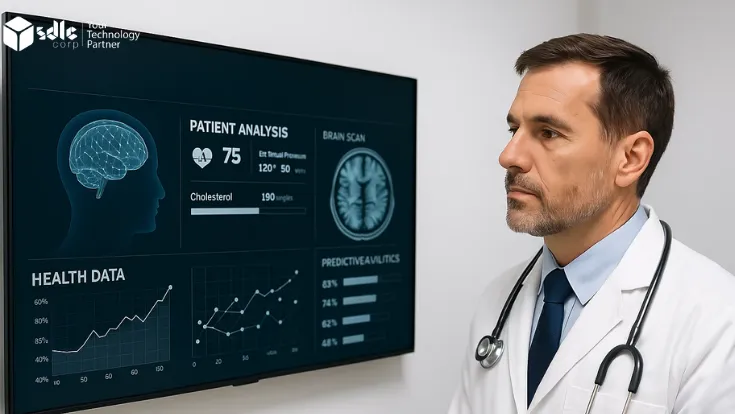
Artificial Intelligence (AI) is no longer a futuristic concept it is rapidly reshaping the healthcare industry. From diagnostics to treatment, AI in healthcare is improving patient outcomes, reducing costs, and enabling faster decision-making. As AI trends in healthcare continue to evolve, the integration of advanced technologies like machine learning, computer vision, and generative AI in healthcare is unlocking new possibilities for medical professionals and patients alike.
Role of AI in Healthcare Systems
Healthcare organisations manage complex data across clinical records, diagnostics, administration, and research. AI systems can support these environments by analysing large datasets, assisting with documentation, and improving operational efficiency. Many providers rely on AI development services to build solutions that comply with healthcare data standards and privacy requirements.
What Is AI in Healthcare?

Artificial Intelligence in healthcare, often abbreviated as AI in healthcare, refers to the use of advanced computational algorithms, machine learning, and data-driven models to perform tasks that typically require human intelligence. These systems are designed to analyze complex medical data, recognize patterns, support clinical decisions, and even automate routine administrative or diagnostic tasks.
Key Applications and Real-World Examples
Medical Imaging and Diagnostics
- AI algorithms can detect abnormalities in medical images (like X-rays, MRIs, and CT scans) with accuracy comparable to human radiologists.
- Tools like Google’s DeepMind and Aidoc are being used to identify early signs of cancer, brain hemorrhages, and fractures.
Predictive Analytics in Healthcare
- By analyzing historical health records and real-time patient data, AI models can predict disease progression, readmission risks, and patient deterioration.
- For example, predictive algorithms help identify sepsis risk in ICU patients or forecast heart failure among at-risk individuals.
Robotic-Assisted Surgeries
- AI-powered robotic systems assist surgeons in minimally invasive procedures with greater precision and control.
- Systems like the da Vinci Surgical System help reduce recovery times and surgical complications.
Conversational AI in Healthcare
- Conversational AI in healthcare is transforming how patients and providers interact. AI-driven chatbots and virtual assistants are now capable of:
- Booking appointments
- Answering health-related questions
- Guiding patients through post-operative care
- Performing triage and routing queries to the right specialist
- Booking appointments
- Tools like Babylon Health’s chatbot or Microsoft’s Azure Health Bot are widely adopted in telemedicine and digital health platforms.
Clinical Decision Support Systems (CDSS)
- AI tools assist doctors by providing evidence-based recommendations during diagnoses or treatment planning.
- These systems flag drug interactions, suggest alternative therapies, and even generate differential diagnoses.
Benefits of AI in Healthcare

The benefits of AI in healthcare are vast and continually expanding. From increasing diagnostic accuracy to enabling real-time remote monitoring, AI is streamlining processes and improving care delivery. AI-powered systems reduce manual workload, flag anomalies faster, and support clinicians with evidence-based recommendations.
Bullet Points:
- Faster and more accurate diagnosis
- Personalized treatment plans
- Predictive analytics for early disease detection
- Enhanced administrative efficiency via healthcare automation solutions
Healthcare Automation Solutions Powered by AI

AI-powered healthcare automation solutions are transforming operations by streamlining tasks like billing, diagnostics, and documentation. They reduce costs, boost efficiency, and free up medical professionals to focus more on patient care than administrative work.
AI in Billing, Claims Processing, and EHRs
AI automates billing and claims by identifying errors, flagging fraud, and speeding up reimbursements. In EHRs, AI extracts and organizes patient data, automates medical coding, and reduces manual documentation. This enhances accuracy and frees up clinicians for patient care.
Workflow Management in Hospitals
AI streamlines hospital workflows by predicting patient demand, managing staff schedules, and optimizing bed usage. Smart dashboards offer real-time insights for faster decision-making. This boosts efficiency and minimizes delays in patient treatment.
Automation in Radiology and Pathology Labs
AI tools analyze medical images and pathology slides faster and with high accuracy. They assist in detecting conditions like tumors or infections, prioritize urgent cases, and reduce human error. This speeds up diagnosis and supports better clinical outcomes.
Integration with IoT and Wearable Tech
AI combines with IoT devices and wearables to continuously monitor patient health metrics like heart rate or oxygen levels. It detects anomalies in real time and sends alerts for timely interventions. This improves chronic care management and supports remote monitoring.
Emerging AI Trends in Healthcare
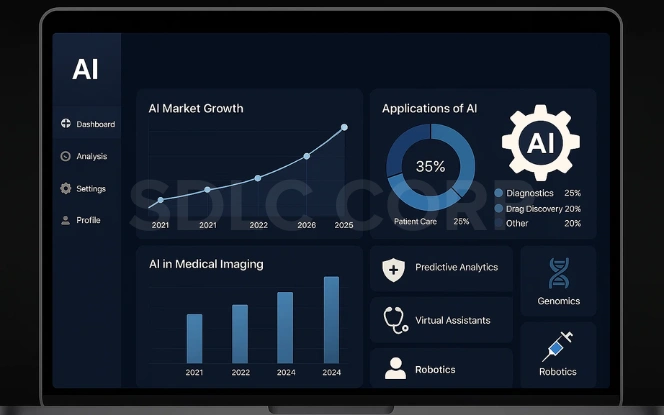
The rise of advanced technologies is reshaping the medical landscape, and AI trends in healthcare are increasingly focused on personalization, efficiency, and real-time insights. Below are some of the most impactful developments:
Generative AI in Healthcare
Generative AI in healthcare is being used to draft clinical notes, summarize medical records, and even generate synthetic patient data for research. This reduces clinician workload and enhances documentation speed without compromising accuracy.
Conversational AI for Teleconsultations
Conversational AI in healthcare enables smarter patient engagement through chatbots and voice assistants. These tools assist in scheduling, symptom triage, and post-visit follow-ups streamlining teleconsultations and improving accessibility.
Integration with Robotics and Wearables
AI-driven robotics assist in surgery, rehabilitation, and elderly care, while wearable devices track real-time health metrics. This trend supports proactive care, allowing providers to intervene earlier and monitor patients remotely.
Scaling AI Across Healthcare Environments
As AI adoption expands across departments and facilities, consistency and governance become essential. Enterprise-level coordination helps manage multiple systems and use cases. Practices used by an enterprise AI development company can inform strategies for scaling AI while maintaining control and oversight.
AI for Population Health and Drug Discovery
AI analyzes vast datasets to identify health trends across populations, supporting early intervention and policy planning. In drug discovery, machine learning accelerates target identification, trial optimization, and development timelines.
Top AI Healthcare Companies Leading the Innovation
As AI continues to transform the medical landscape, several pioneering firms are setting benchmarks for innovation. Here are some of the top AI healthcare companies making a global impact:
| Company | Focus Area | Key Contribution |
|---|---|---|
| IBM Watson Health | Clinical decision support, oncology, drug development | AI for data analysis and personalized treatment planning |
| Tempus | Precision medicine, genomic analytics | AI + genomics for cancer insights and personalized care |
| PathAI | AI-powered pathology diagnostics | Improved diagnostic accuracy in pathology using AI |
| Aidoc | Radiology image analysis | Real-time imaging triage and critical findings detection |
| Babylon Health | Conversational AI, virtual care | Accessible mobile-based telemedicine and AI triage |
What Is the Future of AI in Healthcare?

The future of AI in healthcare is poised to be predictive, personalized, and preventative. With the continued rise of generative AI and real-time analytics, healthcare providers can expect better patient engagement, faster decision-making, and more cost-effective operations. As regulatory frameworks evolve, AI will become an indispensable pillar of modern healthcare.
Also Read – Top 10 AI Companies to Watch in 2025
AI in Healthcare Jobs: Opportunities and Challenges

As AI becomes more integrated into modern medicine, the demand for skilled professionals in AI in healthcare jobs is rapidly growing. From hospitals to startups, the healthcare sector is seeking talent that can bridge the gap between technology and clinical care.
- High Demand: Rapid growth in AI integration has created strong demand for skilled professionals in healthcare.
- Key Roles: Data scientists, AI developers, bioinformatics experts, and medical AI trainers.
- Essential Skills: Python, machine learning, NLP, data visualization, and knowledge of healthcare systems like HIPAA.
- Where to Work: Hospitals, healthtech startups, research labs, and top AI healthcare companies.
Pros and Cons of AI in Healthcare
| Pros of AI in Healthcare | Cons of AI in Healthcare |
|---|---|
| Efficiency & Scalability: AI accelerates administrative tasks, patient triage, and diagnostic workflows, enabling healthcare systems to handle larger volumes with fewer resources. | Ethical & Privacy Concerns: AI systems often rely on sensitive patient data, raising concerns about security, HIPAA compliance, and consent. |
| Clinical Decision Support: AI tools assist doctors with data-driven insights, improving diagnosis accuracy and reducing human error in complex cases. | Over-Reliance on Technology: Excessive dependence on AI may undermine clinical intuition and limit personalized care in nuanced medical decisions. |
| Cost Reduction: Automation of billing, documentation, and diagnostics lowers labor costs and streamlines hospital operations. | Integration & Regulation Challenges: Implementing AI requires robust infrastructure, training, and compliance with ever-evolving healthcare regulations. |
| Improved Access to Care: Through telemedicine and conversational AI, underserved or remote populations gain better access to medical advice and triage. | Bias & Accuracy Risks: AI models trained on biased or limited data sets can produce inaccurate results, affecting treatment fairness and quality. |
| Predictive Analytics: AI anticipates health risks based on real-time data, enabling early intervention and reducing emergency admissions. | Loss of Human Touch: The rise of automation may reduce the empathetic, human interaction that is critical in healthcare settings. |
Governance, Compliance, and Strategic Planning
AI in healthcare must align with regulatory requirements, ethical standards, and patient safety expectations. Clear governance frameworks support responsible use and long-term sustainability. An AI consulting company may assist healthcare organisations in evaluating use cases, managing risk, and defining oversight structures.
AI in HealthTech Platforms and Digital Health Products
Hospitals and payers buy AI inside systems they already run. HealthTech vendors have the opposite problem: the AI is the product, and it has to survive procurement, clinical review and integration at every customer site.
Where AI sits in a digital health product
- Triage and intake. Symptom capture, structured history taking and routing to the right care pathway before a clinician is involved.
- Remote monitoring. Continuous data from wearables, home devices and connected diagnostics, with models watching for deterioration rather than clinicians reading every reading.
- Documentation. Ambient capture and structured note generation, always with clinician review before anything enters the record.
- Care coordination. Scheduling, follow-up reminders, adherence prompts and escalation to a human when a response is missing.
- Analytics for the customer. Population dashboards and outcome reporting that the provider or payer can act on.
Interoperability is the integration cost
A healthtech product is only as deployable as its data path. FHIR resources, HL7v2 feeds, DICOM for imaging and site-specific EHR extensions all show up in the same roadmap, and each customer tends to have its own interpretation of the standard. Budget for mapping and reconciliation per site rather than assuming one integration serves everyone.
Validation and regulatory path
Software that informs diagnosis or treatment may fall under medical device rules in its market, which changes the evidence, change-control and post-market monitoring the product needs. Decide early whether the feature is clinical decision support, a monitoring aid or an administrative tool, because that classification drives the whole release process. Nothing here is legal advice: the classification belongs with your regulatory advisor for each market.
Implementation checklist for healthtech teams
- Named clinical owner and a defined intended use for each model.
- Data agreements, PHI handling and residency settled before the pilot, not after.
- Baseline metrics from the customer’s current process, so improvement can be measured.
- Human review points documented for every output that touches care.
- Monitoring for drift, device changes and population differences between sites.
- Rollback and fallback paths when a model or an integration fails.
Conclusion
AI in healthcare is transforming both clinical and administrative aspects of the medical industry, enabling smarter diagnostics, streamlined operations, and more personalized patient care. As the technology evolves, the future of AI in healthcare will bring innovations like predictive analytics, remote monitoring, and intelligent automation. With strong contributions from leading AI healthcare companies, this shift is paving the way for a more efficient, accessible, and patient-focused healthcare system.
FAQ
1. How does AI help doctors and clinicians?
AI assists clinicians by analyzing vast datasets quickly, offering diagnostic suggestions, highlighting anomalies in scans, and predicting patient outcomes. It enhances decision-making, reduces errors, and allows healthcare professionals to focus more on patient care.
2. Is AI replacing doctors?
No. AI is not replacing doctors but augmenting their capabilities. It serves as a decision support tool, streamlining tasks and offering insights, but the final clinical judgment and patient interaction remain the physician’s responsibility.
3. How is generative AI used in healthcare?
Generative AI in healthcare is used to create clinical summaries, draft documentation, and even generate synthetic patient data for research and training purposes. It helps reduce the administrative burden on doctors and enhances productivity.
4. What is conversational AI in healthcare?
Conversational AI in healthcare involves chatbots and voice assistants that interact with patients to schedule appointments, provide health advice, perform symptom checks, and follow up after consultations. It improves accessibility and reduces strain on front-desk staff.
5. What are the challenges or risks of using AI in healthcare?
Key challenges include ethical concerns, data privacy issues, over-reliance on algorithms, potential bias in AI models, and integration difficulties with existing systems. Proper regulation and oversight are essential to address these risks.
6. What is the future of AI in healthcare?
The future of AI in healthcare includes predictive diagnostics, autonomous surgical systems, personalized medicine, and seamless integration with wearable tech. It aims to make healthcare more proactive, precise, and accessible globally.
7. Are there job opportunities in AI and healthcare?
Yes, there are growing opportunities in AI in healthcare jobs for data scientists, machine learning engineers, AI developers, medical AI trainers, and healthcare informatics specialists. The demand is rising across hospitals, healthtech startups, and AI-focused companies.
8. Who are the top AI healthcare companies?
Some of the top AI healthcare companies include IBM Watson Health, Tempus, PathAI, Aidoc, and Babylon Health. These companies lead innovation in areas like diagnostics, personalized medicine, and virtual care.