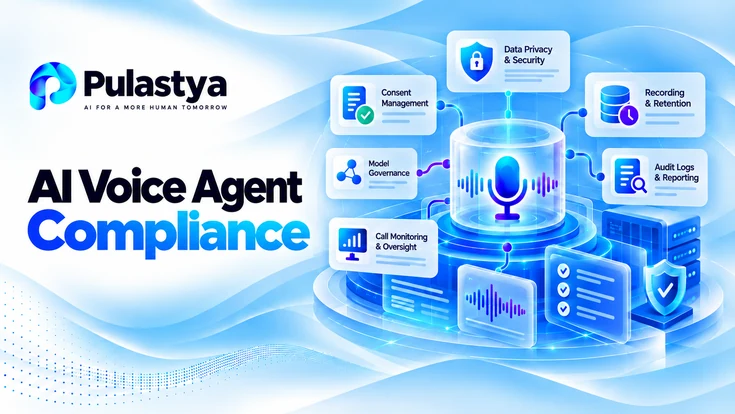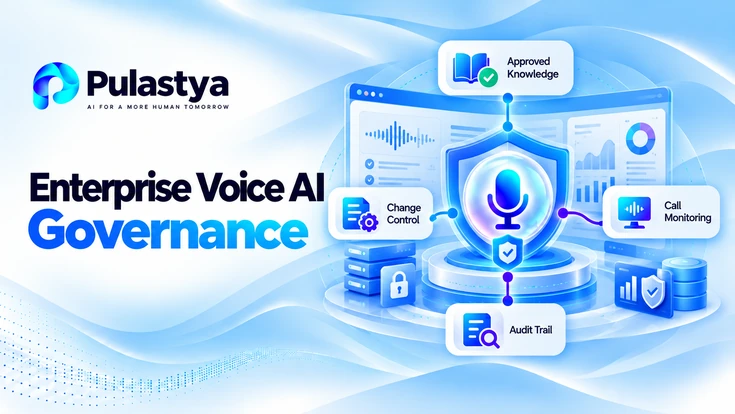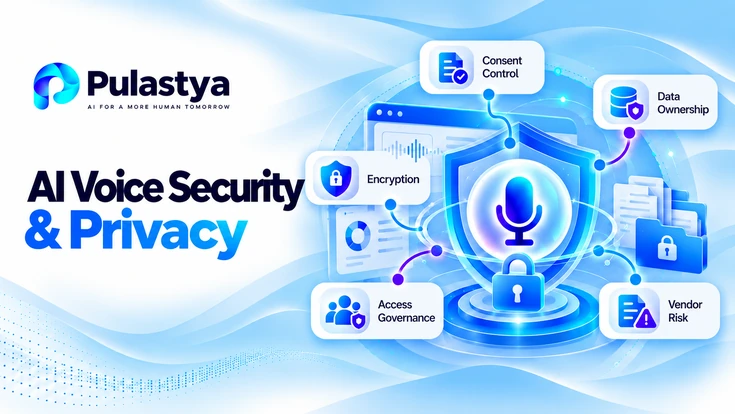
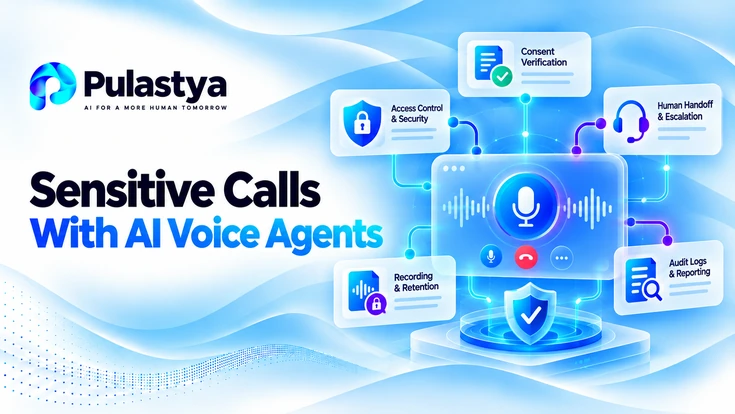
Handling sensitive voice calls with AI voice agents requires policy, technical controls, and team readiness that differ from routine automation.
Organizations must define clear thresholds for escalation, consent, and data handling while aligning to legal obligations and customer experience goals. Clear operational controls and detection strategies should guide enterprise deployment decisions.
- Treat sensitive calls as a separate workflow Segment traffic early and apply stricter NLU thresholds, mandatory human escalation rules, and limited data retention for sensitive intents.
- Control recording and consent Require explicit consent for recording or analysis, use ephemerality for transcripts when appropriate, and log consent events for audits.
- Design for fast, reliable handoff Implement low-latency transfer, context-rich transcripts, and prioritized queueing for human specialists to reduce time-to-resolution and liability.
AI voice agents can reduce latency and expand coverage for front-line voice channels, but sensitive calls expose legal, reputational, and operational risk that standard IVR designs do not address.
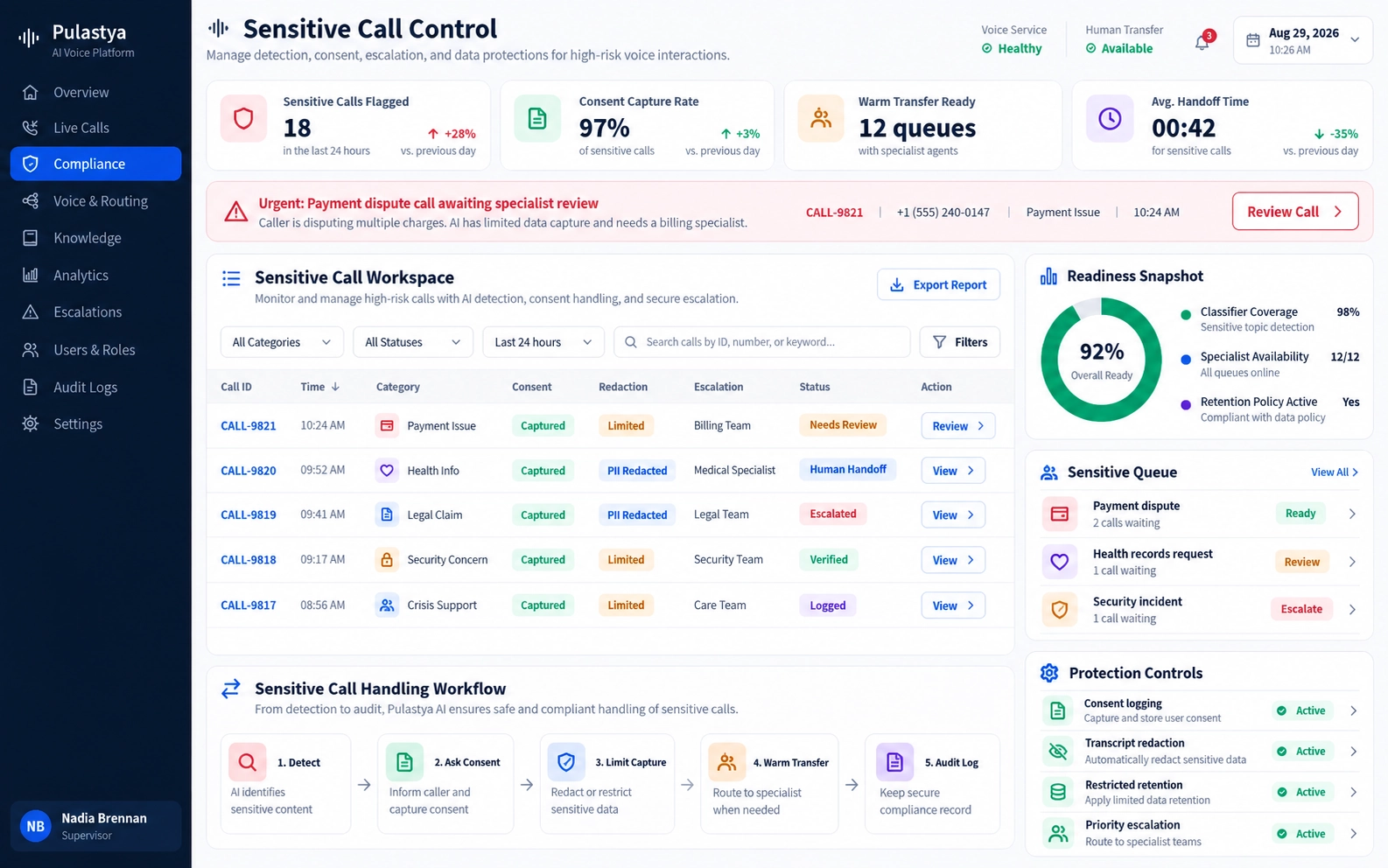
Sensitive calls include financial transactions, health information, crisis intervention, legal disputes, and any interaction where incorrect advice, breached confidentiality, or improper escalation could cause harm. Enterprises should treat these calls as a distinct class of traffic with dedicated policies, metrics, and human-in-the-loop controls.
A hardened handling approach separates detection, consent, and containment from normal routing logic. That means training NLU to recognize sensitive intents and words, setting conservative confidence thresholds, enforcing explicit consent and opt-in for recording or data retention, and creating rapid handoff paths to human specialists.
Focus on practical tooling, tests, and runbook items you can implement, rather than assumptions about model omniscience.
Detect and Classify Sensitive Intent Before Response
Start by defining an enterprise taxonomy of sensitive intents that maps to compliance regimes and operational risk. Include categories such as payments and refunds, protected health information, legal claims, security incidents, threats of self-harm, and escalation triggers like hostile language or de-escalation failure.
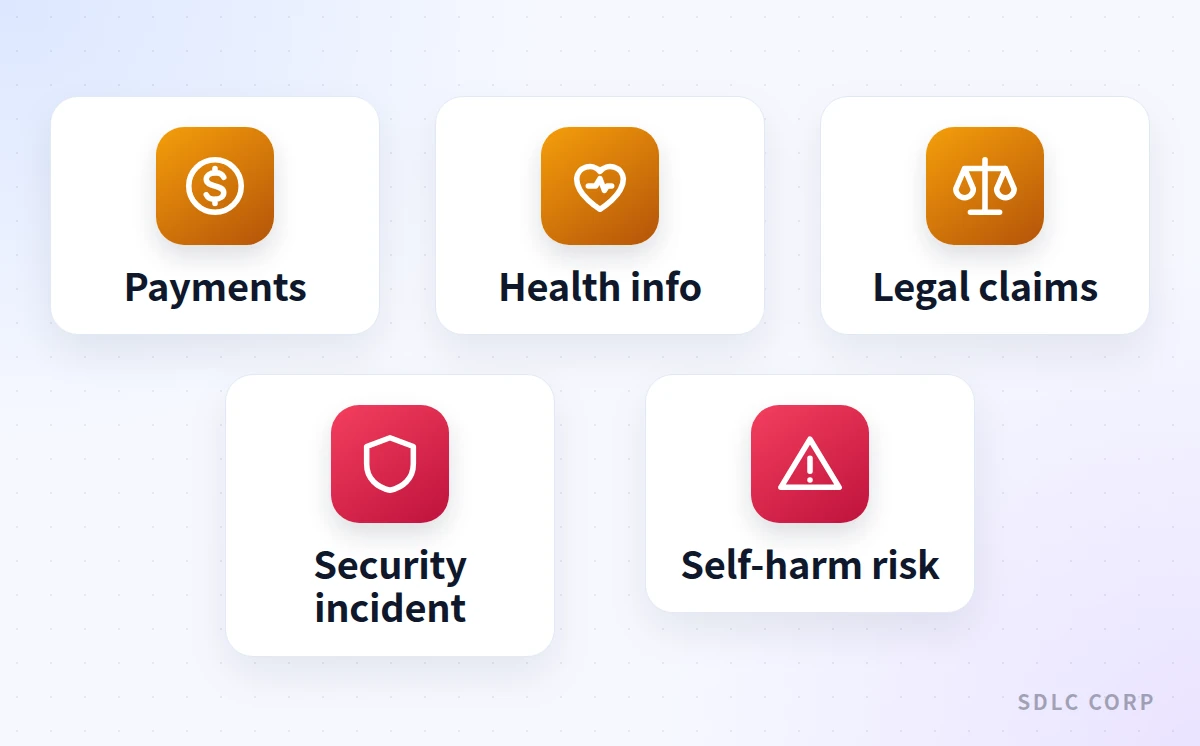
Map each category to required controls: whether recording is allowed, if a human must approve the action, and what data fields cannot be captured.
Implement a dedicated lightweight classifier that runs on the raw audio or early transcript with conservative thresholds. Use intent-specific confidence calibration so that false negatives are minimized for high-impact categories.
Run classifiers in parallel with the primary dialog model; if the classifier flags sensitivity above its threshold, divert to a controlled workflow rather than continuing automated negotiation.
Plan operational exceptions and periodic review of the taxonomy. Log near-miss events where the classifier was below threshold but later identified as sensitive by humans. Review these logs weekly for the first three months, then monthly, to adjust labels and thresholds. Maintain versioned definitions and date-stamped change records to support audits and incident reviews.
- Create a sensitivity taxonomy aligned to legal and business risk mapped to specific handling rules
- Deploy a fast, parallel classifier with conservative thresholds to avoid missed sensitive calls
- Log classifier outputs, handoffs, and near misses for continuous calibration and auditability
- Keep change history of taxonomy and thresholds for regulatory and internal review
Early, conservative detection reduces downstream risk and limits unnecessary human intervention.
Require Explicit Consent and Limit Data Capture
For sensitive calls, treat consent as explicit, recorded, and tied to the specific purpose of the interaction, even where local recording law would allow less. For calls that will be recorded, analyzed, or routed to third-party specialists, state that clearly at the beginning and capture an affirmative response in the transcript and the call record.
If the caller declines recording or analysis, the agent must have a defined alternative such as immediate human routing or refusal to perform the sensitive action.
Limit what you capture even after consent. Use field-level redaction for Social Security numbers and protected health details, and keep card numbers out of the conversation entirely: route card payments to a PCI DSS compliant flow, such as DTMF masking or a secure payment line, so digits never reach the transcript. Where possible, capture only tokenized references for reconciliation.
Ensure that any temporary transcripts used for NLU are purged according to the retention policy or moved to an encrypted, access-controlled archive with a narrow access list.
Operationalize consent metadata in event logs and analytics. Record the time, agent or model identifier, exact consent phrasing, and caller response. Make consent metadata available to compliance tooling and to supervisors in UI panels so they can verify compliance during spot checks and investigations.
- State recording and analysis purposes explicitly and capture affirmative consent in the call record
- Provide a documented alternative handling path when consent is refused
- Apply field-level redaction and tokenization to minimize sensitive data in transcripts
- Purge temporary transcripts per retention rules and log consent metadata for audits
Explicit consent and minimal data capture reduce exposure and preserve caller trust.
Sensitive call path
How a Sensitive Call Leaves the Routine Flow and Reaches a Specialist
- Detect the sensitive topicA parallel classifier with a low flag threshold checks the early transcript
- Limit what is capturedMask card entry; keep health and ID details out of transcripts
- Ask consent for this purposeSay why recording or analysis is needed; offer a human path if declined
- Hand off to a specialistWarm transfer with a sanitized summary, intent, confidence and redaction marks
Capture is limited before consent is requested, so nothing sensitive is stored while the caller decides.
Design Human-In-The-Loop Escalation and Handoff Protocols
Define clear escalation triggers: classifier confidence, caller request, specific keywords, or prolonged low-confidence dialog. For each trigger, specify whether a cold (blind) transfer, a warm transfer, supervisor intervention, or a recorded compliance approval is required.
Prefer warm transfers for sensitive calls: the AI or agent first confirms a specialist is available, or briefs them, before connecting the caller. A cold transfer sends the live call without that consult; the call is not dropped, and a context summary can still reach the specialist if the systems support it, but no one confirms readiness first.
Prepare handoff payloads that include sanitized transcripts, confidence scores, intent tags, and real-time audio snippets. Limit what automation includes to the minimum useful context and mark any redacted fields.
Ensure human specialists see the context by the time the call connects so they can continue without delay. Prioritize queue position for sensitive calls to avoid long wait times that increase risk.
Train human specialists on the automation context and on differences between agent-generated suggestions and verified facts. Maintain a rapid escalation path from specialists to legal, security, or clinical teams when cases exceed the specialist remit. Log every handoff with timestamps, participant identifiers, and actions taken for future compliance review.
Check the scope of the voice platform itself. Pulastya AI, for example, is not designed for diagnosis, emergency support, financial advice, legal advice, or sensitive account verification, so plan for those calls to reach a person; its human transfer passes the conversation context along.
- Specify triggers for cold transfer, warm transfer, and supervisor approval per sensitivity class
- Send concise, sanitized context payloads to humans with intent, confidence, and recent transcript window
- Prioritize queue position for sensitive transfers to minimize time-to-resolution and liability
- Log handoff events with timestamps and participant IDs for compliance and dispute resolution
Fast, context-rich warm transfers reduce caller frustration and institutional risk.
Control Recording, Storage, and Access With Least Privilege
Adopt a principle of least privilege for access to sensitive call recordings and transcripts. Restrict access to named roles, require just-in-time approvals for unusual access, and use multi-factor authentication and conditional access policies for viewing. For especially sensitive categories, implement dual-approval workflows and session recording for human review when access is granted.
Choose storage and encryption strategies that align with regulatory obligations. Encrypt recordings in transit and at rest, use key management that separates duties between platform and application owners, and implement key rotation policies. Consider storing only pointers in the primary datastore and moving raw recordings into a guarded archival tier that requires elevated clearance for retrieval.
Maintain a retention policy that maps to the sensitivity taxonomy and to legal holds. Automate deletion where permitted and apply immutable retention holds only when required by litigation or regulation. Provide an auditable deletion trail showing who requested and executed deletions to defend against claims of improper evidence destruction.
- Apply least-privilege access controls and require just-in-time approvals for access to recordings
- Encrypt data in transit and at rest with separated key management and rotation policies
- Segregate active and archival storage with elevated controls for archival retrieval
- Automate retention and deletion according to taxonomy and preserve auditable deletion trails
Restrictive access controls and auditable retention reduce insider and compliance risk.
Test, Validate, and Run Continuous Safety Drills
Implement a structured testing program that includes synthetic and realistic call scenarios across the sensitivity taxonomy. Test classifier recall and precision for sensitive categories, simulate consent refusals and forced handoffs, and measure time-to-human-transfer under varying load.
Include edge cases such as overlapping intents, background speech, and multiple speakers to understand model behavior under realistic acoustic conditions.
Run scheduled safety drills with human specialists and supervisors that simulate escalations and data breach scenarios. Validate that handoff payloads arrive intact, that consent metadata is visible to reviewers, and that archived recordings are accessible with the proper approvals.
Use tabletop exercises to rehearse coordination with legal, compliance, and incident response teams so human procedures are reliable under stress.
Monitor post-implementation metrics that matter for safety rather than vanity metrics. Track false negative rates for sensitive detection, median handoff time for escalations, proportion of declined-recording alternatives executed, and frequency of manual overrides. Review these metrics weekly during early rollout and move to monthly review once the flow stabilizes.
- Include synthetic and realistic acoustic scenarios to validate sensitive intent detection
- Conduct safety drills that exercise handoffs, access approvals, and incident response
- Measure safety-focused metrics: false negatives for detection, handoff latency, and override frequency
- Use tabletop exercises to align legal, compliance, and incident teams for real incidents
Regular drills and targeted metrics reveal gaps that static tests will miss.
Operational Governance: Policies, Training, and Auditing
Establish a governance board that includes compliance, legal, security, operations, and product stakeholders to own sensitivity taxonomy, retention schedules, and escalation rules. Document decisions with rationale, effective dates, and rollback criteria. Require sign-off for any change that reduces protective controls or expands automation into new sensitive categories.
Train front-line staff and human specialists on policies and on identifying when automation has erred. Provide scenario-based training that includes examples of misclassifications, consent disputes, and incorrect advice.
Make training mandatory at onboarding and require periodic refreshers tied to policy changes. Capture competency assessments to ensure staff meet minimum readiness prior to taking sensitive transfers.
Establish an audit program that samples sensitive-call handling, verifies consent artifacts, and confirms policy adherence. Combine automated monitoring with manual review of a statistically valid sample.
Feed audit findings back into taxonomy updates, training materials, and system configuration to close the loop between discovery and remediation. For third-party providers, include contractual audit rights and require SOC 2 reports or equivalent evidence as part of due diligence.
- Create a cross-functional governance board with documented decision records for policy changes
- Deliver scenario-based training and competency assessments for specialists handling sensitive calls
- Run a combined automated and manual audit program with feedback loops into policy and training
- Require audit rights and compliance evidence from third-party voice providers
Governance and training turn policies into consistent operational behavior.
Two industries where these boundaries shape the whole deployment are healthcare and insurance. See the guides to AI voice agents for healthcare calls and AI voice agents for insurance calls.
For matching each call to the right team, see routing calls to the right team.
Conclusion
Handling sensitive calls with AI voice agents safely requires more than accurate responses. Enterprises need early intent detection, clear consent practices, minimal data collection, secure storage, and defined limits on what automation can handle. When a call involves significant risk or falls outside the agent's approved scope, a timely, context-rich transfer to a qualified human specialist helps protect the caller and keeps sensitive decisions under appropriate oversight.
These safeguards must also work consistently in day-to-day operations. Assign ownership for escalation rules, train human specialists, test difficult call scenarios, and review missed detections, transfer delays, overrides, and audit findings. By improving controls based on real outcomes, organizations can use AI voice agents to increase service availability while preserving confidentiality, accountability, and caller trust.
Frequently Asked Questions
Classify calls that involve payments, health information, legal claims, security incidents, threats to safety, or any situation where wrong advice or exposure can cause material harm. Map each class to required handling steps like recording rules, mandatory human approval, and retention constraints.
Use conservative detection to minimize risk while optimizing follow-up paths. Favor warm transfers and context-rich handoffs to reduce repeated explanations. Provide transparent messaging about why a human specialist is required to preserve trust and reduce perceived friction.
Key controls include early intent classification, field-level redaction, tokenization of identifiers, encrypted storage with separated key management, least-privilege access, just-in-time approvals, and automated retention policies that enforce purging when allowed.
Capture the exact consent phrasing, timestamp, agent or model identifier, and caller response as structured metadata in the call record. Surface consent data to compliance dashboards and include it in sampled audits to demonstrate lawful processing and to resolve disputes.
Stop the automated flow. Tell the caller to contact local emergency services, such as 911 in the US, or a crisis line such as 988 in the US, and connect them to a trained person right away if one is available. The agent should not counsel, diagnose, or keep collecting data. Log the event and review every such call so detection and wording improve.