A communications platform is the usual way an application acquires a presence on the telephone network without becoming a telephone company.
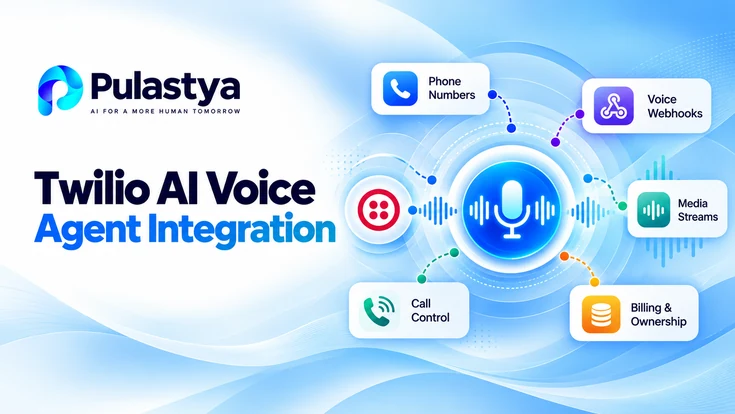
Twilio is the most common worked example, and the shape it establishes is broadly the same across the category: an account holds numbers, an application is told when calls arrive, and audio can be delivered live to something that listens.
- The account holds the numbers Whoever the account belongs to controls the numbers in it, which makes account ownership a commercial decision rather than an administrative one.
- Your application is a live participant Call events arrive at an address you publish and host, so its availability becomes part of the call path.
- Control and audio are separate services Instructing a call and receiving its audio are different jobs, and a conversational agent needs both.
The useful question is not what the platform can do, which is a long list, but what it takes responsibility for and what it hands back. That boundary decides how much your own application has to be built, hosted and kept available.
It also decides some commercial things that are easy to skip past during a pilot and awkward to unwind afterwards, starting with who holds the account and therefore who holds the numbers.
What a Communications Account Contributes
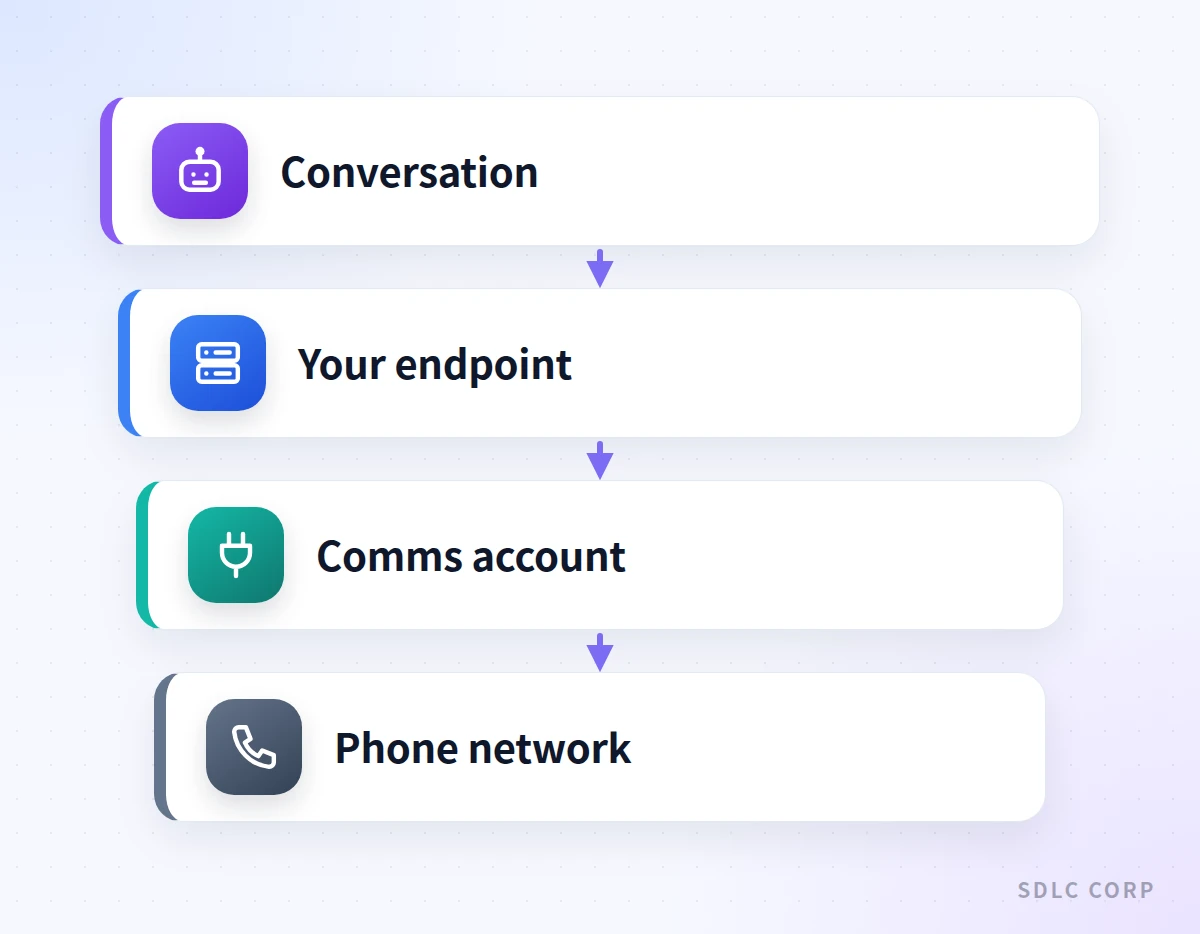
The contribution is narrow and important. The platform stands between the telephone network and general-purpose software, so an application can originate and answer calls without holding licenses, interconnects or hardware of its own.
- Numbers in many countries, bought through the account and held within it.
- Programmable voice, so calls can be placed and answered under the control of an application.
- Notification of call events to an address the business publishes and operates.
- Live audio streaming, so software can hear a call while it is still in progress.
- Support for connecting existing telephony by trunk rather than only by number purchase.
- Usage billed on the account holder's own account, separately from any software above it.
Everything above that line belongs to another layer. The platform does not decide what to say, does not hold the organization's knowledge, and does not know whether a conversation succeeded. It moves calls and audio, reliably, and reports what happened.
That is the right division for a voice agent. The conversational parts change often during the first months of a deployment. The telephony underneath should not have to change with them, and a clean boundary is what makes that possible.
Not every deployment begins by buying a number. An organization that already runs its own telephony can attach that estate to the account instead, so the agent becomes a destination inside the existing dial plan, by the route described in how a trunk connects an agent to existing telephony.
Read the boundary as a contract. The platform guarantees reachability, call control and audio delivery. Everything about the conversation, the knowledge behind it and the outcome recorded afterwards remains the responsibility of whatever the account is pointed at.
The Webhook Your Application Has to Serve
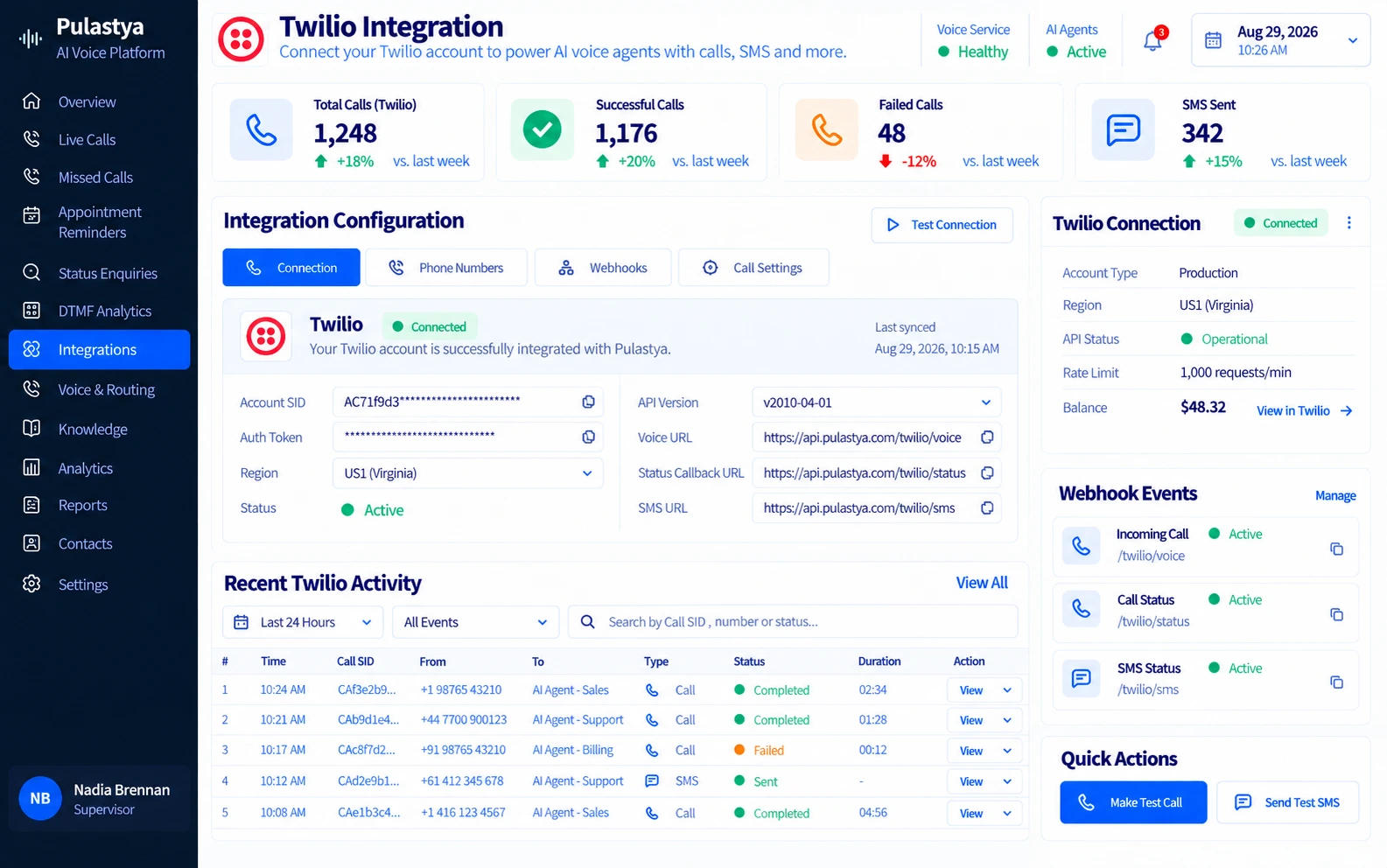
When a call arrives for a number in the account, the platform makes a request to an address configured against that number. This is the moment the deployment stops being a purchase and becomes a system you operate. Where the agent itself runs is a separate decision from where the number lives, and the hosting options open to a voice agent sets out the trade-offs.
The consequence is often underestimated. That address is now inside the call path. If it is slow, callers wait in silence at the very start of the call. If it is unreachable, the call has nowhere to go and something has to be waiting to catch it.
The request comes from outside your network, so the endpoint must be publicly resolvable and reliably available rather than hidden behind an internal-only route.
The caller is already connected and waiting. Work that can happen after the greeting should happen after the greeting, not before the response.
Anything on the public internet can send a request to a public address. The endpoint should establish that a request genuinely came from the platform before acting on it.
Events continue throughout the call and after it: answered, transferred, completed. Treat these as a stream that can retry or arrive out of order rather than as a tidy sequence, and make the handling of a repeated event harmless.
This is also the hook that lets an existing business number be kept. The number stays where it is and its arrival rules are redirected to the new application, an option compared in keeping an existing number or moving it outright.
Call Control and Media Are Two Different Jobs
Programmable voice lets an application instruct a call: answer it, play something, gather input, connect it to another party, end it. That is a control relationship, and it is enough for many traditional telephony applications.
It is not enough for a conversational agent. An agent has to hear the caller continuously, form a response while they are still talking, and respond when they cut in. That needs the audio itself, not a description of what the call is doing.
Media streaming is the facility that provides it. The platform delivers the live audio of the call to software that is listening, and accepts audio to play back into the call, for as long as the conversation lasts.
| Capability | Call control alone | With live media |
|---|---|---|
| Answer and route a call | Yes | Yes |
| Collect a menu selection | Yes | Yes |
| Understand free speech mid-call | No | Yes |
| React to a caller interrupting | No | Yes |
| Start replying before the caller finishes | No | Yes |
The distinction explains why a voice application built for recorded announcements cannot simply be made conversational. The missing piece is not intelligence, it is access to the audio while the call is still open.
Everything the agent does with that audio once it has it, from detecting the end of a turn to handling an interruption, is described in what an agent does with live caller audio.
Whose Account, Whose Number, Whose Bill
Usage on a communications platform is billed to the account it happens on. That single sentence has consequences worth settling before a pilot rather than after one.
When the account belongs to the business, the numbers sit in an inventory the business controls, the usage record is visible directly, and a change of software supplier does not put the phone numbers in question. The business also carries the administration of the account.
When the account belongs to a supplier, the business is buying a bundled service. That can be simpler to start, and it makes the numbers, the call records and the billing relationship the supplier's property, which is exactly the thing that becomes difficult to unpick later.
- Who can move a number to a different provider without needing anybody else to act.
- Who can see the raw record of calls made and received, independently of any dashboard.
- What happens to numbers and call history at the end of a software agreement.
- Whether telephony usage is a separate line the business can audit, or bundled inside a fee.
None of these are objections to either arrangement. They are simply the questions that answer themselves during a renewal if nobody asks them at the start. How the same call minutes get packaged and charged in different vendor models is set out in four ways vendors bill the same call minutes.
Operating the Account Once Calls Are Real
A communications account that can place calls is a spending instrument and a reputational one. The operational habits that matter here are unglamorous and they are all cheaper to establish before launch than after an incident.
- Separate the environmentsTest numbers and credentials should be distinct from production ones, so an experiment cannot reach real customers or consume real capacity.
- Treat credentials as secrets with a lifecycleStore them outside application code, scope them as narrowly as the platform allows, and have a rehearsed way to rotate them.
- Watch spend as an operational signalAn unexpected rise in usage is usually the first visible symptom of a loop, a retry storm or a misconfigured campaign.
- Reconcile the two recordsThe platform's record of calls and the application's record of conversations should agree. Where they diverge, something was missed rather than merely unreported.
- Know the behavior when your side is downDecide in advance what a caller experiences if the application cannot answer, and test that path rather than assuming it.
The reconciliation step earns its place quickly. A logged call with no matching conversation is the clearest available evidence that something is being lost at the boundary, and where each kind of failure belongs is mapped in which layer owns each part of the call path.
What the fallback should be, and how the failure is detected quickly enough to use it, are covered in detecting failure and recovering safely.
What the Account Record Can and Cannot Tell You
Every call leaves a record on the account: when it began, how long it ran, which direction it went, which number was involved and how it finished. That record is authoritative for billing and for proving a call happened at all.
It is also completely silent on the only thing the business is buying. A long call is not a good call, a completed call is not a resolved one, and a short call may be either a fast answer or an early hang-up.
Duration, direction, the numbers at each end, and whether the call connected, failed or ended early. Facts about the call as a telephony event.
What was asked, whether the answer was right, where the caller hesitated, and whether they left satisfied or gave up partway through.
Whether a run of short calls was efficiency or failure, and whether a spike in usage was demand or something retrying in a loop.
The practical mistake is reporting from one source alone. Usage figures make a deployment look busy and say nothing about whether it worked; conversation summaries describe quality and cannot explain a bill.
Which measures belong on an operational dashboard, and which are one-off diagnostics, is set out in the metrics worth tracking for a voice agent.
Conclusion
Twilio AI voice agent integration provides the telephony connection between calls and conversational software. Phone numbers and call-control webhooks make an application reachable, while live media streams give an AI agent access to audio during a conversation.
Reliable operation depends on more than establishing that connection. Teams also need to validate webhook requests, secure credentials, test interruption and fallback behavior, reconcile call records with conversation outcomes, and agree on who controls numbers and usage billing.
A clear separation between telephony infrastructure and AI conversation logic makes future changes easier, while giving the business greater visibility into reliability, costs and customer experience.
Frequently Asked Questions
Reachability and audio. It sells numbers, lets an application place and answer calls, tells that application when calls arrive, and can deliver the live audio of a call to software while the conversation is happening. It does not decide what the agent says or hold the knowledge behind the answers, which stays above that boundary.
Yes, in the sense that something has to receive the call events at an address the platform can reach. That endpoint is part of the call path, so its availability and speed matter to callers directly. Whether your own team operates it or a platform supplier does is a separate question from whether it exists.
Call control can answer, play audio, collect a keypad selection and connect parties. It cannot give software the caller's voice while they are speaking. A conversational agent needs that continuous audio to understand free speech, judge when a turn has ended and react when somebody interrupts.
Both arrangements are workable, and they differ in control rather than capability. An account the business holds keeps the numbers, the call records and the billing relationship in its own hands. A supplier-held account is simpler to begin with and makes those things the supplier's to release later.
Usually, and there is more than one route. The number can stay with its current provider while the instructions for arriving calls are changed, or it can be moved into the account being used for the agent. The two differ in how quickly they take effect and how easily they are reversed.