Advisory Enterprise Ready

AI Consulting
Services

Turn AI ambition into a practical, fundable roadmap.

Our AI consulting services help you find the use cases worth funding, assess data and technology readiness, choose between machine learning, computer vision, generative AI and automation, define governance requirements and plan a measurable path from pilot to production.

Proven AI Delivery

300+AI Deployments
400+AI Specialists
40+AI Products Shipped
SOC 2Type II

Trusted by enterprises, public-sector teams and universities worldwide


Powered by leading cloud & AI platforms

AWS
Google Cloud
Microsoft Azure
NVIDIA
OpenAI
Anthropic
Gemini
Grok
Perplexity
Google AI
AWS
Google Cloud
Microsoft Azure
NVIDIA
OpenAI
Anthropic
Gemini
Grok
Perplexity
Google AI

Recognized by leading industry reviewers

Awards & industry recognition

Top AI Development Company by Selected FirmsTop IT Consulting, SI & Managed Services Company by ITRateTop Web Development Company by Selected FirmsTop Service Provider 2025 by RightFirmsTop App Development Company by AppDevelopmentCompaniesTop Software Development Company by Selected FirmsBest Support Company 2025 by SoftwareSuggestTop AI App Developers by C2C Reviews
Services

AI Consulting
Services We Deliver

Move from scattered AI ideas to prioritized initiatives with clear business, technical, data and governance requirements.

Direction

AI Strategy

Define where AI fits within your business, which capabilities matter and how initiatives connect with your wider technology and transformation goals.

Discovery

Use Case Discovery

Identify opportunities across departments and workflows, then match each one to the right technique: machine learning, computer vision, NLP, generative AI, automation or conventional software.

Readiness

AI Readiness Assessment

Evaluate data, applications, infrastructure, security, people and operating processes before committing to implementation.

Value

AI Business Case

Estimate value, implementation effort, operating implications and measurable success criteria for shortlisted initiatives.

Direction

Architecture Advisory

Define the high-level approach across predictive models, computer vision, language models, retrieval, agents, APIs and enterprise systems without locking the organization into one provider too early.

Control

Governance Planning

Define accountability, permissions, human oversight, evaluation, data controls and operating policies before AI reaches production.

Ready to move from strategy into delivery? Explore AI Development Services.

Clarity

Questions We
Help Answer

AI consulting should reduce uncertainty before significant development investment begins.

Starting Point

Where Should We Start?

Identify the business processes where AI can create measurable value.

Priority

Which Use Cases Matter?

Compare potential initiatives based on business value, feasibility, data readiness, adoption requirements and operational impact.

Approach

Which AI Approach Fits?

Determine whether the problem needs predictive machine learning, computer vision, NLP, generative AI, RAG, agentic AI, workflow automation or conventional software.

Models

Which Platforms Should We Evaluate?

Compare cloud AI services, open models and ML platforms against task requirements rather than brand preference.

Data

Is Our Data Ready?

Understand what information is available, who owns it, how it can be accessed and what limitations could block the project.

Control

How Should We Govern It?

Define controls before scaling AI into important business processes.

Answering these before a build starts is the entire commercial argument for a consulting engagement.

Deliverables

What You
Receive

A consulting engagement should produce decisions and usable artifacts - not simply presentations about AI.

Artifact

Use Case Portfolio

A structured list of candidate opportunities across relevant teams and business processes.

Artifact

Prioritization Matrix

Shortlisted initiatives compared across expected business value, technical feasibility, data readiness, implementation complexity, organizational readiness, operating risk and time to value.

Artifact

AI Readiness Report

The current state of data, systems, integrations, security, infrastructure, teams, governance and operating processes.

Artifact

Architecture Recommendation

The recommended application approach and the major technical components required for the shortlisted use case.

Artifact

Evaluation Plan

How accuracy, usefulness, safety, latency and operating cost should be measured during the pilot.

Artifact

Pilot Roadmap

A phased path from proof of concept through pilot, validation and production decision.

Artifact

Executive Business Case

Business rationale, expected outcomes, key dependencies, risks and investment considerations, summarized for leadership review.

Artifact

Implementation Backlog

Consulting outputs translated into requirements an engineering team can pick up without re-running discovery.

The exact deliverable set depends on the engagement; these are the artifacts a roadmap engagement normally produces.

Roadmap

90-Day
AI Roadmap

The exact timeline depends on the organization and use case, but a consulting roadmap can be structured around three stages.

Days 1-30

Discover and Prioritize

Stakeholder workshops, workflow discovery, use-case inventory, data assessment, readiness review and an initial prioritization of the opportunities found.

Days 31-60

Design and Validate

Architecture recommendation, technology and vendor evaluation, governance requirements, evaluation strategy, business case and pilot definition.

Days 61-90

Prepare for Pilot

Implementation backlog, integration plan, acceptance criteria, operating model, ownership, measurement framework and a rollout recommendation.

The output is a decision-ready plan for moving into implementation.

Discovery

AI Use Case
Discovery

Not every process needs AI. We evaluate where prediction, perception, language understanding or generation gives a meaningful advantage over simpler options.

Customer

Customer Experience

Explore personalization, churn and propensity models, conversational support and customer-facing assistance.

Internal

Employee Productivity

Identify opportunities for drafting, summarization, knowledge access and work assistance.

Planning

Forecasting and Planning

Evaluate demand forecasting, capacity planning, pricing and inventory decisions that depend on better predictions.

Quality

Visual Inspection

Assess defect detection, safety monitoring and visual verification where cameras or images already exist.

Operations

Document Workflows

Identify processes involving large volumes of text, summaries, classification, extraction or content preparation.

Product

Product Experiences

Explore where AI capabilities can become part of the customer-facing product itself.

Discovery deliberately includes ruling use cases out - that is often the most valuable output of the exercise.

Prioritization

Use Case
Prioritization

We help separate interesting ideas from initiatives worth funding. Each use case can be reviewed against several practical dimensions.

Outcome

Business Value

What measurable business outcome could improve?

Adoption

User Value

Who benefits and how often will they use the capability?

Build

Technical Feasibility

Can available models, systems and infrastructure support the requirement?

Inputs

Data Readiness

Is the required business information available and usable?

Effort

Implementation Effort

What integrations, application changes and operating processes are required?

Change

Adoption Complexity

Will the workflow actually fit how employees or customers work today?

Scoring every candidate on the same dimensions is what turns a wish list into a fundable shortlist.

Readiness

AI
Readiness Assessment

Before selecting models, understand whether the organization is ready to support the application.

Business

Business Readiness

Review objectives, ownership, stakeholders and measurable outcomes.

Data

Data Readiness

Identify relevant data sources, ownership, permissions, quality and accessibility.

Systems

Technology Readiness

Review applications, APIs, infrastructure and integration constraints.

Security

Security Readiness

Assess authentication, authorization, sensitive information and deployment requirements.

Control

Governance Readiness

Determine whether responsibilities, approval processes and AI policies already exist.

People

Team Readiness

Identify skills, operating roles and change-management requirements.

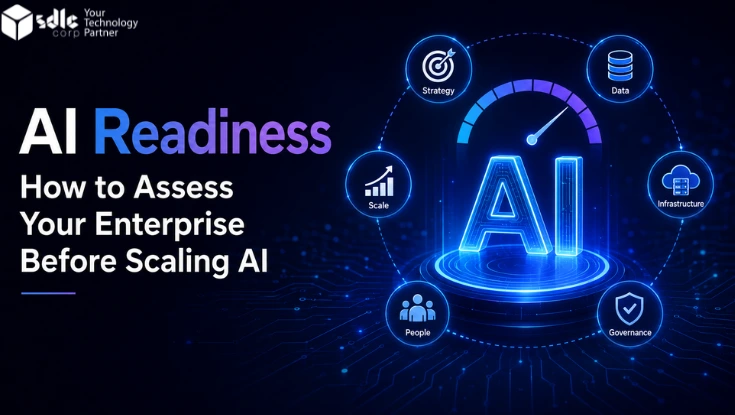
Background reading: AI readiness - how to assess your enterprise before scaling AI.

Evaluation

Technology and Vendor
Evaluation

The most popular platform is not automatically the best fit for every workload. We help organizations evaluate options against the actual use case.

Fit

Capability Fit

Compare models, platforms and tools against the tasks the application needs to perform.

Quality

Output Quality

Evaluate representative outputs rather than relying only on public benchmarks.

Data

Data Requirements

Assess what data volume, context and freshness each use case requires.

Speed

Latency

Understand whether response times fit the user experience.

Hosting

Deployment Options

Compare managed cloud services, private environments and suitable open-source options.

Cost

Operating Cost

Estimate model and infrastructure costs under realistic usage assumptions.

Risk

Vendor Dependency

Consider how tightly the proposed architecture depends on one provider.

Privacy

Data Handling Terms

Review what each provider may process, retain or train on, and whether that survives your own legal and security review.

Evaluation is run against your representative tasks, because a benchmark leaderboard is not a procurement decision.

Information

Data Strategy
for AI

AI projects frequently stall because the organization starts with models before understanding its data environment.

Inventory

Data Inventory

Identify relevant structured and unstructured information.

Ownership

Data Ownership

Determine which teams own each source and who can approve its use.

Access

Access Requirements

Understand how future applications can securely access required information.

Sensitivity

Sensitive Data

Identify personal, financial, confidential or regulated information that needs additional controls.

Quality

Data Quality

Determine whether source information is reliable enough for the intended workflow.

Lifecycle

Data Lifecycle

Define how data is updated, retained or removed from the AI application.

Where the data foundation itself needs work, implementation belongs with data engineering services.

Governance

Governance and
Responsible AI

Governance should be part of the roadmap rather than added after implementation.

Accountability

AI Ownership

Define who is accountable for the application and its business outcomes.

Oversight

Human Oversight

Determine which outputs or actions require human review.

Permissions

Access Controls

Define which users and applications may access specific capabilities and data.

Models

Model Governance

Document approved models, providers, versions and use cases.

Quality

Evaluation Standards

Set minimum quality thresholds before releasing an AI capability.

Evidence

Auditability

Define what decisions, requests, responses and actions should be logged.

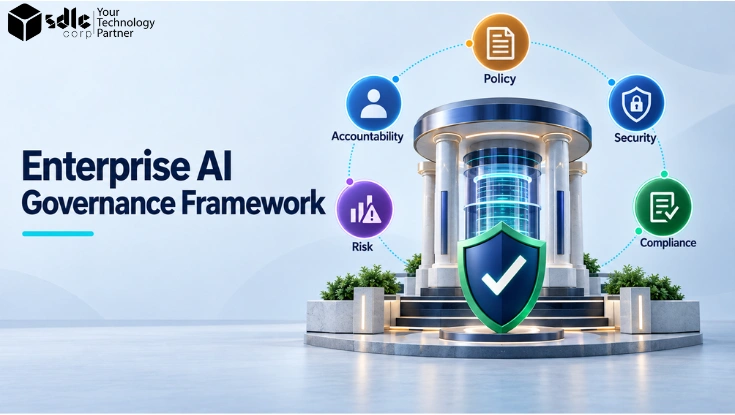
Each roadmap defines the governance requirements for its own initiatives. For an organization-wide program with policies, risk tiers and evidence, see our AI governance consulting services.

Risk

AI
Risk Assessment

We help identify risks before they become production problems.

Accuracy

Incorrect Outputs

Evaluate the impact of wrong predictions, false positives and unsupported generated content.

Exposure

Sensitive Information

Assess whether training data, prompts or outputs could expose confidential information.

Fairness

Bias and Fairness

Check whether outcomes differ unfairly across customer or employee groups.

Rights

Intellectual Property

Review ownership of training data, models and generated content.

Supplier

Vendor Risk

Understand provider dependency, data-processing requirements and service limitations.

Continuity

Operational Risk

Identify what happens when the model, provider or integration is unavailable.

Risks are documented against specific use cases, so mitigation can be scoped and costed rather than discussed in the abstract.

Business Case

AI ROI and
Business Case

AI initiatives should be connected to measurable business outcomes.

Before

Baseline

Measure the current process before estimating improvement.

Target

Target Outcome

Define the metric the pilot is expected to influence: forecast accuracy, defect rate, time per task, support volume, conversion rate, processing effort, response time or operating cost.

Spend

Cost Model

Estimate implementation, model usage, infrastructure and operational requirements.

Uptake

Adoption Assumptions

Consider how many users or transactions realistically reach the new workflow.

Decision

Success Threshold

Define what result would justify moving from pilot to production.

Evidence

Measurement Framework

Agree how the outcome will actually be measured, by whom, and against which system of record.

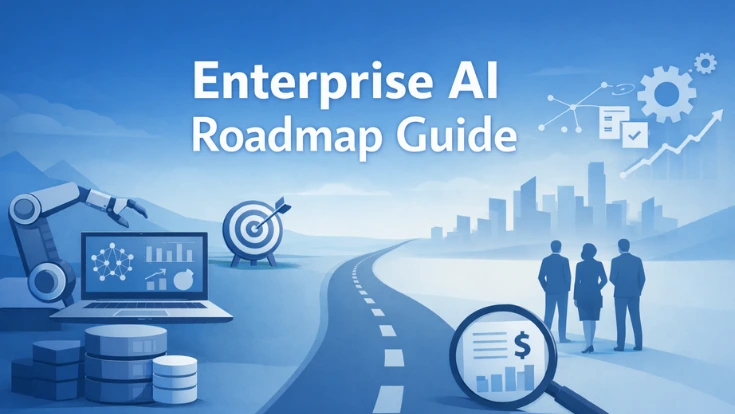
Background reading: the enterprise AI roadmap guide covers use cases, guardrails and ROI measurement.

Pilot

Pilot
Planning

An AI pilot should answer defined questions. It should not become an indefinite demonstration.

Scope

Pilot Scope

Limit the initial project to a specific use case and representative users.

Bar

Acceptance Criteria

Define what the system must achieve before stakeholders consider the pilot successful.

Testing

Evaluation Dataset

Create representative scenarios for measuring quality and failure cases.

Systems

Integration Scope

Include only the integrations required to test the business hypothesis.


Users

User Feedback

Collect structured feedback from the people who will actually use the application.

Gate

Production Decision

Determine in advance what evidence is required to scale, modify or stop the initiative.

Deciding the stop condition in advance is what keeps a pilot from becoming a permanent demo.

Industries

Consulting
Across Industries

The consulting method is consistent. The constraints, review obligations and value levers are not.

Finance

Financial Services

Assess fraud, risk, document and service opportunities while respecting sensitive data, model review and controlled decisions.

Health

Healthcare

Identify administrative, documentation, scheduling and imaging workflows where AI can help while clinicians keep authority.

Retail

Retail and E-commerce

Prioritize demand forecasting, personalization, merchandising and customer service opportunities.

Industry

Manufacturing

Explore visual inspection, predictive maintenance, planning and operational knowledge use cases.

Logistics

Logistics

Evaluate document processing, ETA and demand prediction, routing and exception workflows across distributed systems.

Enterprise

Enterprise Services

Build roadmaps across HR, finance, IT, customer support, sales and internal productivity.

Sector reading: AI for healthcare.

Proof

From Strategy
to Delivery

Consulting creates the roadmap. Specialized engineering teams then implement the approved architecture.

3 entries · scroll to reveal
01 / 03 Implementation
Knowledge Access SDLC Corp

Enterprise Knowledge Assistant

A generative AI assistant integrated with the client's internal documentation, CRM and ticketing system, built on GPT-4o and retrieval-augmented generation.

This is the type of system that results when consulting identifies enterprise knowledge access as a high-value use case: the discovery work establishes which sources matter and who owns them, and delivery follows.

Best proof forconsulting that identifies knowledge access as the priority use case

  • Internal documentation
  • CRM integration
  • Ticketing data
  • Retrieval-grounded
  • Guardrails
  • Pinecone
  • LangChain
  • Autonomous resolution
Implementation capability: RAG Development Services
Enterprise Knowledge Assistant, a retrieval-grounded internal assistant built by SDLC Corp

Published in our generative AI portfolio.

68%Employee Queries Resolved Autonomously
50%Published Support Cost Reduction
GPT-4oModel
RAGArchitecture
02 / 03 Implementation
Content Operations SDLC Corp

AI Content Generation Engine

An AI content generator producing advertising copy, product descriptions and branded visual content across multiple channels.

This represents the downstream application that can follow when content operations are prioritized through AI strategy - the use case is chosen first, the engine is built second.

Best proof forconsulting that prioritizes content operations as the funded initiative

  • Ad copy
  • Product descriptions
  • Branded visuals
  • Multi-channel
  • Task orchestration
  • Campaign velocity
  • Hugging Face
  • Scalable production
Implementation capability: Generative AI Development
AI Content Generation Engine, an automated multi-channel content production system built by SDLC Corp

Published in our generative AI portfolio.

70%Published Reduction in Manual Effort
Multi-ChannelOutput
Claude 3Model
CrewAIOrchestration
03 / 03 Consulting
Roadmap and Feasibility SDLC Corp

AI Roadmap and Feasibility

Our published client feedback includes an engagement where SDLC Corp refined an AI roadmap, ran feasibility checks and supported delivery through clear project communication.

This is the type of engagement this page exists for: identifying the right problem and validating feasibility before expanding implementation.

Best proof forroadmap refinement and feasibility validation before a build commits

  • Roadmap refinement
  • Feasibility checks
  • Clear communication
  • Weekly syncs
  • Delivered on schedule
  • Extension of the team
  • Scoped before build
  • Validated first
Talk to an AI Consultant
RoadmapRefined
FeasibilityChecked
On ScheduleDelivered
WeeklySyncs
“SDLC Corp felt like an extension of our team. They refined our AI roadmap, ran feasibility checks, and delivered on schedule, with weekly syncs and clear updates, always.”
Mike Bennett, Ops Dir. (North), Elysium Healthcare

Each of these began as a prioritized use case. The figures are the ones already published for those engagements.

Client Stories

What Clients Say
About SDLC Corp

Founders, CEOs, and operating leaders share what it's like to build with SDLC Corp.

Client story

Eric Leist

CEO, Edgerton Strategies

Client story

Doug Schmidt

CEO, Roofaid USA

Client story

Reyzal Razmi

All Star Influencers
What clients say
01 / 05
They approached our Salesforce discovery with real technical depth, uncovered structural gaps others missed, and delivered a solution that worked exactly as promised.
SDLC CORP built a mobile application that met our strategic requirements with strong technical execution. The solution performs reliably and has become an important operational asset.
They saw inefficiencies in our Salesforce workflow and redesigned our entire quote-to-cash system. We now operate faster, cleaner, and with better accuracy.
From planning to post-launch, SDLC Corp guided us every step of the way. Their support makes them more than a vendor. They're a trusted partner.
The SDLC Corp team scaled our platform with impressive technical expertise, ensuring it's secure, robust, and ready for future growth.
What clients say
01 / 05
The SDLC Corp team scaled our platform with impressive technical expertise, ensuring it's secure, robust, and ready for future growth.
From planning to post-launch, SDLC Corp guided us every step of the way. Their support makes them more than a vendor. They're a trusted partner.
They saw inefficiencies in our Salesforce workflow and redesigned our entire quote-to-cash system. We now operate faster, cleaner, and with better accuracy.
SDLC CORP built a mobile application that met our strategic requirements with strong technical execution. The solution performs reliably and has become an important operational asset.
They approached our Salesforce discovery with real technical depth, uncovered structural gaps others missed, and delivered a solution that worked exactly as promised.
Process

Our AI
Consulting Process

Five stages, each ending in a decision rather than a status update.

01

Discover

Understand business priorities, workflows, challenges and stakeholder expectations.

02

Assess

Evaluate use cases, data, systems, security and organizational readiness.

03

Prioritize

Rank opportunities based on value, feasibility and implementation requirements.

04

Design

Define the recommended architecture, governance model, evaluation approach and pilot.

05

Roadmap

Produce the business case, implementation backlog, milestones, KPIs and production decision criteria.

Why SDLC Corp

Why Choose SDLC Corp
for AI Consulting

Advisory that is accountable for whether the recommendation can actually be built.

Outcome First

Business-First Consulting

Start with the business outcome instead of forcing every requirement into the latest AI technology.

Informed

Architecture-Aware Advice

Consultants understand how machine learning, computer vision, LLM, RAG, agentic AI and enterprise applications behave in production.

Neutral

Vendor-Neutral Evaluation

Compare suitable platforms, models and vendors according to workload requirements.

Grounded

Delivery Experience

Recommendations are informed by teams that also build and operate AI applications.

Handover

Clear Handoff to Engineering

Translate consulting outputs into actionable requirements for implementation teams.

300+AI Deployments
400+AI Specialists
40+AI Products Shipped
Scope

AI Consulting
vs Development

The two are sequential, not competing. Which one you need depends on how much is already decided.

Consulting

Use consulting when the initiative is still a set of questions: what to build, why to build it, where to start, which architecture fits, whether the data is ready, how to govern it, how to measure value and how to structure a pilot.

What to buildWhy to build itWhere to startWhich architecture fitsWhether data is readyHow to govern itHow to measure valueHow to structure a pilot
Development

Use development when the use case and implementation direction are already sufficiently defined and you need engineers to build the application.

Use case definedArchitecture agreedEngineering capacityProduction buildIntegration workOperate and support

Output

Decisions and Artifacts

Consulting ends in a roadmap, business case and backlog.

Output

A Running Application

Development ends in something in production.

Risk

Reduce Uncertainty

Consulting exists to de-risk the spend that follows.

Risk

Deliver to Spec

Development exists to build what was agreed.

Sequence

One Feeds the Other

The backlog from consulting is the input to development.

Explore AI Development Services when the direction is already clear.

Scope

AI Consulting
vs Generative AI Consulting

This page covers the full AI landscape. Generative AI strategy has its own specialist engagement.

Generative AI Consulting

Focused specifically on opportunities involving foundation models, LLM applications, generative media, RAG, AI agents and GenAI products and workflows.

Foundation modelsLLM applicationsGenerative mediaRAGAI agentsGenAI products and workflows
AI Consulting

Broader advisory covering other forms of artificial intelligence as well, including predictive machine learning, computer vision, forecasting, optimization and recommendation systems.

Predictive machine learningComputer visionForecastingOptimizationRecommendation systemsBroader AI transformation

Scope

Generative Only

Foundation-model opportunities and the workflows around them.

Scope

All of AI

Including techniques that predate foundation models.

Start

A GenAI Idea

You already believe generative AI is the answer.

Start

A Business Problem

You want the right technique chosen for you.

Next

Organization-Wide Strategy

Broader transformation belongs in the wider engagement.

When the roadmap is limited to foundation models and generative workflows, use our generative AI consulting services.

Get Started

Build Your
AI Roadmap

Move from disconnected AI ideas to a prioritized, measurable plan.

We help you identify the right use cases, assess readiness, define architecture options, establish governance requirements and build a practical roadmap for implementation.

Contact Us

Share a few details about your project, and we’ll get back to you soon.

Let's Talk About Your Project

FAQ

AI Consulting
FAQs

Straight answers on scope, deliverables, data, technology choices, ROI and where consulting ends and engineering begins.

AI consulting services help organizations decide where and how to use artificial intelligence before committing to implementation.

Typical activities include use-case discovery, readiness assessment, technology selection, business-case development, governance planning and pilot roadmapping.

An AI consultant reviews business goals, workflows, data, systems and constraints to find viable AI opportunities and recommend the right technique and delivery approach.

The output is a decision the business can act on, not a technology overview.

Typical deliverables include a use-case portfolio, prioritization matrix, readiness report, architecture recommendation, technology evaluation, governance requirements, pilot scope, KPI framework, implementation roadmap and an executive business case.

The exact deliverables depend on the engagement.

We match the problem to the technique: predictive machine learning for forecasting and scoring, computer vision for images and video, NLP and generative AI for language, agentic AI for multi-step workflows, and automation or conventional software where AI is not needed.

We evaluate each candidate against business value, user value, technical feasibility, data readiness, implementation effort, operating requirements and adoption complexity.

Scoring every candidate on the same dimensions makes the shortlist defensible to a budget holder.

Not necessarily. Part of the readiness assessment is identifying which data is required, its current condition, ownership and accessibility, and the gaps to close before implementation.

Discovering that the data is not ready is a valid and valuable outcome.

A readiness assessment reviews whether your organization has the business ownership, data, systems, infrastructure, security controls, governance processes and skills required for the proposed AI initiative.

We first measure the current process baseline. Then we define the metric the proposed solution should influence, estimate realistic adoption and operating costs, and set a success threshold for the pilot.

Without a baseline measured before the pilot, any improvement claim afterwards is unverifiable.

The duration depends on the number of use cases, stakeholders, systems and depth of assessment required.

A focused workshop can establish initial priorities quickly, while an enterprise readiness and roadmap engagement needs deeper business, technical and governance analysis.

Consulting determines what should be built, why and how the initiative should be structured.

Development turns the approved use case and architecture into a production system. See AI development services.

AI consulting covers the full range of artificial intelligence, including predictive machine learning, computer vision, NLP, optimization and generative AI.

Generative AI consulting focuses only on foundation models, LLM applications, RAG and agents. See generative AI consulting services.

Yes. Every roadmap includes the governance requirements for its own use cases.

For an organization-wide program with policies, risk tiers and evidence, see AI governance consulting services.

Yes. We compare cloud AI services, open models and ML platforms against your workload, data, privacy and cost requirements rather than a preferred provider.

That is a legitimate and often valuable outcome. Ruling a use case out early costs a fraction of discovering the same thing after a build.

Where a problem is better solved by conventional software, automation or simpler analytics, the roadmap says so and points at the approach that fits.