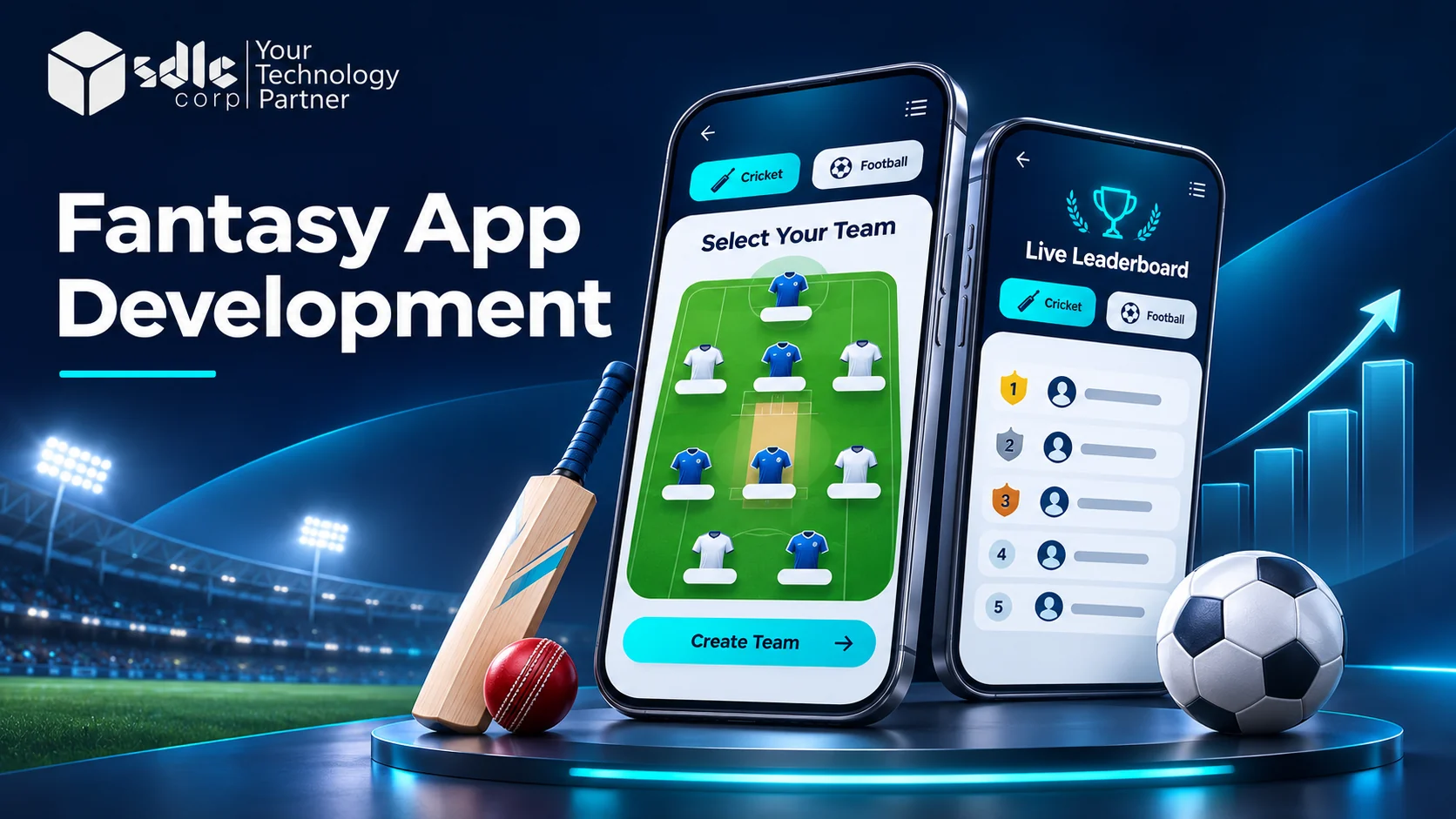
To develop a fantasy app, start with the sport, game format and audience. Then build the features that let people select teams, follow live scores and compete with confidence. Clear rules, reliable match data and accurate results form the foundation.
A cricket contest works differently from a season-long football league. A collectible-card competition adds another set of requirements. Choosing the right model early helps you control development costs and launch a product people understand.
Choose the right fantasy app format
First, decide how people will play. Will they select a new team for each match or manage a roster throughout a season? Will they join public contests, run private leagues or trade collectible player cards?
| App format | Main features | Key decision |
|---|---|---|
| Daily or match-based fantasy | Team selection, entry deadlines and live points | How players form teams and earn points |
| Season-long leagues | Drafts, trades, waivers and league settings | How teams and rules change during a season |
| Best ball | Drafted rosters and automatic lineup selection | How the app selects eligible scoring players |
| Multi-game platform | Shared accounts and several game types | Which services each game shares |
| Collectible fantasy | Player cards, ownership and a marketplace | How cards qualify for competitions and transfers |
Start with one format and a manageable set of competitions. You can add more sports once scoring, support and match-day performance work reliably.
Essential fantasy app features
A successful fantasy platform connects the player experience with the tools needed to run it. Plan both from the beginning.
Player accounts and team selection
Make registration simple. Players should be able to find a match, read its rules and create a valid team without confusion. Show selection budgets, position limits and entry deadlines before they commit.
Contests and private leagues
Support the formats your audience needs, such as head-to-head contests or invitation-only leagues. Display entry conditions, scoring rules and tie handling clearly. Where prizes apply, explain how the app awards them.
Live scores and leaderboards
Show how real match events affect fantasy points. Keep team scores and rankings consistent across the app. If a data feed pauses, tell players what is happening instead of showing an unexplained frozen score.
Notifications and support
Send useful reminders about lineup deadlines, draft turns and results. Let players control their notification preferences. Support staff should be able to trace a disputed score or contest entry.
Administration and payments
The admin dashboard needs contest controls, user support, scoring settings and a record of important changes. If your product includes permitted payments, add transaction records, refunds, withdrawals and reconciliation.
Build a fantasy cricket app
Fantasy cricket turns real player performances into points. Define selection budgets, player roles, captain multipliers and team limits for each competition. Next, set the deadline for creating or editing a team.
The server should keep the accepted lineup and the rules used for that entry. This prevents a late request from changing a locked team. It also gives support staff a clear record when a player disputes a result.
Test match interruptions, changed lineups, abandoned games and corrected statistics. Publish the handling rules before people enter a contest.
Support season-long fantasy leagues
Season-long leagues need features that last beyond a single match. Players may draft teams, make trades, claim available players and compete across weekly rounds.
A league commissioner manages settings and disputes. Give that role clear permissions for scheduling, scoring changes and trade approval. Record each decision so league members can understand what changed.
Draft rooms also need timers, pick queues and automatic selections. If someone loses their connection, they should be able to return without losing the draft’s current state.
For keeper or dynasty leagues, decide what carries into the next season. This may include players, draft picks, contracts or league history.
Add best-ball and draft formats
In best ball, players draft a roster and the app selects the highest-scoring eligible lineup for each scoring period. The rules determine positions, roster limits and whether later changes are allowed.
Make those calculations repeatable. For example, support staff should be able to show why one player counted toward a lineup while another stayed on the bench.
Then define how rounds, ties and corrected statistics affect standings. Each format needs its own test cases, even when it shares the same live data.
Expand into rugby and other sports
Each sport has its own player roles, calendars and scoring events. Rugby may track tries, tackles, cards and substitute appearances. Cricket and football require different event definitions.
Keep these rules separate from the incoming data feed. That way, you can update a scoring system without rebuilding the whole app.
Before adding a sport, confirm that your data provider covers the required competitions and statistics. Also check how it handles delayed events and later corrections.
Create a multi-game platform
A multi-game app can share accounts, profiles, notifications and support. However, each game needs its own rules, session records and result checks.
Give each game a clear way to start a session, record actions and submit a result. This helps you add new games without disrupting existing ones.
Anti-cheating controls should match the game. A draft room, a sports contest and a real-time skill game expose different risks.
Include collectible player cards
Collectible fantasy adds ownership and trading to team selection. Players may use their cards in competitions, list them for sale or transfer them to another account.
Define how those actions interact. For example, can someone sell a card during a live competition? When does a transfer change eligibility? Clear rules prevent ownership disputes.
If you use blockchain, plan wallet recovery, transaction confirmation and contract security. Also confirm the rights needed for player images, club marks and match data.
Connect live data to accurate results
The sports data feed supplies fixtures, lineups, match events and statistics. Your scoring engine turns those events into points under the rules for each competition.
Check coverage before signing a data contract. A provider may cover a league without supplying every statistic your scoring model needs. The sports data coverage documentation shows the kinds of coverage differences to review.
A reliable scoring pipeline should:
- Validate incoming events and reject duplicates.
- Keep the original data needed to check a result.
- Apply the correct scoring rules and lineup deadlines.
- Update scores and leaderboards consistently.
- Handle official corrections under the published contest rules.
Keep key decisions on the server. The mobile app can display a team or score, but it should not decide whether an entry is valid.
Choose a practical technology stack
Choose tools your team can build, test and maintain. A shared mobile codebase may suit an early release, while native apps may suit platform-specific needs.
| Layer | Common options | Purpose |
|---|---|---|
| Mobile app | Flutter, React Native, Swift or Kotlin | Team selection, contests and live results |
| Backend | Node.js, Python, Java or .NET | Accounts, game rules and integrations |
| Database | PostgreSQL or another transactional database | Entries, rosters, league history and payments |
| Cache and live updates | Redis, queues and live connections | Fast score delivery and background processing |
Start with the simplest architecture that supports your format and expected load. Add complexity when a measured need justifies it.
How to develop a fantasy app in seven steps
- Define the game. Choose the audience, sport, format and target markets. Write the scoring and eligibility rules.
- Design the main journeys. Prototype team selection, contest entry, drafts and results. Test confusing steps with prospective users.
- Arrange data and integrations. Confirm coverage, rights, pricing and provider access before development depends on them.
- Build the scoring engine. Test rules, deadlines and corrections with recorded or simulated matches.
- Develop the app and admin tools. Connect the player experience to the records and controls support staff need.
- Test match-day pressure. Simulate busy entry periods, dropped connections, delayed feeds and repeated requests.
- Launch to a limited audience. Monitor errors, scores and support requests. Resolve problems before expanding.
Fantasy app development cost and timeline
To estimate the cost to develop a fantasy app, define the first release in detail. One sport with basic contests needs less work than several sports with payments, live drafts and a trading marketplace.
The main cost drivers are:
- Game rules: contest types, drafts, trades, scoring and corrections.
- Data coverage: sports, leagues, statistics and recurring provider fees.
- Platforms: web, iOS, Android and the admin dashboard.
- Transactions: payment integrations, refunds, verification and fraud review where applicable.
- Scale: peak users, hosting, monitoring, backups and support.
- Specialist features: multi-game integrations, dynasty leagues or collectible assets.
Ask for a quote that separates design, development, testing and recurring costs. In addition, confirm who owns the code and who maintains the system after launch.
The timeline also depends on data access, integration approvals and testing. A useful delivery plan shows these dependencies alongside the development milestones.
Choose how the platform earns revenue
Options include league-management subscriptions, premium analytics, sponsorships, advertising and white-label licensing. Choose a model that fits the audience and supports the cost of running the service.
If you plan paid contests, prizes or marketplace fees, review the intended markets and operating model with qualified advisers first. These choices affect eligibility checks, payments and support.
Also compare custom development with licensed or white-label software. Check rule flexibility, ownership, integration access and recurring fees before choosing a delivery route.
Check these essentials before launch
- Players can understand scoring, entry deadlines and tie rules.
- Lineups lock correctly and draft rooms recover from lost connections.
- The app handles duplicate events, delayed data and corrected statistics.
- Data, imagery and other third-party assets have the required permissions.
- Payment and eligibility controls match the intended product and markets.
- Support staff can trace entries, decisions and results.
- Monitoring, backups and incident response are ready.
Frequently asked questions
What do I need to develop a fantasy app?
You need clear game rules, reliable sports data, team or roster management, a scoring engine and an admin dashboard. Your chosen format may also need drafts, payments, league controls or trading features.
Can one app support cricket, football and rugby?
Yes. Share common services such as accounts and notifications. Keep each sport’s scoring, player roles, fixtures and roster rules separate.
How much does it cost to develop a fantasy app?
The price depends on the features, sports, platforms and integrations. Define a first-release feature list, then request a quote with separate build and operating costs.
Does a fantasy app need blockchain?
No. Standard team selection, contests and live scoring can run without it. Consider blockchain when asset ownership and trading form a useful part of the product.
How do you keep fantasy scores accurate?
Use reliable data, validate events and apply clear scoring rules. Keep records that let the team replay calculations and handle official corrections consistently.
Build your fantasy sports platform with SDLC Corp
Ready to develop a fantasy app? Share your target sport, game format and launch priorities with SDLC Corp. Our fantasy sports development team can help turn those requirements into a product plan.
For an initial estimate, include the platforms you need, expected peak traffic and the features planned for the first release.